
Business
Lagos-Calabar Highway Will Cut Logistics Cost By 15%, Says NOA

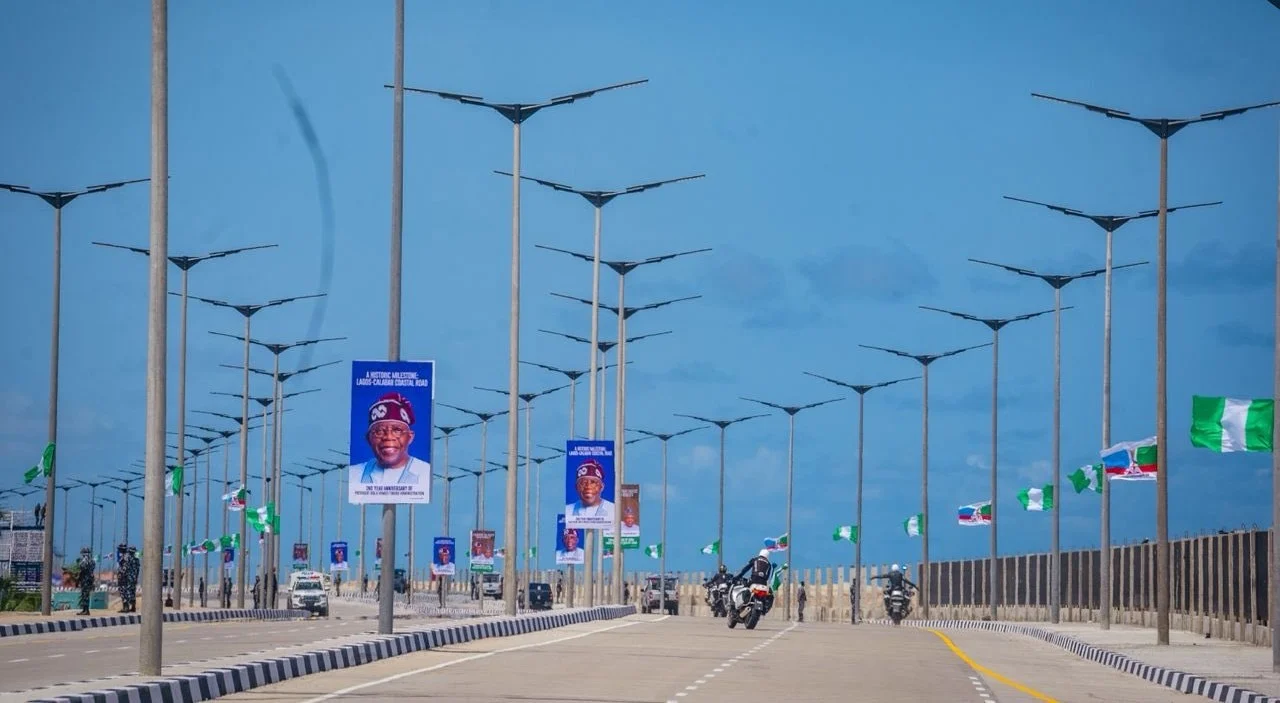
The National Orientation Agency (NOA) says the ongoing construction of the Lagos-Calabar coastal highway will serve as a transformative infrastructure project, driving economic growth and national integration.
In its weekly publication, The Explainer, the NOA quoted David Umahi, minister of works, as describing the 700-kilometre 10-lane superhighway as a “blueprint for national transformation.”
According to the agency, the minister said the project will reduce travel time between Lagos and Calabar from 12 hours to just 4.5 hours, reduce logistics costs by 15-20 percent, and empower over 500,000 small businesses.
“This is not just road construction—it’s an investment in Nigeria’s future,” Umahi was quoted as saying.

“It is a visionary undertaking that will drive inclusive development, improve access to markets, and empower over 500,000 small businesses along the corridor.
“The project links the industrial strength of Lagos with the agricultural potential of the Niger Delta and Southeast, while addressing key infrastructure, economic and security challenges.”
In the report, the minister also highlighted the project’s potential to increase Nigeria’s gross domestic product (GDP) by 2 percent by creating new industrial corridors, expanded trade, and enhanced tourism access along the coastal route.
The NOA said the Lagos-Calabar highway is expected to generate 10,000 direct jobs in construction and engineering, and over 15,000 indirect jobs in logistics, materials supply, and support services.

“The highway is expected to boost tourism revenue by 25 per cent by providing access to underutilised beaches such as Ilashe Island in Lagos and Ibeno Beach in Akwa Ibom State,” the agency said.
“Its eco-friendly elements, such as reforestation initiatives and a rail system to reduce emissions, align with sustainable development goals.
“The road’s design features solar-powered CCTV surveillance systems for safety, a central rail line for integrated transport, and a tolling system to ensure sustainability. It is financed through a 30 percent public and 70 percent private investment model, with full cost recovery targeted over 15 years.
“The project is comparable to Ireland’s Wild Atlantic Way, which generates €3 billion annually,” the agency stated, adding that its environmental components—such as mangrove restoration and wildlife corridor designs—are aligned with international standards.”
The NOA also said the highway is a strategic step toward closing Nigeria’s infrastructure deficit, which it noted stands at 30 percent of GDP — well below the World Bank’s 70 percent benchmark.
Citing the 2025 Appropriation Act, the agency applauded the Tinubu administration for allocating N23.96 trillion to capital expenditures, which, for the first time in decades, surpasses recurrent spending, which is pegged at N13.64 trillion.
“This shift reflects a clear commitment to reversing decades of underinvestment in public infrastructure,” the NOA said.
The agency noted that the highway is one of several signature projects, alongside the Sokoto-Badagry superhighway and Eastern railway, geared toward unlocking regional development and national productivity.
President Bola Tinubu had said the road is a “pathway to prosperity” and a symbol of national unity while commissioning the projects to mark his two years in office.
Thecable.ng
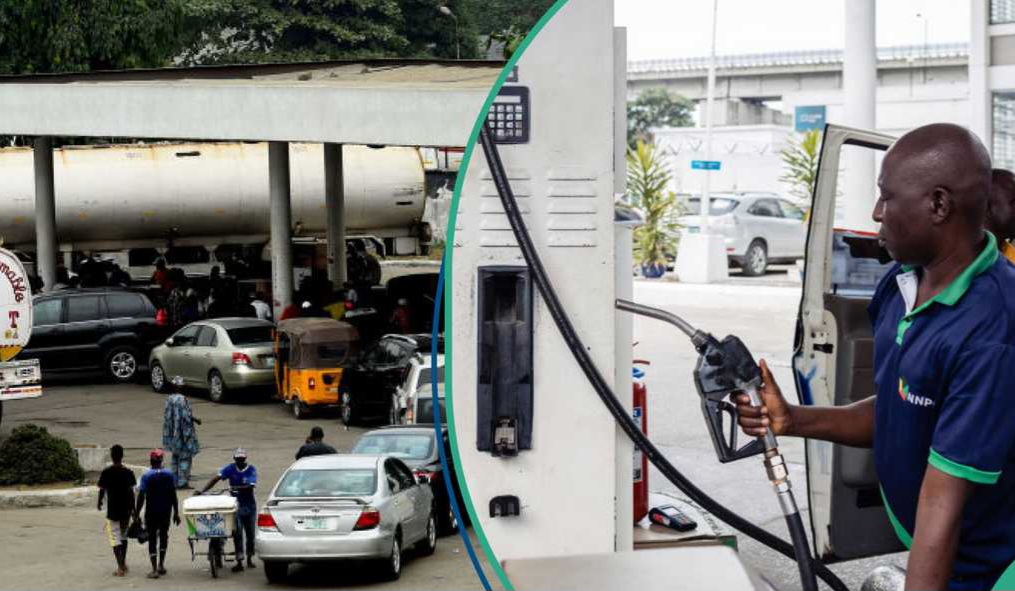
Fresh petrol depot prices have emerged across Nigeria as marketers adjust to rising crude oil prices and renewed tensions in the Middle East.
The latest pricing changes come amid growing uncertainty in the global energy market following fresh military exchanges between the United States and Iran near the Strait of Hormuz, one of the world’s most important oil transit routes.
ndustry data tracked by PetroleumPriceNG and monitored by Legit.ng show that depot owners raised their Premium Motor Spirit (PMS) prices as a protective measure against potential losses linked to volatile international oil prices.
Global crude oil prices climbed during early trading on Wednesday, June 10, 2026, after the United States launched strikes on Iranian military infrastructure near the Strait of Hormuz.
As of 5:08 a.m. WAT, Brent crude rose by 1.03% to $92.39 per barrel, while the U.S. West Texas Intermediate (WTI) crude gained 0.91% to trade at $89.00 per barrel, according to a report by Oilprice.com
The market rally followed reports that American forces targeted Iranian air defence systems, radar installations and surveillance facilities after Washington accused Tehran of bringing down a U.S. Army Apache helicopter operating within the region.
The U.S. Central Command described the strikes as a defensive response. However, Iran denied responsibility for the helicopter incident and accused the United States of escalating tensions unnecessarily. The development has raised fears of a broader regional conflict that could disrupt global crude oil supplies.
Checks across fuel depots nationwide show that marketers have adjusted their petrol prices upward in response to the changing global market conditions.
According to the latest data: AIPEC now sells petrol at N1,247 per litre RainOil Lagos sells at N1,248 per litre Integrated depot price stands at N1,247 per litre Liquid Bulk has also fixed its price at N1,248 per litre Industry experts say the latest adjustments are largely precautionary as marketers attempt to shield themselves from potential losses should crude oil prices continue to rise.
The cost of importing petrol into Nigeria has dropped sharply following the recent decline in global crude oil prices, creating fresh competition for local refiners, including the $20 billion Dangote Refinery.
New data released by the Major Energy Marketers Association of Nigeria (MEMAN) shows that the landing cost of imported Premium Motor Spirit (PMS), also known as petrol, has fallen to N1,117 per litre.
The figure is now significantly lower than Dangote Refinery’s gantry price of N1,250 per litre, leaving a difference of N133 per litre.
The development comes days after the mega refinery reduced its ex-depot petrol price from N1,275 to N1,250 per litre in response to changing market conditions.
The latest MEMAN pricing template suggests that fuel importers may now enjoy a competitive edge over domestic refiners as international crude prices continue to soften. Aside from petrol, the landing costs of other petroleum products also recorded notable declines.
According to the data, diesel landing cost dropped to N1,470 per litre, compared to Dangote Refinery’s price of N1,700 per litre. Aviation Turbine Kerosene (ATK), commonly known as aviation fuel, also fell to N1,426 per litre, while Dangote’s price remains N1,650 per litre.
MEMAN estimated the exchange rate for fuel imports at N1,366.85 per dollar, reflecting the prevailing official foreign exchange rate at the time of the calculation.
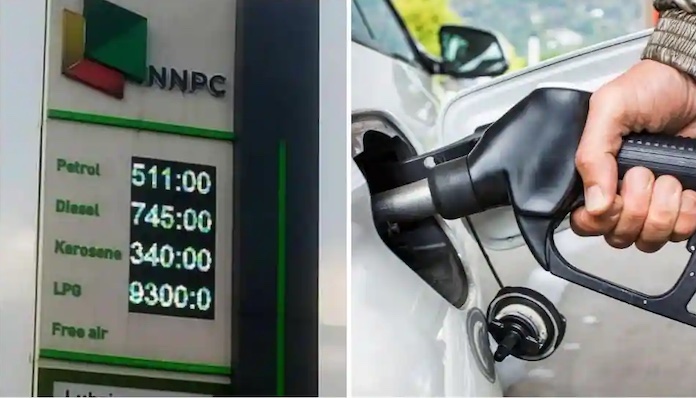
Some filling stations along the Lagos-Ibadan Expressway and in other locations across Lagos and Ogun states have reduced petrol prices below N1,300 per litre.
This follows a price cut announced by the Dangote Petroleum Refinery on Sunday.
The refinery adjusted its ex-depot gantry price of petrol down to N1,250 per litre from N1,275 per litre, while also slashing the price of diesel to N1,700 per litre from N1,800 per litre.
According to Dangote officials, the price review reflects a recent decline in global oil prices and reinforces the company’s commitment to making refined products more affordable while providing cost relief to Nigerian consumers and businesses.
Following the announcement, observations across the Mowe/Ibafo axis of the Lagos-Ibadan Expressway in Ogun State showed that several independent marketers immediately adjusted their pumps. For instance, MRS filling stations reduced their petrol pump price to N1,286 per litre, NIPCO and Heyden retailed the product at N1,290 per litre, and SGR adjusted its price to N1,297 per litre.
Reductions were also recorded in the diesel market, with many filling stations dropping their prices to N1,800 per litre from the previous N1,900 per litre.
Despite these downward adjustments, many retail outlets still sell petrol above the N1,300 mark. Outlets operated by the Nigerian National Petroleum Company Limited (NNPC) in Ibafo adjusted their pumps to N1,305 per litre, while Mobil and Asharami sold the product at N1,310 and N1,320 per litre, respectively.
The overall price drop comes after a prolonged period of high fuel costs in Nigeria, which saw petrol skyrocket from N830 per litre to over N1,300 after global crude oil climbed past $115 per barrel due to tensions between the United States and Iran.


Filling Stations Adjust Petrol Prices Again as New Landing Cost Emerges

Bandits Strike Again, Kill Vice Principal in Fresh School Attack

BREAKING: Court Takes Action on APC Primaries

Former Super Eagles Star Loses Life Savings, Duped By A Pastor of ₦1.2 Billion

I’m A Married Man, I Can Never Get Myself Involved With Such A Thing, Delta Gov Aide Reveals Why He Offered Comfort ₦500,000 Job

Lagos Imposes ₦250,000 Fine For Illegal Waste Disposal

-

 Politics2 days ago
BREAKING: Kwankwaso Breaks Silence on Dumping NDC
-

 News1 day ago
FG to Declare Nationwide Public Holiday, Date Revealed
-
 News10 hours ago
Bandits Strike Again, Kill Vice Principal in Fresh School Attack
-

 Business2 days ago
JUST IN: Marketers Crash Petrol Prices Nationwide, New Pump Prices Emerge
-

 News1 day ago
BREAKING: Top Nigerian Emir is Dead, Details Emerge
-
 Politics11 hours ago
BREAKING: Court Takes Action on APC Primaries
-
 Business7 hours ago
Filling Stations Adjust Petrol Prices Again as New Landing Cost Emerges
-

 News14 hours ago
BREAKING: Tinubu’s Ex-Minister in Trouble Over Certificate Scandal