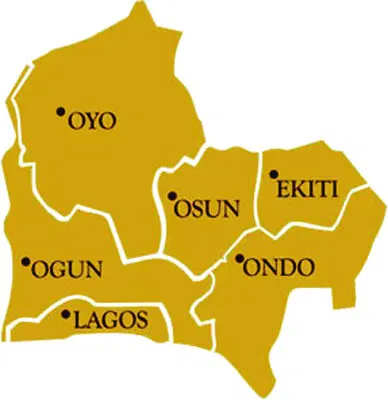
“The menace started from Ekiti State areas which share boundaries with Kwara State and we thought the establishment of the outfit would put a stop to the movement of the bandits towards the southwest.
Initially, it was effective especially in Ondo and Osun states but gradually the security outfit lost focus or it was no longer funded and across the states its effect is dwindling very fast, as it is being used to tackle petty crimes while bandits are getting emboldened to attack the region. At this point, the governors need to return to the drawing table with a view to making the region safe for the people. I am of the view that other security outfits, like Oodua People’s Congress, Iru Ekun, and local hunters should be integrated into Amotekun to check the incursion of the terrorists”.
We’re concerned about growing vulnerability of our forests — Chief Adebayo
The Oluode of Ogbomoso South Local Government Areas of Oyo State: Chief Adebayo Amos Abiade said: “The recent insecurity spreading towards the South-West is deeply alarming. As local hunters and community-based security stakeholders, we are concerned about the growing vulnerability of our forests, which are increasingly becoming unsafe and potentially used as hideouts for criminal elements. These forests can no longer remain unmonitored or left without structured oversight.
Beyond modern surveillance and intelligence gathering, we must also reinforce traditional means of securing our land. Local hunters, forest guards, and community vigilante structures have long relied on indigenous knowledge of terrain, tracking skills, and early warning systems rooted in our communities. These methods, when properly coordinated and supported, remain highly effective in complementing formal security efforts.
Governments across the South-West must urgently improve surveillance of forest reserves, strengthen community intelligence networks, and ensure rapid response mechanisms are in place, especially around rural schools which must no longer remain easy targets. What is required now is coordinated action, stronger intelligence sharing, and a serious integration of both modern and traditional security approaches. Our people deserve to live in safety, and that responsibility must be taken seriously and without delay.
Security can’t be reduced to checkpoints, patrol vans alone — Adewale
A public analyst and former Ondo state chairman of the Social Democratic Party, Stephen Adewale, said: “Amotekun remains an important regional security initiative, but the latest developments show that it cannot work effectively as a symbolic outfit. It must be strengthened with intelligence, logistics, training, technology, and stronger coordination with the police, DSS, civil defence, local hunters, forest guards, traditional rulers and community leaders.
“Security today cannot be reduced to checkpoints and patrol vans alone. It requires early warning systems, community reporting, forest surveillance, rapid response arrangements and proper mapping of vulnerable schools, border communities and forest corridors. The South West governments must also treat forests as security spaces, not empty lands. Many criminal groups exploit ungoverned forests, abandoned settlements and poorly monitored border routes. The governments in the region should, therefore, conduct coordinated forest audits, register and monitor legitimate occupants, remove criminal hideouts, improve inter-state intelligence sharing and strengthen collaboration with neighbouring states such as Kwara, Kogi, Niger and Edo. No state can secure itself in isolation because these criminal networks move across boundaries.
Most importantly, school security must now become a regional emergency. Schools in remote areas should be assessed for risk, emergency communication channels should be created, and local security committees should work directly with school heads. Parents and teachers need assurance, but that assurance must come from visible, organised and sustained protection, not occasional statements after tragedy. The lesson from Oyo is that the South West must not wait until terrorists become deeply rooted before acting. Prevention is cheaper, wiser and more humane than rescue after abduction.
The situation now is frightening — Ekujumi
Nelson Ekujumi, human rights activist said, “The situation at hand now is a frightening one, the governments at all levels need to activate citizens security engagements to highlight why we all must be on the same page to ward off this danger and also reinvigorate its security architecture in synergy with state governments in the South West. That way, everyone will be on alert to play their roles because security like we used to say, is everybody’s business.
We must move from response-based to preventive systems — Inegbenijie
Technical Partner at Davijey Integrated Services Limited, Mr. Job Inegbenijie, argued that the current approach allows criminals enough time to strike and disappear before security agencies arrive.
He said, “We have been in this reactive scenario, the kidnap happens, Amotekun goes there. The kidnap happens, the police get there, and they are always too late. That gap is what criminals exploit to carry out violent attacks and escape with victims. The solution lies in shifting from response-based security architecture to preventive systems capable of stopping attacks before they escalate. There has to be a new way of thinking.
“We need proactive anti-intrusion and anti-terrorist systems that can protect schools, farmlands and vulnerable communities while allowing security agencies enough time to respond effectively. For communities across Oyo, Ogun and Lagos states, the concerns are becoming increasingly real. In many rural settlements, residents now live with growing fears that forests and border communities are being quietly exploited by criminal groups as operational bases and transit routes.”
Coordinated regional security strategy focused on intelligence should be adopted — Nwagunma
Executive Director of the Rule of Law and Accountability Advocacy Centre, RULAAC, Mr. Okechukwu Nwagunma, said “the Oyo abduction has exposed critical weaknesses in intelligence sharing, rapid response coordination and rural security coverage. The attacks suggest that forests and remote communities across the region may increasingly be used as hideouts and transit routes by kidnappers and armed groups migrating from other parts of the country.
“Amotekun remains a valuable regional initiative, the security outfit alone cannot shoulder the burden without stronger collaboration among state governments, local communities and federal security agencies. To prevent further infiltration, South-West governments must adopt a stronger coordinated regional security strategy focused on intelligence sharing, forest surveillance, border monitoring and rapid emergency response. Years of neglect of the region’s vast forests and ungoverned spaces have created fertile grounds for insecurity.”
Govs should identify, map vulnerable border communities — Saludeen
Security expert, Dr. Hashim Saludeen, said the first step to secure the South West is for governors in the region to identify and map vulnerable border communities and isolated territories that have largely remained outside government presence. According to him, “These groups believe border communities are easy targets because they are forgotten by the government, that is why they are attacking these areas.
“Relying solely on ‘boots on the ground’ will no longer be enough against criminal groups increasingly deploying technology, drones and coordinated intelligence gathering before launching attacks.
“Modern security transformation comes from intelligence capability, surveillance technology and reconnaissance. There is a need to audit personnel and arms within the regional security structure. The region must ensure accountability and integrity within its security architecture. Beyond government agencies, local communities must now become active participants in intelligence gathering and early warning systems.”
The solution must go beyond weapons and patrol vehicles — Ajayi
Dr. Timi Ajayi, a security and safety expert, said, “The current situation is the consequence of years of complacency and ignored warning signs. We have had early warning signals for more than 10 to 15 years that this menace would spread down, but we waited. Many criminal groups infiltrate communities long before attacks occur, embedding informants and operatives quietly within local populations.
“These people have advanced parties. Some may have settled within communities for years, studying the environment and gaining trust before attacks happen. This is due to poor profiling systems and weak surveillance mechanisms in many South-West communities.
“Before strangers settle within communities, there should be profiling, due diligence and continuous monitoring. Our governors have not done enough, the Nigerian government has politicised security instead of treating it as a priority. We need technology that can immediately engage during an attack. The idea is to buy time, protect victims and allow security agencies to intervene. The solution must go beyond weapons and patrol vehicles.
“There is no development without security. The South-West Development Commission should place regional security coordination at the centre of its agenda. If communities are abandoned, some people may become informants for these groups. The latest attacks may ultimately become a defining moment for the South-West, either as an early warning that prompted decisive action or as the beginning of a deeper security crisis.”
There’s need for increased deployment of surveillance technology — Onayemi
On his part, the Convener of the Yoruba Commitment Forum, Otunba Tayo Onayemi, charged the government to focus more on enforcement of necessary laws, against all forms of criminality in the state. “Governments know there are aggressors, criminals, and innocent victims. The primary duty of the government is the protection of lives and property,” he said.
He advocated the establishment of functional security committees at local government and ward levels involving farmers, herders, traditional rulers, and security agencies. He also called for stronger prosecution of criminal offenders, increased deployment of surveillance technology, and the adoption of structured ranching and grazing policies to reduce recurring conflicts.
Ogun on alert to check rising kidnapping, banditry — Akinmade
Special Adviser to Ogun state governor on Media and Strategy, Hon. Kayode Akinmade, said the state has adopted proactive, intelligence-driven security measures, aimed at neutralising threats before they escalate. According to him, security agencies have intensified coordinated operations across vulnerable locations through joint patrols, stop-and-search exercises, surveillance activities, and bush-combing missions.
He said, “In recent days, combined security operatives carried out extensive forest-combing operations within identified flashpoints, leading to the neutralisation of suspected kidnappers, the arrest of several others, and the rescue of kidnapped victims held within forest corridors. Particular attention was being paid to border communities, isolated settlements, forest corridors, and suspected infiltration routes linking Ogun with neighbouring states.
The government had strengthened intelligence gathering, early-warning systems, and operational collaboration among the Police, Department of State Services (DSS), the military, Nigeria Security and Civil Defence Corps (NSCDC), Amotekun Corps, hunters, and local vigilante groups. Vulnerable schools and communities within identified operational zones were also being assessed for enhanced protection. The Ogun State government remains proactive, vigilant, and operationally prepared to respond to emerging security threats”.
Govt intensifying efforts to prevent attacks on schools in Ekit — Ogundana
Brigadier General Ebenezer Ogundana (rtd) Special Adviser on Security Matters to Governor Biodun Oyebanji, has assured residents of Ekiti State that the government and security agencies are intensifying efforts to prevent attacks on schools and public places, amid rising concerns over violent incidents in parts of the Southwest. Ogundana said the state government had identified vulnerable schools and strategic locations across the state and had already put measures in place to secure them against possible attacks.
The retired military officer disclosed that all security agencies in the state recently held a meeting where they resolved to prevent any occurrence of attacks similar to those recorded in some parts of the country. Ogundana noted that the government was not limiting its security measures to schools alone, stressing that marketplaces and areas with large population gatherings were also under surveillance.
His words, “We have identified some of our strategic locations and some of the schools that are likely vulnerable. These schools are safe. All the security agencies in the state met and resolved that we are not going to allow that kind of occurrence in the state.
“The Governor has already given instructions, at least for now, to put on hold all these night occupations, particularly in vulnerable places. We are also looking at marketplaces because incidents can happen where there are large populations during the daytime.If you wait until something happens before saying, ‘I saw this, I saw that,’ it becomes difficult. Security personnel cannot be everywhere. The people in the communities know their environment better. These criminals did not just drop from the air; they came from somewhere.
“On a realistic note, these guys are sometimes a little ahead in terms of planning because they choose the time and have the initiative. But when you look at the frequency of incidents, you will realise that the efforts of security agencies have prevented the entire region from being overwhelmed.
“We are not considering closing any schools. That would be counterproductive. The children are in the examination period. Why should they lose a whole year? We will provide security for them. We will identify schools in vulnerable areas and work with security agencies to ensure those places are secure.
“A lot of things are going on underground. We cannot disclose everything to the press because it could endanger the lives of the victims and their families. But we are working to ensure these people are rescued”.
Sleeper cells spreading!
In his submission, the Director-General of the International Institute of Professional Security, Dr Tony Ofoyetan, said sleeper cells often exist unnoticed because they deliberately integrate into society.
He said: “Sleeper cells are terrorist cells, individuals or groups sympathetic to acts of terrorism. They can be financiers, foot soldiers, and can take many different forms nationally and internationally.”
For him, terrorism begins long before attacks occur.
“Some members deliberately move into strategic positions within society. Some go into politics, some become religious clerics, some establish businesses, while others operate at intelligence levels. They may appear harmless for years while gathering information about communities and institutions.”
Then came his warning:”Terrorists do not simply wake up and attack. An attack is the final stage. By the time it happens, a lot of groundwork has already taken place.”
From distant war to national anxiety
That reality increasingly worries security experts observing patterns across Nigeria. Over the last decade, insurgency has evolved, and the geography of terror is shifting. Groups once confined to the North-East have demonstrated the capacity to establish support networks elsewhere. And the concern among analysts is no longer whether extremist elements can move southward, but whether some already have. For years, many southern communities watched insurgency from afar. Borno burned, Yobe mourned, Adamawa buried its dead.
Shift to the South-West
The South-West read the headlines and assumed distance offered protection. Then came June 5, 2022. Pentecost Sunday. At St Francis Xavier Catholic Church in Owo, Ondo State, worshippers gathered expecting prayers. Gunmen arrived instead. The attack killed dozens and shattered assumptions that extremist violence could not penetrate South-West Nigeria.
For security experts, Owo represented more than tragedy; it represented capability, planning, movement, logistics, and coordination, which are known attributes of sleeper cells. If insurgents could organise an attack in Ondo, then the notion of permanent geographical immunity became difficult to sustain. Since then, warning signs have appeared in fragments, including pockets of kidnap incidents and the latest attack on three schools in Oyo State, where some teachers and students were abducted.
Arrest that unsettled Lagos
Following the recent attacks in Oyo, whispers and fears over the possible presence of sleeper cells in Lagos have intensified. Unknown to many Lagosians, on December 21, 2025, operatives of the Department of State Services, DSS quietly arrested two suspected fighters linked to ISWAP in Apapa, Lagos, an incident many security experts viewed as evidence that extremist networks may already be quietly embedded within Nigeria’s commercial capital.
The suspects’ names were given as Modu Gana and Ibrahim Dugge. Intelligence reportedly suggested that the men had relocated from Nigeria’s insurgency-hit North-East into Lagos. Authorities did not publicly establish their mission in the state, nor indicate any immediate attack plans.
The arrests occurred without fanfare. No national emergency followed. Life in Lagos continued. Traffic remained steady, markets opened, and containers moved through Apapa ports.
But for security analysts, the development raised uncomfortable questions: how many similar operatives may exist unnoticed, and how long have they been present?
A senior military personnel, who spoke on condition of anonymity, stated that several other arrests of suspected terrorists had previously been made in the state.
Fear reached Ikeja
Then came another reminder. In January 2026, bomb threat messages were reportedly sent to two schools in Ikeja Government Reserved Area (GRA), one of Lagos’ most secure residential districts where diplomats, business executives, and senior professionals reside. The messages claimed explosive devices had been planted within the schools. Authorities responded rapidly. Explosive Ordnance Disposal units were deployed, and counter-terrorism teams moved in. Searches followed. But no explosives were found, according to the then Commissioner of Police, Lagos State Police Command, now AIG Zone 2, Olohundare Moshood.
Why Lagos matters
Lagos is not simply another Nigerian state. It is the country’s economic heartbeat. Its ports sustain commerce. Its financial institutions influence markets. Its infrastructure drives business activity. With a population exceeding 20 million, Lagos represents opportunity for investors and, potentially, for those seeking symbolic targets.
Security analysts argue that densely populated cities provide concealment. A security analyst, Damian Osondu, said: “Large crowds create anonymity. People disappear more easily where movement never stops. And extremist expansion rarely begins with dramatic occupation. It often starts quietly, with a rented apartment, frequent transfers of modest funds, and local contacts.”
What Lagos is doing differently
Despite emerging concerns, findings by Saturday Vanguard revealed that Lagos has invested significantly in security architecture over the years. Through the Lagos State Security Trust Fund (LSSTF), the state has sustained support for police and military operations beyond conventional government allocations.
Recent interventions include the procurement of operational vehicles, bulletproof vests, ballistic helmets, and protective equipment for the newly established Violent Crime Response Unit (VCRU), designed to strengthen rapid response capacity. Modern police stations are also under construction in strategic locations including Badagry, Agege, Yaba, Ikeja, Lagos Island, and Ilasamaja, aimed at improving operational efficiency.
Support extends beyond policing
Also, the LSSTF recently donated protective equipment to military formations including the Nigerian Army’s 9 Brigade, NNS Beecroft, and the 651 Base Services Group of the Nigerian Air Force, reinforcing collaboration between state institutions and security agencies.
Security officials argue that such investments matter because modern threats require intelligence, mobility, surveillance, and rapid response.
Recent police operations suggest vigilance remains active. For instance, in May 2026, Lagos Police operatives rescued four kidnapped children around Alafia Bus Terminal in Coker-Orile after observing suspicious movements involving a woman attempting to transport them outside the state. The intervention occurred before the children disappeared. That, analysts say, is how effective security often works.
Danger Nigeria underestimated
For Dr Ofoyetan, Nigeria’s greatest mistake was dismissing early warning signs. He said: “Terrorism is a cancer easier to eradicate at the beginning. Nigeria’s greatest undoing was underestimating the threat in its early stages. The major issue today is the proliferation of sleeper cells.
Ofoyetan also warned that some powerful individuals may be indirectly shielding terrorist networks.
“Government is doing a lot, but there are what we call partners in crime. Some politicians will stand on the floor of the National Assembly and accuse the government of human rights abuses during military operations. But sometimes it is because they are sympathetic to the terrorists and believe military bombardment is weakening their operational strength.”
Beyond conventional patrols
For Mr Oritseseundede Omagbemi, a retired Comptroller of Customs, Lagos must strengthen surveillance around its waterways and riverine communities, warning that such routes could be exploited by criminal or extremist elements seeking discreet entry points into the state.
“The waterways require constant monitoring because hostile elements often look for paths with the least resistance. Security architecture must extend beyond roads to coastal and riverine corridors,” he said, adding that schools should also receive heightened protection through intelligence gathering, perimeter surveillance, and rapid response mechanisms. “Schools are soft targets globally because attacks there create fear far beyond the immediate victims.”
While dismissing fears that Lagos could easily experience attacks similar to those witnessed in Oyo, citing the state’s comparatively stronger security infrastructure, economic significance, and investment in intelligence systems, he cautioned against complacency.
He said: “Lagos is more developed and has better security coordination than many states, so replicating such attacks is not straightforward. Lagos possesses advantages many states lack: stronger institutions, sustained security investment, public-private collaboration, and comparatively robust support systems. But development alone does not confer immunity. No city remains safe solely because it was safe yesterday. Security agencies must remain alert because threats evolve and terrorists study vulnerabilities over time. Preparedness, not panic, is what Lagos needs.”
I’ve capacity to end kidnappings in Yorubaland — Gani Adams
Aare Ona Kakanfo of Yorubaland, Iba Gani Adams, has declare that he has the capacity and network to confront kidnappers terrorising the South West region. Adams urged leaders to grant him permission to act, stressing that “the time to wage war against kidnapping is now,” and cautioning that continued silence in the face of rising insecurity is being “misconstrued as foolishness.”
Adams, in a statement titled ‘Yorubaland is troubled, darkness looms’, which was addressed to the governors and monarchs, said kidnapping and payment of ransom are creating fear in the zone.
He further challenged the leaders to use the powers at their disposal to curb the menace which he described as a monster.
The generalissimo of Yorubaland declared that insecurity in the land has reached an alarming peak, saying people can no longer go to their farms and the time to act is now.
He, however, urged the governor’s to give him six months to flush out the terrorists.
The statements reads:
“Evil has entered Yorubaland. The more than 70 million Yoruba living in the South-West, parts of South-South and North-Central of Nigeria, are troubled.
“On November 26, 2020, a firstclass traditional ruler in Ondo State, the Olufon of Ifon, Oba Israel Adeusi, who just left the Governor’s Office, Akure after a security meeting with the then Governor, the late Arakunrin Oluwarotimi Akeredolu, (may his soul rest in peace), was shot dead by suspected Fulani herdsmen on Akure-Owo Highway.
“All hell was let loose. Imagine the insult on the Yoruba race.
“The Yoruba, home and abroad, saw this as an unprecedented sacrilege.
“Youths in Ondo State immediately threatened to take up arms but the then President Muhammadu Buhari pacified the Yoruba, saying the killers would be apprehended.
“Till today, the killers have not been apprehended.
“We thought we had seen the last of that sacrilege. But now, there is evil in the land. Even during the Kiriji War, between 1860 and 1886, I don’t think what happened a few days ago ever happened in Yorubaland.
“From Ekiti to Kwara states, three traditional rulers were shot dead by these blood-thirsty maniacs.
“The Alara of Ara who escaped in Ekiti narrated what happened and the people who perpetrated this heinous crime.
“Never in the history of Yoruba were three Obas shot dead in a spate of four days. So, obviously, evil has entered Yorubaland.
“And as our progenitors did, we must not appease this evil in our land. It must be dealt with immediately and decisively.
“But that decisive action requires speed. The evil gradually creeping into Yorubaland is a monster which must be fought with all powers at our disposal.
“This scourge of foreign banditry is similar to the scorched-earth policy of the Fuhrer, Adolf Hitler, during the Second World War, an intentional course of military and para-military action that was drastic, maximum and ruinous.
“The ‘clear and present danger’ is to behave as if this hydra-headed monster is not already constituting a problem.
“The matter is so serious now that some Yoruba are being abducted on the highway. If our people are afraid of going to their farms and travelling on the highway, danger looms.
“Aside making money from this evil venture, these killers and their sponsors want to destroy the economy of Yorubaland. That is why they must be stopped now.
“Let me acknowledge the efforts of the Amotekun and other security agencies, but the fact still remains that there is need to complement their efforts.
“We must wage war against kidnapping and the time for that fight is now.
“When I was installed as the 15th Aare Ona Kakanfo of Yorubaland by the Alaafin of Oyo, Oba Lamidi Adeyemi III, on January 13, 2018, I vowed, before the distinguished audience, that I would do everything to project the image and protect the name of Yorubaland.
“I also said the first fundamental right of a Yoruba and a Nigerian is the ‘Right to Life’.
“Sadly, my zeal to protect Yorubaland, and the will of millions of Yoruba to defend their fatherland, are being tested with the invasion of some parts of our land by these killers.
“I find it difficult to comprehend this open insult that some murderers, whose kinsmen live in our villages, towns and cities, will invade Yorubaland at will and plunder by force.
“The insecurity in the land is reaching an alarming peak. Our people can no longer go to their farms.
“I ask, if we allow killings of innocent farmers and destruction of farmlands in any part of Yorubaland to continue, where is our determination to defend the Yoruba society, values, culture and territory?
“Obviously, our silence is being misconstrued for foolishness.
“Elementary law of nature has taught us, for centuries, that you don’t appease evil. You crush it.
“Invaders of our land must not be given any breathing space. I still don’t know why anybody will choose to live in forests in Yorubaland and some external forces will defend such a barbaric action.
“We will not accept this open hostility. I believe the time to check this madness is now.
“Since the killing of the three traditional rulers, I have received several calls, especially from outside Nigeria, from prominent Yoruba professionals who are afraid of what the future holds for us in the country.
“I told them that as the Aare Ona Kakanfo, I have the capacity and the network to deal with enemies of Yorubaland.
“But, I reminded them that even in the days of yore, the Aare Ona Kakanfo must get permission from the Alaafin of Oyo before embarking on any conquest.
“Now, we are in the 21st Century. Elected governors are the Chief Security Officers of their respective states. For me to move against enemies of Yoruba in this land, I will need their permission and cooperation.
“Aside the Oodua Peoples Congress (OPC) which has solid network in all the wards, villages, towns and cities in Yorubaland, I also control 13 other groups working with the OPC.
“They are the South West Security Stakeholders Group (SSSG) and this group includes the Agbekoya,the Professional Hunters, Vigilante Groups of Nigeria, Vigilante Jahun, Agbekoya Peace Movement, Agbekoya Farmers Society, COMSAIC, Isokan Ile Oodua and the Obinrin Oodua Agbaye among others.
“We already have the troops and logistics to flush out undesirable elements in the land but I need the permission of our governors.
“For this war to be fought effectively, coordination is central.
“And as the Aare Onakakanfo of Yorubaland, I have my strategy and I am ready to give you my maximum support as the Chief Security Officer of your state.
“I can assure you that within six months, insecurity will reduce drastically across Southwest.
“This is not the time to be liaising with some groups in isolation, (majority of them are members of South West Security Stakeholders Group and they are under my leadership as the convener of the group and as the Aare Onakakanfo of Yorubaland) to wage this battle against the marauders.
“I write to have an urgent meeting with Your Excellency and other governors on this threat to our collective existence.
“Obviously, the agenda will centre on security in Yorubaland.
“All the governors will also decide the date, venue and time for the meeting.
“It is high time we stopped this cancer that is spreading its virus across Yorubaland. We must act now before the situation becomes unbearable.”