
News
VC Urges Farmers’ Return, Allays Insecurity Fears

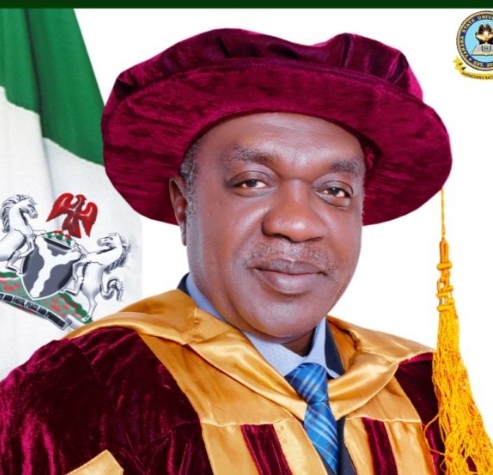
The Vice-Chancellor of Taraba State University, Sunday Bako, on Wednesday allayed the fears of Nigerian farmers over the reported cases of insecurity nationwide.
Bako made the remarks during an interview with newsmen on the sidelines of the ongoing 2025 In-House Research Review of the Cocoa Research Institute of Nigeria, held at the institute’s premises, Idi-Ayunre, Ibadan, in the Oluyole Local Government Area of Oyo State.
He advised farmers to return to their farms, especially during this rainy season, to make food produce more available for the teeming Nigerian population.
The VC described their experiences as a phase that would soon pass, saying, “Nigerian farmers will smile again.

So This Happened (EP310) Reviews Oshiomhole, Air Peace and The Missed Flight Saga0:00 / 0:00
“Nigerian farmers should be very hopeful with the current policies being put in place by the Federal Government. There is hope, and the farmers will smile again.”
Bako said the policies, aimed at supporting farmers generally, focus on increasing agricultural production, improving farmers’ livelihoods, and ensuring food security in Nigeria.
The Executive Director of CRIN, Patrick Adebola, had earlier explained that the yearly in-house review was a day set aside to inform the major stakeholders (farmers) in the sector about the direction of the institute for that year.

“The yearly in-house review is a day set aside to tell our major stakeholders, mainly the farmers, the direction of our research. You cannot do research in isolation. You have to involve farmers so that they can tell you where the shoe pinches most, and that shapes the direction of our research.
“So, it is very important to call our stakeholders every year, showcase the type of research we want to carry out, so they can contribute and guide us on where our research should focus,” he said.
Adebola lamented that lack of funding was the major challenge affecting research institutes in Nigeria.
He further stressed that research institutes were failing because they lacked the capacity to obtain enough seedlings.
“These are economic crops that can transform the Nigerian economy. We know what is happening now — everybody is shying away from oil, and the only alternative is to go back to the land, to go back to the farm. Let’s focus on plantations and crops, which will bring economic benefits, uplift farmers, and transform their livelihoods,” he added.
In his keynote address themed, “Advances in Varietal Development of Cocoa, Kola, Cashew, Coffee and Tea for Sustainable Economic Growth,” the National President of the Cocoa Farmers Association of Nigeria, Adeola Adegoke, said these crops, traditionally seen as economic commodities, have now emerged as powerful instruments for socio-economic transformation and environmental sustainability.
Adegoke, who is also the Global President of the Cocoa Farmers Alliance of Africa, explained that these crops not only enhance rural livelihoods and contribute significantly to Nigeria’s GDP and foreign exchange but also regenerate soils, enhance biodiversity, and build climate resilience.
He said, “These perennial crops when integrated into agroforestry systems, improve soil structure, increase organic matter, and offer long-term carbon sequestration potential.
“The Nigerian agenda to upscale our cocoa production from the present 280,000–300,000 metric tonnes to 500,000 metric tonnes in the next two years must have led President Bola Tinubu and the Federal Executive Council’s approval for the creation of the National Cocoa Management Board.
“This is to establish an institution that will regulate, support, develop, and promote the Nigerian cocoa industry along sustainable practices, without the board being involved in cocoa buying and selling.”
He therefore urged Nigerians to embrace the opportunity to transform the nation’s agricultural systems into engines of green growth, social justice, and global leadership.
Punchng.com
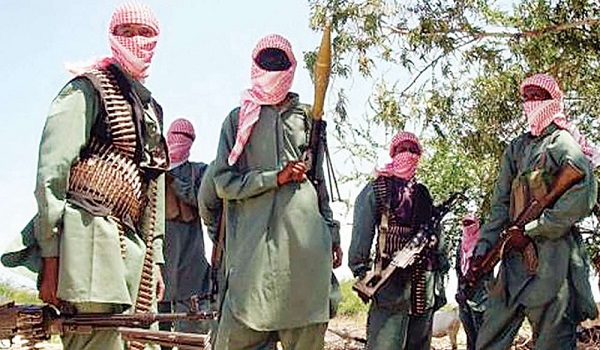
Tension and sorrow have gripped the Iluke Bunu community in Kogi State following a deadly bandit attack that reportedly claimed the life of the Vice Principal of Government Secondary School, Iluke.
According to reports, the victim, identified as Mr. Gani Anifowose, was brutally killed on Wednesday morning during an attack carried out by armed bandits.
Residents said the community is currently facing heightened security concerns, with fear and panic spreading across the area.
In another disturbing development, reports indicate that students from three neighbouring communities, who were scheduled to sit for the English Language WAEC examination on the same day, were allegedly abducted amid the worsening insecurity in the region.
The incidents have raised fresh concerns over the safety of students, teachers, and residents in vulnerable communities across Kogi State.
A representative of the community association called on security agencies and relevant authorities to urgently intensify efforts to restore peace, secure the affected communities, and ensure the safe return of the abducted victims.
“An hour is gone and no sign of rescue efforts from the security agencies despite placing several calls for help. We urge citizens to remain calm and continue praying for divine intervention, protection, and lasting peace in our communities.”
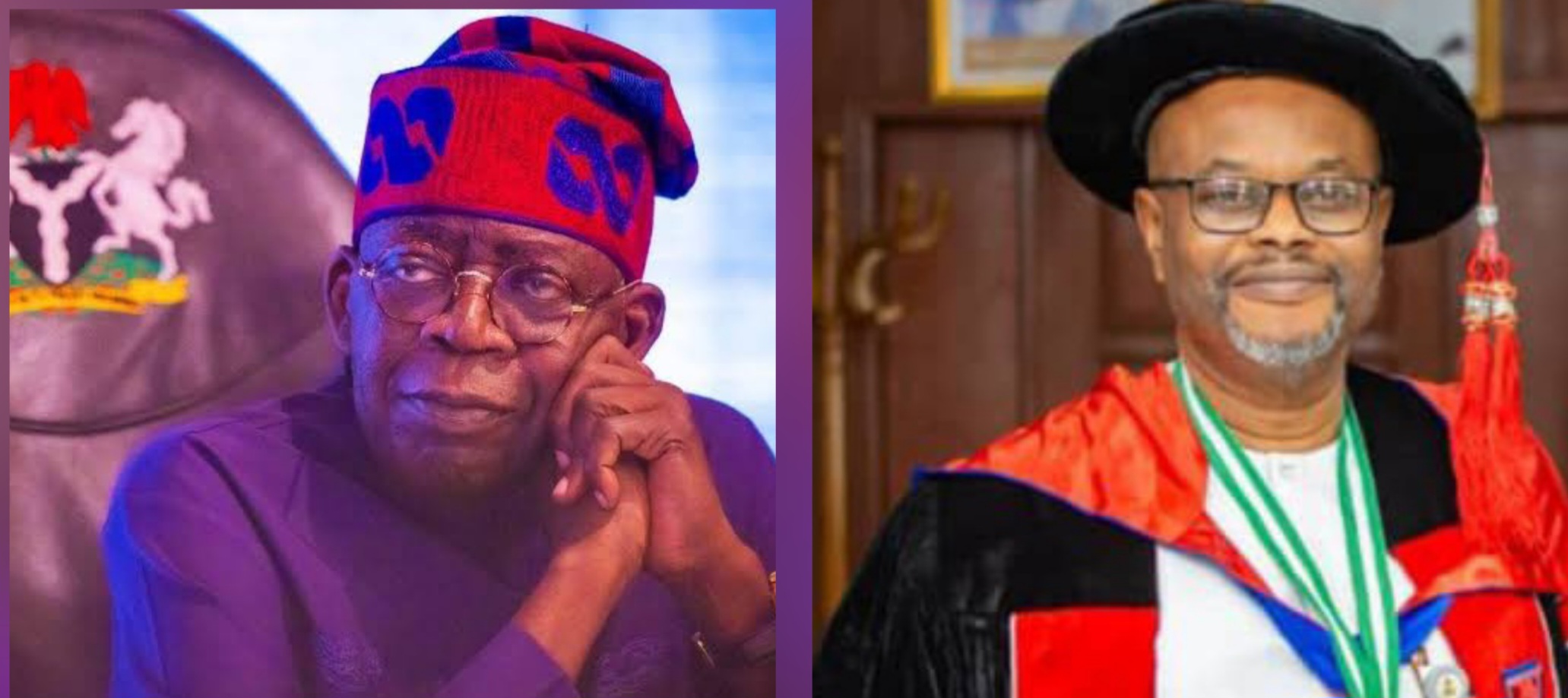
The Independent Corrupt Practices and Other Related Offences Commission (ICPC) has reportedly stepped up its investigation into former Minister of Innovation, Science and Technology, Uche Nnaji, over allegations of certificate forgery.
According to a report by Premium Times, the anti-graft agency has begun efforts to locate the former minister after he allegedly failed to honour several invitations issued in connection with the ongoing investigation.
The publication reported that sources familiar with the matter said the ICPC had invited Nnaji for questioning through different channels, including telephone calls, emails and WhatsApp messages, but he did not appear before investigators.
One of the sources quoted by the newspaper claimed that the commission could declare the former minister wanted if attempts to secure his appearance are unsuccessful.
The latest development is said to be part of an investigation that followed a lengthy inquiry by Premium Times into Nnaji’s academic records and National Youth Service Corps (NYSC) documents.
The newspaper had earlier alleged that the former minister submitted forged degree and NYSC certificates during his ministerial screening and confirmation process in 2023.
According to the report, the ICPC has also sought information from the University of Nigeria, Nsukka (UNN), as part of its investigation.
Another source cited by Premium Times alleged that Nnaji’s failure to respond to the invitations may be linked to his political ambitions ahead of the 2027 governorship election in Enugu State.
The newspaper recently reported that the former minister moved from the All Progressives Congress (APC) to a faction of the Peoples Democratic Party (PDP) and later emerged as its governorship candidate.
Neither Nnaji nor his media aide, Robert Ngwu, had publicly responded to the latest allegations as of the time of filing this report. Premium Times said calls and messages sent to his spokesperson were not answered.
The controversy surrounding the former minister began after investigations into his academic qualifications were published in 2023.
According to the newspaper, Nnaji had approached the Federal High Court in Abuja in a bid to stop the release of his academic records by the University of Nigeria, Nsukka.
However, Premium Times reported that university authorities later informed the newspaper that although Nnaji was admitted into the institution, he did not graduate or obtain the certificate attributed to him.
The publication also stated that the National Youth Service Corps disowned the discharge certificate allegedly presented by the former minister.
Nnaji eventually resigned from his position shortly after the allegations became public.
The matter has continued to attract public attention, with several lawyers and civil society groups calling for a thorough investigation and, where necessary, prosecution in line with the law.
In a related development, POLITICS NIGERIA also reported earlier this year that an investigative panel set up by the Federal Ministry of Education examined the matter as part of a broader review of the allegations surrounding the former minister’s credentials.
The ICPC has yet to release an official public statement detailing the current status of its investigation
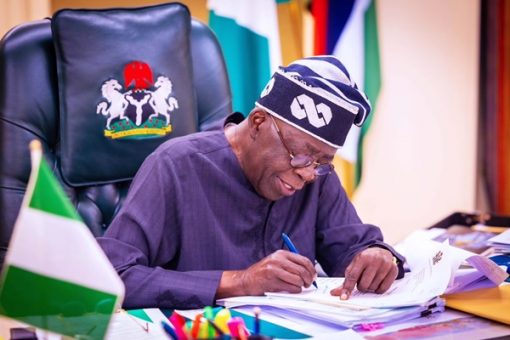
Nigeria’s Ministry of Interior is set to declare a nationwide public holiday across all sectors to mark Democracy Day 2026, potentially granting a one-day break for both private and public sector employees.
The federal government’s announcement regarding Democracy Day will be the only national public holiday observed in Nigeria in June 2026.
Democracy Day commemorates the 1993 presidential election and the nation’s struggle for democratic freedom. June 12, 2026, falls on a Friday.
On June 6, 2018, the late former president Muhammadu Buhari, in a public statement, changed the Democracy Day from May 29 to June 12, in honour of the June 12, 1993, presidential election and its winner, Moshood Kashimawo Olawale Abiola, who died in prison.
Abiola was born on August 14, 1937 and passed away under suspicious circumstances on July 7, 1998. A popular Ogun businessman, publisher, and politician of the Egba clan, he is often referred to as MKO Abiola.
He ran for the presidency in 1993 and was widely regarded as the presumed winner of the election, which was annulled by former military head of state, General Ibrahim Babangida.
Some southwest states had been celebrating June 12 as a public holiday and are holding ceremonies in Abiola’s honour until Buhari officially declared the day as Nigeria’s real democracy day. The former president, on Monday, June 10, 2018, signed the Public Holiday Amendment Bill into law.
The law, according to the former president’s ex-senior special assistant on National Assembly Matters (Senate), Ita Enang, allows a public holiday to be declared on June 12 every year, while May 29 is to be a handing-over date.


Filling Stations Adjust Petrol Prices Again as New Landing Cost Emerges

Bandits Strike Again, Kill Vice Principal in Fresh School Attack

BREAKING: Court Takes Action on APC Primaries

Former Super Eagles Star Loses Life Savings, Duped By A Pastor of ₦1.2 Billion

I’m A Married Man, I Can Never Get Myself Involved With Such A Thing, Delta Gov Aide Reveals Why He Offered Comfort ₦500,000 Job

Lagos Imposes ₦250,000 Fine For Illegal Waste Disposal

-
 Politics1 day ago
BREAKING: Kwankwaso Breaks Silence on Dumping NDC
-
 News22 hours ago
FG to Declare Nationwide Public Holiday, Date Revealed
-

 Business1 day ago
JUST IN: Marketers Crash Petrol Prices Nationwide, New Pump Prices Emerge
-

 News1 day ago
BREAKING: Top Nigerian Emir is Dead, Details Emerge
-
 News4 hours ago
Bandits Strike Again, Kill Vice Principal in Fresh School Attack
-
 Politics4 hours ago
BREAKING: Court Takes Action on APC Primaries
-

 News8 hours ago
BREAKING: Tinubu’s Ex-Minister in Trouble Over Certificate Scandal
-
News2 days ago
BREAKING: Tinubu Swears In Two New Ministers