
Foreign
“Millions Of Drones” Needed For European Defense, Says EU

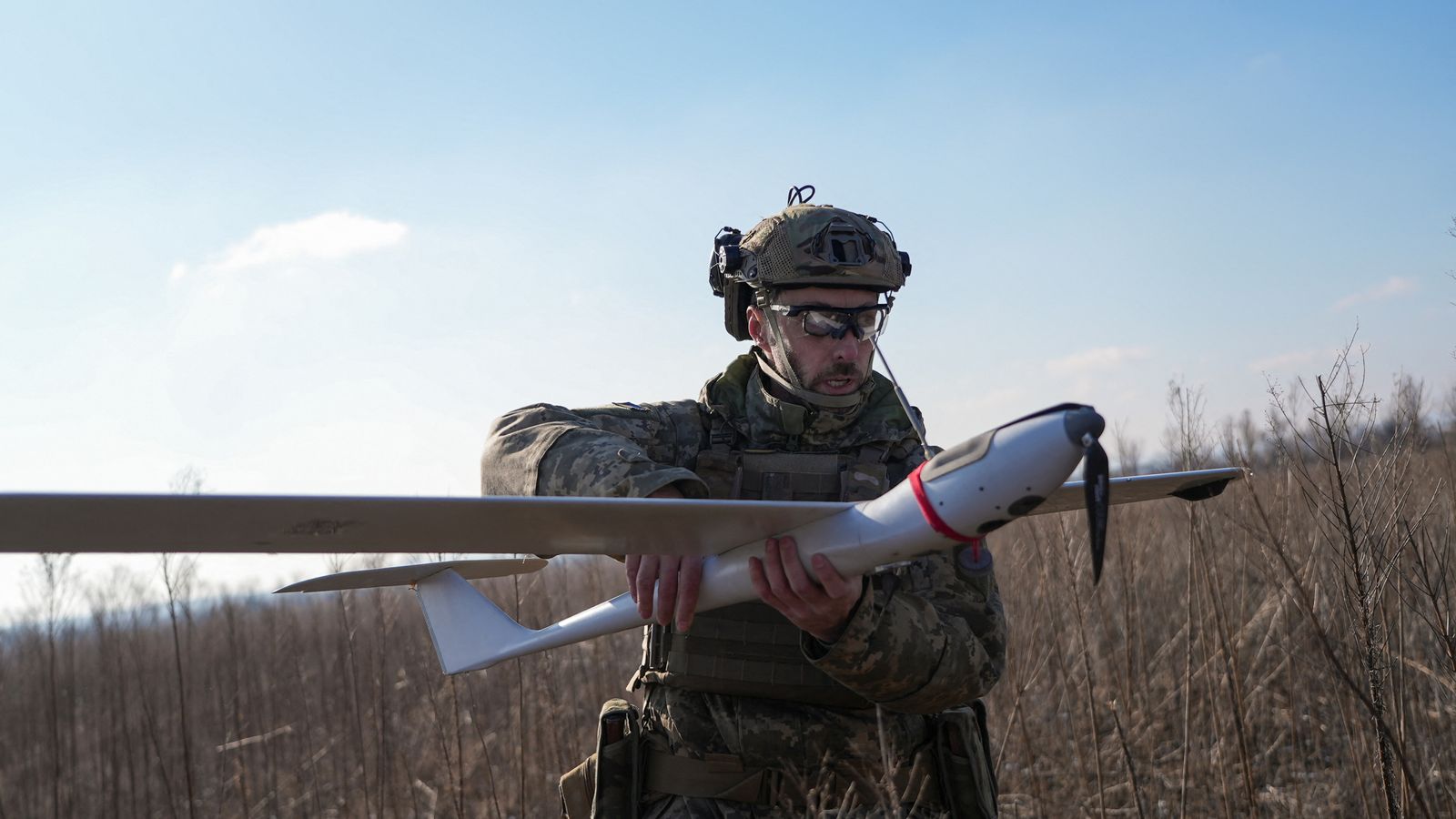
EU defence commissioner Andrius Kubilius says Europeans will require millions of drones to create an “army” and they need to start preparing now.
The European Union’s defence commissioner has warned Europe must be capable of building a drone army in case Russia attacks.
Military intelligence has suggested Russian forces could be ready to strike a NATO country within the next five years.
In order to defend themselves, Andrius Kubilius says Europeans will require millions of drones and need to start preparing now.

“Russia can have around five million drones, so we need to have capacities bigger than those in order to prevail,” he told Sky News, warning that if President Putin ordered an attack, the target would face a “battle-tested” Russian army with the ability to use “millions of drones”.
The 2022 invasion of Ukraine sparked a revolution in drone warfare.
Facing one of the world’s strongest militaries, the Ukrainians used the cheap, adaptable technology to their advantage.
It estimates its drone units are now responsible for 80% of Russian frontline losses.

Mr Kubilius has visited Ukraine to learn the lessons from the battlefield.
Along the 1,200km (745 mile) front line is an area nicknamed “Death Valley”.
“Nothing can move. Everything is controlled by drones. A traditional tank in that zone survives six minutes,” he explained.
This year, Ukraine’s expected to produce more than four million drones.
Contemplating how many units other countries would need, the commissioner used the example of his home country of Lithuania.
The former Soviet republic shares a border of around 900km (559 miles) with Russia and Belarus.
“If Ukrainians need four million for 1,200km, we need something like three million drones for one year if the war is starting, if ‘Day X’ is coming,” he said.
To try to stay ahead in the fight, both Russia and Ukraine are constantly updating their drone technology.
For this reason, the commissioner believes that rather than stockpiling drones now, which will go out of date, Europe should instead build up teams of pilots, engineers, and producers ready to scale up production should the time come.
“On the European continent, at the moment, there are only two armies battle-tested with the ability to use millions of drones: one is Russian, which is planning new aggressions; another one is Ukrainian,” said Mr Kubilius.
“We need to learn a lot from Ukraine… how to organise defences against millions of drones, and also how to make your defence industry innovative,” he added.
It’s a point many in the business agree with.
German start-up STARK has been testing loitering munitions or “attack drones” ready to supply to Kyiv.
“It’s all made for easy handling for soldiers, so you don’t have to use any tools on the front line, and you just plug in the rudders,” said STARK’s senior vice president, Josef Kranawetvogl, as he quickly clicked the unit’s tail together.
He spent 18 years in the German military before making the jump to weapons production.
He says staying ahead of the enemy requires tactics and technology to be frequently updated.
“Every day you have to adapt. You have such fast development cycles in Ukraine – two or three weeks, then there’s something new upcoming and you have to be prepared for this.”
Since the start of June, Russia has repeatedly used drone swarms to attack Ukraine.
It involves hundreds of drones hammering cities in one night.
I asked Josef whether he believes NATO’s European members are ready to defend against such an attack.
“I see quite a lot of European armies starting right now to develop or to purchase unmanned systems, and it’s a good development, but it’s all about time. How can we speed up?” he replied.
Close to the border with France, another German start-up, Alpine Eagle, is testing defence drone units for Ukraine.
“This is our interceptor drone,” explained the company’s CEO, Jan-Hendrik Boelens, holding up a prototype which looks a bit like a small black plane. The interceptor is carried underneath a large grey drone.
On-board radar means it can be fired at enemy drones up to 5km (3 miles) away.
Jan thinks that could be a game changer in an aerial battle as it means hostile units could be picked off before they get close.
And he believes NATO is unprepared if one of its countries was to be hit by a wave of drones like those in Ukraine.
“We are absolutely not ready in my view,” he said.
He explained that Ukraine produced around 1.3 million drones a year last year.
“I would be surprised if NATO even bought a thousand drones last year. I think Germany procured, I don’t know, 100, maybe 200. So now you do the math on what that means and how quickly you run out of drones.
“If Ukraine consumed 1.3 million drones per year, that’s 3,000 a day. So, if you have 100 in your inventory, that would not last an hour.”
A spokesperson from the German Defence Ministry said the numbers stated “do not closely reflect reality”.
“Drones are now part of everyday life for soldiers, they are omnipresent and are used extensively in service operations and training,” they added.
Drones are a key part of NATO’s defence plan.
The alliance’s leadership has repeatedly said producing, procuring, and protecting against drones is a priority.
At the NATO summit, members agreed to boost defence spending to 5% of gross domestic product (GDP) by 2035.
In addition to increasing training and development, NATO Chief Mark Rutte has said he wants more investment in drone technology as well as boosting air defences fivefold.
“We see Russia’s deadly terror from the skies over Ukraine every day, and we must be able to defend ourselves from such attacks,” he told an audience at the summit.
Lessons from Ukraine have prompted members to embrace unmanned technology in various ways.
Britain is one of the countries pledging to put drones front and centre of its new defence plan.
Earlier this month, the UK government’s Strategic Defence Review outlined a new way forward for British Army warfighting based around a drone-centric 20-40-40 strategy in which uncrewed systems are deployed for first wave attacks, before tanks, attack helicopters and other manned platforms arrive on the battlefield.
In essence, the new weapons mix would be 20% traditional heavy platforms (like tanks), 40% single-use expendable drones and munitions, and the remaining 40% reusable, high-end drones.
It’s been confirmed that an extra £2bn will be spent on army drones this parliament.
Defence Secretary John Healey said Britain’s adversaries were working more in alliance and technology was changing how war was fought.
“Drones now kill more people than traditional artillery in the war in Ukraine and whoever gets new technology into the hands of their armed forces the quickest will win,” he said.
This week, the prime minister announced a deal with Ukraine to co-produce drones.
Germany and Denmark have made similar agreements with the German Ministry of Defence, telling Sky News that drones are a top priority.
In a drone showroom in central Berlin, we meet Sven Weizenegger, head of the German military’s cyber innovation hub.
He said they have noticed a boom in pitches from potential suppliers.
Every day, his department receives up to 20 enquiries from companies asking how their products could be used by the military.
He believes things need to move more quickly so soldiers get weapons faster.
“We are very advanced in the innovation process. That means we have a lot of ideas and many companies that are ready to deliver,” he explained. “Unfortunately, what we are not good at right now, due to our current processes, is getting these things into real operations, into frontline use. We need to fix that.”
Germany has promised to turbo-charge defence spending, with the Chancellor pledging to create the “strongest conventional army in Europe”.
Plans announced this week include boosting unmanned systems and air defences.
The German Ministry of Defence said it couldn’t reveal stock levels due to security, but a spokesperson confirmed the country is investing in a range of different units, including signing two contracts for attack drones.
“We are procuring not just a few but quite large quantities and testing them directly with the troops,” the spokesperson added.
However, they agreed with the EU defence commissioner that rather than stockpiling tech which would go out of date, it was better to have a system in place to allow for large quantities to be made quickly in the event of war.
In May, the EU approved a €150bn (£125bn) loan scheme to boost defence production across the bloc.
News.sky.com



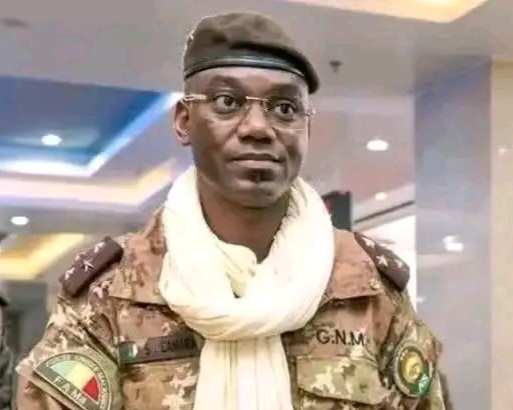
Mali’s Defence Minister, Sadio Camara, has been killed following a wave of coordinated attacks targeting military installations across the country.
Camara reportedly died from injuries sustained during an attack on his residence in Kati, a key military garrison town located about 15 kilometres from Bamako.
The assault, which occurred barely 24 hours before his death, involved a suicide car bomb and formed part of a broader offensive across the country.
The attacks were reportedly carried out by fighters linked to Jama’at Nusrat al-Islam wal-Muslimin, an al-Qaeda-affiliated group, alongside Tuareg rebels from the Liberation Front of Azawad.
According to Al Jazeera, the attackers were able to breach Kati, considered one of the most secure military locations in Mali.
Camara, a key figure in Mali’s military leadership, rose to prominence after playing a central role in the coups of 2020 and 2021 that brought the current junta to power.
Al Jazeera’s Nicolas Haque described his death as significant.
“He was one of the most influential figures within the ruling military leadership… His death is a major blow to the country’s armed forces,” he said.
The coordinated offensive extended beyond Kati, with gunmen attacking several locations including Bamako, Gao, Kidal and Sevare.
“As we speak, people in the garrison town of Kidal can still hear heavy gunfire and loud explosions,” Haque said, adding that the operation remained ongoing more than 24 hours after it began.
The attacks have intensified pressure on Mali’s interim leadership, with analysts suggesting that security forces were overwhelmed by the scale and coordination of the violence.
However, Interim President, Assimi Goita, was reportedly moved to safety and remains in control of the military.
International bodies, including the African Union, the Organisation of Islamic Cooperation, and the United States Bureau of African Affairs, have condemned the attacks and called for urgent measures to restore stability.

President Bola Tinubu has declared Nigeria’s support for countries in the Gulf region following rising tension linked to the ongoing conflict involving the United States, Israel, and Iran.
Naija News reports that he made this known in Abuja during a formal ceremony where he received letters of credence from several foreign diplomats. The event had representatives from countries such as Qatar and Saudi Arabia, alongside envoys from Lebanon, Sudan, Namibia, Rwanda, Somalia, Argentina, and Congo.
During the meeting, the president assured the visiting diplomats that Nigeria stands with nations in the Gulf, including the United Arab Emirates, Saudi Arabia, Qatar, Kuwait, Bahrain, Oman, and Jordan. He praised their calm approach in handling the situation and stressed the need for peace across the region.
Tinubu described the diplomatic gathering as an important step in strengthening Nigeria’s relationship with other countries. He encouraged the envoys to build stronger partnerships with Nigeria that would benefit both sides.
He also spoke about his government’s economic direction, saying efforts are being made to position Nigeria as an attractive destination for investors. He pointed out opportunities in areas like infrastructure, economic growth, and diaspora involvement, inviting the diplomats to explore these sectors.
On regional matters, the president restated Nigeria’s role in the Economic Community of West African States, especially in maintaining democratic order, improving trade among member states, and addressing instability in the Sahel region.
Tinubu further noted that global issues such as climate change, energy challenges, terrorism, and unfair financial systems require countries to work together.
He said Nigeria is ready to cooperate with other nations both directly and through international platforms to promote a safer and fairer global system.

According to a report by Telegraph, on Thursday April 23, 2026, Israel’s defence minister has declared the country stands prepared to resume military operations against Iran, but only upon receiving authorisation from the Trump administration, as tensions between the two nations continue to simmer beneath a fragile ceasefire.
The statement came amid fresh alarm in the Iranian capital on [date], after Iranian state media reported that explosions were heard above Tehran and air defence systems were activated across the city. The developments immediately triggered speculation of a new Israeli strike, drawing swift attention from regional observers and international monitors tracking the volatile situation.
However, a source within the Israeli military moved quickly to dismiss those claims. Speaking to Israeli outlet Ynet, the source firmly stated that Israel had not carried out any attacks on Iran, offering a direct contradiction to the wave of concern that had swept through diplomatic circles following the reports from Tehran.
A ceasefire between the two countries has been in effect since April 8, and Israeli officials have so far indicated no public breach of that agreement. Despite this, the defence minister’s earlier remarks have raised serious questions about how durable that truce remains, particularly given its apparent dependency on political decisions emanating from Washington.
The reference to a required “green light” from the Trump administration underscores the degree to which Israeli military calculations are now intertwined with American foreign policy direction. Analysts note that this framing places significant weight on Washington’s posture toward Tehran, effectively making U.S. political will a trigger mechanism for potential renewed hostilities in the region.
Iran has not officially responded to the Israeli defence minister’s statement at the time of reporting. The sounds heard over Tehran, while alarming to residents and regional watchers, remain unexplained by Iranian authorities beyond initial media reports of activated air defences.
The situation reflects the precarious nature of the current ceasefire, with both nations maintaining high military readiness even as formal hostilities remain paused. Observers warn that the combination of unexplained aerial activity and bellicose ministerial language represents a dangerous mix that could rapidly destabilise the existing arrangement.


Political Twist: Nigerians React as NDC Gives Key Appointment to Peter Obi’s Popular Critic

Tragedy as Adeleke Dies On Official Assignment in Switzerland

BREAKING: Femi Falana, Others Announce Date for Nationwide Protest Over Insecurity, Hunger

Former Super Eagles Star Loses Life Savings, Duped By A Pastor of ₦1.2 Billion

I’m A Married Man, I Can Never Get Myself Involved With Such A Thing, Delta Gov Aide Reveals Why He Offered Comfort ₦500,000 Job

Lagos Imposes ₦250,000 Fine For Illegal Waste Disposal

-

 News2 days ago
FG to Declare Nationwide Public Holiday, Date Revealed
-
 News22 hours ago
Bandits Strike Again, Kill Vice Principal in Fresh School Attack
-
 News2 days ago
BREAKING: Top Nigerian Emir is Dead, Details Emerge
-

 Politics22 hours ago
BREAKING: Court Takes Action on APC Primaries
-

 Business18 hours ago
Filling Stations Adjust Petrol Prices Again as New Landing Cost Emerges
-

 News1 day ago
BREAKING: Tinubu’s Ex-Minister in Trouble Over Certificate Scandal
-

 Politics2 days ago
BREAKING: INEC Updates Portal, Lists New PDP National Executives
-
Health4 hours ago
Tragedy as Adeleke Dies On Official Assignment in Switzerland