
Foreign
Analysts: Israel-Iran Conflict Exposes China’s “Limited Leverage”

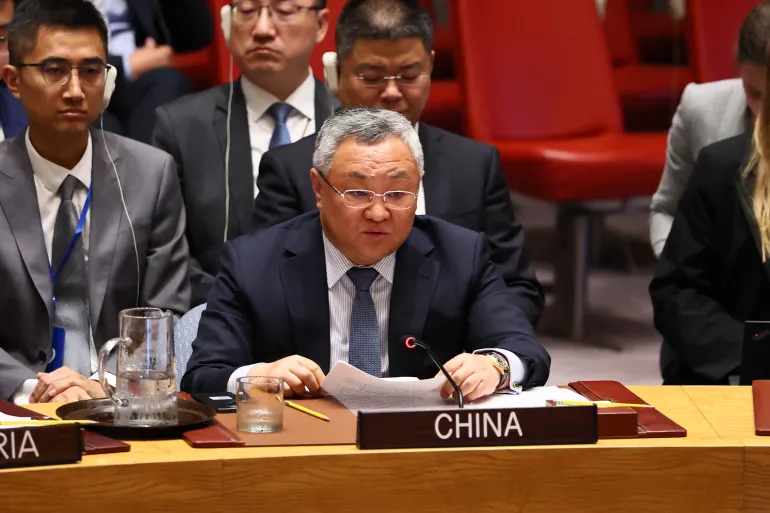
China called for a ceasefire. But despite its recent history of mediation in the region, its role was limited this time.
Through the 12 days of the recent Israel-Iran conflict, China moved quickly to position itself as a potential mediator and voice of reason amid a spiralling regional crisis.
The day after Israel’s unprovoked attack on Iran on June 13, Beijing reached out to both sides to express its desire for a mediated solution even as the country’s top diplomat, Foreign Minister Wang Yi, condemned Israel’s actions as a violation of international law.
Chinese President Xi Jinping soon followed with calls for de-escalation, while at the United Nations Security Council, China joined Russia and Pakistan in calling for an “immediate and unconditional ceasefire”.

When Iran threatened to blockade the strategically important Strait of Hormuz, through which 20 percent of the world’s oil passes, Beijing was also quick to speak out.
The Ministry of Foreign Affairs instead called for the “international community to step up efforts to de-escalate conflicts and prevent regional turmoil from having a greater impact on global economic development”.
Beijing’s stance throughout the conflict remained true to its longstanding noninterference approach to foreign hostilities. But experts say it did little to help shore up its ambition of becoming an influential player in the Middle East, and instead exposed the limitations of its clout in the region.
Why China was worried
Unlike some countries, and the United States in particular, China traditionally approaches foreign policy “through a lens of strategic pragmatism rather than ideological solidarity”, said Evangeline Cheng, a research associate at the National University of Singapore’s Middle East Institute.

This approach means China will always focus on protecting its economic interests, of which it has many in the Middle East, Cheng told Al Jazeera.
China has investments in Israel’s burgeoning tech sector and its Belt and Road infrastructure project spans Iran, Saudi Arabia, Qatar, Oman, Kuwait, Iraq, Egypt and the United Arab Emirates.
Critically, China relies on the Middle East for more than half of its crude oil imports, and it’s the top consumer of Iranian oil. A protracted war would have disrupted its oil supplies, as would an Iranian blockade of the strategically important Strait of Hormuz – something threatened by Tehran’s parliament during the conflict.
“War and security instability not only undermines Chinese investment and trade and business… but also the oil price and gas energy security in general,” said Alam Saleh, a senior Lecturer in Iranian Studies at the Australian National University.
“Therefore, China seeks stability, and it disagrees and opposes any kind of military solution for any type of conflict and confrontations, no matter with whom,” he said.
John Gong, a professor of economics at the University of International Business and Economics in Beijing, told Al Jazeera that China’s top concern through the conflict was to avoid “skyrocketing oil prices” that would threaten its energy security.
Flexing diplomatic muscle, protecting economic might
Aware of China’s friendly relations with Iran and Beijing’s economic fears, US Secretary of State Marco Rubio called on Beijing to keep Tehran from closing the Strait of Hormuz as ceasefire negotiations stumbled forward this week.
It was a brief moment of acknowledgement of Beijing’s influence, but experts say China’s overall diplomatic influence remains limited.
“China’s offer to mediate highlights its desire to be seen as a responsible global player, but its actual leverage remains limited,” Cheng said. “Without military capabilities or deep political influence in the region, and with Israel wary of Beijing’s ties to Iran, China’s role is necessarily constrained.”
To be sure, Beijing has demonstrated its ability to broker major diplomatic deals in the region. In 2023, it mediated the normalisation of relations between Iran and Saudi Arabia. While seen as a huge diplomatic win for China, experts say Beijing owed much of its success to fellow mediators, Oman and Iraq. China also mediated an agreement between Palestinian factions, including Hamas and Fatah, in July 2024, under which they committed to working together on Gaza’s governance after the end of Israel’s ongoing war on the enclave.
But William Yang, a senior analyst for Northeast Asia at the Brussels-based International Crisis Group, said the odds were stacked against China from the beginning of the latest conflict due to Israel’s wariness towards its relationship with Iran.
In 2021, China and Iran signed a 25-year “strategic partnership”, and Iran is an active participant in the Belt and Road project. Iran has also joined the Beijing-led Shanghai Cooperation Organisation and this year took part in China’s “Maritime Security Belt” naval exercises.
Iran’s “resolute opposition to American hegemony” also aligns well with China’s diplomatic interests more broadly, compared with Israel’s close ties to the US, Yang said.
China’s dilemma
It’s a scenario that could be repeated in the future, he said.
“This case also reinforces the dilemma that China faces: while it wants to be viewed as a great power that is capable of mediating in major global conflicts, its close relationship with specific parties in some of the ongoing conflicts diminishes Beijing’s ability to play such a role,” Yang said.
For now, Beijing will continue to rely on the US as a security guarantor in the region, he added.
“It’s clear that China will continue to focus on deepening economic engagement with countries in the Middle East while taking advantage of the US presence in the region, which remains the primary security guarantor for regional countries,” Yang said.
“On the other hand, the US involvement in the conflict, including changing the course of the war by bombing Iranian nuclear sites, creates the condition for China to take the moral high ground in the diplomatic sphere and present itself as the more restrained, calm and responsible major power,” he said.
Aljazeera.com


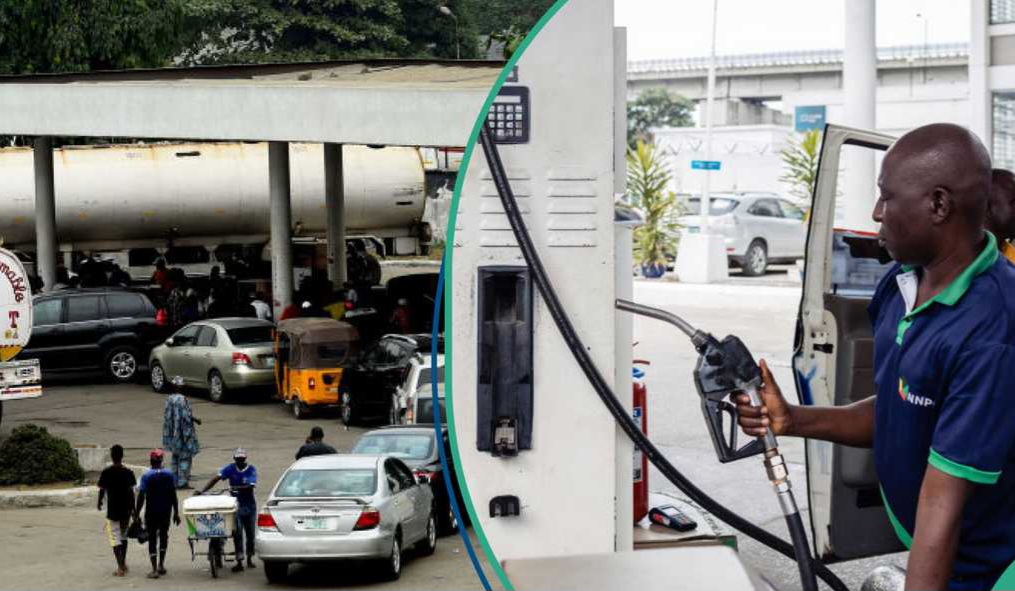
The cost of importing petrol into Nigeria dropped sharply following the recent decline in global crude oil prices, creating fresh competition for local refiners, including the $20 billion Dangote Refinery.
New data released by the Major Energy Marketers Association of Nigeria (MEMAN) showed that the landing cost of imported Premium Motor Spirit (PMS), also known as petrol, had fallen to N1,117 per litre as of June 4, 2026.
The figure was significantly lower than Dangote Refinery’s gantry price of N1,250 per litre, leaving a difference of N133 per litre.
Meanwhile, Nigeria’s fuel market is facing renewed uncertainty after the Dangote Refinery reportedly reduced petrol production, prompting fuel marketers to increase imports of cheaper products amid concerns over supply stability.
The development comes at a sensitive period for global energy markets, with rising crude oil prices and geopolitical tensions already putting pressure on fuel costs worldwide.
According to industry monitor IIR Energy, the Dangote Refinery has reduced operating rates at its key gasoline-producing unit, the Residual Fluid Catalytic Cracking Unit (RFCCU), by about 34%.
The reduction is linked to technical issues affecting the unit, which plays a major role in converting heavy crude residues into valuable products such as petrol, diesel and cooking gas.
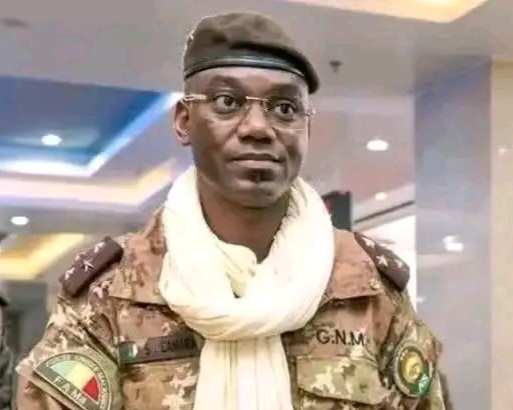
Mali’s Defence Minister, Sadio Camara, has been killed following a wave of coordinated attacks targeting military installations across the country.
Camara reportedly died from injuries sustained during an attack on his residence in Kati, a key military garrison town located about 15 kilometres from Bamako.
The assault, which occurred barely 24 hours before his death, involved a suicide car bomb and formed part of a broader offensive across the country.
The attacks were reportedly carried out by fighters linked to Jama’at Nusrat al-Islam wal-Muslimin, an al-Qaeda-affiliated group, alongside Tuareg rebels from the Liberation Front of Azawad.
According to Al Jazeera, the attackers were able to breach Kati, considered one of the most secure military locations in Mali.
Camara, a key figure in Mali’s military leadership, rose to prominence after playing a central role in the coups of 2020 and 2021 that brought the current junta to power.
Al Jazeera’s Nicolas Haque described his death as significant.
“He was one of the most influential figures within the ruling military leadership… His death is a major blow to the country’s armed forces,” he said.
The coordinated offensive extended beyond Kati, with gunmen attacking several locations including Bamako, Gao, Kidal and Sevare.
“As we speak, people in the garrison town of Kidal can still hear heavy gunfire and loud explosions,” Haque said, adding that the operation remained ongoing more than 24 hours after it began.
The attacks have intensified pressure on Mali’s interim leadership, with analysts suggesting that security forces were overwhelmed by the scale and coordination of the violence.
However, Interim President, Assimi Goita, was reportedly moved to safety and remains in control of the military.
International bodies, including the African Union, the Organisation of Islamic Cooperation, and the United States Bureau of African Affairs, have condemned the attacks and called for urgent measures to restore stability.
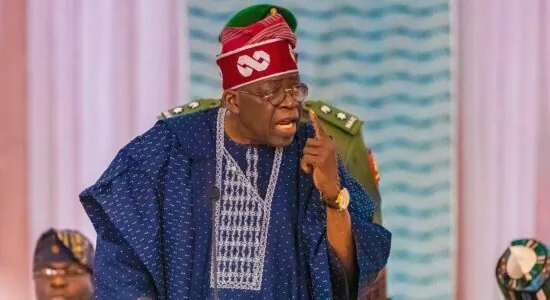
President Bola Tinubu has declared Nigeria’s support for countries in the Gulf region following rising tension linked to the ongoing conflict involving the United States, Israel, and Iran.
Naija News reports that he made this known in Abuja during a formal ceremony where he received letters of credence from several foreign diplomats. The event had representatives from countries such as Qatar and Saudi Arabia, alongside envoys from Lebanon, Sudan, Namibia, Rwanda, Somalia, Argentina, and Congo.
During the meeting, the president assured the visiting diplomats that Nigeria stands with nations in the Gulf, including the United Arab Emirates, Saudi Arabia, Qatar, Kuwait, Bahrain, Oman, and Jordan. He praised their calm approach in handling the situation and stressed the need for peace across the region.
Tinubu described the diplomatic gathering as an important step in strengthening Nigeria’s relationship with other countries. He encouraged the envoys to build stronger partnerships with Nigeria that would benefit both sides.
He also spoke about his government’s economic direction, saying efforts are being made to position Nigeria as an attractive destination for investors. He pointed out opportunities in areas like infrastructure, economic growth, and diaspora involvement, inviting the diplomats to explore these sectors.
On regional matters, the president restated Nigeria’s role in the Economic Community of West African States, especially in maintaining democratic order, improving trade among member states, and addressing instability in the Sahel region.
Tinubu further noted that global issues such as climate change, energy challenges, terrorism, and unfair financial systems require countries to work together.
He said Nigeria is ready to cooperate with other nations both directly and through international platforms to promote a safer and fairer global system.


Shock, Tears as Serving Federal Lawmaker Dies (VIDEO)

BREAKING: Atiku Picks Running Mate for 2027 Election

Relief as Marketers Release Cheaper Petrol Prices Nationwide

Former Super Eagles Star Loses Life Savings, Duped By A Pastor of ₦1.2 Billion

I’m A Married Man, I Can Never Get Myself Involved With Such A Thing, Delta Gov Aide Reveals Why He Offered Comfort ₦500,000 Job

Lagos Imposes ₦250,000 Fine For Illegal Waste Disposal

-
 Politics17 hours ago
BREAKING: Atiku Picks Running Mate for 2027 Election
-
 Health2 days ago
Tragedy as Adeleke Dies On Official Assignment in Switzerland
-

 News2 days ago
BREAKING: Femi Falana, Others Announce Date for Nationwide Protest Over Insecurity, Hunger
-
 Politics1 day ago
2027 Elections: Former Governor Finally Speaks on Dumping ADC
-
 News1 day ago
Tinubu Government Declares One-Day Public Holiday, DETAILS
-

 Politics2 days ago
Political Twist: Nigerians React as NDC Gives Key Appointment to Peter Obi’s Popular Critic
-
News1 day ago
Fresh Crisis as 34 ADC Aspirants Resign; Announce New Party
-
 Foreign19 hours ago
Relief as Marketers Release Cheaper Petrol Prices Nationwide