
Business
Analysis: Tinubu’s Tax Bills & Nigeria’s Economic Future


On Thursday, President Bola Tinubu is expected to sign into law four sweeping tax reform bills aimed at overhauling Nigeria’s complex and inefficient revenue system.
According to the Presidency, these reforms mark a significant milestone in the country’s fiscal history and are poised to reshape the tax landscape for both individuals and businesses.
The bills: the Nigeria Tax Bill, the Nigeria Tax Administration Bill, the Nigeria Revenue Service (Establishment) Bill, and the Joint Revenue Board (Establishment) Bill, have been in the works for several months and were passed by the National Assembly after consultations with stakeholders across the public and private sectors.
Bayo Onanuga, Special Adviser to the President on Information and Strategy, confirmed the development in a statement on Wednesday evening, describing the reforms as “transformational.”

The bills will be signed into law at the Presidential Villa in Abuja in the presence of several high-ranking officials. Dignitaries expected include Senate President Godswill Akpabio, House Speaker Tajudeen Abbas, and Finance Minister Wale Edun, among others. The inclusion of governors and revenue committee leaders underlines the multi-tiered cooperation the reforms are meant to foster.
What the New Laws Aim to Do
At the heart of these reforms is a mission to modernize tax administration, streamline revenue collection, and encourage compliance. Each bill carries distinct goals:
- Nigeria Tax Bill (Ease of Doing Business):
This bill consolidates Nigeria’s fragmented and often contradictory tax laws into a single statute. The aim is to reduce the multiplicity of taxes and eliminate duplication, which has historically burdened businesses and discouraged compliance. The streamlined framework is expected to reduce the cost and complexity of doing business in Nigeria. - Nigeria Tax Administration Bill:
This legislation creates a harmonized legal and operational framework for tax administration across the federal, state, and local governments. By aligning tax processes nationwide, it intends to minimize bureaucratic inefficiencies and reduce conflict between different tiers of government over tax jurisdiction. - Nigeria Revenue Service (Establishment) Bill:
A key highlight of the reform package, this bill repeals the Federal Inland Revenue Service (FIRS) Act and establishes the Nigeria Revenue Service (NRS), a more autonomous and performance-driven national revenue agency. Its expanded mandate will include non-tax revenue collection, and it introduces a framework for transparency, accountability, and service delivery.
Joint Revenue Board (Establishment) Bill:
Designed to foster cooperation among federal, state, and local tax authorities, this bill creates a formal governance structure to oversee joint revenue efforts. Notably, it includes the creation of a Tax Appeal Tribunal and a Tax Ombudsman’s Office, both aimed at safeguarding taxpayer rights and offering avenues for dispute resolution.

What It Means for Nigeria’s Economy
At a time when Nigeria faces dwindling oil revenues, mounting public debt, and inflationary pressures, the move to reform tax administration is both strategic and necessary. Here’s what the new tax framework could mean in practical terms:
1. Improved Revenue Generation
Nigeria’s tax-to-GDP ratio, which hovers below 10%, is among the lowest in Africa. By streamlining collection and cutting down on evasion and inefficiencies, the reforms could significantly raise government revenues without introducing new taxes. This would help finance critical infrastructure and social services, reducing reliance on external borrowing.
2. Ease of Doing Business
For years, businesses in Nigeria have had to navigate a web of overlapping and often arbitrary taxes. The consolidated tax bill aims to simplify this environment, which could attract both domestic and foreign investors. A predictable tax system lowers the cost of compliance and encourages formal sector participation, an essential ingredient for sustainable growth.
3. Federalism and Fiscal Coordination
The creation of a Joint Revenue Board and a harmonized tax administration framework signals an effort to improve intergovernmental coordination. Historically, states and the federal government have clashed over tax authority and allocation. A unified system can reduce duplication and friction while increasing the efficiency of public finance at all levels.
4. Institutional Reform and Accountability
By replacing the FIRS with the Nigeria Revenue Service, the government appears committed to modernizing tax collection through a performance-driven model. The inclusion of oversight mechanisms, such as the Tax Ombudsman, signals a shift toward a more transparent and accountable system that protects taxpayer rights.
5. Risks and Implementation Challenges
While the reforms are ambitious and laudable, implementation will be key. Without proper training, digital infrastructure, and cooperation among agencies, the new framework could falter. Also, taxpayer trust, especially among SMEs, remains low, and it will take sustained outreach and consistent results to shift public perception.
Is This A Path to Fairer Taxation?
For ordinary Nigerians, tax often feels more like punishment than participation. With the cost of living soaring, many worry about what reform means for them. The government insists these laws will not introduce new taxes but will instead make the system more efficient and equitable.
If implemented as planned, these reforms could reduce harassment from tax agents, bring clarity to payment obligations, and ensure that citizens see more visible returns on their contributions to the public purse.
The signing of these four tax bills represents a foundational shift in how Nigeria manages one of its most crucial levers of development: domestic revenue. While the path ahead may be fraught with institutional and logistical hurdles, the reforms offer a chance to reset the country’s tax narrative, from one of confusion and coercion to one of clarity, fairness, and growth.
Whether the government can translate intention into impact will determine whether these laws truly become the game-changers they promise to be.
Ripplesnigeria.com






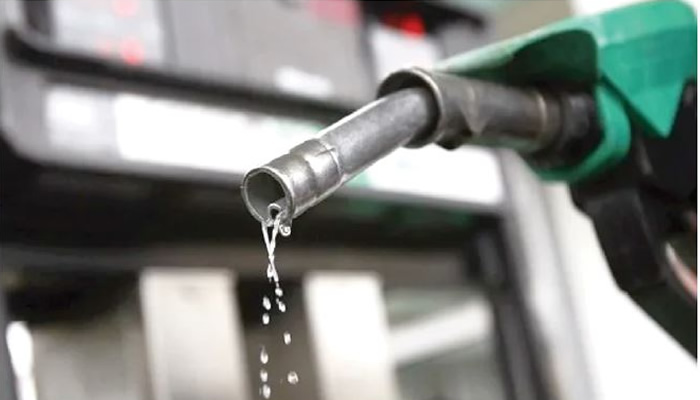
The cost of importing petrol into Nigeria has dropped sharply following the recent decline in global crude oil prices, creating fresh competition for local refiners, including the $20 billion Dangote Refinery.
New data released by the Major Energy Marketers Association of Nigeria (MEMAN) shows that the landing cost of imported Premium Motor Spirit (PMS), also known as petrol, has fallen to N1,117 per litre.
The figure is now significantly lower than Dangote Refinery’s gantry price of N1,250 per litre, leaving a difference of N133 per litre.
The development comes days after the mega refinery reduced its ex-depot petrol price from N1,275 to N1,250 per litre in response to changing market conditions.
The latest MEMAN pricing template suggests that fuel importers may now enjoy a competitive edge over domestic refiners as international crude prices continue to soften. Aside from petrol, the landing costs of other petroleum products also recorded notable declines.
According to the data, diesel landing cost dropped to N1,470 per litre, compared to Dangote Refinery’s price of N1,700 per litre. Aviation Turbine Kerosene (ATK), commonly known as aviation fuel, also fell to N1,426 per litre, while Dangote’s price remains N1,650 per litre.
MEMAN estimated the exchange rate for fuel imports at N1,366.85 per dollar, reflecting the prevailing official foreign exchange rate at the time of the calculation.
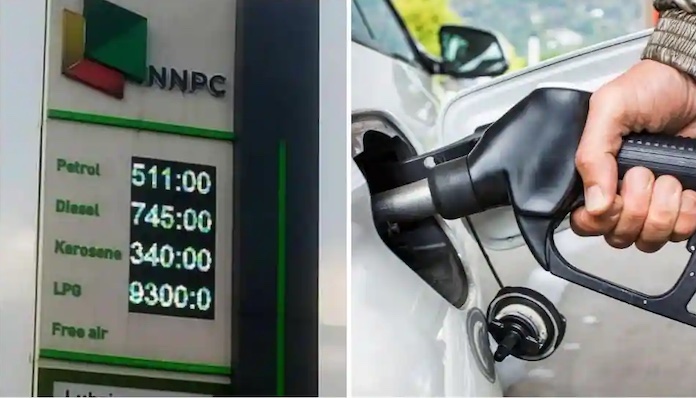
Some filling stations along the Lagos-Ibadan Expressway and in other locations across Lagos and Ogun states have reduced petrol prices below N1,300 per litre.
This follows a price cut announced by the Dangote Petroleum Refinery on Sunday.
The refinery adjusted its ex-depot gantry price of petrol down to N1,250 per litre from N1,275 per litre, while also slashing the price of diesel to N1,700 per litre from N1,800 per litre.
According to Dangote officials, the price review reflects a recent decline in global oil prices and reinforces the company’s commitment to making refined products more affordable while providing cost relief to Nigerian consumers and businesses.
Following the announcement, observations across the Mowe/Ibafo axis of the Lagos-Ibadan Expressway in Ogun State showed that several independent marketers immediately adjusted their pumps. For instance, MRS filling stations reduced their petrol pump price to N1,286 per litre, NIPCO and Heyden retailed the product at N1,290 per litre, and SGR adjusted its price to N1,297 per litre.
Reductions were also recorded in the diesel market, with many filling stations dropping their prices to N1,800 per litre from the previous N1,900 per litre.
Despite these downward adjustments, many retail outlets still sell petrol above the N1,300 mark. Outlets operated by the Nigerian National Petroleum Company Limited (NNPC) in Ibafo adjusted their pumps to N1,305 per litre, while Mobil and Asharami sold the product at N1,310 and N1,320 per litre, respectively.
The overall price drop comes after a prolonged period of high fuel costs in Nigeria, which saw petrol skyrocket from N830 per litre to over N1,300 after global crude oil climbed past $115 per barrel due to tensions between the United States and Iran.
Barely 24 hours after announcing a reduction in the price of premium motor spirit (PMS), commonly known as petrol, Dangote Refinery has adjusted its ex-depot price upward, joining several other fuel depot operators in responding to renewed volatility in the global oil market.
The latest development comes after the refinery had cut petrol prices twice within two days, lowering its ex-depot rate from N1,275 per litre to N1,250 per litre.
However, fresh market data now indicates a reversal of that trend as rising crude oil prices continue to influence domestic fuel pricing.
Industry observers attribute the latest increase to growing uncertainty in the international energy market, particularly concerns surrounding the Strait of Hormuz, a critical shipping route for global oil supplies.
Data from PetroleumPriceNG shows that Dangote Refinery increased its petrol price by 0.46 per cent to N1,256 per litre, up from N1,250 per litre announced earlier.
The refinery’s adjustment was mirrored by several major depot operators across the country. According to the data, AIPEC raised its petrol price to N1,252 per litre, while Ardova also fixed its rate at N1,252 per litre. Bulk Strategic and Liquid Bulk both increased their prices to N1,285 per litre.
The coordinated adjustments reflect growing concerns among marketers and depot operators over the rising cost of crude oil and the need to manage pricing risks.


Bandits Strike Again, Kill Vice Principal in Fresh School Attack

BREAKING: Court Takes Action on APC Primaries

BREAKING: Tinubu’s Ex-Minister in Trouble Over Certificate Scandal

Former Super Eagles Star Loses Life Savings, Duped By A Pastor of ₦1.2 Billion

I’m A Married Man, I Can Never Get Myself Involved With Such A Thing, Delta Gov Aide Reveals Why He Offered Comfort ₦500,000 Job

Lagos Imposes ₦250,000 Fine For Illegal Waste Disposal

-
 Politics1 day ago
BREAKING: Kwankwaso Breaks Silence on Dumping NDC
-

 News20 hours ago
FG to Declare Nationwide Public Holiday, Date Revealed
-

 Business1 day ago
JUST IN: Marketers Crash Petrol Prices Nationwide, New Pump Prices Emerge
-

 News1 day ago
BREAKING: Top Nigerian Emir is Dead, Details Emerge
-
 News2 hours ago
Bandits Strike Again, Kill Vice Principal in Fresh School Attack
-
 Politics2 hours ago
BREAKING: Court Takes Action on APC Primaries
-
News2 days ago
BREAKING: Tinubu Swears In Two New Ministers
-
 News6 hours ago
BREAKING: Tinubu’s Ex-Minister in Trouble Over Certificate Scandal