
Foreign
Uganda Election: Museveni Confirms Bid To Extend 40-Year Rule

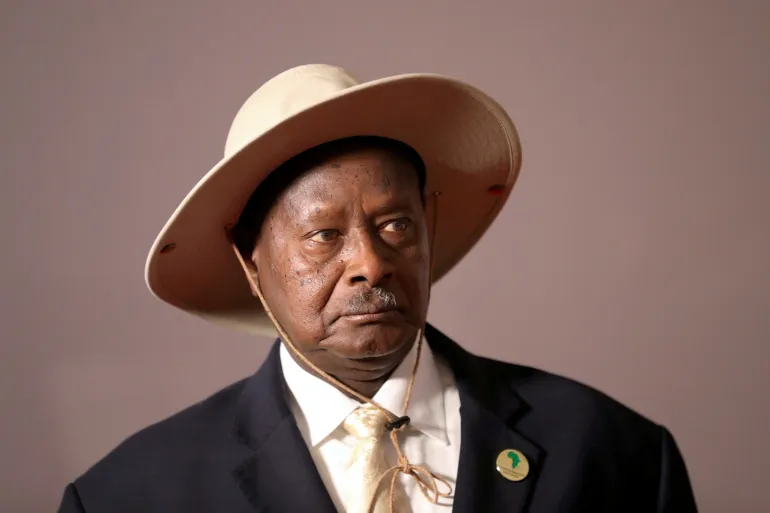
The 80-year-old leader pledges economic growth from today’s GDP of $66bn to $500bn within the next five years.
Ugandan President Yoweri Museveni has confirmed he will contest next year’s presidential election, setting the stage for a potential extension of his nearly 40-year rule.
The 80-year-old announced late on Saturday that he had expressed his interest “in running for … the position of presidential flag bearer” for his National Resistance Movement (NRM) party.
Museveni seized power in 1986 after a five-year civil war and has ruled ever since.

The NRM has altered the constitution twice to remove term and age limits, clearing the way for Museveni to extend his tenure.
Rights groups accused him of using security forces and state patronage to suppress dissent and entrench his power – claims he denies.
Museveni said he seeks re-election to transform Uganda into a “$500bn economy in the next five years”. According to government data, the country’s current gross domestic product stands at just under $66bn.
Ugandans are due to vote in January to choose a president and members of parliament.

Challenger
Opposition leader Bobi Wine, a pop star-turned-politician whose real name is Robert Kyagulanyi, has confirmed he will run again. Wine rejected the 2021 results, alleging widespread fraud, ballot tampering and intimidation by security forces.
Ugandan opposition leader Robert Kyagulanyi, also known as Bobi Wine, poses for a photograph after his press conference at his home in Magere, Uganda, on January 26, 2021. – Ugandan soldiers have stood down their positions around the residence of opposition leader Bobi Wine, a day after a court ordered an end to the confinement of the presidential runner-up. He had been under de-facto house arrest at his home outside the capital, Kampala, since he returned from voting on January 14, 2021.
Tensions have risen in recent months after parliament passed a law allowing military courts to try civilians, a practice the Supreme Court ruled unconstitutional in January.
The government insisted the change is necessary to tackle threats to national security, but rights organisations and opposition figures argued it is a tool to intimidate and silence critics.
Uganda for years has used military courts to prosecute opposition politicians and government critics.
In 2018, Wine was charged in a military court with illegal possession of firearms. The charges were later dropped.
Human Rights Watch (HRW) has criticised Uganda’s military courts for failing to meet international standards of judicial independence and fairness.
Oryem Nyeko, senior Africa researcher at HRW, said this year: “The Ugandan authorities have for years misused military courts to crack down on opponents and critics.”
Aljazeera.com
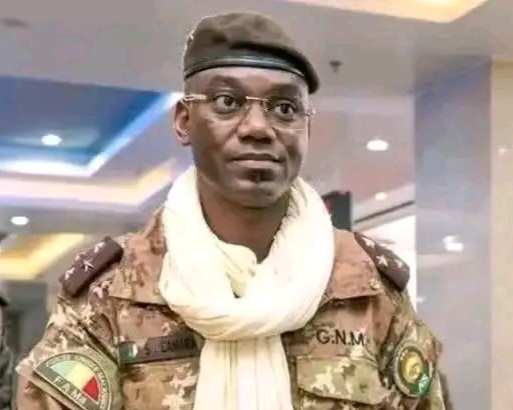
Mali’s Defence Minister, Sadio Camara, has been killed following a wave of coordinated attacks targeting military installations across the country.
Camara reportedly died from injuries sustained during an attack on his residence in Kati, a key military garrison town located about 15 kilometres from Bamako.
The assault, which occurred barely 24 hours before his death, involved a suicide car bomb and formed part of a broader offensive across the country.
The attacks were reportedly carried out by fighters linked to Jama’at Nusrat al-Islam wal-Muslimin, an al-Qaeda-affiliated group, alongside Tuareg rebels from the Liberation Front of Azawad.
According to Al Jazeera, the attackers were able to breach Kati, considered one of the most secure military locations in Mali.
Camara, a key figure in Mali’s military leadership, rose to prominence after playing a central role in the coups of 2020 and 2021 that brought the current junta to power.
Al Jazeera’s Nicolas Haque described his death as significant.
“He was one of the most influential figures within the ruling military leadership… His death is a major blow to the country’s armed forces,” he said.
The coordinated offensive extended beyond Kati, with gunmen attacking several locations including Bamako, Gao, Kidal and Sevare.
“As we speak, people in the garrison town of Kidal can still hear heavy gunfire and loud explosions,” Haque said, adding that the operation remained ongoing more than 24 hours after it began.
The attacks have intensified pressure on Mali’s interim leadership, with analysts suggesting that security forces were overwhelmed by the scale and coordination of the violence.
However, Interim President, Assimi Goita, was reportedly moved to safety and remains in control of the military.
International bodies, including the African Union, the Organisation of Islamic Cooperation, and the United States Bureau of African Affairs, have condemned the attacks and called for urgent measures to restore stability.
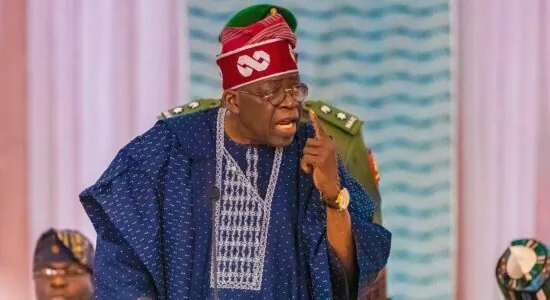
President Bola Tinubu has declared Nigeria’s support for countries in the Gulf region following rising tension linked to the ongoing conflict involving the United States, Israel, and Iran.
Naija News reports that he made this known in Abuja during a formal ceremony where he received letters of credence from several foreign diplomats. The event had representatives from countries such as Qatar and Saudi Arabia, alongside envoys from Lebanon, Sudan, Namibia, Rwanda, Somalia, Argentina, and Congo.
During the meeting, the president assured the visiting diplomats that Nigeria stands with nations in the Gulf, including the United Arab Emirates, Saudi Arabia, Qatar, Kuwait, Bahrain, Oman, and Jordan. He praised their calm approach in handling the situation and stressed the need for peace across the region.
Tinubu described the diplomatic gathering as an important step in strengthening Nigeria’s relationship with other countries. He encouraged the envoys to build stronger partnerships with Nigeria that would benefit both sides.
He also spoke about his government’s economic direction, saying efforts are being made to position Nigeria as an attractive destination for investors. He pointed out opportunities in areas like infrastructure, economic growth, and diaspora involvement, inviting the diplomats to explore these sectors.
On regional matters, the president restated Nigeria’s role in the Economic Community of West African States, especially in maintaining democratic order, improving trade among member states, and addressing instability in the Sahel region.
Tinubu further noted that global issues such as climate change, energy challenges, terrorism, and unfair financial systems require countries to work together.
He said Nigeria is ready to cooperate with other nations both directly and through international platforms to promote a safer and fairer global system.

According to a report by Telegraph, on Thursday April 23, 2026, Israel’s defence minister has declared the country stands prepared to resume military operations against Iran, but only upon receiving authorisation from the Trump administration, as tensions between the two nations continue to simmer beneath a fragile ceasefire.
The statement came amid fresh alarm in the Iranian capital on [date], after Iranian state media reported that explosions were heard above Tehran and air defence systems were activated across the city. The developments immediately triggered speculation of a new Israeli strike, drawing swift attention from regional observers and international monitors tracking the volatile situation.
However, a source within the Israeli military moved quickly to dismiss those claims. Speaking to Israeli outlet Ynet, the source firmly stated that Israel had not carried out any attacks on Iran, offering a direct contradiction to the wave of concern that had swept through diplomatic circles following the reports from Tehran.
A ceasefire between the two countries has been in effect since April 8, and Israeli officials have so far indicated no public breach of that agreement. Despite this, the defence minister’s earlier remarks have raised serious questions about how durable that truce remains, particularly given its apparent dependency on political decisions emanating from Washington.
The reference to a required “green light” from the Trump administration underscores the degree to which Israeli military calculations are now intertwined with American foreign policy direction. Analysts note that this framing places significant weight on Washington’s posture toward Tehran, effectively making U.S. political will a trigger mechanism for potential renewed hostilities in the region.
Iran has not officially responded to the Israeli defence minister’s statement at the time of reporting. The sounds heard over Tehran, while alarming to residents and regional watchers, remain unexplained by Iranian authorities beyond initial media reports of activated air defences.
The situation reflects the precarious nature of the current ceasefire, with both nations maintaining high military readiness even as formal hostilities remain paused. Observers warn that the combination of unexplained aerial activity and bellicose ministerial language represents a dangerous mix that could rapidly destabilise the existing arrangement.


Political Twist: Nigerians React as NDC Gives Key Appointment to Peter Obi’s Popular Critic

Tragedy as Adeleke Dies On Official Assignment in Switzerland

BREAKING: Femi Falana, Others Announce Date for Nationwide Protest Over Insecurity, Hunger

Former Super Eagles Star Loses Life Savings, Duped By A Pastor of ₦1.2 Billion

I’m A Married Man, I Can Never Get Myself Involved With Such A Thing, Delta Gov Aide Reveals Why He Offered Comfort ₦500,000 Job

Lagos Imposes ₦250,000 Fine For Illegal Waste Disposal

-
 News2 days ago
FG to Declare Nationwide Public Holiday, Date Revealed
-
 News21 hours ago
Bandits Strike Again, Kill Vice Principal in Fresh School Attack
-
 News2 days ago
BREAKING: Top Nigerian Emir is Dead, Details Emerge
-

 Politics22 hours ago
BREAKING: Court Takes Action on APC Primaries
-

 Business18 hours ago
Filling Stations Adjust Petrol Prices Again as New Landing Cost Emerges
-
 News1 day ago
BREAKING: Tinubu’s Ex-Minister in Trouble Over Certificate Scandal
-

 Politics2 days ago
BREAKING: INEC Updates Portal, Lists New PDP National Executives
-
Health4 hours ago
Tragedy as Adeleke Dies On Official Assignment in Switzerland