
Lifestyle
The Road To The Past

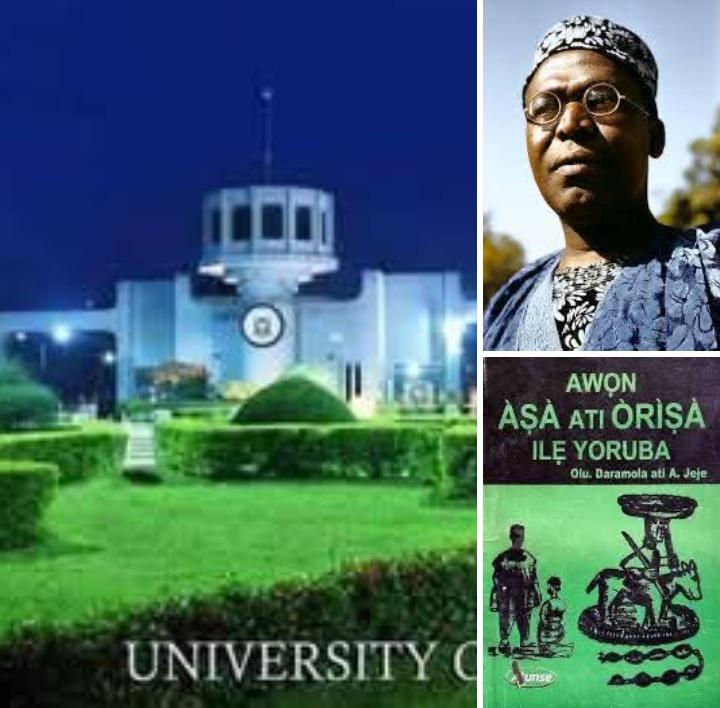
Last week, I wrote about the past—the glorious era of our education system. It was a time when deliberate efforts were made to engage young minds early, exposing them to diverse cultures and values through the written word. Education was not merely about passing exams; it was about shaping the mind, the character, and the society.
In the days that followed that piece, many of my contemporaries—and even some older—reached out. They shared how the article stirred a wave of nostalgia, transporting them to a forgotten past that now, through reflection, seemed nothing short of golden. One friend even reminded me of a song we used to sing with joy whenever the Aworerin journal was distributed in primary schools across the Western Region:
Aworerin dun, baba jowo ra fun mi
Aworerin dun jowo baba ra fun mi
Gbogbo wa ni, gbogbo wa ni
Gbogbo wa ni, gbogbo wa l’egbe Aworerin
We read books tailored to our environment and collective experience. Our literature reflected who we were—our values, our landscapes, our hopes. We respected our teachers, and society held them in high regard. I still remember how, at Emmanuel Primary School in Ado Ekiti, we composed an anthem for our revered headmaster, Mr. Boboye:
Mr. Boboye, Oga ile iwe wa
Ohun gbogbo la fi si ikawo re
Ma fi wa sile lai ni ireti
O dowo re, o dowo re
Mr. Boboye, o dowo re
Mr. Boboye and his colleagues carried themselves with a grace and dignity that commanded both fear and admiration. They delighted in raising children who would one day become assets to society. They were not just educators; they were moral compasses and mentors.
Above the school system were the Inspectors—next to God in the hierarchy of respect. Their visits, though occasional, were thunderous in impact. They checked lesson notes and registers, inspected pupils’ nails and teeth, and toured the school for cleanliness. Their presence instilled discipline. A pupil unable to recite “Ise ni Ogun ise, mura si ise re, ore mi…” risked the sting of the cane once they left. School inspectors, the Wole Wole (health inspector) of the big hat and short knickers, and tax collectors were the feared triad of the time. I recall a grand-uncle who once fled into the forest for three days to evade the tax man!
This, dear reader, is a pastiche of a time many have forgotten.
Permit me to dwell further on that era—a productive past where civil servants were truly civil, and public service was a noble calling. Many of the books that shaped our early understanding of society were authored by civil servants. Icons like D.O. Fagunwa and J.F. Odunjo were not just writers; they were officials in the Ministries of Education and Information. They wrote books, produced films to educate farmers about planting seasons and pest control, and traveled to towns and villages to share this knowledge.
Textbooks in science and the humanities were penned by schoolteachers and scholars in government service—not for profit, but for purpose. S.M.O Aka, M.A Ogundipe and E. Tregido in English, A.O Lawal and Adekunle Aromolaran in Economics. Awon Asa Ati Orisa Ile Yoruba by Olu Daramola and E Jeje ran us through the gamut and fine points of Yoruba culture.
Names like Pius Okigbo, Adebayo Adedeji, and others were known far and wide. Their works were to education what scripture is to faith. These were not just authors; they were torchbearers of enlightenment.
Chief Simeon Adebo, a towering figure in the Nigerian civil service, authored foundational texts in public administration. Their contributions cemented a structure of governance and civic responsibility that today seems almost mythical.
Ibadan, then the capital of the Western Region, was a publishing haven—home to Heinemann, Evans, Longman, Onibonoje Press, in the hinterland of Ekiti was Omolayo Press and Bookshop and other literary powerhouses. Almost every town had a bookstore or library. Creativity flourished. Research institutes were abundant, turning the city into a veritable laboratory of knowledge—on cocoa, palm oil, fruits , coconut, tropical plants, and more. The University of Ibadan stood tall, drawing the finest minds in pursuit of excellence.
Culture bloomed. From Ibadan to Osogbo, a new artistic renaissance took root. Poets, playwrights, carvers, painters, Adire makers—our soil yielded not just crops but genius. Theatre companies ( Alarinjo ) toured the schools, toured the country, sometimes even venturing as far as Kano. The world noticed. This was the context in which all those ‘firsts’ emerged—first television station, first stadium, first skyscraper.
This flourishing of ideas and culture in the First Republic was no accident. The colonial administrators had laid the groundwork, but it was the visionaries of the Awolowo-led Western Region who deepened the roots. Education was free and compulsory. Leaders were men of ideas, driven not by spectacle but by service. Imagine, if you will, Senator J.A.O. Odebiyi distributing hair clippers in a town square or Abraham Adesanya sharing hand-held blowers at a political rally. Impossible. These were men long on substance and short on drama.
But what of today?
Can you name a single public official who has gifted their intellect, time, or talent to the next generation through a book, a film, or a thought leadership piece? What we hear instead is a litany of scandals—officials awarding contracts to themselves, permanent secretaries racing to become billionaires, hosting ostentatious parties to mark birthdays or weddings.
The refrain across the land today is “schooling is a scam.” This isn’t just youthful disillusionment—it’s a symptom of societal decay. We now have “Associations of Yahoo Yahoo Mothers” urging their children toward wealth by any means, even ritual. One governor once established an SSCE ‘miracle center’ just to boost pass rates for political propaganda. Today, a law student can graduate without ever reading a book. Journalists show little interest in books, even when offered for free. Headmasters and teachers now find ways to extort pupils for money to do the naming ceremony of their children or roof their houses.
We are on a dangerous road. The wheels are coming off. The vehicle is veering off the highway, the engine sputtering on its last drop of fuel. As Wole Soyinka once warned, “The man dies in all who keep silent in the face of tyranny.” In our case, silence in the face of intellectual decay may be even deadlier.
Unless—and until—we find our way back to that forgotten road, that road of values, simplicity, service, and vision, we will remain trapped in this cycle of decline.
We must return to a time when men were admired for the content of their minds, not the size of their convoys. When the written word was sacred, and teachers were heroes. When children sang songs of knowledge, and inspectors symbolized integrity, not dread.
We must call forth a new generation of writers, teachers, civil servants, and leaders who will pick up the baton and run—not for themselves, but for the children yet unborn.
For as George Santayana famously said, “Those who cannot remember the past are condemned to repeat it.” But I would add: those who remember and choose not to act are condemned to perish alongside it.
The road to the past is not just a journey into memory; it may well be the only way forward
Thenewsnigeria.com.ng
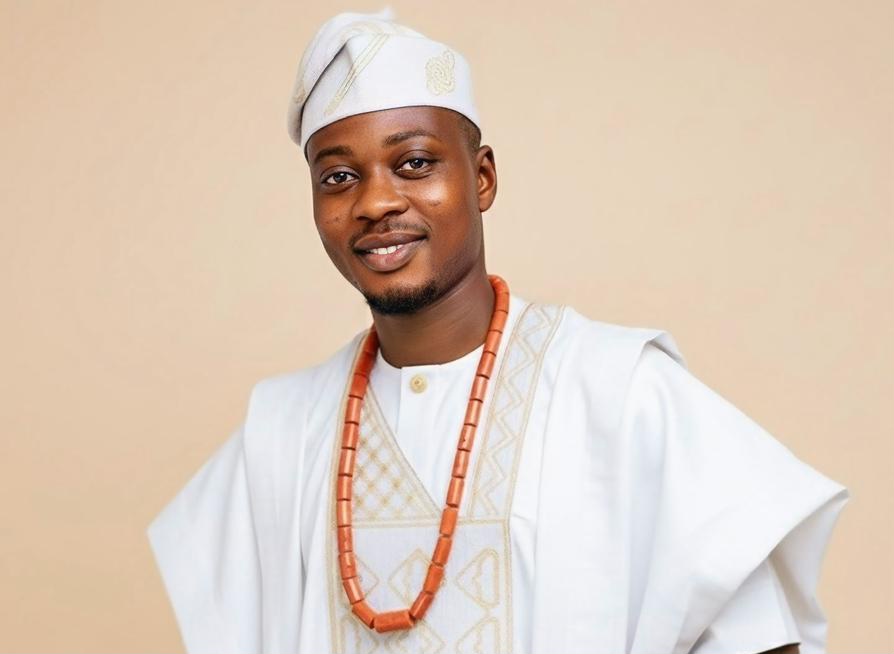
The Permanent Chairman of the Southern Nigeria Traditional Rulers Council (SNTRC), Arole Oodua Olofin Adimula and the Natural Head of the Oduduwa race worldwide, the Ooni of Ife, Ooni Adeyeye Enitan Ogunwusi, CFR, Ojaja II has congratulated Prince Sunday Adekanmbi Olayode Asinloye II on his emergence as the Oniko-Elect of Ikolaje Idiriko Kingdom in Ipokia Local Government Area of Ogun State.
Prince Adekanmbi was elected and formally appointed as the Oniko-Elect on 10th February, 2026, by the Ikolaje Idiriko Council of Kingmakers, following due traditional processes and consultations in line with the customs of the ancient kingdom.
In a press statement issued on Monday and signed by the Director of Media and Public Affairs, Ooni’s Palace, Otunba Moses Olafare, the Ooni described the emergence of Prince Adekanmbi as a testament to divine favour and the collective will of his people.
According to the statement, the Ooni commended the kingmakers for conducting a peaceful and credible selection process, noting that the stability of traditional institutions remains vital to cultural preservation and grassroots development across Yorubaland.
The Ooni urged the Oniko-Elect to embrace humility, wisdom and inclusiveness in the discharge of his royal duties, stressing that the throne is a sacred trust that demands selfless service, integrity and unwavering commitment to the welfare of the people.
He further prayed for divine guidance, long life and a peaceful reign for Prince Adekanmbi, expressing confidence that his ascension would usher in a new era of unity, growth and prosperity for Ikolaje Idiriko Kingdom.
The Ooni also reaffirmed the importance of synergy among traditional rulers in Ogun State and beyond, emphasising the need for collaboration in promoting peace, security and socio-economic advancement within their respective domains.
Signed,
Otunba Moses Olafare,
Director, Media & Public Affairs,
Ooni’s Palace,
Ile-Ife.
Lifestyle
Watch: Trending Video Of Gen. Diya Crying, Begging Late General Sani Abacha Surfaces Online

Former Ogun State Leader, General Oladipo Diya, grovelling at General Sani Abacha’s feet, crying and begging the late Head Of State over the 1997 coup allegation.
Gen. Diya was crossed examined at the Human Rights Violation Commission (HRVIC) on the coup plan 1997 to overthrow Gen. Sanni Abacha. He bluntly denied the fact that he was part of the plan but he admitted he knew about the plan.
He further explained that he was afraid of being killed by the Coup Master Planner if he revealed the plan. He denied pleading with Gen. Sanni Abacha but was shocked to see the video where he truly knelt down before Gen. Sanni Abacha as tendered by the Lawyer.
Gen. Diya Oladipo then was appointed as Chief of Defense Staff. He was appointed Chief of General Staff in 1993 and Vice Chairman of the Provisional Ruling Council in 1994. In 1997 Diya and dissident soldiers in the military allegedly planned to overthrow the regime of Sani Abacha.
The alleged coup was uncovered by forces loyal to Abacha, and Diya and his cohorts were jailed. Diya was tried in a military tribunal and was given the death penalty. pon the untimely death of Abacha in 1998, Diya was pardoned by the late Head of State’s successor, Abdusalami Abubakar.
Below is a leaked video clip
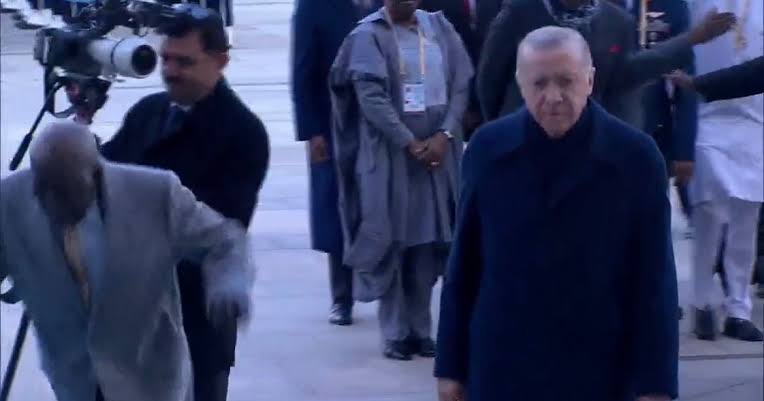
A video has emerged showing the moment President Bola Ahmed Tinubu momentarily tripped during his state visit to Turkey, according to Naija News.
Naija News reports that President Tinubu had on Monday arrived Ankara, the capital of Turkey for a state visit.
According to a statement by the Special Adviser to the President on Information and Strategy, Bayo Onanuga, the visit to Turkiye is aimed at deepening cooperation in key sectors including security, education, social development, innovation, and aviation.
Onanuga noted that the trip follows an earlier official visit to Nigeria by Turkish President Recep Tayyip Erdoğan between October 19 and 20, 2021, which reinforced diplomatic ties between Abuja and Ankara.
During President Tinubu’s visit, both countries are expected to hold strategic political and diplomatic engagements focused on shared interests in finance, communication, trade, and investment.
The programme will also feature meetings between senior government officials from both nations, alongside the signing of several memoranda of understanding (MoUs) covering scientific research, energy, technical cooperation, media and communications, military collaboration, and protocol.
A business forum will be held on the sidelines of the visit, bringing together Nigerian and Turkish investors to explore opportunities for mutual economic growth, the presidency noted.
Members of the President’s delegation participating in the bilateral engagements include the Minister of Foreign Affairs, Yusuf Tuggar; the Attorney General of the Federation and Minister of Justice, Lateef Fagbemi, SAN; the Minister of Defence, General Christopher Musa (rtd); and the Chairman of the House Committee on Defence, Jimi Benson.
Others on the entourage are the Minister of Women Affairs and Social Development, Hajiya Suleiman-Ibrahim; the Minister of Interior, Olubunmi Tunji-Ojo; the Minister of Culture and Creative Economy, Hannatu Musawa; the National Security Adviser, Malam Nuhu Ribadu; and the Director-General of the National Intelligence Agency, Mohammed Mohammed.
Culled from Naija News


BREAKING: “Serial Disrespect” Sparks Drama As Senate Order Arrest Of Tinubu’s Appointee

Edo State To Spend N1billion On Armoured Car For Speaker, N4.6billion On Vehicles For Lawmakers

Opposition Leaders Urge N’Assembly To Begin Fresh Electoral Act Amendment

Former Super Eagles Star Loses Life Savings, Duped By A Pastor of ₦1.2 Billion

These ’90s fashion trends are making a comeback in 2017

I’m A Married Man, I Can Never Get Myself Involved With Such A Thing, Delta Gov Aide Reveals Why He Offered Comfort ₦500,000 Job
-

 Politics2 days ago
Assembly Confirms Popular Redeemed Pastor As Deputy Governor
-

 Foreign2 days ago
Cabinet Reshuffle: President Sacks Finance Minister
-

 Business2 days ago
JUST IN: 13 Banks May Shut Down In March As CBN Confirms 20 Safe For Recapitalisation Deadline
-
 Politics11 hours ago
BREAKING: “Serial Disrespect” Sparks Drama As Senate Order Arrest Of Tinubu’s Appointee
-
 Politics11 hours ago
Opposition Leaders Urge N’Assembly To Begin Fresh Electoral Act Amendment
-
 Opinion11 hours ago
Edo State To Spend N1billion On Armoured Car For Speaker, N4.6billion On Vehicles For Lawmakers