
Opinion
Japa: The Courage And Cost Of Nigeria’s Great Exodus

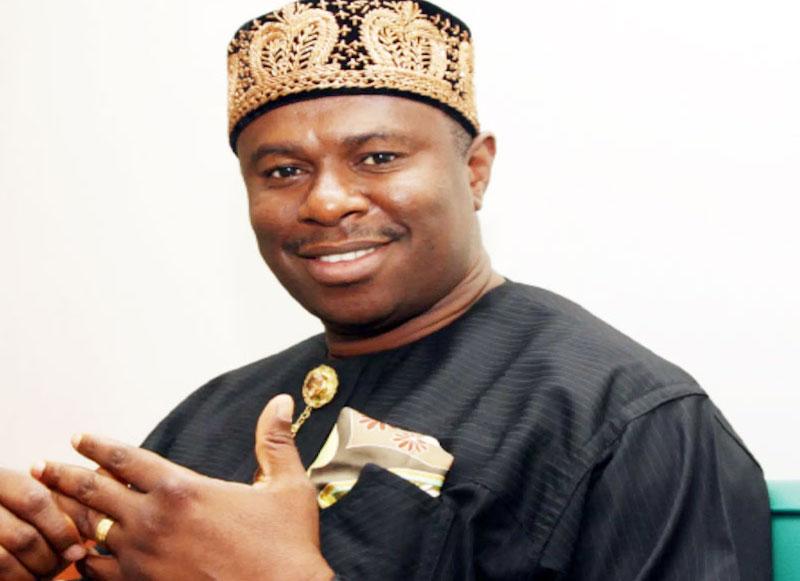
I still remember the evening I first heard the term “Japa.” It came in the form of a meme—“If you’re seeing this, pack your bags”—plastered over an image of a dusty road disappearing into a golden horizon. The joke wasn’t just funny—it was painfully accurate. “Japa,” a Yoruba word meaning “to flee,” has evolved into a cultural and economic phenomenon, serving as a shorthand for the restless exodus of Nigerians, particularly the young and educated, in search of a better life. What was once a quiet movement of the desperate and the privileged has now morphed into a defining feature of Nigeria’s national psyche. It reflects not only a failure of the state but also the boundless courage of individuals who continue to chase dignity, safety, and opportunity across oceans.
Beneath the headline-grabbing migration figures lie deeply human stories, complicated by trade-offs that span continents and generations. When Aisha, a surgical nurse from Kaduna, arrived in London in 2022, she secured an NHS position that paid her over three times her salary in Nigeria. Her new life was a dream on paper—financial stability, functional healthcare, and reliable electricity. But the price was steep: her mother, widowed and diabetic, was left behind with no one to accompany her to clinic visits. Her younger siblings, used to Aisha’s help with tuition and groceries, now relied on irregular remittance flows and prayer. Her calls home, filled with reassurance and cheer, barely masked the weight of her absence. Aisha’s story is not exceptional—it is replicated across tens of thousands of households in Lagos, Yenegoa,Owerri, Ilorin, and beyond.
In 2023, Nigeria received an estimated $20.13 billion in remittances, the highest in sub-Saharan Africa and one of the few bright spots in the country’s bleak economic landscape. Remittances now account for nearly 4% of Nigeria’s GDP—greater than direct foreign investment — and serve as a vital buffer for families struggling with inflation, food insecurity, and crippling unemployment. These inflows fund school fees, hospital bills, building projects, and sometimes entire family businesses. For many, having a child or sibling abroad is the difference between collapse and survival. But money doesn’t hug you. It doesn’t walk your grandmother to the mosque or church. It doesn’t explain puberty to your 13-year-old son now growing up without a father figure.
What’s less visible but just as real is the emotional price of migration. There’s the guilt of leaving ageing parents in precarious health, the pain of missing births and funerals, and the slow erosion of intimacy with friends and siblings. Couples stretch their marriages across time zones, relying on WhatsApp calls that feel both immediate and artificial. Children born abroad grow up with hybrid identities, sometimes unable to speak their parents’ language or understand the values they left behind.
The psychological price of migration is huge. Take Emmanuel, a computer science graduate from Enugu who arrived in Toronto in late 2023. At first, he thrived—new friends, a buzzing tech hub, crisp winter mornings. Within weeks, though, he began waking at 3 a.m., heart pounding, unable to shake the fear that he was alone in a strange land. Migraines set in, his appetite vanished, and he drifted into a fog of irritability and despair—a textbook case of the “Ulysses syndrome,” an immigrant stress reaction marked by anxiety, insomnia, and somatic pains. A 2020 meta-analysis of Nigerian-American immigrants found that higher acculturative stress was strongly linked to poorer mental health outcomes. Emmanuel endured six months of silent struggles before reaching out for therapy, finally realising that the cost of leaving home included the erosion of his well-being.
Nigeria, as a state, teeters between the benefits and burdens of this migration wave. On the one hand, remittances boost foreign reserves, provide fiscal stability, and enhance the purchasing power of recipient households. Diaspora investments are also reshaping the tech ecosystem. Diaspora entrepreneurs in London and Toronto have launched some of Europe’s fastest-growing fintech startups. Additionally, Nigeria ranks second only to India in terms of long-term migrants to the UK, with approximately 120,000 Nigerians relocating there as of June 2024. Nigerian-led startups in the UK, Canada, and the US are channelling capital, ideas, and tools back home, with Lagos fast becoming a West African tech hub despite its infrastructural challenges. Culturally, the country is undergoing a kind of global flowering—Afrobeat now dominates international music charts, Nollywood films are streaming on Netflix, and Nigerian chefs are redefining fine dining in New York, Toronto, and Berlin.
But the cost of this “success” is staggering. Over 75,000 Nigerian professionals have emigrated between 2019 and 2024. The health sector has been particularly hard hit: the Nigerian Medical Association estimates that more than 50% of registered doctors are practising abroad, widening the patient-doctor gap at home and prompting emergency staffing drives that still fall short. In 2023 alone, over 3,600 nurses were licensed to practice in the United Kingdom. University classrooms, once bustling with brilliant lecturers, now depend on visiting professors and part-time faculty. Hospitals are forced to recruit unqualified assistants to fill gaps. In the public sector, civil service talent is drying up, with young officers resigning en masse. The result is a talent vacuum that weakens national institutions just when they are most needed.
Government responses have been largely reactive and uncoordinated. Proposals to bond medical graduates to public service contracts for five to ten years have sparked outrage, especially among young professionals who argue that the state has no moral authority to restrict their freedom after failing to provide basic infrastructure, job security, or personal safety. Some state governments have introduced scholarship retention schemes and returnee investment incentives, but these remain too few, poorly implemented, or overshadowed by more attractive foreign offers. Policy inertia persists because Japa isn’t just a problem of economics—it is a verdict on governance. People are not leaving because they lack patriotism; they are leaving because patriotism no longer feeds them.
And while the Nigerian government tries to cope, Western host countries also wrestle with their own dilemmas. Nigerian migrants now comprise a significant portion of new arrivals in countries such as Canada and the United Kingdom. In Canada’s 2024 immigration data, Nigerians ranked among the top five sources of skilled workers. Western host nations find themselves in a precarious balancing act. Nigerian nurses and engineers fill critical shortages, bolstering public coffers through taxes and consumer spending. In the UK, they are heavily represented in the National Health Service and private care homes. These workers are praised for their diligence, education, and resilience.
However, the systems receiving them are often ill-prepared to integrate them. Many face bureaucratic roadblocks, including slow credential recognition and expensive licensing exams, which delay their full participation in the workforce. Years of retraining blunt the momentum of eager professionals, and discrimination can turn anticipation into anxiety. Others face subtle racism, wage disparities, and cultural isolation. Britain’s new Code of Practice for ethical health-worker recruitment aims to ensure that “poaching” talent doesn’t hollow out Nigeria’s fragile health system, yet the debate over “brain drain” ethics continues amid NHS staffing crises.
Despite these challenges, the Nigerian presence abroad is growing stronger and more confident. Nigerian culture is reshaping Western norms—Afrobeat now pulses through Glastonbury stages; jollof rice trucks line the streets of London; Yoruba phrases are sneaking into British slang; and the children of migrants are rising to prominence in politics, academia, and the arts. In 2025, the UK’s political landscape saw its first major-party leadership candidate of Nigerian descent. In America, Nigerian-American students consistently excel academically, and Nigerian churches and businesses have transformed entire neighbourhoods. These are not signs of assimilation—they are signs of expansion, the Nigerian identity flowering beyond borders.
Yet the question remains: what happens to the country they left behind? Who teaches in the schools from which they once graduated? Who rebuilds the hospitals where they were trained? Who ensures that power stays on long enough to power a mother’s air conditioner? Who stays to fix the power grid, redesign the curriculum, enforce the laws, and tell the next generation that hope is still possible at home?
Japa is not a simple story of brain drain or economic migration. It is a reckoning. It is a mirror held up to a nation that has failed too many of its brightest and bravest. But it is also a thread—an invisible umbilical cord—that connects the streets of Lagos to the clinics of Manchester, the classrooms of Toronto, and the startups of Berlin. And through that thread flows not just money but longing, memory, identity, and love. Japa is not unequivocal gain. It is a human response to systemic failures—economic, social, and political—and to the boundless courage of individuals chasing the promise of a better life. Its actual impact is braided across continents: in the phone calls between a migrant nurse and her mother, in the budget sheets of national ministries, and the urban rhythms of Toronto’s Chinatown.
Perhaps, over time, Japa will evolve from a flight to a return, as seen in India. Possibly, one day, Aisha will bring her NHS experience back to Kaduna to build a clinic of her own, and Emmanuel will reopen his old bedroom as a co-working space for local tech startups. Perhaps Nigeria will invest in a future that gives people a reason to stay, not just a means to leave. Until then, the suitcase remains half-packed, the visa application opens on the browser, and the heart is torn in two—between what is and what should have been.
Thenewsnigeria.com.ng
Opinion
Edo State To Spend N1billion On Armoured Car For Speaker, N4.6billion On Vehicles For Lawmakers

The budget also reveals that N4.6 billion is planned for vehicles for the 25 members of the State House of Assembly.
Reporters’ review of the Edo State approved budget for 2026 shows that N1billion has been allocated to purchase an armoured vehicle for the Speaker of the State House of Assembly.
The budget also reveals that N4.6 billion is planned for vehicles for the 25 members of the State House of Assembly.
Also, N50million is planned for the purchase of refrigerators and other equipment for four directors. The House of Assembly Commission also plans to spend 200 million naira on roof and window replacement for its office building.
Earlier, a civic accountability group, MonITng, raised concerns over the execution of a multi-million-naira education project in Edo State, citing poor quality, procurement irregularities, and a recurring pattern of questionable contract awards.
“A project titled ‘Building of Blocks of Classrooms at Ojah Comprehensive High School, Akoko LGA, Edo State’ with project code ZIP20240448, valued at ₦222,000,000.00, and awarded under the Federal Polytechnic Auchi, Federal Ministry of Education, has raised serious concerns about the quality of execution, contract pricing, and procurement integrity.”
According to MonITng, its team tracked and inspected the project site. “Our team tracked and visited the project site and confirmed that although the classrooms were completed, they were poorly constructed.”
The group further noted: “The structure lacks basic finishing elements such as landscaping, proper drainage, and standard finishing works, all of which should have been included and adequately executed, given the huge sum budgeted for the project.”
It added that “the poor quality of work raises questions about project supervision, contract oversight, and how the allocated funds were spent.”
MonITng also linked the project to a contractor allegedly tied to multiple controversial contracts. “Even more troubling is the pattern we uncovered. The project was executed by Sam Sedi Nig. LTD, a company that has consistently received major contracts facilitated by Senator Adams Oshiomhole.”
The group claimed that “this same contractor handled the abandoned ERGP20245252 project, Construction of Warake to Ivbiaro Road in Owan East LGA, valued at ₦200,000,000.00, which remains incomplete despite significant disbursements.”
“Additionally, the same company implemented a controversial agricultural empowerment programme in Etsako communities, also facilitated by Senator Oshiomhole.”
MonITng alleged that “the recurring involvement of this contractor in multiple projects, combined with substandard delivery and abandoned works, suggests a pattern of procurement manipulation, inflated contracts, and possible diversion of public resources.”
It added that “the situation reflects how public projects, although completed on paper, often fail to deliver a meaningful impact due to corruption, poor supervision, and a lack of accountability.”

The Ogun State chapter of the Labour Party has accused the All Progressives Congress of using its ongoing electronic membership registration to allegedly manipulate figures ahead of the 2027 general elections.
In a statement issued on Wednesday, the state chairman of the Labour Party, Chief Oluwabukola Soyoye, claimed that the APC’s e-registration exercise was designed to digitally inflate its membership strength and project a false image of popularity in the state.
Soyoye alleged that the ruling party had resorted to electronic registration because it could no longer mobilise people openly, insisting that the administration of Governor Dapo Abiodun had suffered widespread rejection due to what he described as underperformance.
According to him, the APC’s e-registration, presented as a routine membership drive, was in reality “a political referendum that exposes the deep rejection of Governor Dapo Abiodun and his black-market style of governance by the people of Ogun State.
“The people of Ogun are now wiser. They have deliberately refused to participate in any open, physical APC registration because they know the ruling party has failed them,” Soyoye said.
“That is why the APC has resorted to this so-called electronic registration — a system that allows figures to be fabricated behind closed doors without the presence of real members.”
The LP further alleged that the electronic platform could be used to manipulate membership data, inflate figures and create a misleading narrative of political dominance ahead of 2027
“What we are witnessing is not a genuine political exercise but a fraudulent digital operation designed to manufacture legitimacy for a government that has lost the confidence of the people,” Soyoye added.
By Kola Odepeju
“Calumny Is Only The Noise Of Madmen” –Diogenes
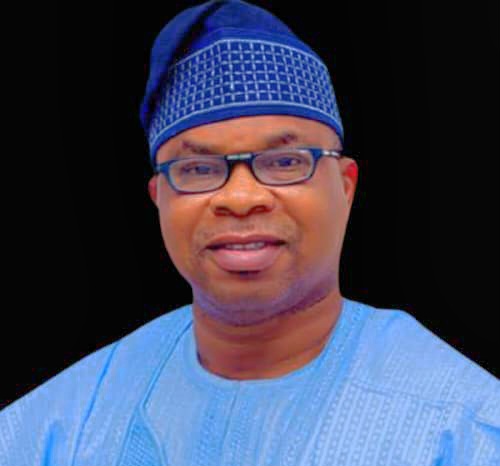
As Osun state gubernatorial election draws nearer, we’re now at the dawn of the campaigns for the coming election and so as characteristic of Nigeria’s democracy, wrong accusations, blackmails, character assassinations and all manner of negative campaigns aimed at demarketing the most popular candidate with the highest chances of coasting home to victory in a major election of this nature, must surface. And so in our own dear Osun state here this ugly trend has started surfacing. The mudslinging that has started from Governor Ademola Adeleke’s Accord Party’s camp against the APC gubernatorial candidate, Asiwaju Munirudeen Bola Oyebamiji AMBO is ‘normal’ and expected because with the massive support for AMBO across the nook and cranny of the state, it’s crystal clear that he’s the candidate to beat.
As mentioned above, a candidate to beat in any major election is bound to face vilifications by his opponents who see him as a threat and a stumbling block against the success of their own ambitions. Therefore given the nature of our politics in this part of the world, the negative campaigns that have started against AMBO are no surprise. We witnessed the same thing against the incumbent president, Asiwaju Bola Tinubu during the 2023 electioneering campaigns for the office of the country’s president. But against all odds, Asiwaju Tinubu emerged victorious. So as Asiwaju Tinubu emerged victorious in 2023, l have that strong conviction that our own Asiwaju Bola Oyebamiji will also become victorious in the coming August gubernatorial election in the state irrespective of whatever negative campaigns that may come up against him. This is because the AMBO governorship project is divinely ordained.
Amongst other attacks that are still likely to come up against him as we face the election and as the election faces us, we have heard from those who are afraid of losing power that AMBO is the architect of half salaries in Osun (as if he was the governor in that era). We have also heard from them that he’s not youth-friendly. The spokesperson to governor Adeleke, Malam Olawale Rasheed also amplified these two negative points in his latest article aimed at demarketing AMBO. Like I mentioned, the negative campaigns have just started. We are still going to hear more. I wonder why people cannot engage in issues-based campaigns instead of vilifying candidates.
Ambo has told Osun youths the program he has for them. He has promised to take care of them. And as a God-fearing and honest leader who keeps to his words, l believe he will not renege on his promise for the youths and also his promises for Osun people generally. So let those who revel in vilifying a credible candidate like AMBO tell Osun youths the programs they have for them rather than calumniating a visionary and capable leader who has what it takes to deliver the goods. Of course AMBO – being a focused leader – needs not to bother himself about the negative campaigns being circulated against him by his political detractors because William Shakespeare had for long told us that “*Be thou as chaste as ice, and as pure as snow, thou shall not escape calumny*”. And George Washington also mentioned it that “*Silence is the best answer to false accusations*”.
Finally, the Yorubas in their words do say that “maligning the honey doesn’t reduce its sweetness”. No matter the level of negative campaigns against the APC gubernatorial candidate towards the election, it won’t reduce the love the Osun people have for him while it won’t deter them from casting their votes for him in the upcoming gubernatorial election in the state. He will surely come out victorious by the special Grace of God Almighty 🙏. For, Vox populi vox dei. AMBO should continue on the path of issues-based campaigns and close his eyes against malignant talks by those who are already on their way out of power.
● Odepeju, newspaper columnist and political activist, writes from Iragbiji, Osun state.


BREAKING: “Serial Disrespect” Sparks Drama As Senate Order Arrest Of Tinubu’s Appointee

Edo State To Spend N1billion On Armoured Car For Speaker, N4.6billion On Vehicles For Lawmakers

Opposition Leaders Urge N’Assembly To Begin Fresh Electoral Act Amendment

Former Super Eagles Star Loses Life Savings, Duped By A Pastor of ₦1.2 Billion

These ’90s fashion trends are making a comeback in 2017

I’m A Married Man, I Can Never Get Myself Involved With Such A Thing, Delta Gov Aide Reveals Why He Offered Comfort ₦500,000 Job
-

 Politics2 days ago
Assembly Confirms Popular Redeemed Pastor As Deputy Governor
-

 Foreign2 days ago
Cabinet Reshuffle: President Sacks Finance Minister
-

 Business1 day ago
JUST IN: 13 Banks May Shut Down In March As CBN Confirms 20 Safe For Recapitalisation Deadline
-
 Politics7 hours ago
BREAKING: “Serial Disrespect” Sparks Drama As Senate Order Arrest Of Tinubu’s Appointee
-
 Politics7 hours ago
Opposition Leaders Urge N’Assembly To Begin Fresh Electoral Act Amendment
-
 Opinion7 hours ago
Edo State To Spend N1billion On Armoured Car For Speaker, N4.6billion On Vehicles For Lawmakers