
Politics
Anti-Tinubu Coalition: Still Seeking Momentum

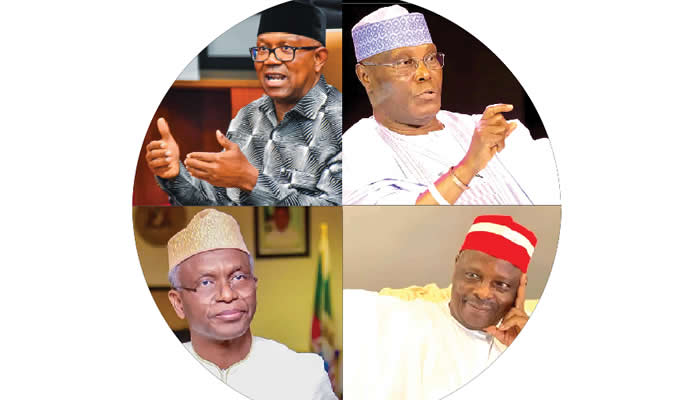
The coalition of opposition leaders spearheaded by former Vice President Atiku Abubakar and Labour Party’s 2023 presidential candidate, Peter Obi, which once gained significant momentum, is now losing steam, reducing to exploratory talks marked more by shared opposition to President Bola Tinubu than a coherent ideological vision, according to Punchng.com.
Nigeria’s current socio-political landscape closely mirrors that of 2013, when the country was charged by intense moves of opposition leaders plotting to unseat the then President Goodluck Jonathan. Widespread discontent and mounting national crises had spurred the coalition of opposition parties against the Jonathan’s administration.
The 2013 coalition, spearheaded by former Lagos State governor and now President Bola Tinubu, capitalised on growing public distrust, economic mismanagement, and unabated terrorism activities under Jonathan’s government to build strong political momentum.
The alliance leveraged the political strength of existing parties at the time, such as the Action Congress of Nigeria, the All Nigeria Peoples Party, the Congress for Progressive Change, and a faction of the All Progressives Grand Alliance, to form a united front that ultimately drove the PDP from power two years later.
At that time, the ruling Peoples Democratic Party was battling with deep internal fractures, which led to the defection of five governors out of the seven who staged a dramatic walkout during its national convention held at the Eagles’ Square in Abuja on August 31, 2013. The PDP subsequently splintered into factions that cracked its national dominance and shifted the political climate in favour of the Tinubu-led coalition that birthed the All Progressives Congress.
Back at same spot 12 years after
Nearly 12 years later, Nigeria has found itself at a similar turning point where a mix of economic crisis, rising insecurity and political disaffection have emboldened some opposition heavyweights to plan a formidable coalition against President Tinubu.
On March 20, 2025, former Vice President Atiku Abubakar, Labour Party’s 2023 presidential candidate, Peter Obi, and ex-governor of Kaduna State, Mallam Nasir El-Rufai, announced the formation of a coalition aimed at unseating the APC-led administration in the 2027 elections.
In a recent post on his X handle, Atiku outlined the mission of the emerging alliance. “We are building a strong, united opposition coalition — one that will challenge the excesses of this administration, restore accountability, and return government to the people.
“We will protect the right of every Nigerian to freely choose their leaders, and we will continue to fight for economic justice, political freedom, and national progress. We are here to rescue Nigeria. And we will not stop until that goal is achieved,” he posted.
To achieve national spread, the Atiku/Obi-led coalition brought in prominent figures such as former Rivers State governor, Rotimi Amaechi, his Cross River counterpart, Liyel Imoke, former Secretary to the Government of the Federation, Babachir Lawal, former Kano State governor, Ibrahim Shekarau, and several other northern political heavyweights.
In a strategic move for political realignment, Obi has held private meetings with former Jigawa State governor, Sule Lamido and former Senate President, Bukola Saraki in recent months. The coalition leaders also met weeks back with some northern power blocs in a bid to rally support for the anti-Tinubu alliance in the region.
The meeting, convened by the National Political Consultative Group (North) had in attendance prominent figures including former Chairman of the PDP Board of Trustees, Adolphus Wabara, and former Attorney General of the Federation and Minister of Justice, Abubakar Malami, SAN.
All talks, no clarity
Many political analysts have expressed mixed reactions over the coalition drive and prospects of opposition unity to achieve its agenda. While some observers see the coalition’s formation as a significant realignment in Nigerian politics, others regard it as sheer exploratory talks which lack ideological clarity beyond the anti-Tinubu sentiments.
In terms of leadership and power dynamics, some observers argue that the Atiku/Obi alliance is still in its consultation phase, and it is quite premature to assess its potential impact. Others, however, contend that the coalition could be undermined by internal power struggles, as its leading figures, Atiku and Obi, have competing ambitions, while the roles of several other prominent allies like El-Rufai remain unclear.
Another counterargument against the ongoing coalition is that some of its arrowheads appear to lack the political weight and mass appeal needed to unseat a dominant ruling party like the APC.
Atiku, who has been the major driver of the alliance, doesn’t have the credibility or command the kind of mass appeal that Buhari had in 2013 due to how he has been moving from one party to another, according to the President, National Association of Political Scientists, Prof Hassan Salisu.
“Buhari’s personality gave substance to the coalition in 2013. He was seen as somebody capable of doing so many things. But there’s nobody that’s very inspiring in the new coalition, not even Atiku.
“Also, Obi doesn’t have the kind of followership that Buhari had. Secondly, there are doubts whether he can retain the same number he had in 2023 this time around because of some developments,” Salisu explained.
But the Atiku’s staunch supporters argue that even Buhari switched political parties before he achieved his presidential ambition after his military stint. They add that cross-carpeting is a familiar trend among the politicians.
Atiku left the PDP for Action Congress in 2006 where he contested the presidential election in 2007, polling 2.6 million votes. He returned to the PDP in 2009, and later joined APC in 2013.
In 2017, Atiku left APC for PDP and got the party’s ticket to contest the 2019 presidential election. He polled 11.2 million votes to come second to Buhari. Atiku also failed to leverage his region’s voting strength to defeat the APC presidential candidate, Tinubu in 2023 as he got 6.9 million votes.
Some Nigerians considered Atiku as someone lacking ideological consistency and driven solely by personal ambition. Others, however, argue that Obi’s debut in the presidential race significantly undercut Atiku’s chances, especially given the former Anambra governor’s strong appeal among the youth.
The pro-Atiku analysts stated that the former vice president would have defeated Tinubu with a landslide had Obi not run against him.
But others believe the Atiku-Obi alliance still wouldn’t have stopped the APC’s return to power as the pair could only muster 11.2 million votes in the 2019 poll despite the widespread dissatisfaction with Buhari’s first-term performance.
Amid the controversies, it has been argued that the fragile state of the opposition parties and their conspicuous absence from the coalition struggle may be another big stumbling block.
Counting opposition losses
Back in 2013, the opposition bloc that collapsed its structures into the APC was formidable enough to pull in governors and heavyweight politicians from the then ruling PDP. The likes of Amaechi, Rabiu Kwankwaso (Kano), Aliyu Wamakko (Sokoto), Murtala Nyako (Adamawa), Abdulfatah Ahmed (Kwara), who were all governors at the time, dumped the ruling PDP to pitch tent with the opposition APC.
Today, however, the leading opposition parties, notably the PDP, LP, and New Nigeria Peoples Party have been grappling with internal crises that have cost them key political figures.
Beyond losing over 30 lawmakers to the APC in the National Assembly over the past two years, the opposition has also ceded some of its former strongholds across the federation, including Delta State, to the ruling party. Before the 2023 general elections, opposition parties controlled 16 states, 15 of which were held by the PDP, while the APC had 20 states. But the political map has since changed. The APC now controls 23 states, while the opposition holds 13 with the PDP accounting for 10, while APGA, NNPP, and LP control one state each.
In what could be seen as a potential setback for the ongoing coalition, leading opposition parties, including the PDP and LP, have publicly distanced themselves from the alliance talks. On April 14, 2025, the PDP governors declared at a meeting that the party would not join any coalition.
Similarly, the Labour Party, in a 12-point resolution adopted at the National Executive Council meeting of the party on May 2, 2025 in Abuja, said it will not enter into any coalition or alliance ahead of the 2027 general elections.
It has been argued in some quarters that the absence of the major opposition parties from the coalition will weaken its prosperity, resulting in a fragmented front to the advantage of the APC.
However, both Atiku and Obi’s camps have, at different forums, affirmed their readiness to either adopt one of the existing political parties or create a new platform to mount a strong challenge against the APC. Initially, the coalition had wanted to adopt the SDP but the party’s leadership rejected the move. The African Democratic Congress is now considered as the platform of the coalition to challenge Tinubu in 2027.
Amid the uncertainties, a chieftain of the PDP, Segun Sowunmi, maintained that ultimately, only one party would emerge as the coalition’s platform of choice, and only one individual can become its presidential candidate.
“As far as I am concerned, I don’t believe they are building any coalition. What I think they are doing is what you call ‘forum-shopping,’ looking for a platform that suits their ambition. That kind of effort can only serve one person. But if too many of them are chasing the same goal, well, good luck to them,” Sowunmi told Sunday PUNCH.
Atiku/Obi allies speak
Speaking to Sunday PUNCH, Atiku’s media aide, Paul Ibe, dismissed any negative claims against the coalition’s agenda. He said, contrary to widespread reports, there would be no clash of interests among the coalition leaders. “Atiku, Obi, and other coalition stakeholders are in talks, and once concluded, they will make the way forward public,” Ibe stated.
He insisted that those who believe internal conflicts will tear down the coalition are Tinubu’s loyalists, who are bent on turning Nigeria into a one-party state. “The coalition will succeed and ultimately provide Nigerians with a viable platform to reclaim and rebuild the country in line with their aspirations,” the Atiku’s aide affirmed.
In his comment, Obi’s ally, Peter Ameh, added that the coalition movement remained steadfast in its mission to foster steady, organic growth, prioritising unity and connection with the everyday struggles of Nigerians.
He said the formation strongly believed that sustainable progress is essential for building a coalition that resonates with the majority, particularly the common man on the street, who he said continues to bear the brunt of the current administration’s failure to deliver effective governance. “Contrary to some observers’ narrow assertions, our movement is not driven by any particular individual or group of individuals, but rather by the collective desire of the Nigerian people to see a change in governance,” Ameh added.
As Atiku, Obi, and others continue to champion the anti-Tinubu coalition agenda, the sharp contrast between this unfolding movement and the 2013 experiments is fuelling growing doubts about how far the current alliance can truly go in its bid to unseat the ruling APC. Will it succeed in the long run despite the visible cracks? Can it hit its target without the full cooperation of the established opposition giants? Only time will tell.

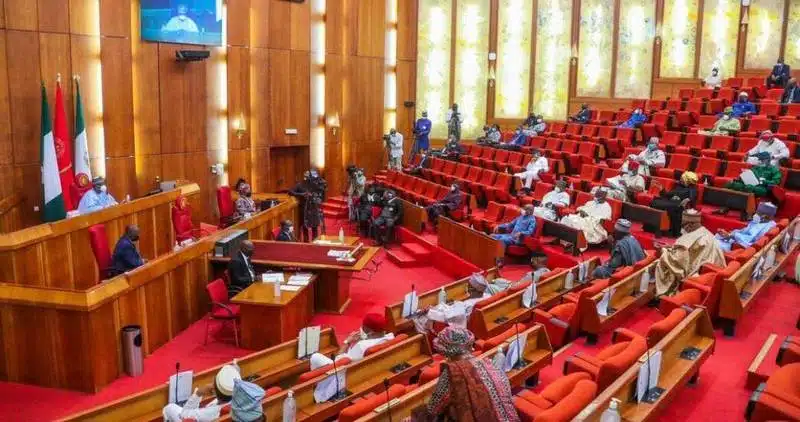
The Senate has asked President Bola Tinubu to immediately remove the Registrar General of the Corporate Affairs Commission (CAC), Hussaini Ishaq Magaji (SAN), from his office.
As reported by Nigerian Tribune, the Senate committee on finance, while passing a resolution in Abuja on Thursday, February 26, accused Magaji of failing to honour the upper legislative chamber’s invitations to account for the finances of his agency.
Senator Sani Musa, the chairman of the committee, said:
“He (Magaji) refused on so many occasions to honour our invitation to appear before this committee.
“We have issues with the reconciliation of the revenue of CAC.
“Each time we invite him, he gives us excuses.
” Magaji was appointed to this position by President Tinubu on October 13, 2023.
As the registrar-general of the CAC, Magaji is expected to work for the development and regulation of corporate affairs in Nigeria.
Meanwhile, President Tinubu on Wednesday night, February 25, formally urged the Senate to begin the process of amending the 1999 constitution to provide for the establishment of state police, declaring that Nigeria must urgently restructure its security architecture to confront terrorism, banditry and insurgency.
Speaking at an interfaith breaking of fast with the leadership and members of the Senate at the State House, Abuja, the president stated that the time had come for lawmakers to “start thinking” about embedding state policing in the constitution to enable governments at subnational levels better secure their territories.
The Nation quoted President Tinubu as saying:
“Nigeria is extremely challenged, we are facing terrorism, banditry, insurgency, but you never failed to make a right response to these calls.
“What I will ask for tonight is for you to start thinking how best to amend the Constitution to incorporate the state police for us to secure our country, take over our forests from marauders, free our children from fear.”
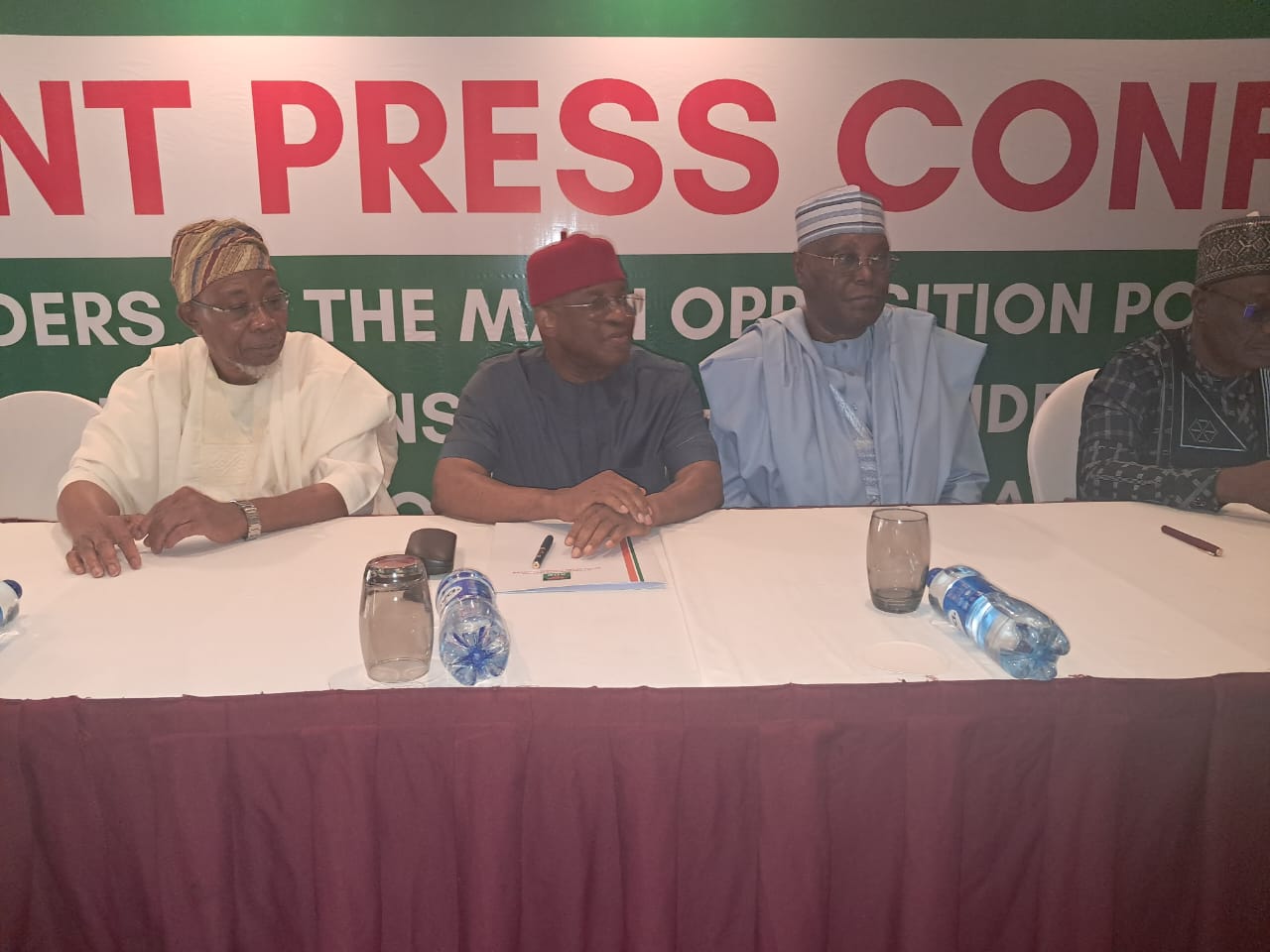
Leaders of the African Democratic Congress and the New Nigeria Peoples Party have called on the National Assembly to commence a fresh process to amend the Electoral Act.
Speaking on behalf of the opposition at a press conference in Abuja on Thursday, NNPP National Chairman, Ajuji Ahmed, urged federal lawmakers to expunge all objectionable provisions contained in the Act.
Prominent opposition figures at the meeting included former Senate President David Mark; NNPP chieftain Buba Galadima; former Vice-President Atiku Abubakar; and the 2023 presidential candidate of the Labour Party, Peter Obi.
Also in attendance at the Lagos/Osun Hall of Transcorp Hilton, Abuja, were the ADC National Secretary, Rauf Aregbesola; former Rivers State Governor Rotimi Amaechi; and the party’s National Publicity Secretary, Bolaji Abdullahi, alongside other stakeholders.
Others present included Senator Dino Melaye, former ADC National Chairman Ralph Nwosu, and former Cross River State Governor Liyel Imoke, among several dignitaries.
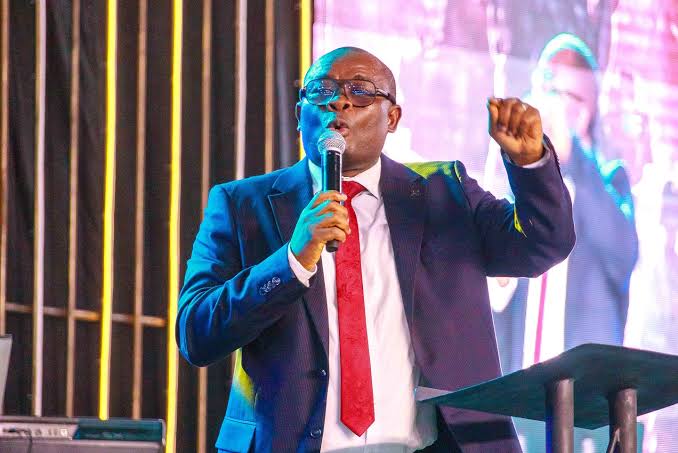
The Bayelsa state house of assembly has approved the appointment of Peter Akpe as the deputy governor of the state.
Akpe, a pastor, served as chief of staff to Douye Diri, governor of Bayelsa, prior to his nomination.
Ordained clergy by the Redeemed Christian Church of God (RCCG), Akpe has had a career spanning the civil service and politics.
He served in the Rivers and Bayelsa state civil services before transitioning fully into politics.
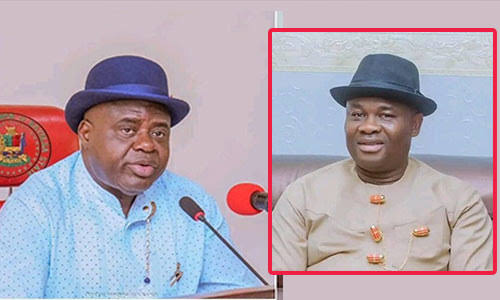
Akpe was a two-term member of the Bayelsa state house of assembly from 2011 to 2019, serving as majority leader throughout his stint in the legislature.
He also served as commissioner between 2008 and 2011 under the Seriake Dickson administration.
The approval clears the way for his swearing-in as deputy governor.
Akpe’s appointment follows the death of Lawrence Ewhrudjakpo, the former deputy governor, who passed on last December.


BREAKING: “Serial Disrespect” Sparks Drama As Senate Order Arrest Of Tinubu’s Appointee

Edo State To Spend N1billion On Armoured Car For Speaker, N4.6billion On Vehicles For Lawmakers

Opposition Leaders Urge N’Assembly To Begin Fresh Electoral Act Amendment

Former Super Eagles Star Loses Life Savings, Duped By A Pastor of ₦1.2 Billion

These ’90s fashion trends are making a comeback in 2017

I’m A Married Man, I Can Never Get Myself Involved With Such A Thing, Delta Gov Aide Reveals Why He Offered Comfort ₦500,000 Job
-

 Politics2 days ago
Assembly Confirms Popular Redeemed Pastor As Deputy Governor
-

 Foreign2 days ago
Cabinet Reshuffle: President Sacks Finance Minister
-

 Business2 days ago
JUST IN: 13 Banks May Shut Down In March As CBN Confirms 20 Safe For Recapitalisation Deadline
-
 Politics12 hours ago
BREAKING: “Serial Disrespect” Sparks Drama As Senate Order Arrest Of Tinubu’s Appointee
-
 Politics13 hours ago
Opposition Leaders Urge N’Assembly To Begin Fresh Electoral Act Amendment
-
 Opinion12 hours ago
Edo State To Spend N1billion On Armoured Car For Speaker, N4.6billion On Vehicles For Lawmakers