
Opinion
Lessons From The Vatican, A Muslim View

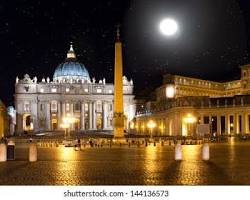
Recently, Pope Leo XIV appealed against the recent senseless killings of people in Benue State, Nigeria. He said:
“On the night of 13th/14th June, in the town of Yelwata in the Guma Local Government Area, in Benue State in Nigeria, a terrible massacre occurred in which around 200 people were killed with extreme cruelty, most of whom were internally displaced persons hosted by the local Catholic mission. I pray that security, justice and peace will prevail in Nigeria, a beloved country so affected by various forms of violence. And I pray in a special way for the rural Christian communities in Benue State, who have been unceasingly the victims of violence.”
It is good that the Pope spoke against the senseless killings of Christians in Nigeria. He is a Catholic leader but to the credit of the Vatican, it has been speaking for world peace. The Christians value their lives, if other Nigerians don’t.
In fact, the Vatican has consistently identified with the problems of the Palestinians, although about 90 per cent of them are muslims. The Catholic Church has its challenges and problems but there are some lessons the world can learn from it. After all, the prophet of Islam said that knowledge and wisdom are the property of the believer. Therefore, he should seek and take them, even if it requires going to China, a country that had nothing to do with Islam at that time. Perhaps, to date.
This piece is about papacy, an office and institution. And I’m fairly conversant with the papacy as an institution because I offered European History in the university, where we examined the origin and development of Christianity, including the rebellion of Martin Luther and his 95 allegations called Theses, against the Catholic Church in 1517, based on which he was excommunicated (disowned) in June 1520 by Pope Leo X.
I have also read a number of books on contemporary issues in the Vatican and papacy. The one I found most engaging and intriguing is titled, “In God’s Name – An investigation Into the Murder of Pope John Paul I” by David Yallop. Over six million copies were sold, and The Economist (London) described it as, “Excellently done… an engrossing and disturbing book”. Indeed, like all other religious groups, the Catholic Church has its share of challenges. But this is not our focus.
For clarity, the pope refers to “the individual leader of the Catholic Church, the Bishop of Rome, who serves as the spiritual leader and Head of State of Vatican” while the papacy refers to “the office, dignity, and jurisdiction of the pope, encompassing the institution, authority, and tradition of the papal office”.
Now, the lessons. First, let me start with power. If there is to be president of the world, based on global acceptance of his followers, the pope is eminently qualified, as a spiritual leader and head of government (Vatican) whose about 1.4 billion followers cut across all countries, races and continents.
Interestingly, it is an enormous power which the Pope doesn’t use to massage his (not her) ego or acquire material wealth. I put “her” in bracket because there has never been a female Pope, and the struggle now is for an African, not female Pope.
With a population of 882 people, and as an enclave in Italy, the Vatican is the smallest country in the world but with sovereignty, independence and self-government. Thus, the pope is a strong leader, as head of government and at the same time spiritual leader in the world. But I cannot recall reading about an instance where the pope used this ENORMOUS POWER against humanity.
Secondly, all the four occupiers of the office of the pope in my life, were paragons of humility, the climax of which was the kissing of the feet of warring faction leaders of Southern Sudan. You may recall that John Garang took up arms for the freedom of Southern Sudan from the Arabs of Sudan who they accused of racism. However, Pope Francis knelt down and kissed the feet of their leaders. This may not mean anything in some cultures but the pope succeeded in sending a powerful message to them pleading for peace.
The president of Southern Sudan, Salva Kirr, stated in his tribute to Pope Francis that:
“His act of kindness and humility demonstrated during our visit to Rome in 2019, when he knelt down to kiss our feet was a turning point for us, the peace partners. I was almost trembling” (Agnes Aineah, ACI Africa, Juba, April 23, 2025)
Thirdly, all the popes preached peace and love for humanity regardless of religion, gender or race. And they matched their words with action. For example, they never abandoned the Palestinians who are predominantly Muslims and Arabs. Imagine the set back the Palestinians may have experienced if any of the Popes had called on Catholics in the world to support Israel.
Of course, only God knows the pressure put on them to do so. But Pope Francis died calling for ceasefire and humanitarian intervention for Palestinians in Gaza. To the dismay of war mongers, I believe.
The Catholic Church is known for effective organisation and management based on which it successfully runs thousands of dioceses and parishes all over the world. It does this by engaging in productive businesses to generate wealth to cater for its officials and followers. This commitment to social services like education, health etc earned it the respect of its followers which makes management and discipline easier.
Also, their officials are constantly trained and retrained to discharge their duties effectively. For example, see the address of Pope John Paul II to the plenary session of the congregation for the clergy entitled, “The Priest, Pastor, and Leadership of the Parish Community”, delivered on Friday November 23, 2001.
He specifically stated that, “in fulfilling his duty as guide, which is his personal responsibility, the pastor will surely obtain help from the consultative bodies foreseen by canon law”.
In the same vein, the Vatican has been teaching the world how to conduct free and fair elections. No petition. No tribunal. No court case.
For us in Nigeria, the lessons are important, because there will always be Muslims and Christians in the country. Therefore, they must learn to live in peace on the basis of justice and fairness. We must also continue to pray for peace in the country. Even if Nigeria is to break, let the new countries have something to show for wasting their time in Nigeria.
Be that as it may, it would be interesting, for example, just as the Muslims were persecuted in Mecca and the prophet of Islam sent them to present day Ethiopia where there was a just Christian king called Najashi of Aksum empire, if some Muslims are to be persecuted in Nigeria today, they will find peace in the Vatican. And the Sultan of Sokoto should be comfortable enough to send them there.
Finally, it will be good if the Vatican examines the possibility of changing the colours of the smoke they use as symbols of election of a new pope; with black indicating mourning, and white victory for the election of a new pope. All colours are innocent but people will continue to attach meanings to them.
There appears to be light at the end of the tunnel in Benue. For example, President Muhammadu Buhari expressed frustration that he directed the Inspector General of Police to relocate to Benue during a similar attack but he refused. Today, the Inspector General of Police and Chief of Defence Staff are there already before President Bola Tinubu directed them to go.
Should we all say, Shalom!
Dailytrust.com
Opinion
Edo State To Spend N1billion On Armoured Car For Speaker, N4.6billion On Vehicles For Lawmakers

The budget also reveals that N4.6 billion is planned for vehicles for the 25 members of the State House of Assembly.
Reporters’ review of the Edo State approved budget for 2026 shows that N1billion has been allocated to purchase an armoured vehicle for the Speaker of the State House of Assembly.
The budget also reveals that N4.6 billion is planned for vehicles for the 25 members of the State House of Assembly.
Also, N50million is planned for the purchase of refrigerators and other equipment for four directors. The House of Assembly Commission also plans to spend 200 million naira on roof and window replacement for its office building.
Earlier, a civic accountability group, MonITng, raised concerns over the execution of a multi-million-naira education project in Edo State, citing poor quality, procurement irregularities, and a recurring pattern of questionable contract awards.
“A project titled ‘Building of Blocks of Classrooms at Ojah Comprehensive High School, Akoko LGA, Edo State’ with project code ZIP20240448, valued at ₦222,000,000.00, and awarded under the Federal Polytechnic Auchi, Federal Ministry of Education, has raised serious concerns about the quality of execution, contract pricing, and procurement integrity.”
According to MonITng, its team tracked and inspected the project site. “Our team tracked and visited the project site and confirmed that although the classrooms were completed, they were poorly constructed.”
The group further noted: “The structure lacks basic finishing elements such as landscaping, proper drainage, and standard finishing works, all of which should have been included and adequately executed, given the huge sum budgeted for the project.”
It added that “the poor quality of work raises questions about project supervision, contract oversight, and how the allocated funds were spent.”
MonITng also linked the project to a contractor allegedly tied to multiple controversial contracts. “Even more troubling is the pattern we uncovered. The project was executed by Sam Sedi Nig. LTD, a company that has consistently received major contracts facilitated by Senator Adams Oshiomhole.”
The group claimed that “this same contractor handled the abandoned ERGP20245252 project, Construction of Warake to Ivbiaro Road in Owan East LGA, valued at ₦200,000,000.00, which remains incomplete despite significant disbursements.”
“Additionally, the same company implemented a controversial agricultural empowerment programme in Etsako communities, also facilitated by Senator Oshiomhole.”
MonITng alleged that “the recurring involvement of this contractor in multiple projects, combined with substandard delivery and abandoned works, suggests a pattern of procurement manipulation, inflated contracts, and possible diversion of public resources.”
It added that “the situation reflects how public projects, although completed on paper, often fail to deliver a meaningful impact due to corruption, poor supervision, and a lack of accountability.”

The Ogun State chapter of the Labour Party has accused the All Progressives Congress of using its ongoing electronic membership registration to allegedly manipulate figures ahead of the 2027 general elections.
In a statement issued on Wednesday, the state chairman of the Labour Party, Chief Oluwabukola Soyoye, claimed that the APC’s e-registration exercise was designed to digitally inflate its membership strength and project a false image of popularity in the state.
Soyoye alleged that the ruling party had resorted to electronic registration because it could no longer mobilise people openly, insisting that the administration of Governor Dapo Abiodun had suffered widespread rejection due to what he described as underperformance.
According to him, the APC’s e-registration, presented as a routine membership drive, was in reality “a political referendum that exposes the deep rejection of Governor Dapo Abiodun and his black-market style of governance by the people of Ogun State.
“The people of Ogun are now wiser. They have deliberately refused to participate in any open, physical APC registration because they know the ruling party has failed them,” Soyoye said.
“That is why the APC has resorted to this so-called electronic registration — a system that allows figures to be fabricated behind closed doors without the presence of real members.”
The LP further alleged that the electronic platform could be used to manipulate membership data, inflate figures and create a misleading narrative of political dominance ahead of 2027
“What we are witnessing is not a genuine political exercise but a fraudulent digital operation designed to manufacture legitimacy for a government that has lost the confidence of the people,” Soyoye added.
By Kola Odepeju
“Calumny Is Only The Noise Of Madmen” –Diogenes
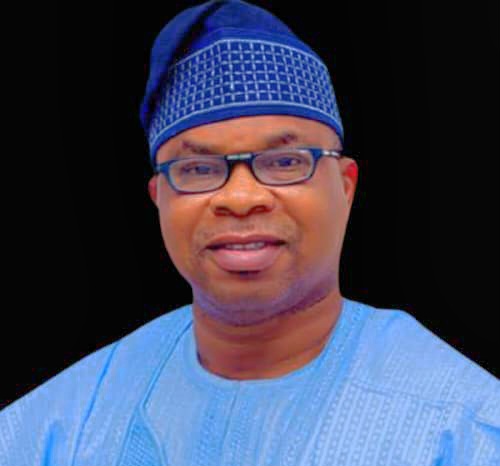
As Osun state gubernatorial election draws nearer, we’re now at the dawn of the campaigns for the coming election and so as characteristic of Nigeria’s democracy, wrong accusations, blackmails, character assassinations and all manner of negative campaigns aimed at demarketing the most popular candidate with the highest chances of coasting home to victory in a major election of this nature, must surface. And so in our own dear Osun state here this ugly trend has started surfacing. The mudslinging that has started from Governor Ademola Adeleke’s Accord Party’s camp against the APC gubernatorial candidate, Asiwaju Munirudeen Bola Oyebamiji AMBO is ‘normal’ and expected because with the massive support for AMBO across the nook and cranny of the state, it’s crystal clear that he’s the candidate to beat.
As mentioned above, a candidate to beat in any major election is bound to face vilifications by his opponents who see him as a threat and a stumbling block against the success of their own ambitions. Therefore given the nature of our politics in this part of the world, the negative campaigns that have started against AMBO are no surprise. We witnessed the same thing against the incumbent president, Asiwaju Bola Tinubu during the 2023 electioneering campaigns for the office of the country’s president. But against all odds, Asiwaju Tinubu emerged victorious. So as Asiwaju Tinubu emerged victorious in 2023, l have that strong conviction that our own Asiwaju Bola Oyebamiji will also become victorious in the coming August gubernatorial election in the state irrespective of whatever negative campaigns that may come up against him. This is because the AMBO governorship project is divinely ordained.
Amongst other attacks that are still likely to come up against him as we face the election and as the election faces us, we have heard from those who are afraid of losing power that AMBO is the architect of half salaries in Osun (as if he was the governor in that era). We have also heard from them that he’s not youth-friendly. The spokesperson to governor Adeleke, Malam Olawale Rasheed also amplified these two negative points in his latest article aimed at demarketing AMBO. Like I mentioned, the negative campaigns have just started. We are still going to hear more. I wonder why people cannot engage in issues-based campaigns instead of vilifying candidates.
Ambo has told Osun youths the program he has for them. He has promised to take care of them. And as a God-fearing and honest leader who keeps to his words, l believe he will not renege on his promise for the youths and also his promises for Osun people generally. So let those who revel in vilifying a credible candidate like AMBO tell Osun youths the programs they have for them rather than calumniating a visionary and capable leader who has what it takes to deliver the goods. Of course AMBO – being a focused leader – needs not to bother himself about the negative campaigns being circulated against him by his political detractors because William Shakespeare had for long told us that “*Be thou as chaste as ice, and as pure as snow, thou shall not escape calumny*”. And George Washington also mentioned it that “*Silence is the best answer to false accusations*”.
Finally, the Yorubas in their words do say that “maligning the honey doesn’t reduce its sweetness”. No matter the level of negative campaigns against the APC gubernatorial candidate towards the election, it won’t reduce the love the Osun people have for him while it won’t deter them from casting their votes for him in the upcoming gubernatorial election in the state. He will surely come out victorious by the special Grace of God Almighty 🙏. For, Vox populi vox dei. AMBO should continue on the path of issues-based campaigns and close his eyes against malignant talks by those who are already on their way out of power.
● Odepeju, newspaper columnist and political activist, writes from Iragbiji, Osun state.


BREAKING: “Serial Disrespect” Sparks Drama As Senate Order Arrest Of Tinubu’s Appointee

Edo State To Spend N1billion On Armoured Car For Speaker, N4.6billion On Vehicles For Lawmakers

Opposition Leaders Urge N’Assembly To Begin Fresh Electoral Act Amendment

Former Super Eagles Star Loses Life Savings, Duped By A Pastor of ₦1.2 Billion

These ’90s fashion trends are making a comeback in 2017

I’m A Married Man, I Can Never Get Myself Involved With Such A Thing, Delta Gov Aide Reveals Why He Offered Comfort ₦500,000 Job
-
 Politics2 days ago
Assembly Confirms Popular Redeemed Pastor As Deputy Governor
-

 Foreign2 days ago
Cabinet Reshuffle: President Sacks Finance Minister
-

 Business2 days ago
JUST IN: 13 Banks May Shut Down In March As CBN Confirms 20 Safe For Recapitalisation Deadline
-
 Politics9 hours ago
BREAKING: “Serial Disrespect” Sparks Drama As Senate Order Arrest Of Tinubu’s Appointee
-
 Politics10 hours ago
Opposition Leaders Urge N’Assembly To Begin Fresh Electoral Act Amendment
-
 Opinion9 hours ago
Edo State To Spend N1billion On Armoured Car For Speaker, N4.6billion On Vehicles For Lawmakers