
Politics
Gowon Reflects On Aburi, Blames Ojukwu Misinterpretation

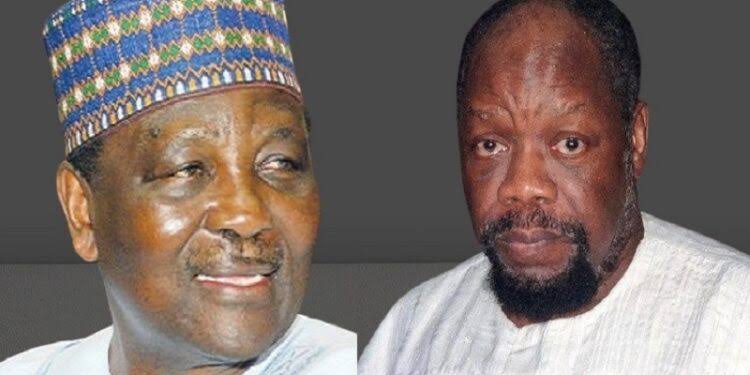
Former Nigerian Head of State General Yakubu Gowon has shed new light on the collapse of the historic Aburi Accord, claiming that his eastern counterpart, Chukwuemeka Odumegwu Ojukwu, misrepresented the terms of the agreement in a manner that derailed hopes of national unity and contributed to the outbreak of the Nigerian Civil War.
Speaking during an interview on Arise Television on Wednesday, Gowon recounted the tense atmosphere that followed the January 1967 peace talks held in Aburi, Ghana. The talks were convened to ease the political crisis threatening to splinter Nigeria in the aftermath of two coups and growing regional mistrust.
Gowon (the head of state) and Ojukwu (then military governor of the Eastern Region), were key players in the discussions.
Gowon said that while the intent of the Aburi meeting was to return home and finalize the resolutions together, Ojukwu immediately made public pronouncements that, according to him, were not aligned with what was actually agreed upon.
“We just went there, as far as we were concerned, to meet as officers and then agree to get back home and resolve the problem at home. That was my understanding,” Gowon said. “But that was not his (Ojukwu’s) understanding.”
The retired general, who led Nigeria from 1966 to 1975, said he fell seriously ill with fever shortly after returning from Aburi, which prevented him from immediately engaging in follow-up deliberations. During that time, he claimed Ojukwu moved quickly to present a version of the accord that surprised many of his fellow officers.
“I don’t know where he got his version from,” Gowon said, a note of bewilderment in his voice.

At the heart of the disagreement, according to Gowon, was the issue of military control. Ojukwu, he alleged, proposed that regional military zones be placed under the command of regional governors, a structure that would have effectively decentralized control of the armed forces.
“That was one of the major issues,” Gowon explained. “We said that the military would be zoned, but he wanted those zones to be commanded by the governor of each region. Of course, we did not agree with that one.”
Gowon also noted that a follow-up meeting was arranged in Benin City to clarify lingering ambiguities in the agreement. All regional leaders, including Ojukwu, were invited. But the Eastern Region governor declined, citing security concerns.
“We needed to review and agree collectively on the next steps. But he refused to come,” Gowon said.
The Aburi meeting, held from January 4–5, 1967, was one of the last-ditch efforts to preserve Nigeria’s unity in the face of mounting ethnic tensions, military mutinies, and regional secessionist sentiment. Both federal and eastern delegates agreed in principle that regions should have autonomy in managing their affairs, but the specifics, especially regarding the chain of command and national sovereignty, remained contentious.
The failure to implement the accord ultimately paved the way for the declaration of the Republic of Biafra on May 30, 1967, by Ojukwu and the onset of a brutal civil war six weeks later. The conflict, which lasted until January 15, 1970, claimed an estimated one to three million lives, many from starvation in the war-ravaged eastern region.
Though more than five decades have passed since the accord and the war, interpretations of Aburi remain divisive. To some, it symbolized a missed opportunity for a more decentralized, federal Nigeria. To others, it exposed the fault lines and distrust that no agreement, however well-intentioned, could mend.
Ojukwu, the man at the centre of that critical moment in Nigerian history, died in 2011 at the age of 78. His legacy, like that of Aburi, remains both revered and contested.
For Gowon, now in his 80s, the lessons of that era still resonate. “We wanted peace,” he said in the interview. “But peace must come with clarity and shared understanding. That, sadly, is where we fell short.”
Ripplesnigeria.com
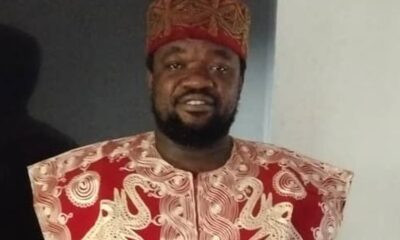


Olujonwo Obasanjo, son of former President Olusegun Obasanjo, has backed the re-election of President Bola Tinubu ahead of the 2027 presidential election.
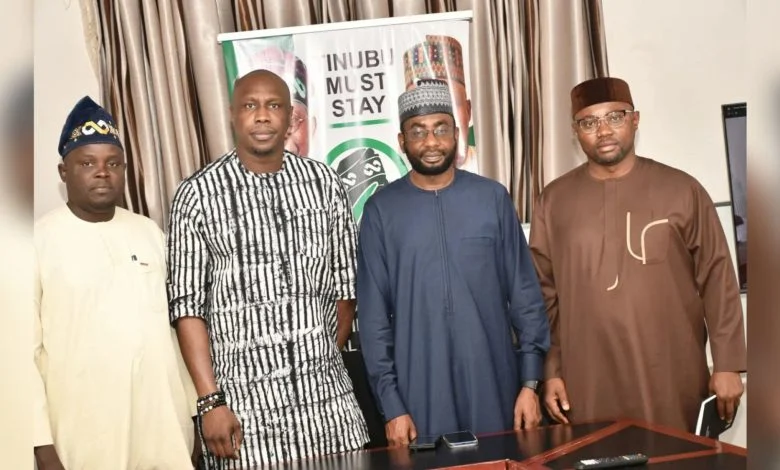
He expressed his support after joining the Tinubu Movement for Sustainable Governance Foundation (TMS), popularly known as the “Tinubu Must Stay” movement, to promote the president’s re-election agenda.
Olujonwo said his decision to join the movement was informed by his longstanding association with the ruling All Progressives Congress (APC) and his belief in the need to sustain the policies and reforms introduced by the Tinubu administration.
He was formally received by the leadership of TMS at a forum in Abuja, where he expressed support for the government’s Renewed Hope Agenda and called for increased public awareness of its policies and achievements.
Olujonwo, who serves as president of the Buhari Youth Organisation (BYO) and Project One Nigeria, as well as Senior Special Assistant to the Ogun State Governor on Housing, said he had been associated with the APC since 2014.
Explaining his political background, he said he was familiar with the party’s formation and its relationship with key political figures, including his father, former President Obasanjo, the late President Muhammadu Buhari and President Tinubu.
“I have been in the APC since 2014. I was there when my father hosted the late President Muhammadu Buhari and President Bola Ahmed Tinubu to form the movement. I am not new to the party,” he said.APC party merchandise
He argued that some of the policies and achievements of the Tinubu administration were not being adequately communicated to Nigerians, adding that misinformation had contributed to negative perceptions of the government.
Olujonwo cited developments in the education sector, infrastructure and access to student loans as areas he believed deserved greater public attention.
“There is a lot of noise out there, and people are distorting what is going on. ASUU has had no strikes. Students have access to loans. Nigeria has become a massive construction site and an investors’ haven again. These are things we need to promote,” he said.
His decision to join the movement comes as political parties and their supporters begin positioning themselves ahead of the 2027 general election, in which Tinubu is expected to seek another presidential term.
The move also places the son of the former president within a political platform established to defend the current administration’s policies and encourage public support for continuity in governance.
Welcoming Olujonwo to the movement, the National Coordinator of TMS and Director-General of the National Information Technology Development Agency (NITDA), Kashifu Inuwa Abdullahi, said his background gave him an understanding of the importance of economic reforms.
Inuwa drew a comparison between the economic reforms introduced during Olusegun Obasanjo’s administration and those being pursued by Tinubu, arguing that both periods involved policies intended to reshape Nigeria’s economy.
He cited telecommunications liberalisation and banking reforms under the elder Obasanjo as measures that helped establish the foundation for subsequent economic development.
“You grew up in a family that led the second wave of reforms in Nigeria. Telecommunications liberalisation, banking reforms—these laid a solid foundation. Being raised in that family, you understand what reforms mean,” Inuwa said.
He urged Nigerians to consider the long-term implications of government policies, warning that reversing ongoing reforms could undermine investor confidence and disrupt economic progress.
According to him, maintaining policy consistency would be important for attracting investment and sustaining developments in key sectors of the economy.
“We are building investors’ confidence. The naira is becoming strong. Our stock exchange is one of the fastest-growing. The Dangote Refinery is a game changer. If we start reversing these policies, we’ll go back to where we were,” Inuwa added.
Also speaking at the event, Marcel Ngogbehei, Director-General of TMS and a former coordinator of the Obidient Movement, praised the economic policies implemented during Obasanjo’s presidency.
Ngogbehei highlighted the former president’s role in securing debt relief for Nigeria and supporting the liberalisation of the telecommunications sector, describing those measures as important contributions to the country’s economic development.
He said TMS intended to promote discussions about government policies through evidence, research and public engagement rather than propaganda.
“We’re happy you have decided to take this step. Your father was one of those who revolutionised this country. The debt was paid off, and major innovations were introduced in liberalising the economy. This is not about propaganda. We will engage respectfully, factually and transparently,” Ngogbehei said.
The organisation said it had established structures across the country, including a Board of Trustees, national coordinators and specialised directorates, to support its activities.
It also plans to use digital platforms, virtual town hall meetings, policy research and fact-checking initiatives to promote the government’s policies and address what it considers misinformation about the administration.
Following Olujonwo’s reception, TMS announced plans to expand its engagement with professional associations, youth organisations and community groups across the country.
The planned activities are intended to increase public participation in governance and communicate the administration’s policies to Nigerians across different states and geopolitical zones.
Meanwhile, Olusegun Obasanjo has previously expressed concerns about Nigeria’s economic challenges, arguing that the country has sufficient natural and human resources to become prosperous.
In an interview on C-Suite Cafe, hosted by Ikem Okuhu, the former president questioned why Nigeria continued to struggle with poverty despite its agricultural potential, vast land, water resources and large population.Buy Maps
“Give me one reason why Nigeria should be poor. Is it the land that we don’t have or the desert that we are in or the people that we don’t have or the water that we don’t have or the rain that we don’t have?” he asked.
Obasanjo also criticised policies that encourage the importation of goods that could be produced locally, arguing that such practices discourage domestic farmers and undermine local production.
He recalled how restrictions on rice imports were introduced in 1979 to encourage domestic production, claiming that subsequent administrations reversed the policy and allowed imported rice to compete with locally produced varieties.
“When our successors came, one of the first things they did was to lift importation of rice, not to encourage production of rice but to encourage importation of rice, and the farmers couldn’t sell their own rice,” he said.
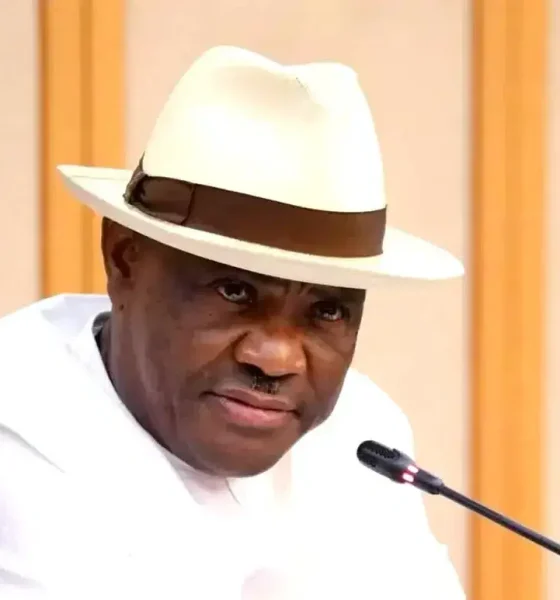
The Peoples Democratic Party (PDP) has indicated plans to take disciplinary action against members accused of working against its interests, with the Minister of the Federal Capital Territory, Nyesom Wike, among those facing criticism over his alleged support for the ruling All Progressives Congress (APC).Access Services
PDP chieftain Emmanuel Ogidi disclosed the party’s position during an interview on Arise Television on Wednesday.
He discussed the lingering crisis within the opposition party and the steps its leadership intends to take against members accused of undermining its activities.
Ogidi described the situation as internal sabotage and maintained that the party could no longer afford to tolerate actions that weaken its structure, particularly as political activities ahead of the 2027 general elections continue to gather momentum.
He accused Wike of maintaining a relationship with the PDP while allegedly supporting the interests of the APC, arguing that such conduct raised serious questions about loyalty and commitment to the opposition party.
“You can’t serve two masters. He (Wike) is supposed to be serving us in PDP, but he is serving APC. This is a threat to democracy. APC is using him to destroy democracy, and it’s deliberate, but we are very conscious of that and very soon you will hear what will happen,” Ogidi said. Access Services
The PDP chieftain’s comments suggest that the party may be preparing to take a firmer position against members it believes are contributing to its internal difficulties.
However, he did not disclose the specific disciplinary measures being considered or when any formal decision concerning Wike would be announced.
Ogidi also indicated that the party had moved beyond the demands previously presented by Wike’s camp during efforts to resolve the disagreements within the PDP.
His comments point to growing frustration among party members who believe that the disagreements have continued for too long and are affecting the party’s ability to prepare for future elections.
The dispute involving Wike and the PDP has remained a major issue within the party since the 2023 general elections, when divisions emerged over its presidential candidate, the distribution of party positions and disagreements surrounding the political future of its leadership.
Wike, a former governor of Rivers State, was a prominent PDP member before President Bola Tinubu appointed him as FCT minister in 2023.
His appointment placed him in the cabinet of an APC-led administration despite his continued association with the opposition party.
His role in the federal government has since generated disagreements among PDP members, with some questioning how a senior party figure can serve in an administration controlled by a political opponent while remaining associated with the PDP.
Ogidi, however, insisted that the PDP belongs to its members and supporters rather than any individual or faction.
He argued that no group should be allowed to dictate the party’s direction or prevent it from enforcing its rules.
He further warned that the party’s willingness to reconcile with aggrieved members should not be interpreted as an acceptance of indiscipline.
According to him, efforts to bring members together must be accompanied by accountability for actions considered harmful to the party.
The PDP remains one of Nigeria’s major political parties, but prolonged internal crises could affect its candidate-selection process, campaign planning and efforts to attract voters ahead of 2027.Nigeria travel guide
Despite these challenges, Ogidi maintained that the PDP remained strong and capable of overcoming its current difficulties.
He dismissed suggestions that defections, court cases and disagreements over zoning had rendered the party incapable of competing in future elections.
He said the party was focused on ensuring that its forthcoming convention was successful, describing the exercise as an important step in its preparations for the 2027 polls.
Nevertheless, the exact nature of the proposed action against Wike and other members remains unclear, pending any formal announcement by the party’s authorised organs.
The FCT minister has not been quoted in the remarks provided as responding directly to Ogidi’s latest comments.
The allegations against him should therefore be understood as the position expressed by the PDP chieftain rather than an established finding of wrongdoing.
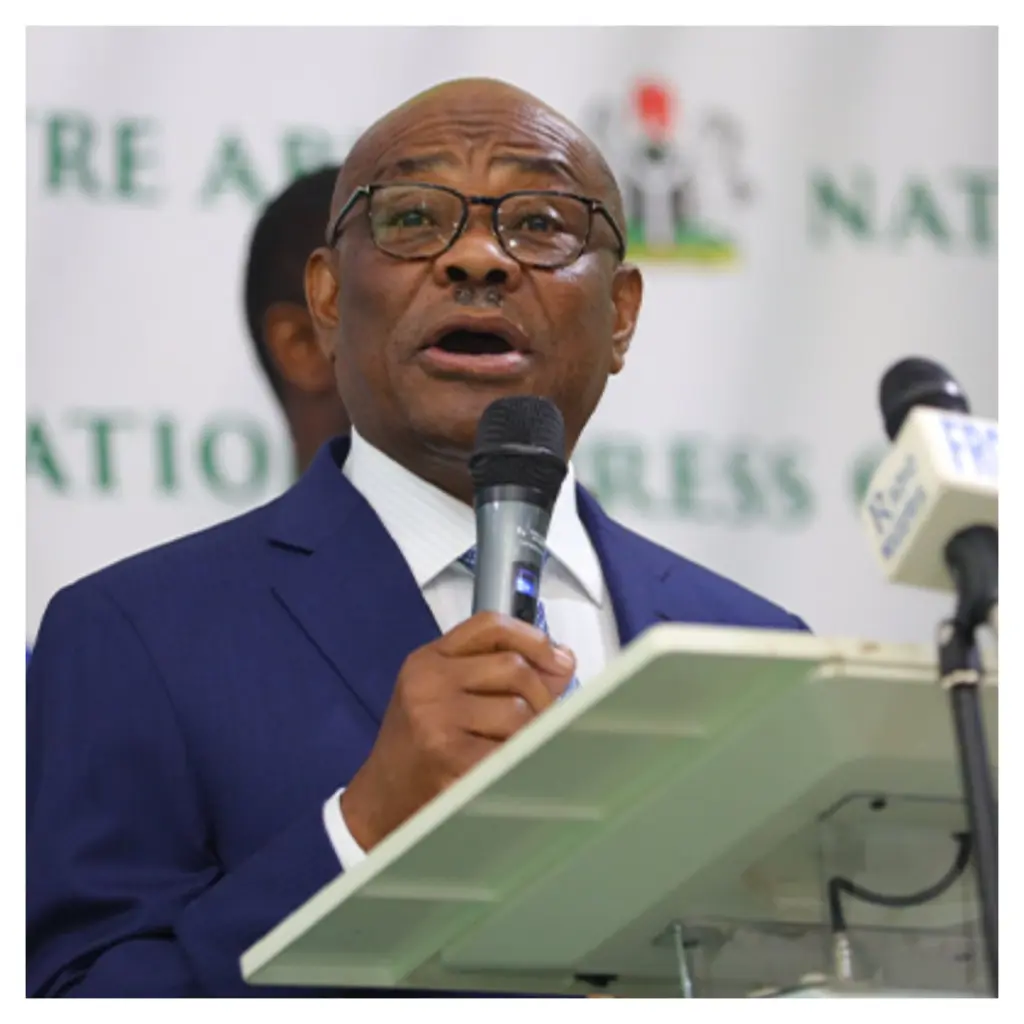
The All Progressives Congress (APC) has dismissed reports of a disagreement between its governors and the Minister of the Federal Capital Territory, Nyesom Wike, insisting that both sides remain committed to President Bola Ahmed Tinubu’s re-election in 2027.
The party’s National Publicity Secretary, Felix Morka, described the reported disagreement as a ‘false battle’.
He maintained that there was no genuine conflict between the minister and members of the Progressives Governors Forum.
Morka clarified this on Tuesday during an interview on Arise Television’s News Day, following Wike’s inclusion in the APC Presidential Campaign Council.
According to him, the governors and the FCT Minister share a common political objective of ensuring Tinubu’s victory in the next presidential election.
“It was a false battle to begin with. I mean, I don’t think there was any real tension between those positions because they united in their extraordinary commitment to the re-election of the president,” Morka said.
He noted that the Progressive Governors Forum comprised governors elected on the APC platform, while Wike, a former Rivers State governor, was a member of Tinubu’s cabinet and a vocal supporter of the President.
According to him, publication of the presidential campaign council list had also clarified the roles of those involved in Tinubu’s re-election campaign.
He said: “Governors, who are not of the APC, now [are] front and centre, coordinating some of our activities in their respective jurisdictions.”
Morka described the development as a new phase in Nigeria’s democratic politics, arguing that the President was bringing politicians from different parties together around a common objective.
The APC spokesperson claimed that the collaboration was unusual in a presidential system, stressing that Tinubu was transcending party differences by building a coalition of political actors to support his administration and re-election campaign.
He said: “We’re seeing a president who is transcending all of the divides and really nullifying what I call the politics of difference between these partisans and bringing them together under the same umbrella to pursue a common agenda for the good of the people.”


Salary: Fresh Update Emerges On Payment To Nigerian Workers

Obasanjo’s Son Picks Side In 2027 Race