







“We remain committed to advocating for policies that strengthen transparency and fairness. We call on all stakeholders to support the President’s reform agenda for the benefit of all Nigerians,” Uwaleke concluded.
Business
FG Launches Flood Insurance Policy

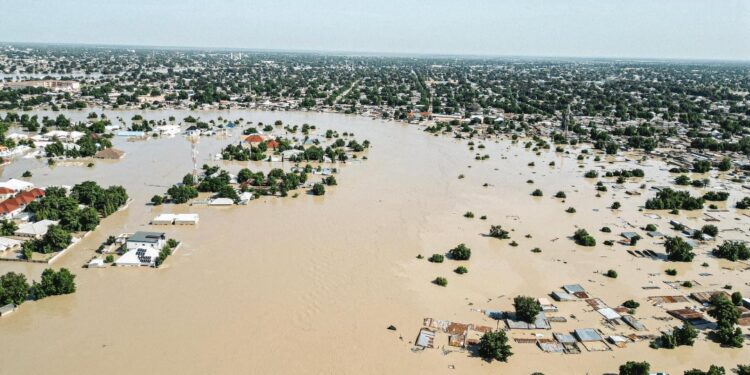
The Federal Government has introduced a National Flood Insurance Policy (NFIP) to provide a financial safety net for individuals, businesses, and communities frequently affected by flooding across Nigeria.
The initiative was announced on Thursday in Abuja at a Technical Committee Meeting (TCM) focused on the development and implementation of the new insurance policy, as reported by the News Agency of Nigeria (NAN).
According to the Ministry of Environment, the NFIP is designed to reduce the financial burden on federal and state governments, while also offering protection to citizens and businesses facing flood-related losses.
Speaking at the event, Mr. Mahmud Kambari, Permanent Secretary at the Ministry of Environment, represented by Mr. Kunle Awojemila, Deputy Director of Flood Erosion Control, said the policy shifts from reactive response to proactive flood risk management. He added that it aligns with Section Four of the National Erosion and Flood Control Policy, which focuses on long-term resilience.
“The Federal Government has adopted a National Flood Insurance Policy (NFIP) aimed at addressing the growing threat of flood-related disasters across the country,” the NAN report read in part.
The report further stated, “The Permanent Secretary of the Ministry of Environment, Mr Mahmud Kambari, said the policy would reduce the financial burden on both federal and state governments currently allocated to emergency relief and post-disaster reconstruction.
“He added that the NFIP would serve as a financial safety net for individuals, businesses, and communities, enabling swift recovery from flood-induced losses and ensuring long-term resilience.”
Kambari explained that the programme is designed to provide financial protection and support rapid recovery from flood-related losses. He noted that its implementation would include clearly defined timelines, assigned responsibilities, and mechanisms for effective monitoring.
Also speaking at the event, Mrs. Rubaiyat El Rufai, Special Adviser to the President on National Economic Council and Climate Change, highlighted the urgency of the initiative.
Represented by Mrs. Inna Audu, Special Assistant to the President on Humanitarian Affairs, she pointed out that many agrarian communities along the River Benue and River Niger suffer significant damage from seasonal flooding.
She described insurance as a preparedness mechanism rather than a post-disaster response, stressing the importance of proactive contributions to create a fund for emergencies.
El Rufai noted that trillions of naira have been lost over the years due to floods—damaging farms, properties, and livelihoods—and while human lives cannot be quantified, financial protection can help prevent the most vulnerable from falling into deeper hardship.
She further advocated for dedicated flood insurance schemes, explaining that general insurance policies often fail to adequately address flood-specific risks. In her view, standalone coverage would enable better risk management and facilitate long-term recovery for affected communities.
The Director of the Erosion and Coastal Zone Management Department, Mr. Usman Bokani, represented by Assistant Director Mr. Abdullahi Atta, said the national framework would guide the development of an inclusive flood insurance system, incorporating financing models, community-level delivery, risk pooling, and regulatory alignment.
Nairametrics.com
Business
JUST IN: 13 Banks May Shut Down In March As CBN Confirms 20 Safe For Recapitalisation Deadline

Four weeks before the March 31, 2026, deadline, the Central Bank of Nigeria announced that 20 out of 33 participating banks have met the new minimum capital requirement under its sweeping recapitalisation programme.
Governor Olayemi Cardoso disclosed on Tuesday that banks have so far raised a verified and approved total of N4.05 trillion, marking a major step in efforts to reinforce the strength and stability of the country’s financial system.
Speaking at the end of a two-day meeting of the Monetary Policy Committee in Abuja, Cardoso said the committee welcomed the strong progress recorded so far.
According to him, most financial soundness indicators in the banking sector remain within regulatory thresholds, reflecting continued resilience.
Of the N4.05 trillion raised as of February 19, 2026, N2.90 trillion, representing 71.67 per cent, came from domestic sources.
According to a BusinessDay report, foreign participation accounted for $706.84 million, equivalent to N1.15 trillion, or 28.33 per cent of the total.
The CBN governor described the balance between local and foreign inflows as a sign of broad investor confidence. He noted that interest from international investors had been evident in previous engagements abroad and expressed satisfaction that this interest has translated into tangible commitments.
While 20 institutions have crossed the new capital threshold, 13 banks are still working to complete their recapitalisation plans before the deadline.
Some of these lenders are exploring strategic options, including potential mergers or other forms of consolidation.
Cardoso explained that banks currently under regulatory intervention face legal and structural considerations that may affect the timing and sequencing of their capital-raising efforts.
Punch reported that Cardoso stressed that it would be unrealistic to expect them to follow the same timeline as institutions that had more than two years to prepare.
Despite these differences, the governor reassured the public that depositors’ funds remain safe.
He said affected banks continue to operate under close supervisory and regulatory oversight to safeguard stability.
Cardoso reiterated that the March 31 deadline is non-negotiable. He said the CBN remains fully engaged with stakeholders to ensure the process concludes in an orderly, transparent and credible manner.
According to him, the central bank will continue to monitor progress closely and enforce regulatory standards to preserve the stability and integrity of the banking system.
With just weeks left, attention now turns to the remaining banks and whether they can close the gap in time. For the majority that have already met the target, the milestone signals a new phase in Nigeria’s banking reforms and a stronger foundation for the years ahead.
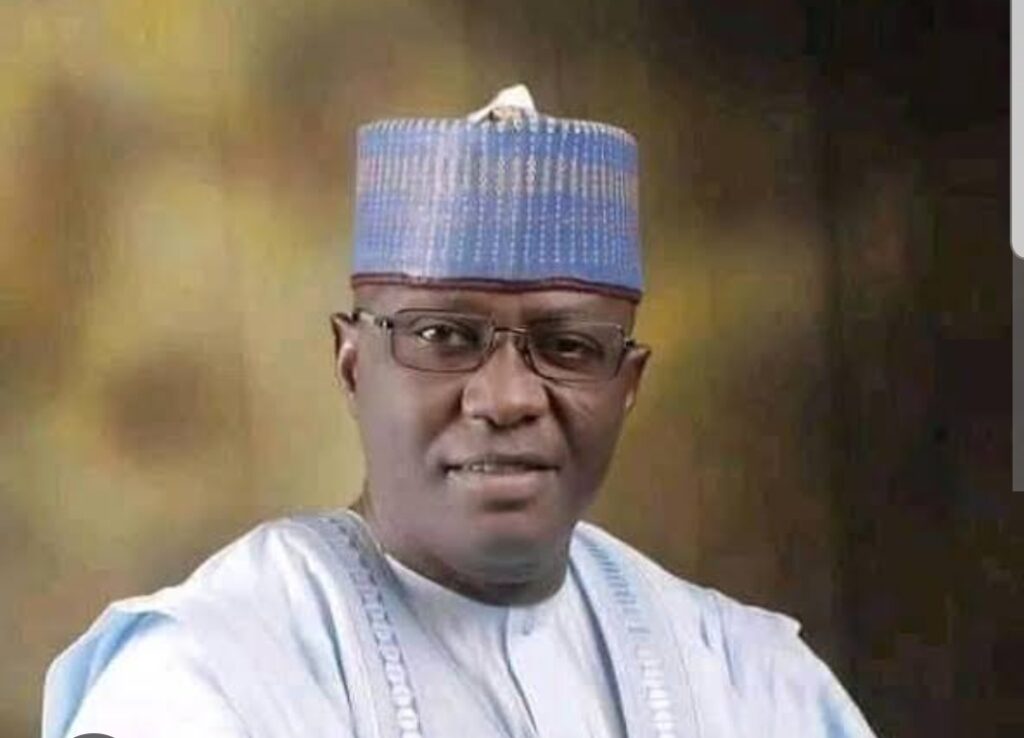
National Commission for Refugees, Migrants and Internally Displaced Persons (NCFRMI), has reiterates its commitment to effective implementation of the Global Compact for Migration.
The Honourable Federal Commissioner, NCFRMI, Hon. Dr. Tijani Aliyu Ahmed disclosed this in his opening remark at the just concluded Voluntary National Review (VNR) on the implementation of the Global Compact for Safe, Orderly and Regular Migration (GCM) ahead of the 2026 International Migration Review Forum (IMRF).
The event which was held between February 17 and 21 at the Lagos Continental Hotel, Victoria Island Lagos, had the International Organisation for Migration, other international partners, members of the civil society, federal and state government agencies among others in attendance.
Speaking, Dr Tijani extended appreciation to the Federal Government, the United Nations Network on Migration for the sustained technical guidance, institutional support and capacity building provided to Nigeria in the implementation of the Compact.
“I equally acknowledge the invaluable support of the Resident Coordinator’s Office for strengthening system-wide coherence and coordination across the United Nations Country Team and partners in Nigeria.”
He recalled that Nigeria adopted the Global Compact for Migration following its endorsement by the United Nations General Assembly in December 2018, and “since then we have demonstrated sustained political will and institutional commitment to its implementation. As a Champion Country, Nigeria has taken deliberate steps to domesticate the principles and objectives of the GCM within our national migration governance framework.
“The recently validated revised National Migration Policy and its integrated Implementation Plan, which doubles as Nigeria’s National GCM Implementation Plan, stand as clear evidence of this alignment between global commitments and national action.”
He added that in preparation for the first IMRF in 2022, Nigeria conducted its inaugural Voluntary National Review in Lagos through a whole-of-government and whole-of-society approach. “The process strengthened coordination among stakeholders and informed Nigeria’s national report, pledge and interventions at IMRF 2022. Building on that foundation, Nigeria convened a second Voluntary National Review in August 2024 in Abuja, structured around Technical Working Groups covering Labour Migration, Migration Data, Border Management, Return, Readmission and Reintegration, and Diaspora Engagement. The outcomes informed Nigeria’s engagement at the regional review and reinforced sustained national monitoring.”
This 2026 Review according to him is required to track progress since the 2024 regional review, assess implementation across the twenty-three objectives of the Compact, and consolidate national priorities, challenges and areas for improvement ahead of IMRF 2026. “Over the next three days, discussions will follow the GCM review template and align with the thematic areas of the IMRF roundtables. Breakout sessions chaired by members of the United Nations Network on Migration and supported by national thematic leads will evaluate progress, identify lessons learned and generate structured talking points to guide Nigeria’s participation at IMRF 2026.
“This consultation also provides an opportunity to stock take Nigeria’s pledges made at IMRF 2022, highlighting achievements, gaps and opportunities for renewed commitment. Furthermore, building on the evidence of impact from Nigeria’s side event at IMRF 2022, preparations are underway for a side event at IMRF 2026 to showcase practical achievements, lessons learned and pathways for strengthening regular migration channels.
“At this juncture, I would like to reiterate the unwavering commitment of the National Commission for Refugees, Migrants and Internally Displaced Persons, to the effective implementation of the Global Compact for Migration and to sustaining the whole-of-government and whole-of-society approach that underpins this national process.
“We remain deeply appreciative of the consistent support of the International Organization for Migration and other members of the United Nations Network on Migration in strengthening Nigeria’s migration governance efforts. As we prepare for IMRF 2026, we look forward to sustained technical collaboration and partnership to facilitate Nigeria’s effective engagement at the Review Forum and the successful delivery of our proposed side event. Continued cooperation will be critical in transforming commitments into tangible, evidence-based results.”
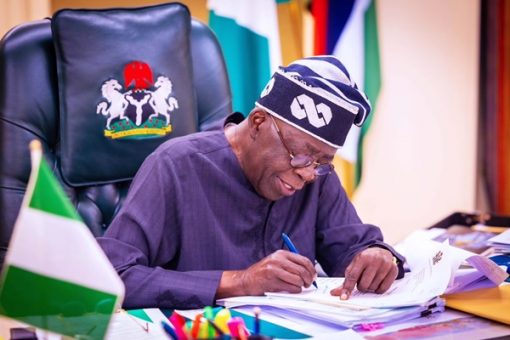
The federal, state, and local governments may receive additional revenue allocations of about N14.57tn following the recent Executive Order signed by President Bola Tinubu, directing that royalty oil, tax oil, profit oil, profit gas, and other revenues due to the Federation under production sharing, profit sharing, and risk service contracts be paid directly into the Federation Account
This is based on an analysis of revenue inflows in 2025, drawing on monthly earnings submitted to the Federation Account Allocation Committee and obtained by our correspondent in Abuja on Thursday.
Based on estimates from 2025 remittances to the Federation Allocation Accounts Committee, the Nigerian National Petroleum Company is projected remit about N906.91bn in management fees and frontier exploration funds, while oil and gas royalties totalling N7.55tn and gas flaring penalties of N611.42bn collected by the Nigerian Upstream Petroleum Regulatory Commission will now be remitted directly to the Federation Account.
The Nigeria Revenue Service will also lose the authority to collect Petroleum Profits Tax and Hydrocarbon Tax, which generated N4.905tn in 2025, while the Midstream and Downstream Gas Infrastructure Fund recorded N596.61bn in the same period, bringing the total affected revenue streams to about N14.57tn.
It was reported on Wednesday that the President signed the executive order directing that royalty oil, tax oil, profit oil, profit gas, and other revenues due to the Federation under production sharing, profit sharing, and risk service contracts be paid directly into the Federation Account.
The order also scrapped the 30 per cent Frontier Exploration Fund under the PIA and stopped the 30 per cent management fee on profit oil and profit gas retained by the Nigerian National Petroleum Company Limited. The order, which took effect from February 13, 2026, is aimed at safeguarding oil and gas revenues due to the Federation and improving remittances into the Federation Account.
According to details of the directive, the President invoked Section 5 of the Constitution of the Federal Republic of Nigeria (as amended), while the policy was anchored on Section 44(3), which vests ownership and control of all minerals, mineral oils, and natural gas in the Government of the Federation.
The PUNCH also gathered exclusively that the implementation of the directive commenced in January, and its impact is expected to reflect in the revenue allocations at the FAAC meeting scheduled for next week.
Since the implementation of the PIA in 2021, the Federation Account, shared by the federal, state, and local governments, received only 40 per cent of proceeds from Production Sharing Contracts. The remaining 60 per cent was retained by the NNPC, split between a 30 per cent Frontier Exploration Fund and a 30 per cent management fee.
Under the new directive, NNPC will no longer collect and manage the statutory 30 per cent Frontier Exploration Fund, a development expected to significantly alter the revenue landscape of the oil and gas sector.
The frontier exploration fund is designed to finance hydrocarbon exploration activities in Nigeria’s frontier basins, areas outside the traditional Niger Delta producing belt, where commercial discoveries have yet to be fully established. These include: the Chad Basin in the North-East, the Sokoto Basin in the North-West, the Bida Basin in North-Central Nigeria, the Benue Trough, and parts of the Dahomey basin.
Exploration in these locations is aimed at expanding Nigeria’s reserve base, reducing regional concentration of oil production, and enhancing long-term energy security. Activities typically involve seismic data acquisition, exploratory drilling, geological studies, and appraisal campaigns.
The fund was floated under the Petroleum Industry Act because frontier basins are generally high-risk and capital-intensive, and therefore would require sustained funding considered critical to maintaining exploration momentum.
In addition, the national oil company will no longer be entitled to the 30 per cent management fee on profit oil and profit gas revenues. The order further directed that all operators and contractors of oil and gas assets under Production Sharing Contracts must now pay Royalty Oil, Tax Oil, Profit Oil, Profit Gas, and any other government interest directly into the Federation Account.
The directive also suspended payments of gas flare penalties into the Midstream and Downstream Gas Infrastructure Fund, instructing the Nigerian Upstream Petroleum Regulatory Commission to remit all proceeds from penalties imposed on operators directly into the Federation Account.
It further directed that all expenditure from the Midstream and Downstream Gas Infrastructure Fund must now comply with extant public procurement laws and regulations. Tinubu said excessive deductions, overlapping funds, and structural distortions in the oil and gas sector have weakened remittances to the Federation Account, warning that the practice must end to protect national revenue.
In a post on his verified X handle, the President stated that for too long, revenues meant for federal, state, and local governments had been trapped in layers of charges and retention mechanisms, thereby slowing development across the country.
He said, “For too long, excessive deductions, overlapping funds, and structural distortions in the oil and gas sector have weakened remittances to the Federation Account. When revenues meant for federal, state, and local governments are trapped in layers of charges and retention mechanisms, development suffers. That must end.”
Tinubu emphasised that oil and gas revenues must serve Nigerians first, noting that the ongoing reforms in the sector are aimed at promoting fairness and fiscal responsibility. He added, “Oil and gas revenues must serve the Nigerian people first, and this reform is about fairness and fiscal responsibility.”
The President explained that as the government strengthens national security, invests in education, expands healthcare, stabilises the economy, and advances the country’s energy transition, every legitimate revenue due to the Federation must be protected.
According to him, NNPC will now operate strictly as a commercial enterprise in line with the law, stressing that the era of duplicative deductions and fragmented oversight in the sector is over. Tinubu also disclosed that his administration would undertake a comprehensive review of the Petroleum Industry Act to address structural and fiscal anomalies weakening national revenue.
He further announced the approval of an implementation committee to oversee and ensure effective and coordinated execution of the executive order on the matter.
The President said, “Nigeria can no longer afford leakage where there should be leadership. We are safeguarding the Federation Account. We are strengthening our budget. We are acting in the national interest.”
He reiterated that the reforms are part of his administration’s commitment to Nigerians, adding that the policy direction aligns with his “Nigeria First” promise.
Based on the latest Federation Allocation Accounts Committee revenue data for 2025, the reallocation could have far-reaching implications for government earnings and sector institutions.
While many Nigerians and energy experts have expressed concerns over the potential impact of the policy on the oil and gas industry, a review of potential revenue reallocation suggests that the NNPC may be the least affected among the key players.
Other relevant government agencies operating within the sector could bear a heavier burden, particularly in terms of revenue losses, operational adjustments, and institutional restructuring.
Findings indicated that NNPC may lose about N906.91bn in management fees and Frontier Exploration Fund deductions. Each of the funds accounted for N453.455bn in 2025. A breakdown showed that the N453.455bn realised for frontier exploration fell short of the N710.520bn budgeted for the year, leaving a deficit of N257.066bn.
The monthly trend reveals the volatility of the fund. In January, N31.77bn was deducted from the frontier line, when PSC profits came in at N105.91bn. The February deduction rose to N38.30bn from a profit of N127.67bn, representing a 20.6 per cent increase on the January inflow.
March provided the first big surge, with N61.49bn allocated to frontier exploration from profits of N204.96bn, a jump of 60.5 per cent on February’s figure. April, however, saw deductions ease back to N36.58bn as profits slid to N121.93bn, a 40.5 per cent drop compared with March.
In May, the fund received N38.8bn, only slightly higher than April’s contribution, reflecting profit of N129.33bn. June delivered the lowest allocation so far this year, just N6.83bn, after profits collapsed to N22.77bn. That represented an 82.4 per cent fall from May.
The flow recovered somewhat in July, with N25.34bn transferred into the fund from profits of N84.48bn. In August, the trend rose sharply to its highest level so far this year, as Profit Sharing Contract earnings surged to N263.13bn. This translated to N78.94bn remitted to the Frontier Exploration Fund, more than three times the July contribution and about twelve times the amount recorded in June.
The momentum was sustained in subsequent months. In September, PSC profit stood at N275.38bn, with N82.61bn deducted for frontier exploration. October recorded a sharp decline, as profit dropped to N36.82bn, while deductions amounted to N11.05bn.
In November, profit rebounded to N112.32bn, with N33.70bn transferred to the fund. However, by December, PSC earnings moderated again to N26.82bn, resulting in frontier exploration deductions of N8.05bn.
The same 30 per cent rule also applied to NNPC’s management fees, which mirrored the frontier deductions exactly. In January, NNPC booked N31.77bn; in February, N38.30bn; in March, N61.49bn; in April, N36.58bn; in May, N38.8bn; in June, N6.83bn; in July, N25.34bn; in August, N78.94bn; N82.614bn in September; N11.046bn in October; N33.695bn in November and N8.046bn in December.
The NUPRC is also expected to lose oversight of oil and gas royalty collections, a development that could significantly reduce its revenue from cost-of-collection fees, which are intended to fund its operational activities. Based on 2025 figures, the commission is projected to forgo approximately N7.55tn, while gas flaring penalties during the same period totaled N611.42bn.
Under the Petroleum Profits Tax, Hydrocarbon Tax, and other levies administered by the NRS, a total of N4.905tn was collected in 2025. This revenue will now be channelled directly to the Federation Account. The earnings, however, exclude company income tax on upstream activities and other revenue streams.
Similarly, the MDGIF, which was established to finance strategic gas infrastructure projects and improve domestic gas utilisation, recorded total collections of N596.61bn in 2025. With the recent directive, these funds will now be subject to the same public finance rules governing statutory allocations, signalling a shift in oversight.
Monthly inflows into the MDGIF in 2025 were highly variable: N35.07bn in January, N31.82bn in February, N52.99bn in March, N29.19bn in April, N41.27bn in May, N66.18bn in June, N50.98bn in July, N57.04bn in August, N66.32bn in September, N66.32bn in October, N59.42bn in November, and N46.90bn in December. The highest single-month collection of N66.32bn in both September and October accounted for about 11.1 per cent of the annual total each, while the lowest in April (N29.19bn) represented just under 4.9 per cent of the year’s total.
Cumulatively, these revenue streams would amount to a total of N14.72tn, although the actual inflows could rise or fall depending on fluctuations in crude oil production and exploration activities, which directly determine the amount of revenue generated.
The anticipated upsurge in oil and gas revenue remittances is expected to deliver a significant boost to sub-national earnings, providing state and local governments with much-needed fiscal resources. This inflow could sharply reduce budget deficits, easing financial pressures across the federation and enabling more consistent funding for critical infrastructure and social services.
Over the years, concerns have been raised by the Nigeria Extractive Industries Transparency Initiative and the National Assembly of Nigeria over revenue leakages, delayed remittances, and opaque deductions in the oil and gas sector.
With the new directive, Nigeria may be entering a new phase of fiscal discipline and transparency in its most critical revenue-generating industry.
Experts react
Commenting, the Chair of the Oil, Gas, and Energy Policy Forum, Professor Wumi Iledare, urged careful consideration of the recent Executive Order by President Bola Tinubu directing the direct remittance of oil and gas revenues to the Federation Account.
The order, described by Iledare as a “significant fiscal intervention,” aims to strengthen revenue transparency, curb discretionary retention, and ensure statutory remittances flow efficiently to the three tiers of government.
In a statement obtained by The PUNCH on Thursday, titled “PEWI Responds to Presidential Executive Order on Direct Remittance of Oil and Gas Revenues”, Iledare acknowledged the government’s stated objectives.
“Safeguarding public revenues, curbing inefficiencies, and enhancing fiscal discipline are legitimate public finance priorities, particularly in a period of budgetary strain and debt sustainability concerns,” he said.
However, Iledare warned that parts of the Executive Order may intersect with statutory provisions under the PIA 2021, including the Frontier Exploration Fund, the Midstream and Downstream Gas Infrastructure Fund, and existing Production Sharing Contract fiscal arrangements.
“While Section 5 of the Constitution empowers the President to implement and enforce laws, substantive changes to statutory fiscal frameworks may require legislative amendments to ensure constitutional alignment and institutional certainty,” he noted.
The energy expert highlighted the importance of distinguishing between contractual entitlements, corporate retained earnings, and statutory earmarked funds under the PIA.
“Clarity in these distinctions is critical to avoid conflating contractual entitlements with discretionary fiscal practices,” Iledare explained.
On the issue of direct remittance of royalty oil, tax oil, and profit oil to the Federation Account, PEWI recognised potential benefits in enhancing transparency and reducing intermediation. Yet, the statement stressed that reforms must be carefully sequenced to maintain contractual stability and safeguard investor confidence.
“NNPC Limited’s dual role as both commercial operator and concessionaire under certain arrangements has long presented institutional tensions within the post-PIA framework.” Iledare said. “Any reform aimed at reinforcing NNPC’s commercial identity must be anchored in legal clarity and predictable governance mechanisms.”
The policy forum therefore recommended a three-pronged approach: prompt legislative consultation to ensure statutory coherence, transparent engagement with operators and investors, and a sequenced reform rollout that balances fiscal urgency with institutional stability.
“Reforms that improve transparency and fiscal integrity are welcome,” the statement concluded, “but sustainable reform must align with constitutional processes, statutory frameworks, and investor predictability. PEWI will continue to monitor developments and provide objective, technically grounded analysis in the public interest.”
Meanwhile, the Capital Market Academics of Nigeria has thrown its weight behind President Bola Tinubu following his recent signing of Executive Order 9 of 2026, which mandates the direct remittance of 60 per cent of oil and gas profits back to the Federation Account.
In a statement released on Thursday, the President of CMAN, Prof Uche Uwaleke, described the move as a “bold and historic” decision that corrects a long-standing fiscal imbalance created by the Petroleum Industry Act of 2021.
“This marks one of the most courageous reforms of his administration and a decisive step toward strengthening fiscal transparency and equity in revenue distribution,” Uwaleke stated.
Uwaleke noted that this structure undermined the principle of collective ownership of national resources. “By correcting this anomaly, the President has ensured that all tiers of government benefit equitably from the nation’s oil and gas wealth. NNPCL, as a limited liability company, must operate independently on its own revenues rather than relying on public funds,” he added.
While praising the reform, CMAN emphasised the need for institutional safeguards to ensure the new policy achieves its intended goals. Specifically, the institute called for the Chairman of the Revenue Mobilisation, Allocation and Fiscal Commission to be included in the committee overseeing the implementation of the Executive Order.
“CMAN underscores the importance of including the RMAFC Chairman to ensure transparency and accountability. This development is a victory for the Federation Accounts Allocation Committee and for fiscal justice in Nigeria.”
The group also urged the administration to extend these reforms to Joint Venture assets, arguing they should also be returned to the Federation Account to maximise national revenue. According to the statement, the anticipated surge in revenue will enhance the capacity of all government tiers to deliver essential services and stimulate the capital markets.


Politics2 hours ago
BREAKING: “Serial Disrespect” Sparks Drama As Senate Order Arrest Of Tinubu’s Appointee

Opinion2 hours ago
Edo State To Spend N1billion On Armoured Car For Speaker, N4.6billion On Vehicles For Lawmakers

Politics2 hours ago
Opposition Leaders Urge N’Assembly To Begin Fresh Electoral Act Amendment

Sports8 months ago
Former Super Eagles Star Loses Life Savings, Duped By A Pastor of ₦1.2 Billion

Uncategorized9 years ago
These ’90s fashion trends are making a comeback in 2017

Lifestyle6 months ago
I’m A Married Man, I Can Never Get Myself Involved With Such A Thing, Delta Gov Aide Reveals Why He Offered Comfort ₦500,000 Job
-

 Politics2 days ago
Assembly Confirms Popular Redeemed Pastor As Deputy Governor
-

 Foreign2 days ago
Cabinet Reshuffle: President Sacks Finance Minister
-

 Business1 day ago
JUST IN: 13 Banks May Shut Down In March As CBN Confirms 20 Safe For Recapitalisation Deadline
-
 Politics2 hours ago
BREAKING: “Serial Disrespect” Sparks Drama As Senate Order Arrest Of Tinubu’s Appointee
-
 Politics2 hours ago
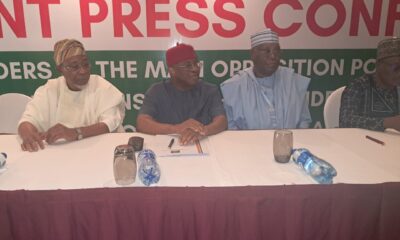
Opposition Leaders Urge N’Assembly To Begin Fresh Electoral Act Amendment
-
 Opinion2 hours ago
Edo State To Spend N1billion On Armoured Car For Speaker, N4.6billion On Vehicles For Lawmakers