
News
What South-West Governors Discussed At Emergency Security Meeting


Governors of the South-West states on Monday converge on Ibadan for an emergency meeting to deliberate on pressing regional issues.
Daily voice reports that the meeting, held behind closed doors at the Governor’s Office, Agodi, is being hosted by Oyo State Governor, Seyi Makinde.
All six governors from Lagos, Ogun, Oyo, Osun, Ondo and Ekiti are expected to attend the strategic session.
The South West Governors’ Forum, comprising the Governors of Lagos, Ogun, Oyo, Osun, Ekiti, and Ondo States, held its meeting on Monday, 24th November 2025, at the Governor’s Office Secretariat, Ibadan, Oyo State. After extensive deliberations on various issues, including agriculture, economic and regional development and security challenges affecting the South West region, the Forum resolved as follows:

The Forum commends Mr. President, His Excellency, Bola Ahmed Tinubu, GCFR, on the fight against insecurity and various economic reforms and other developmental agenda.
The Forum expresses solidarity with the Federal Government in its efforts in Kebbi, Kwara and Niger States after the recent spate of kidnappings, at the Government Girls Comprehensive Secondary School in Maga town, the Catholic institution of St. Mary’s in Papiri, Agwara LGA, Niger and the CAC Church at Eruku, Kwara State. The forum applauds the swift response of the Federal Government towards the rescue of the Kwara abductees and more than 51 students of the Catholic School, Niger State. The forum reviewed the current state of security of our region and took some decisions to ensure the security of the lives and property of our people.
1. South West Regional Security Fund: The Forum agreed to set up a South West Security Fund (SWSF) under DAWN Commission to be administered by Forum of Special Advisers on Security of all South West States and to meet monthly.
2. Joint Security Intelligence Sharing and Communication Platform: The forum resolves to establish a live, digital intelligence-sharing platform among all six South West states (Lagos, Ogun, Oyo,Osun, Ondo, Ekiti). This platform will exchange threat notifications, incident logs, traveler and cargo alerts and coordinate state-to-state rapid response.

3. Forest Surveillance: the Forum commends the efforts of the Nigerian Security and Civil Defence Corps (NSCDC), Hunters, Amotekun Corps Members and all the other security agencies. The Forum calls on the Federal Government to note the urgent need for enhanced forest surveillance across the South West States and called for the Federal Government to secure the vast forest belts that have become hideouts for criminal elements. To this end, the Forum agrees that the Federal Government should help deploy Forest Guards across the South west states, with each State Government responsible for providing the required personnel. The Governors reaffirm their collective commitment to reclaiming the forests, and ensuring that these spaces no longer serve as safe-corridors for banditry, kidnapping, or any form of criminal activities.
4. Interstate Migration: the forum expresses deep concern on the unregulated interstate migration that continues to pose significant challenges across the Southwest. The forum calls for stricter border monitoring, data collection and self- identification and each South west States to work with the National Identity Management Commission (NIMC) for proper identification. The forum agrees to intensify security collaboration to ensure that interstate migration does not become a conduit for insecurity.
5. Illegal Mining Activities: The forum expresses deep concern over the escalating illegal mining activities across the South West States, which continue to threaten environmental safety, public health and regional security. The forum calls for comprehensive and enforceable licensing framework, strengthened monitoring mechanisms, and strict enforcement actions against violators who may perpetrate violent crimes under the guise of mining.
6. State Police: The Forum reaffirms its support forthe establishment of State Police, emphasizing that ‘The Time is Now’ and It can no longer be delayed.
7. Agriculture, Food Security C Climate Resilience: The Forum acknowledges and appreciates the efforts of the Federal Government in providing food sufficiency and in particular commends the various farmers in the region for the increase in agricultural output and subsequent stability and reduction in food prices.
8. South West Development Commission (SWDC): The Forum thanks Mr. President, His Excellency, Bola Ahmed Tinubu, GCFR, for the establishment of the commission and charges the Commission to effectively deliver on its mandate.
9. DAWN Commission: The Forum commends the DAWN Commission and its activities on regional integration and security.
10. Finally, the forum enjoins all the south west people to remain united and committed to the peace that exists in our dear region. We remain one, indivisible entity that will continue to enjoy and guard the religious tolerance that we have always been known for.

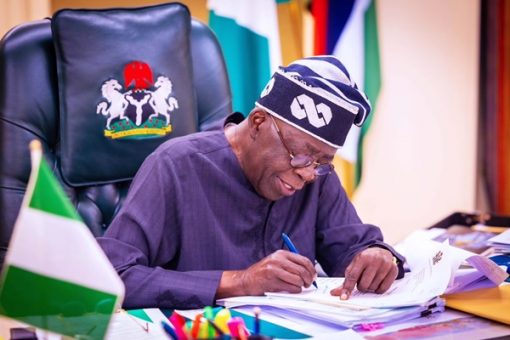
The Federal Government of Nigeria, led by Bola Ahmed Tinubu, has officially designated Friday, June 12, as a public holiday in observance of Democracy Day.
This announcement was made by the Minister of Interior, Dr. Olubunmi Tunji-Ojo, on behalf of the government.
A statement issued by the Permanent Secretary of the Ministry, Dr. Magdalene Ajani, emphasized the importance of June 12 in Nigeria’s history, recognizing the courage, resilience, and sacrifices of Nigerians whose efforts have been pivotal in establishing democratic governance in the country.
The Minister reaffirmed the Tinubu’s administration commitment to the preservation of democratic ideals, including the rule of law, transparency, accountability and inclusive governance.
“The administration has pledged to uphold these principles without compromise.
“The Ministry of Interior, in coordination with relevant security agencies, will continue to maintain and strengthen internal security measures to protect lives and property across the country,” Dr Tunji-Ojo said.
He noted that a secure and stable environment is essential to the health of any democracy and to the broader project of national development.
The Minister called on all Nigerians to observe the holiday as an opportunity for civic reflection, urging citizens to recommit to lawful conduct, responsible engagement and national unity.
“As we mark this historic day, every Nigerian is encouraged to remain law-abiding, uphold the institutions that sustain our democracy, and remember that the strength of any democracy lies ultimately in the character of its citizens,” he said.

The Nigerian delegation attending the 114th Session of the International Labour Conference (ILC) in Geneva is in mourning due to the passing of prominent labour leader Domingo Michael Adeleke.
Adeleke, who was serving as the Chairman of the Lagos State Joint Negotiating Council (JNC), reportedly died on Tuesday in Geneva after a brief illness. While participating in the conference, he fell ill and required medical attention, but unfortunately, he did not survive. His contributions to the labour movement will be remembered during this difficult time.
The incident was confirmed by an official of the Nigeria Labour Congress (NLC), who described him as a committed trade unionist devoted to workers’ welfare.
“It is with deep sorrow that the Nigeria Labour Congress and the entire trade union movement in Nigeria, especially the 2026 Workers’ Delegates to the International Labour Conference, announce the passing of Comrade Domingo Michael Adeleke, who died today in Geneva after a brief illness while attending the 114th Session of the International Labour Conference,” the official said.
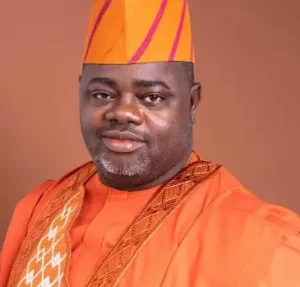
A member of the Nigeria Civil Service Union (NCSU), Adeleke led the Lagos State Joint Negotiating Council, where he was actively involved in labour advocacy and workers’ welfare initiatives.
According to the NLC, he remained committed throughout his career to promoting decent work and social justice.
“Comrade Domingo was a committed trade unionist whose dedication to Nigerian workers and the struggle for decent work took him to the global stage right to the end.
“His loss is felt deeply by all who knew him and worked alongside him,” the official added.
The NLC also confirmed that its leadership had visited the hospital where his remains are being kept and had begun arrangements for repatriation.
“The NLC leadership earlier today went to the hospital to see his body in solidarity, mourn his passing, and begin the process of arranging the necessary procedures,” the official said.
His death has cast a shadow over Nigeria’s participation in the ongoing International Labour Conference, which brings together governments, employers, and workers’ representatives from across the world to deliberate on labour and employment issues.
Tributes have continued to pour in from labour leaders and colleagues who described Adeleke as a passionate advocate for workers’ rights and welfare.
The NLC extended condolences to his family, colleagues, and the wider labour movement, describing his passing as a major loss.
“We extend our heartfelt condolences to his family, the NLC family and all comrades across Lagos State. May his soul rest in peace, and may his commitment to workers’ rights continue to inspire us,” the Congress said.
Adeleke is remembered by colleagues as a dedicated labour activist who spent much of his career advancing public service and protecting the interests of Nigerian workers.

A nationwide protest has been scheduled for June 12 against worsening national insecurity, severe economic hardship, and a sharp drop in living standards across the federation.
Human rights lawyer and Senior Advocate of Nigeria, Femi Falana, has partnered with 16 civil society organizations to lead the mass mobilization.
The coalition—comprising trade unions, youth groups, social movements, and faith-based organizations—noted that the demonstration is timed to coincide with Nigeria’s annual Democracy Day.
Recall that the date was designated by the federal government to honor Chief MKO Abiola, the presumed winner of the annulled June 12, 1993, presidential election.
According to the organizers, widespread administrative failures leave ordinary citizens with nothing to celebrate on this anniversary.
A joint statement signed by Falana in his capacity as National Chairman of the Alliance on Surviving COVID-19 and Beyond (ASCAB), alongside Hassan Taiwo Soweto of the Lagos State #EndBadGovernance Movement and Yinka Folarin, National President of the Committee for the Defence of Human Rights (CDHR), expressed deep concern over the expansion of insecurity in the country.
The leaders observed that entire communities are currently subjected to continuous trauma from unpunished banditry, terrorism, and mass abductions.
“Innocent Nigerians are being killed, abducted, displaced and traumatized while government responses have remained largely inadequate and ineffective. We express solidarity with families of victims of terrorism, banditry and kidnapping across the country. We demand immediate and concrete action to secure the release of all Nigerians held captive by criminal groups in Oyo, Borno, Katsina, Kwara, Ekiti, Zamfara, Kaduna, Niger and other states where citizens have been abducted. The Nigerian people deserve a pro-people government that places protection of lives and property at the core of governance.”
The organizers criticized official security narratives, arguing that promises of safety have been consistently contradicted by the realities faced by rural farmers, commuters, and schoolchildren.
The declaration attributed the country’s severe economic crisis directly to the neoliberal policies introduced under President Bola Tinubu’s administration. The statement detailed the negative impacts of currency devaluation, electricity tariff increases, and the removal of the petroleum subsidy, noting that these measures have triggered historic food inflation and crippled small businesses despite increased statutory allocations to state governments.
Characterizing the upcoming June 12 demonstration as the initial stage of a prolonged series of public actions, the leaders urged widespread citizen participation. They called on workers, market women, unemployed youth, students, and professionals to coordinate grassroots mobilization efforts within their respective neighborhoods and workplaces to demand an immediate policy reversal.
“This protest is about the lives of our children and teachers in captivity. It is about the collective survival of ordinary Nigerians. The coalition therefore calls on civil society organizations and progressive groups to unite and mobilize the collective power of Nigerians to demand the release of all captives and oppose anti-people policies of the Tinubu administration that continue to increase poverty. The time has come for Nigerians to speak with one voice and demand security, dignity and a decent standard of living. Enough of the killings. Enough of the kidnappings. Enough of the hunger. Enough of the suffering.”


Tinubu Government Declares One-Day Public Holiday, DETAILS

Political Twist: Nigerians React as NDC Gives Key Appointment to Peter Obi’s Popular Critic

Tragedy as Adeleke Dies On Official Assignment in Switzerland

Former Super Eagles Star Loses Life Savings, Duped By A Pastor of ₦1.2 Billion

I’m A Married Man, I Can Never Get Myself Involved With Such A Thing, Delta Gov Aide Reveals Why He Offered Comfort ₦500,000 Job

Lagos Imposes ₦250,000 Fine For Illegal Waste Disposal

-
 News2 days ago
FG to Declare Nationwide Public Holiday, Date Revealed
-
 News1 day ago
Bandits Strike Again, Kill Vice Principal in Fresh School Attack
-

 Politics1 day ago
BREAKING: Court Takes Action on APC Primaries
-

 Business1 day ago
Filling Stations Adjust Petrol Prices Again as New Landing Cost Emerges
-

 News1 day ago
BREAKING: Tinubu’s Ex-Minister in Trouble Over Certificate Scandal
-
 Health11 hours ago
Tragedy as Adeleke Dies On Official Assignment in Switzerland
-
 Politics2 days ago
BREAKING: INEC Updates Portal, Lists New PDP National Executives
-

 Uncategorized2 days ago
BREAKING: Peter Obi Drags Kenneth Okonkwo to Court, Reasons Emerge