
Business
BREAKING: Nigeria’s Headline Inflation Drops To 14.45% [Details]

Nigeria’s headline inflation rate eased further in November 2025, dropping to 14.45 per cent year on year, according to the latest Consumer Price Index report released by the National Bureau of Statistics (NBS).
The report, published on the NBS website on Monday, showed that while consumer prices continued to rise every month, annual inflation moderated significantly under the new base year.
According to the NBS, the Consumer Price Index increased to 130.5 points in November 2025 from 128.9 points in October, representing a 1.6-point rise month on month.
“The Consumer Price Index rose to 130.5 in November 2025, reflecting a 1.6-point increase from the preceding month (128.9),” the bureau stated.
However, the headline inflation rate declined to 14.45 per cent year on year, compared with 16.05 per cent recorded in October 2025.
“In November 2025, the Headline inflation rate eased to 14.45 per cent relative to the October 2025 headline inflation rate of 16.05 per cent.
“Looking at the movement, the November 2025 Headline inflation rate showed a decrease of 1.6 per cent compared to the October 2025 Headline inflation rate,” the report added.
Monthly Inflation Still Rises

Naija News understands that on a month-on-month basis, headline inflation stood at 1.22 per cent in November, higher than the 0.93 per cent recorded in October, indicating that average prices increased at a faster pace during the month despite the moderation in annual inflation.
The NBS noted that headline inflation in November 2025 was 20.15 percentage points lower than the 34.60 per cent recorded in November 2024, largely reflecting the impact of the rebasing exercise, with the new base year set at 2024 instead of 2009.
Data from the report showed that the average CPI for the twelve months ending November 2025 rose by 20.41 per cent compared with the average of the preceding twelve months, a sharp slowdown from the 32.77 per cent recorded in November 2024.
Food and non-alcoholic beverages remained the largest contributor to headline inflation on a year-on-year basis, accounting for 5.78 percentage points. This was followed by restaurants and accommodation services at 1.87 percentage points and transport at 1.54 percentage points.
Housing, water, electricity, gas and other fuels contributed 1.22 percentage points, while education services and health accounted for 0.90 and 0.88 percentage points, respectively.
At the month-on-month level, food and non-alcoholic beverages also drove price increases, contributing 0.49 percentage points, followed by restaurants and accommodation services at 0.16 percentage points and transport at 0.13 percentage points.
Urban Inflation Drops Sharply
A breakdown by location showed that urban inflation stood at 13.61 per cent year on year in November 2025, a decline of 23.49 percentage points from the 37.10 per cent recorded in November 2024.
On a month-on-month basis, urban inflation slowed to 0.95 per cent from 1.14 per cent in October, while the twelve-month average urban inflation rate eased to 20.80 per cent.
In contrast, rural inflation was higher at 15.15 per cent year on year in November, although this was still 17.12 percentage points lower than the 32.27 per cent recorded in the corresponding period of 2024.
Month-on-month rural inflation, however, accelerated sharply to 1.88 per cent from 0.45 per cent in October, reflecting stronger price pressures in rural areas during the month.
Food Inflation Moderates Annually
Food inflation also moderated significantly on an annual basis. The NBS reported that food inflation stood at 11.08 per cent year on year in November 2025, down by 28.85 percentage points from the 39.93 per cent recorded in November 2024.
However, month-on-month food inflation rose to 1.13 per cent from a contraction of 0.37 per cent in October.
The increase was driven by higher prices of items such as dried tomatoes, cassava tubers, shelled periwinkle, ground pepper, eggs, crayfish, egusi, oxtail and fresh onions.
The average annual food inflation rate for the twelve months ending November 2025 was 19.68 per cent, compared with 38.67 per cent in the same period of 2024.
Core inflation, which excludes volatile agricultural produce and energy prices, stood at 18.04 per cent year on year in November 2025, down from 28.75 per cent in November 2024.
On a month-on-month basis, core inflation eased slightly to 1.28 per cent from 1.42 per cent in October, while the twelve-month average core inflation rate fell to 20.76 per cent.
Other sub-indices showed that farm produce inflation rose to 0.79 per cent in November from zero per cent in October, while energy inflation increased to 1.08 per cent from 0.50 per cent.
Services inflation rose to 1.82 per cent from 1.54 per cent, and goods inflation increased to 0.79 per cent from 0.63 per cent in the previous month.
States’ Inflation Picture
At the state level, Rivers recorded the highest year-on-year all-items inflation rate at 17.78 per cent, followed by Ogun at 17.65 per cent and Ekiti at 16.77 per cent.
Plateau recorded the lowest year-on-year inflation rate at 9.13 per cent, alongside Kebbi at 10.32 per cent and Katsina at 10.60 per cent.
On a month-on-month basis, Bayelsa recorded the highest increase at 6.58 per cent, followed by Gombe at 5.11 per cent and Edo at 4.45 per cent, while Plateau, Delta and Kaduna recorded declines.
Food inflation data showed that Kogi recorded the highest year-on-year increase at 17.83 per cent, followed by Ogun at 16.52 per cent and Rivers at 16.11 per cent.
Imo, Katsina and Akwa Ibom recorded the slowest rise in food prices on a year-on-year basis. Month-on-month food inflation was highest in Yobe at 9.52 per cent, followed by Katsina at 6.61 per cent and Ondo at 6.04 per cent, while Imo, Nasarawa and Enugu recorded declines.
The NBS cautioned that interstate comparisons should be interpreted carefully, noting that CPI weights differ across states based on consumption patterns, which could make direct comparisons of inflation baskets misleading.

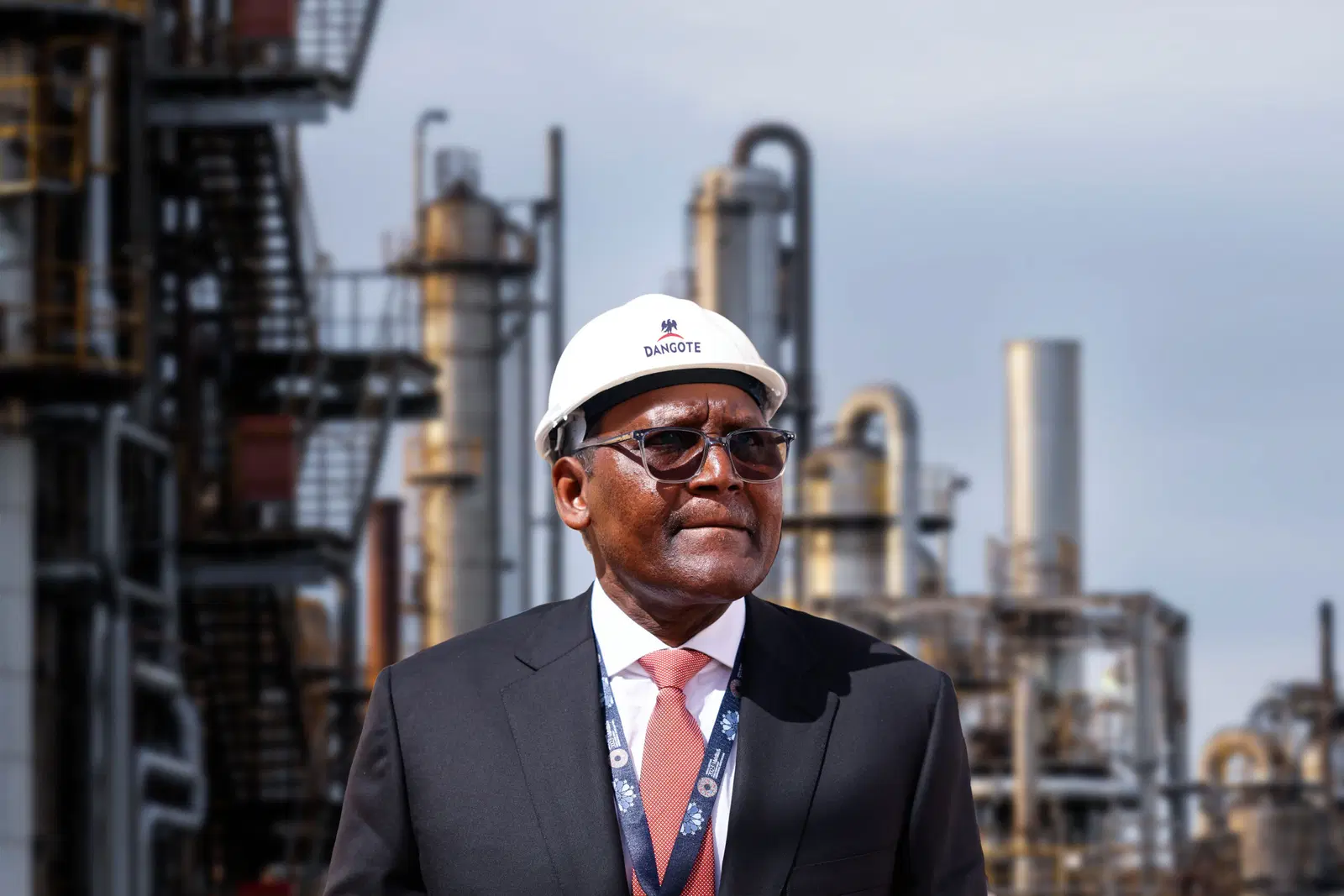
The Emir of Kano, Muhammadu Sanusi II, has warned prospective investors against using their children’s school fees or selling their homes to invest in shares.
Sanusi gave the warning on Thursday while speaking at the Dangote Refinery Initial Public Offering investor roadshow in Kano.
He urged Kano residents and other prospective investors to invest only money they could afford to set aside for some time, saying they could consider amounts such as N10,000, N20,000 or N30,000.
He said, “Do not take your children’s school fees and put in shares, Do not sell the house that you live in and put in shares.
“But what you can afford,10,000, 20,000, 30,000, what you can afford to set aside for some time, set it aside. And if you look at the fundamentals of the economy, over time you can be assured that this investment will grow, and you will not regret it.”
The Emir was speaking as part of the ongoing investor outreach for the Dangote Refinery IPO, which opened on September 14.
Sanusi urged Kano residents to participate in the capital market, saying they should seek to become shareholders in the refinery founded by Kano-born businessman, Aliko Dangote.
“I speak as the Emir of Kano, I would like my people to be owners of this company.
“I do not want us to be left behind in the capital markets. I do not want us to be left behind in financial inclusion. So this is the time and this is the opportunity,” he said.
The Emir also urged representatives of unions and other groups to educate their members about the opportunity to invest.
He advised prospective investors to adopt a long-term approach rather than buying shares in anticipation of quick profits.
“And I’m not talking about someone who will buy 5,000 shares and want to sell tomorrow and believe he will get 10,000. No, I’m talking about you have some money, put it in, leave it there for some time, and just watch your money grow.
“Forget about it for some time. You’ll be surprised in five years the 10,000 Naira you invest today, what it will be. The 100,000 Naira you invest, what it will be,” Sanusi said.
Sanusi also said the location of the refinery should not discourage Kano residents from investing, stressing that shareholders, rather than the location of the facility, determine ownership of the company.
“It doesn’t matter where the refinery is located. It could be located in Lagos, or Ibadan, or on the moon. It is the shareholders who own it.
“It is the shareholders who own it. It’s the shareholders who take the return. It is the shareholders who own the profit,” he said.
The Emir described Dangote as a son of Kano and urged residents to take advantage of the IPO to have a stake in the company.
“We have heard Lagos claim Aliko. I know very soon even Egypt will claim him, America will claim him. But we all know where he comes from,” Sanusi said.
He added, “I would like to say that this is his grand homecoming. We are happy to donate him.
“We are happy to share him, but please do not take him away from us.”
Sanusi also highlighted the refinery’s operations, saying prospective shareholders could see the assets and activities of the company, including its production of refined petroleum products and fertiliser.
He said the refinery was also creating direct and indirect jobs and had secured its gas supply, port access and markets.
-Punch
Alhaji Aliko Dangote, President and Chief Executive Officer of Dangote Industries Limited, has said the Initial Public Offering, IPO, of Dangote Petroleum Refinery and Petrochemicals, FZE, would democratise wealth creation by giving Nigerians and investors globally an opportunity to own shares in one of Africa’s major industrial projects.
Dangote stated this yesterday at the “Facts Behind the Offer” presentation and opening gong ceremony for the refinery’s IPO in Lagos, where the Nigerian Exchange Limited, NGX, formally opened the N2.2 trillion offer.
The IPO comprises 4.1 billion new ordinary shares offered at N525 per share, with a minimum subscription of 10 shares valued at N5,250. The offer is scheduled to close on October 13, subject to the terms contained in the prospectus.
Describing the offer as a historic moment for Nigeria’s capital market, the Dangote Group and Africa, Dangote said: “It would enable ordinary Nigerians and investors globally to own shares in one of Africa’s major industrial projects.
“What initially belongs to a country, begins in a deeper sense, now belongs to the people. Today is such a moment; today is a historic day
“The IPO is not simply about listing a company but creating a new possibility for Nigeria and Africa by broadening ownership of a major industrial asset.
“The decision to offer shares to the public was driven by the desire to allow more people participate in and benefit from the prosperity created by the refinery.
“An asset of this magnitude should not create value for only a very few people. It should create value for millions of people, not only Nigerians, but all over the world.”
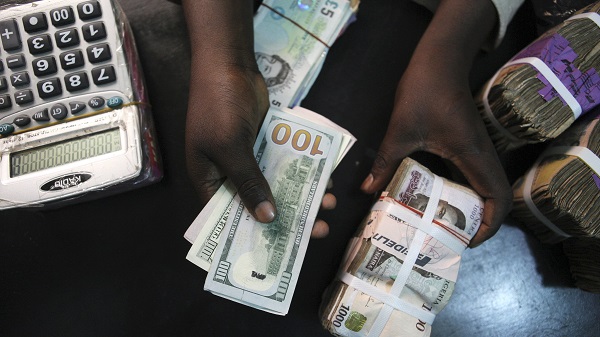
The Nigerian currency, Naira (₦), continued its battle against the United States dollar at the official foreign exchange market on Saturday.
Daily Voice reports that data from the Central Bank of Nigeria (CBN) showed that the local currency sold at ₦1,321.2160/1$ on Sunday.
The latest rate is the same as Saturday’s rate of ₦1,321.2160/1$.
At the parallel market (black market), however, the naira closed on Sunday at ₦1,400 to the dollar.
The offers by commercial banks, Bureau de Change (BDC) operators, and other foreign exchange dealers may, however, differ from the reference rates due to transaction margins and prevailing demand and supply conditions.
Market participants will continue to monitor foreign exchange inflows, demand for dollars, and CBN policies for indications of whether the naira can sustain its gains through the month.


Minimum Wage: Proposed Salary Structure for Nigerian Workers, Levels 1–17 Emerges

‘You Will Hear Full Details Today’ – Wike Speaks On Clash With APC Govs

Tinubu To Appoint Wike As APC Campaign Coordinator For 2027 Election

Former Super Eagles Star Loses Life Savings, Duped By A Pastor of ₦1.2 Billion

I’m A Married Man, I Can Never Get Myself Involved With Such A Thing, Delta Gov Aide Reveals Why He Offered Comfort ₦500,000 Job