
News
S’Court Affirms President’s Power To Declare State Of Emergency, Suspend Elected Officials

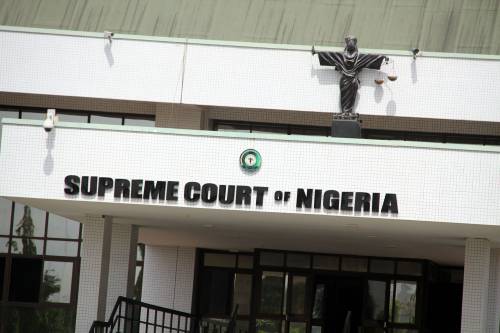
The Supreme Court, on Monday, affirmed the constitutional power of the President to declare a state of emergency in any state to prevent a breakdown of law and order or a descent into chaos and anarchy.
In a split decision of six to one, the apex court upheld the President’s authority under the Constitution to proclaim a state of emergency.
The court further held that, during such a period, the President may suspend elected officials, provided any such suspension is for a limited duration.
Delivering the lead majority judgment, Justice Mohammed Idris held that Section 305 of the 1999 Constitution empowers the President to adopt extraordinary measures to restore normalcy where a state of emergency has been declared.
He noted that the provision does not specify the exact nature of those extraordinary measures, thereby vesting the President with discretion on how to act in such circumstances.
The judgment followed a suit instituted by states governed by the Peoples Democratic Party, challenging the declaration of a state of emergency in Rivers State by President Bola Tinubu, during which elected state officials were suspended for six months. The Supreme Court had reserved judgment in the matter in October.
The plaintiffs were the Attorneys-General of PDP-controlled states, while the defendants were the Federal Government and the National Assembly.
The suit was filed by the Attorneys-General of Adamawa, Enugu, Osun, Oyo, Bauchi, Akwa Ibom, Plateau, Delta, Taraba, Zamfara, and Bayelsa states.
The suit, marked SC/CV/329/2025, was predicated on eight grounds. The plaintiffs asked the Supreme Court to determine whether the President has the constitutional authority to suspend a democratically elected government in a state and whether the procedure adopted in declaring a state of emergency in Rivers State contravened the 1999 Constitution.
Among other reliefs, the plaintiffs urged the court to determine “whether, upon a proper construction and interpretation of Sections 1(2), 5(2), 176, 180, 188, and 305 of the Constitution of the Federal Republic of Nigeria 1999, the President of the Federal Republic of Nigeria can lawfully suspend, or in any manner whatsoever interfere with, the offices of a Governor and the Deputy Governor of any of the 36 component States of the Federation and replace them with his unelected nominee as a Sole Administrator, under the guise of, or pursuant to, a Proclamation of a State of Emergency in any of the Plaintiffs’ States.”
They also asked “whether, upon a proper construction and interpretation of Sections 1(2), 4(6), 11(4) & (5), 90, 105, and 305 of the Constitution, the President can lawfully suspend the House of Assembly of any of the 36 States under the guise of, or pursuant to, a Proclamation of a State of Emergency in such States.”
In the earlier part of the judgment, Justice Idris upheld the preliminary objections raised by the defendants—the Attorney-General of the Federation and the National Assembly—against the competence of the suit.
He held that the plaintiffs failed to establish any cause of action capable of activating the original jurisdiction of the Supreme Court.
In the six-to-one majority decision, the court agreed that the plaintiffs did not demonstrate the existence of an actionable dispute between them and the Federation to warrant the exercise of the court’s original jurisdiction.
Consequently, Justice Idris struck out the suit for want of jurisdiction. He nevertheless proceeded to consider the substantive issues and dismissed the case on the merits.
However, Justice Obande Ogbuinya dissented, holding that the suit succeeded in part.
He agreed that the President has the power to declare a state of emergency, but held that such power cannot be used to suspend elected state officials, including governors, deputy governors, and members of state legislatures.
More to come…

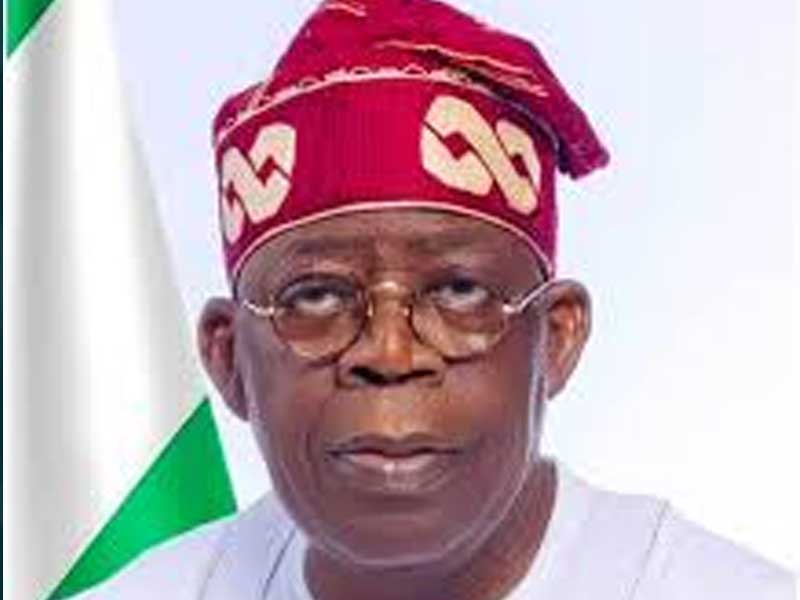
Timi Frank, former Deputy National Publicity Secretary of the All Progressives Congress (APC), has alleged that President Bola Ahmed Tinubu wants to relocate Nigeria’s capital from Abuja to Lagos upon his re-election in 2027.
Frank made this allegation known in a statement on Monday.
The former APC chieftain slammed Tinubu’s government for what he described as a ‘Lagos-centric agenda.’
He said that it has become clear to him that the President is pursuing an agenda of sidelining other regions.
According to Frank, major decisions of Tinubu’s administration are targeted to benefit Lagos State.
“It is now clear that the President’s long-term plan is to concentrate political and economic power in Lagos if given another term in office,” Frank said.
Frank also claimed that federal appointments and development initiatives under Tinubu have been largely one-sided, warning that such a trend undermines national unity.
“We do not want a president who is one-sided,” he said.
“Where are Tinubu’s MOUs tied to agricultural and livestock production in the North, industrial development in the Southeast, and oil and gas development in the South-South? None!
“Secondly, no president in Nigeria’s history has divided the country and its people along regional and ethnic lines the way this administration has done.
“There is a growing sense of alienation and division among Nigerians that is deeply troubling.
“It appears to be a deliberate strategy to impoverish certain regions, especially the North, South, and Southeast, so that citizens are economically weakened ahead of the 2027 election cycle,” Frank stated.
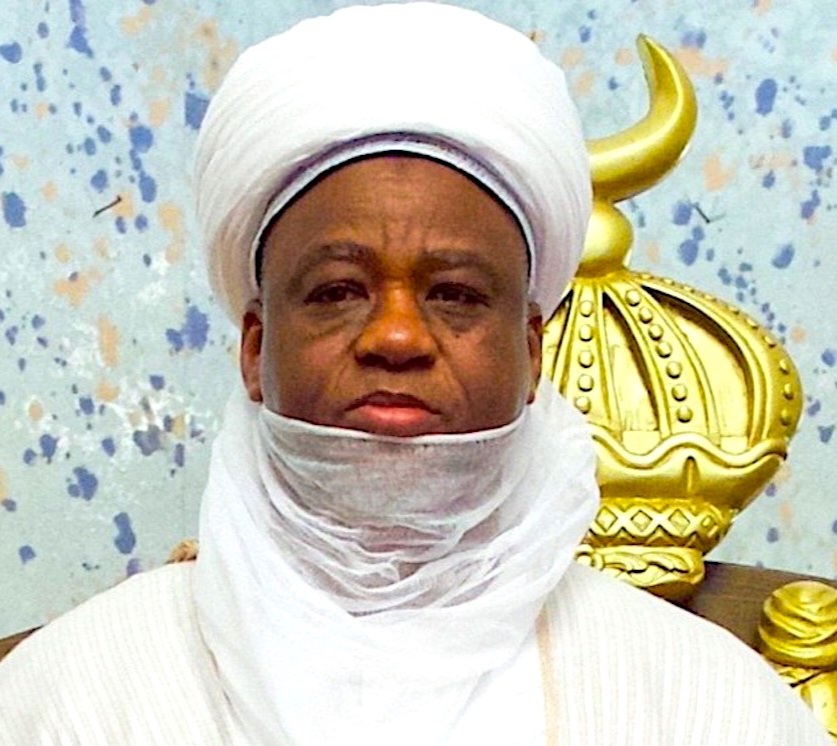
His Eminence the Sultan of Sokoto, Alhaji Muhammad Sa’ad Abubakar II, has announced the date for Eid al-Fitr in Nigeria.
The Emir, who is the Chairman of the Supreme Council for Islamic Affairs in Nigeria, has not reported the sighting of the crescent moon of Shawwal, 1447AH, today, Wednesday, the 29th of Ramadan .
This was contained in a statement posted on the Facebook page of the Daular Usmaniyya , signed by the Wazir of Sokoto and Chairman of the Religious Affairs Committee of the Sultan’s Palace, Professor Sambo Wali Junaidu.
The statement stated that the Sultan’s Palace Moon Sighting Committee had not received any reliable reports of moon sightings from anywhere in Nigeria. According to this information, Thursday, March 19, will be the day to complete the 30th day of Ramadan.
The Sultan of Sokoto has declared Friday, March 20, 2026, as the day of the lesser Sallah, i.e. the 1st of Shawwal 1447AH.
He urged Muslims to use this time of Eid al-Fitr to pray for peace, unity, and sustainable development in Nigeria.
The statement said: “His Eminence, Sultan of Sokoto, Alhaji Muhammad Sa’ad Abubakar CFR, mni, and Chairman, Nigerian Supreme Council for Islamic Affairs (NSCIA), has received the moon sighting report, which showed that the crescent moon was not sighted today, Wednesday.
“Accordingly, he declared Friday, March 20, 2026, as 1 Shawwal 1447AH (the Day of the Small Prayer). He also congratulated the Nigerian Muslim community on the occasion, and wished them the guidance and blessings of God.”
“He also called for continued prayers for peace, progress, and development of the country . He also wished Muslims a peaceful and prosperous Eid. May Allah (SWT) accept our acts of worship, amen.”

Governor Ahmadu Umaru Fintiri approves ₦19.6 billion Mother and Child Specialist Hospital in Yola The Adamawa State government says the hospital aims to reduce maternal and infant mortality rates in Adamawa State Fintiri explains that the facility will serve as a training center and improve healthcare services in the North-East.
Yola, Adamawa State – Governor Ahmadu Umaru Fintiri of Adamawa State has approved the construction of a state-of-the-art Mother and Child Specialist Hospital in Yola. The proposed Mother and Child Specialist Hospital will cost the state ₦19.6 billion, and it’s expected to be completed within 52 weeks. The landmark project is designed to significantly strengthen maternal, neonatal, and child healthcare services across the state.
The project aligns with Governor Fintiri’s commitment to reducing maternal and infant mortality rates. The hospital will also improve access to quality healthcare and position Adamawa as a referral hub for specialized medical services in the North-East region.
As reported by Daily Trust, the hospital will be equipped with modern medical technology and specialized units when completed.
The state governor explained that the hospital capable units to handle high-risk pregnancies, neonatal intensive care, pediatric emergencies, and other complex medical cases affecting women and children. Mother and Child Specialist Hospital will also serve as a training and research centre for healthcare professionals.
It will help to strengthen capacity and improve the quality of medical services within the state’s health sector. It will offer other healthcare services like advanced diagnostic and laboratory services, fully equipped operating theatres, intensive care units, emergency response facilities, and modern inpatient wards designed to provide quality care for patients.
Recall that Fintiri’s administration executed over 100 infrastructural, educational, health, and social projects across Adamawa state, transforming both urban centres and rural communities. The administration completed major road networks, flyovers, and township roads, including the Lamido Aliyu Mustapha Flyover, Yola, and the Nyibango-Yolde Pate Road in Yola South.
Over 100 new primary health care centres were built, while hospitals such as Numan General Hospital and Specialist Hospital, Yola, underwent comprehensive development and modernisation.


2027: Tinubu Accused Of Plot To Relocate Nigeria’s Capital From Abuja – Details Emerge

JUST IN: Nigerian’s Woes Deepen As Fuel Price Hits Record High; DETAILS

“I am Under Pressure”: Top Northern Governor Cries Out

Former Super Eagles Star Loses Life Savings, Duped By A Pastor of ₦1.2 Billion

These ’90s fashion trends are making a comeback in 2017

I’m A Married Man, I Can Never Get Myself Involved With Such A Thing, Delta Gov Aide Reveals Why He Offered Comfort ₦500,000 Job
-
 Politics2 days ago
REVEALED: APC Governor Defies Tinubu’s SGF, Goes Rogue
-

 Politics2 days ago
APC Fixes Date For Screening Of National Convention Aspirants
-
 Politics2 days ago
“I am Under Pressure”: Top Northern Governor Cries Out
-
 Politics2 days ago
Senate Explains Silence On Bill Criminalising Dual Party Membership
-
 Business1 day ago
JUST IN: Nigerian’s Woes Deepen As Fuel Price Hits Record High; DETAILS
-
 News4 hours ago
2027: Tinubu Accused Of Plot To Relocate Nigeria’s Capital From Abuja – Details Emerge