
News
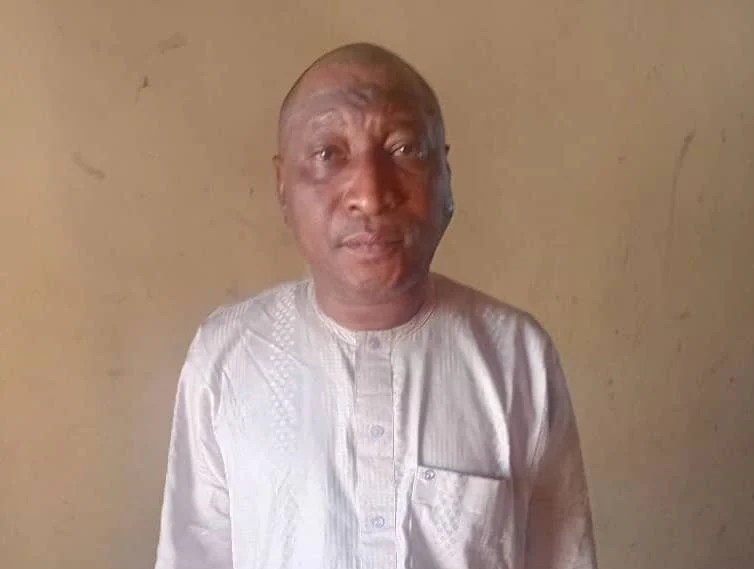
Military Unmasks Ringleader Of North-East Suicide Bombings

Adamawa State Governor, Ahmadu Fintiri, has declared Monday a work-free day across the state in honour of the late former Governor of Gongola State and former National Chairman of the Peoples Democratic Party, Alhaji Bamanga Mohammed Tukur.
The declaration came a day after Tukur was buried in Yola following funeral prayers held at the Lamido’s Palace on Sunday.
Daily Voice reports that political leaders, traditional rulers, family members, associates and sympathisers gathered to pay their final respects to the elder statesman.
Fintiri announced the work-free day in a statement issued by his Chief Press Secretary, Humwashi Wonosikou, saying the decision was intended to give residents an opportunity to honour Tukur and reflect on his contributions to Adamawa State and Nigeria.Nigeria travel guides
The governor described Tukur as a prominent statesman whose contributions to the growth and development of the state and the country would remain part of his enduring legacy.
According to Fintiri, the work-free day is part of activities surrounding the three-day mourning period earlier declared by his administration following the death of the former Gongola State governor.
Fintiri urged residents to use Monday to pray for the peaceful repose of Tukur’s soul and seek comfort for his family, friends and other people affected by his death.

He also directed that government flags across Adamawa State would continue to fly at half-mast throughout the mourning period as a mark of respect for the late statesman.
However, the governor clarified that the declaration would not affect essential services, directing workers in critical sectors to continue their duties.
The latest announcement follows Fintiri’s earlier declaration of three days of mourning after Tukur died on Saturday at the age of 90.
At the time, the governor had described the death as a major loss to Adamawa State and Nigeria, recalling Tukur’s long years of service in public life.Nigeria travel guides
“It is with deep sadness that I mourn the passing of Alhaji Bamanga Tukur, former Governor of Gongola State and an elder statesman whose contributions to our state and nation will remain indelible,” Fintiri had said.
The governor had also announced that government flags would be flown at half-mast throughout the mourning period.
“In his honour and in recognition of his selfless service, I have declared three days of mourning across Adamawa State, during which all government flags will fly at half-mast,” he said.
Fintiri further extended his condolences to Tukur’s family, associates and the people of Adamawa State, saying they were united in grief over the death of the former governor.
“My heart goes out to his family, associates, and the good people of our state during this period of grief,” he said.
Tukur’s family had announced his death in a statement signed by his son, Awwal D. Tukur, on behalf of the family. The statement said the former PDP chairman had “returned to his Creator” after a lifetime devoted to public service, business and community development.
The family described Tukur as a man whose influence extended beyond his immediate family to Adamawa State and Nigeria, citing his wisdom, generosity and commitment to national development.
It also expressed appreciation to Nigerians and others who offered prayers, condolences and support following his death.
Tukur was one of the prominent political figures from the old Gongola region and occupied several important positions during his decades in public and private life.
He served as the third civilian governor of the defunct Gongola State, an entity that existed before the creation of Adamawa and Taraba states. His tenure remains part of the political history of the region.
Beyond his role as governor, Tukur served as Minister of Industries during the military administration of former Head of State, General Sani Abacha. He was also involved in business and economic development activities and, in 2012, served as president of the Africa Business Roundtable.
Tukur later became national chairman of the PDP in March 2012, remaining in the position until January 2014 during a politically turbulent period in Nigeria.Nigeria travel guides
His death came shortly before his 91st birthday, which would have been celebrated on September 15.
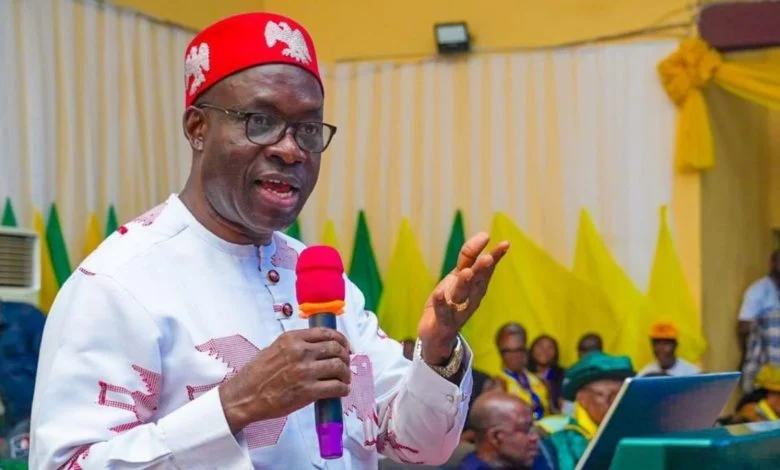
The Anambra State Government says it is still repaying loans taken out by previous administrations, including those of former governors Peter Obi and Willie Obiano.
The state said the inherited obligations remain part of its financial commitments, despite the Chukwuma Soludo administration’s decision not to take fresh commercial bank loans since it came into office.
Commissioner for Finance, Izuchukwu Okafor, disclosed this while speaking on the Ndi Anambra podcast released by the state government’s New Media team.
Okafor used the platform to explain the state’s current financial position and the steps taken by the Soludo administration to reduce its debt burden.
According to him, the government has focused largely on paying existing obligations rather than accumulating new debts.
“It’s on record that this administration has not borrowed a kobo from any commercial bank since the inception of this administration,” he said.The commissioner explained that the absence of new commercial borrowing does not mean the state has completely stopped making debt payments.
He said funds due to Anambra from the Federation Account Allocation Committee are still being deducted to service loans contracted by earlier administrations.
Okafor specifically linked some of the outstanding obligations to the administrations of Obi and Obiano.Read Political News
“These loans were borrowed during the time of Peter Obi and Willie Obiano, the past governors,” Okafor said.
The disclosure comes amid continued debate over the financial records of successive administrations in Anambra and the extent to which the state has relied on borrowing to finance projects.
Peter Obi governed Anambra from 2006 to 2013, while Willie Obiano succeeded him and remained in office until 2022. Soludo took over as governor in March 2022.
The current administration has repeatedly presented debt reduction as one of the major areas of its financial policy.
Okafor said the government had made substantial progress in reducing the liabilities it inherited.
He claimed that the overall state debt profile had dropped by more than 83 per cent under the Soludo administration.
“We have been able to manage the state debt very well, that we have brought it down by more than 83 per cent as of today,” Okafor said.
He said the reduction was not limited to conventional loans.
According to him, the government also inherited several domestic financial obligations which had to be addressed alongside existing debt repayments.
These included unpaid contracts, gratuity arrears and pension liabilities.
The commissioner said the administration had been working to settle such obligations while maintaining funding for ongoing government programmes.
He further stated that Anambra’s domestic debt had been brought close to zero after several outstanding liabilities were cleared.
Okafor said the government still has obligations tied to facilities obtained from development institutions.
He explained that some of the loans are structured in a way that allows repayments to be deducted directly from the state’s federal allocations.
“Before they limit Anambra’s own allocation, they will deduct it as such because most of them, World Bank loans and other loans, they committed,” he said.
The commissioner’s explanation also showed that the state’s current financial position cannot be assessed solely by looking at whether the Soludo administration has taken a new commercial loan.
The administration has maintained that it can finance its programmes through internally generated revenue and available public funds without resorting to fresh commercial borrowing.
The governor, a former Central Bank of Nigeria governor, has frequently emphasised fiscal discipline and the need to reduce the cost of servicing debt.Download Interactive Maps
Anambra had also featured prominently in previous debates over state borrowing during Obi’s tenure.
Obi had built a public reputation around conservative financial management and had repeatedly highlighted the savings and investments accumulated by his administration.
However, available debt records have shown that Anambra had outstanding obligations during and after his tenure, including external facilities.
The latest statement from the Soludo administration does not suggest that all the outstanding obligations were obtained directly from commercial banks.
Rather, Okafor pointed to loans and development facilities whose repayment arrangements remain active years after they were contracted.
He also disclosed that the government had recently cleared an obligation referred to as CAGS.
According to him, the repayment has provided additional financial space for the state government.
The commissioner said clearing such liabilities would allow more resources to be directed towards projects and other areas of government spending.Read Political News

No fewer than 15 people were killed in separate attacks by gunmen on communities in Jos South, Mangu and Riyom Local Government Areas of Plateau State on Sunday night, with nine of the victims being passengers travelling to Jos.
The passengers were killed when suspected terrorists opened fire on their vehicle at Dungus community in Jos South Local Government Area, while other victims were killed in separate attacks in Mangu and Riyom.
Spokesman for the Berom Youth Moulders, Rwang Tengwong, who confirmed the Dungus attack to PUNCH Online via phone call in Jos on Monday, said the victims were passengers travelling to Jos when the attackers opened fire on their vehicle.
He said, “The incident happened around 9.40 p.m. The victims were all passengers travelling to Jos when the terrorists opened fire on the vehicle. Among those killed was a member of Operation Rainbow. It is a very sad development, and we lament the loss of lives.”
According to him, some of the passengers sustained gunshot wounds and were rushed to hospitals, where some later died.
“It was a vehicle carrying passengers to Jos. The attackers opened fire on them, and some of the victims were killed,” he said.
A resident of the community, Musa Dauda, also confirmed the attack, saying some of the injured passengers died while receiving treatment in hospital.
Dauda said, “Some of the passengers who were injured were taken to the hospital, but some of them died while receiving treatment. Others are still in the hospital receiving treatment.”
Meanwhile, in Mangu Local Government Area, suspected terrorists reportedly attacked Vodni in Pushit District during the night, killing two persons.
Four others sustained gunshot injuries in the attack and were receiving treatment at a hospital in Mangu town.
Also in Riyom Local Government Area, two persons were reportedly killed at Tahoos in a separate attack around the same period.
The spokesman for the Plateau State Police Command, Alabo Alfred, and the Media Officer, Operation Enduring Peace, Chinonso Oteh, were yet to respond to enquiries sent by our correspondent on the incidents at the time of filing this report.


Breaking: Former President Arrested as Details Emerge

BREAKING: Popular Federal Lawmaker Dumps APC, Joins New Party

BREAKING: Veteran Nigerian Actor Dies At 84

Former Super Eagles Star Loses Life Savings, Duped By A Pastor of ₦1.2 Billion

I’m A Married Man, I Can Never Get Myself Involved With Such A Thing, Delta Gov Aide Reveals Why He Offered Comfort ₦500,000 Job

Lagos Imposes ₦250,000 Fine For Illegal Waste Disposal

-
 Entertainment12 hours ago
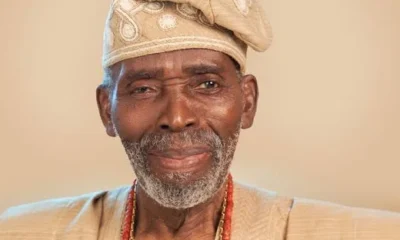
BREAKING: Veteran Nigerian Actor Dies At 84
-

 Uncategorized2 days ago
VIDEO: ‘I Was Just Being Myself’ – Poco Lee Breaks Silence After Release From UK Prison
-
 Politics2 days ago
INEC: 52 Senators Lose Return Ticket To 11th National Assembly
-

 Business2 days ago
Refinery: Our N2.2trn IPO’ll Democratise Wealth Creation —Dangote
-
 Politics10 hours ago
BREAKING: Popular Federal Lawmaker Dumps APC, Joins New Party
-
 Foreign5 hours ago
Breaking: Former President Arrested as Details Emerge