
Foreign
‘Supreme Banditry’: Sheikh Gumi Reacts To Trump’s Arrest Of Venezuelan President

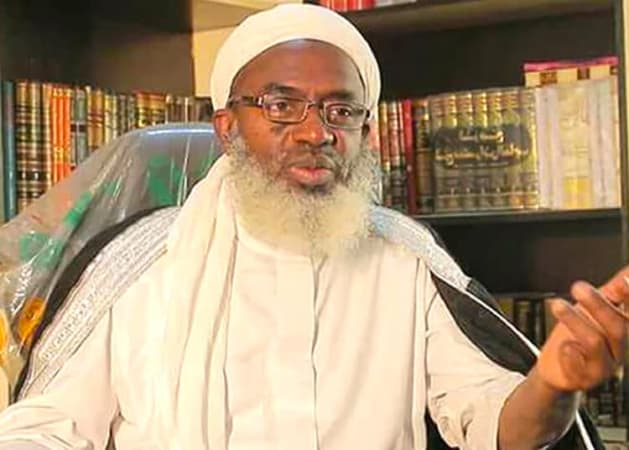
Islamic cleric Sheikh Ahmad Gumi has reacted strongly to the reported arrest of Venezuelan President Nicolás Maduro and his wife by former United States President Donald Trump.
Gumi’s reaction came shortly after news of the arrest began to spread. He focused his response on what he described as the abuse of global power.
According to him, powerful nations now act beyond limits and target entire countries, not just individuals.
In a post shared on his Facebook page on Saturday, the cleric described the action in harsh terms.
He wrote, “Supreme banditry doesn’t attack villages, they attack nations and kidnap leaders,” a statement widely seen as a direct swipe at Trump and the United States.
Gumi’s comments quickly drew attention due to his long-standing criticism of Western military and political influence, especially in developing countries.
He has often argued that global powers destabilize weaker nations under the guise of security and justice.

The arrest of Maduro marks a major escalation in the long-running tension between the United States and Venezuela. The Venezuelan leader has been accused by Washington of involvement in international drug trafficking and other transnational crimes. These allegations have been repeatedly denied by Maduro and his allies.
Only months ago, the United States significantly increased the reward offered for information leading to Maduro’s capture.
The bounty was raised to $50 million, making it one of the highest ever placed on a sitting head of state. The move was condemned by several governments and political groups across the world.
Trump, who announced the arrest through his personal platform, presented the action as a major victory against global crime.
However, critics argue that the move undermines international law and national sovereignty.


A new investigation by The New York Times claims Sudan’s military ran an organized program in 2024 to develop and produce chlorine-based munitions, escalating long-standing allegations of chemical weapons use in the country’s war.
According to the report, the Times reviewed nearly 150 documents, plus photos, videos, audio recordings and thousands of messages. The materials describe months of work to design, test and manufacture about 300 bombs filled with chlorine.
Brigadier General Tariq Hussein is named as one of the principal supervisors. The documents detail a munition that combined explosives with large quantities of chlorine, and tests carried out before production.
One of the most serious claims involves the source of the chemical. The dossier alleges that some chlorine was taken from a water-treatment facility in Omdurman, at a time when Sudan is facing cholera outbreaks and a collapse of basic services.
The investigation also points to senior leadership. Voice and text messages reportedly implicate army chief Gen. Abdel Fattah al-Burhan in knowledge of the program, and in orders to “remove all traces” after U.S. pressure and sanctions.
This is not the first time chemical weapons have been alleged in Sudan. Independent.ng reported that the Sudanese Alliance for Rights filed a case at the International Criminal Court against four senior Port Sudan Authority leaders, including al-Burhan, accusing them of using chemical weapons and committing serious violations against civilians. The lawsuit also names Yasser al-Atta, Shams al-Din al-Kabashi and Major General Taher Mohammed, and calls for an urgent ICC investigation.
The U.S. has already acted on earlier findings.
Independent.ng noted that Washington imposed additional penalties in May 2025 over the alleged use of chemical weapons, further linking Sudan’s war to international politics.
Chlorine is permitted for water purification, but using it as a weapon violates the Chemical Weapons Convention, which Sudan ratified. Experts say its civilian availability makes it easier to obtain and harder to monitor than military-grade agents.
With the conflict since April 2023 already causing mass displacement and famine, rights groups are now calling for an independent international investigation with access to sites, documents and the chain of command.
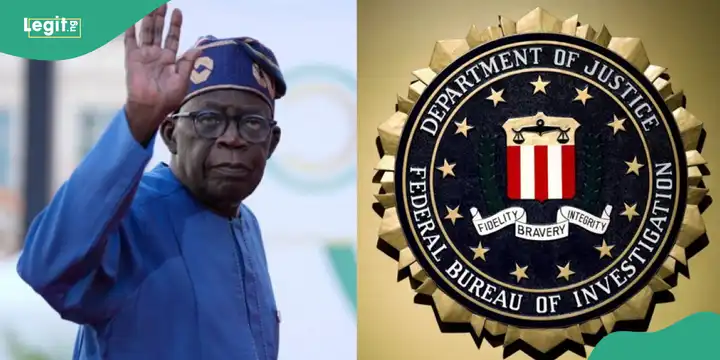
The retired Nigerian Army Major General, Danjuma Hamisu Ali-Keffi, has alleged that two prominent members of the All Progressives Congress (APC) secretly sought confidential records on President Bola Ahmed Tinubu from United States government agencies.
Ali-Keffi, a former General Officer Commanding (GOC) 1 Division of the Nigerian Army, made the claim while speaking about the events that shaped Tinubu’s emergence as the APC presidential candidate.
According to him, the alleged attempt was brought to his attention by former Director of the Nigerian Financial Intelligence Unit (NFIU), Modibbo Hamman-Tukur.
The retired general said the incident happened during the period when powerful figures within the APC were struggling to determine who would secure the party’s ticket for the 2023 presidential election.
Ali-Keffi said the information came to him while he was serving as Commander of Operation Service Wide, an operation he described as being focused on terrorism financing and the leadership structures of terrorist organisations.
He explained that Hamman-Tukur later told him about an alleged move by two influential APC figures who were opposed to Tinubu’s presidential ambition.
According to Ali-Keffi, the individuals allegedly gained access to the office of the NFIU director without authorisation and sent requests to American government agencies for information concerning Tinubu.
“Two prominent APC people who were against Tinubu entered illegally into the office of NFIU director and sent messages to the US government agencies requesting confidential records of Bola Ahmed Tinubu on those issues – terrorism financing,” Ali-Keffi said.
The retired military officer said the former NFIU director was uncomfortable with the development.
He claimed Hamman-Tukur later went to his office at about 2am after becoming aware of what was happening.
According to Ali-Keffi, the people allegedly involved realised that the NFIU director had arrived and subsequently left the office.
Ali-Keffi further claimed that a response was later received from the United States concerning the request.
He, however, said he was not aware of the exact information contained in the response.
“I don’t know what the record is or related to current issues regarding his forfeiture and other issues, if I am not mistaken,” he said.
The former army commander was careful to distinguish between the alleged request for information and any conclusion about Tinubu.
He said he had no personal knowledge of the contents of the records allegedly requested from the US authorities.
He also did not claim that the records established that Tinubu committed any offence.
Instead, he said his account was based on information he received from Hamman-Tukur at the time.
Ali-Keffi also alleged that NFIU officials connected to the incident were later dismissed. He said the matter eventually became the subject of legal proceedings.
The retired general further brought former Kaduna State Governor, Nasir El-Rufai, into the account.
Ali-Keffi alleged that El-Rufai was aware of some of the information relating to the request for Tinubu’s records.
He said the former Kaduna governor was among the political figures who had knowledge of the matter but did not support the idea of using confidential information against Tinubu.
Tinubu eventually defeated other contenders at the APC presidential primary in June 2022.
He went on to defeat Atiku Abubakar of the Peoples Democratic Party (PDP) and Peter Obi of the Labour Party in the February 2023 presidential election.
Ali-Keffi said his own decision to support Tinubu at the time was influenced partly by El-Rufai’s argument that power should move from the North to the South.
He recalled that the argument was based on the need to maintain a sense of balance and national unity after former President Muhammadu Buhari, a northerner, had completed his second term.
The retired general said the political situation could have been different if the alleged information obtained from the United States had been made public before the APC primary.
“Had people like the former NFIU Director and people like El-Rufai who were in the know, who were aware of that documents that were sent in respect of candidate Bola Ahmed Tinubu, had they allowed it to get to public domain at that time, I believe it would have perhaps hurt the candidaty of Ahmed Bola Tinubu. Certainly, he wouldn’t have gotten the ticket to fly the flag of APC at that time,” Ali-Keffi said.
Several prominent politicians had shown interest in the APC presidential ticket before Tinubu eventually emerged as the party’s candidate.
Ali-Keffi said those considerations played an important role in the eventual decision by some politicians to back Tinubu.
He also recounted a separate conversation involving former Federal Inland Revenue Service (FIRS) chairman, Muhammad Nami, and an unnamed powerful minister who was said to have been close to Buhari.
According to Ali-Keffi, Nami approached the minister during the United Nations General Assembly in New York in an effort to persuade him to support Tinubu.
The retired general said the minister expressed reservations about Tinubu and warned that he could take action against some people if he eventually became president.
“Look, Ahmed Tinubu is going to come after them. He was going to do this and that. You people don’t know this,” Ali-Keffi recalled the minister as saying.
Nami, according to Ali-Keffi, continued to make the case for a Southern presidency and argued that handing the APC ticket to a Southern candidate would promote national balance.
However, years after the 2023 election, Ali-Keffi said he now regrets his decision to support Tinubu.
“I regret actually voting for him,” he said.
He also stated that he would not vote for the ruling party in the next election.
“I’m not going to vote APC next election,” Ali-Keffi said.
The Independent National Electoral Commission (INEC) has published the personal particulars of candidates nominated for the 2027 presidential and National Assembly elections, with President Bola Tinubu’s nomination documents showing that the sections for his primary and secondary education were left blank.
The Independent National Electoral Commission (INEC) has published the personal particulars of candidates nominated for the 2027 presidential and National Assembly elections, with President Bola Tinubu’s nomination documents showing that the sections for his primary and secondary education were left blank.
In a related development, POLITICS NIGERIA reported in August that fresh controversy had emerged over Tinubu’s academic credentials.
This came after the Independent National Electoral Commission (INEC) explained why his primary and secondary school certificates were not included among the documents displayed for the 2027 election.
The commission said it displayed the documents submitted by candidates and did not have the authority to demand additional credentials or alter the information contained in their submissions.
Source: Politics Nigeria
The Nigerian Ambassador-designate to Mexico, Reno Omokri, has disclosed that records from the United States, US, Federal Bureau of Investigation, FBI, cleared suspicions that President Bola Tinubu is 90 years old.
Omokri disclosed that a letter from the FBI, sent via the US Embassy in Lagos and addressed to the Nigerian government, revealed that Tinubu was born on March 29, 1952.
Recall that the African Democratic Congress, ADC, presidential candidate, Atiku Abubakar, had claimed that he had evidence that Tinubu is 90 years old.
Atiku disclosed that he would tender the evidence in court.
However, Omokri dismissed Atiku’s claim during an interview on the City Boy Movement’s media one-on-one podcast with Otega Ogra, a Senior Special Assistant to Tinubu on Digital and New Media, yesterday.
According to Omokri: “First of all, Atiku was never my principal; he’s my friend. I have a document here from the FBI via the American Embassy. At that time, it was in Lagos, and I can read it for you.
“It’s a letter to the Nigerian government and Inspector-General of Police, Tafa Balogun, at that time.
“In relation to your letter dated February 3, 2003, regarding Governor Bola Ahmed Tinubu, a record check of the Federal Bureau of Investigation National Crime Information Centre was conducted.
“The result of the check was negative for any criminal arrest records, wants or warrants for Bola Tinubu.
“Another thing is that this is just a complete vindication of Tinubu. But notice that the FBI records have the President’s date of birth, which is March 29, 1952. So, this document destroys anybody trying to say that the President is 90 years old.”


Refinery: Our N2.2trn IPO’ll Democratise Wealth Creation —Dangote

VIDEO: ‘I Was Just Being Myself’ – Poco Lee Breaks Silence After Release From UK Prison

INEC: 52 Senators Lose Return Ticket To 11th National Assembly

Former Super Eagles Star Loses Life Savings, Duped By A Pastor of ₦1.2 Billion

I’m A Married Man, I Can Never Get Myself Involved With Such A Thing, Delta Gov Aide Reveals Why He Offered Comfort ₦500,000 Job

Lagos Imposes ₦250,000 Fine For Illegal Waste Disposal

-

 News15 hours ago
Nigerian Gov Declares Public Holiday
-
 Politics23 hours ago
2027: INEC Final List Sets Off Senate Race
-

 News24 hours ago
2027 Budget: FG Gives MDAs September 18 Deadline
-

 News24 hours ago
Terrorists kill Nine Passengers, Six Others In Plateau Attack
-
 News23 hours ago
Anambra Still Repaying Loans Borrowed Under Peter Obi – Soludo Govt
-
 Politics2 hours ago
INEC: 52 Senators Lose Return Ticket To 11th National Assembly
-
 Uncategorized2 hours ago
VIDEO: ‘I Was Just Being Myself’ – Poco Lee Breaks Silence After Release From UK Prison
-
 Business1 hour ago
Refinery: Our N2.2trn IPO’ll Democratise Wealth Creation —Dangote