The Presidency has maintained that the matter is before the court and urged the public to disregard his claims, while Adeyemi insists he is not an impostor and says the court will determine the dispute.
Uncategorized
Resurfaced Clip Throws Spotlight Back on Alleged Fake Agency DG


A video of Prince Adeniyi Adeyemi Matthew, the man at the centre of the alleged ₦1.3bn “ghost agency” scandal, has resurfaced online on Monday as the controversy surrounding the purported government agency continues to intensify.
The video, recorded during a press conference held in late June 2026, showed Adeyemi defending his claim to the leadership of the alleged Presidential Foreign Intervention Promotion Council while challenging the position of the Presidency and the Office of the Chief of Staff to the President, led by Femi Gbajabiamila.
During the briefing, Adeyemi questioned how an agency described by the Presidency as non-existent could appear in official budget documents.
He said “the national budget does not emerge in isolation. It passes through multiple layers of technical drafting, executive coordination, ministerial inputs, Budget Office review, and finally legislative scrutiny by both chambers of the National Assembly.”
He argued that the inclusion of the agency in official budget documents raised questions about the integrity of the budget process.
“The question becomes unavoidable: At what point in this process did references to a non-existent agency allegedly enter the official record? And if they are indeed present in official documentation, what does that imply about the integrity of the process that produced and approved those documents?” he asked.
Adeyemi further claimed that the agency maintained several accounts with the Central Bank of Nigeria.

“The same acclaimed non-existent agency has a domiciliary account, a pounds sterling account and a Treasury Single Account, all domiciled in the Central Bank of Nigeria. Is it even possible to open an account with fictitious documents in a commercial bank in Nigeria today, let alone the Central Bank of Nigeria?” he said.
He also alleged that the Chief of Staff to the President, Femi Gbajabiamila, demanded 48 per cent of the agency’s proposed ₦27.4bn take-off grant and referenced an alleged demand for ₦12.5bn.
The Presidency has, however, consistently denied the allegations.
The Office of the Chief of Staff has maintained that the Presidential Foreign Intervention Promotion Council has no legal backing and was never established by the Federal Government.
According to the Presidency, Adeyemi forged official documents, including appointment letters bearing the names and signatures of senior government officials, to portray himself as the Director-General of the purported council.
Authorities also alleged that he operated from an office inside Phase III of the Federal Secretariat Complex in Abuja, where he hosted meetings with government officials, diplomats, foreign investors and members of the public while presenting himself as a senior government official.
The controversy deepened after it emerged that an entity listed in the 2026 Appropriation Act as the Presidential Economic Advisory Council/Presidential Foreign Intervention Promotion Council received more than ₦1.3bn in budgetary allocations, sparking widespread public scrutiny over how a body the Presidency now describes as fictitious appeared in the federal budget.
The reported allocation comprised about ₦803m for personnel, ₦200m for overhead and ₦300m for capital expenditure.
Adeyemi is facing an eight-count charge bordering on forgery, impersonation, false personation and operating a fictitious government agency before the Federal High Court in Abuja.

●How Abdul Samad Rabiu Became the Asiwaju’s Most Visible Billionaire Companion
●Inside BUA Boss Remarkable Access to the President
●Why Rabiu Is Always in Tinubu’s Company
●Why Abdul Samad Rabiu Enjoys an Enviable Bond With President
By Uduak Akpan
From the sacred precincts of Makkah to the corridors of presidential power, the BUA billionaire’s remarkable proximity to President Bola Ahmed Tinubu tells a compelling story of friendship, trust, influence and the quiet privileges of belonging to the President’s innermost circle.
There are friendships that flourish beneath the chandeliers of power, and there are relationships that endure long after the ceremonial lights have dimmed and the corridors have emptied of their ambitious visitors. The distinction is neither trivial nor accidental. In the rarefied universe where political authority encounters stupendous private wealth, proximity is a coveted currency, access is an exquisite privilege, and the ability to walk through doors before which other powerful men must patiently wait is perhaps the most eloquent advertisement of influence.
For billionaire industrialist Abdul Samad Rabiu, the founder and chairman of BUA Group, that privilege appears to have acquired an almost effortless familiarity.
In the increasingly crowded constellation of businessmen orbiting the presidency of Bola Ahmed Tinubu, Rabiu has emerged as one of its most conspicuous and enduring stars. His presence around the Nigerian leader has become so recurrent, so conspicuous in its geographical reach and so seemingly unencumbered by the elaborate rituals of officialdom, that it invites an irresistible question: Has the Kano-born industrialist quietly become the President’s favourite billionaire?
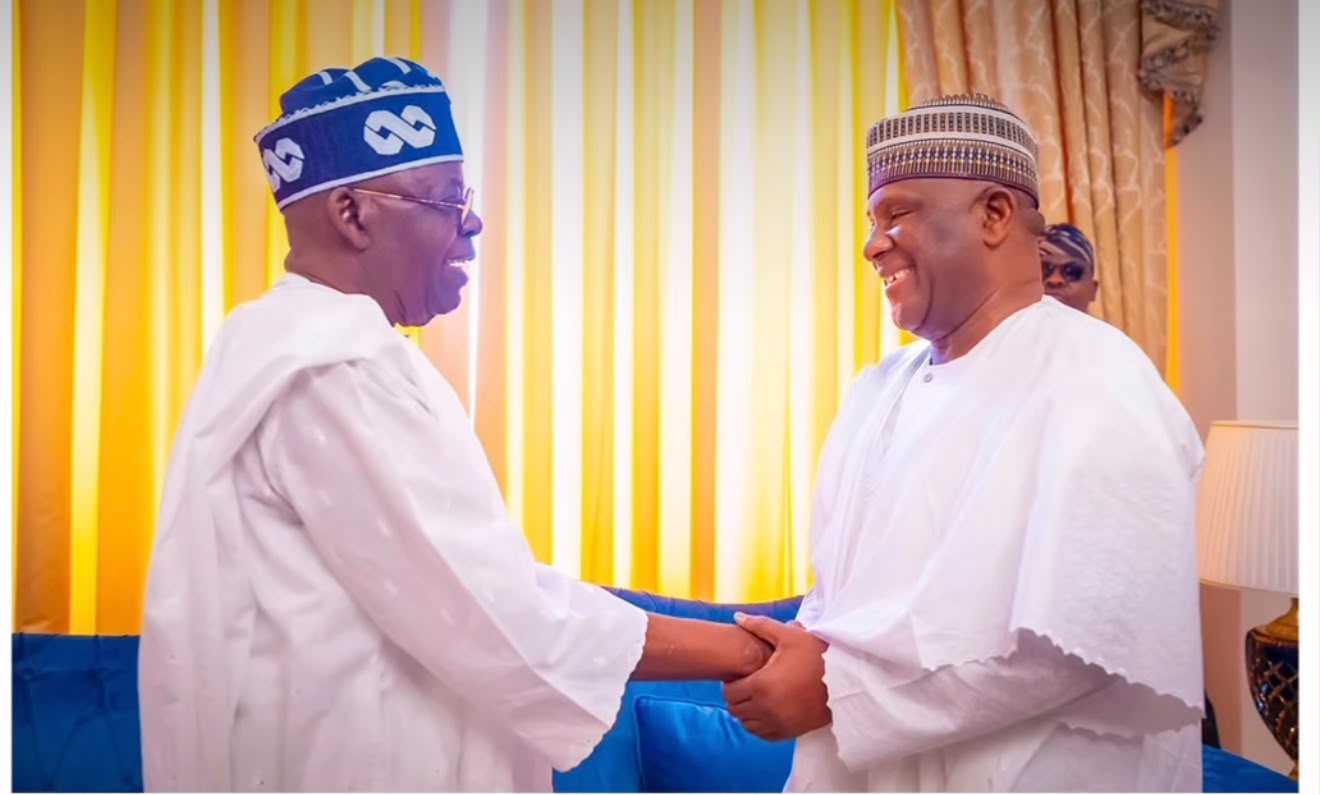
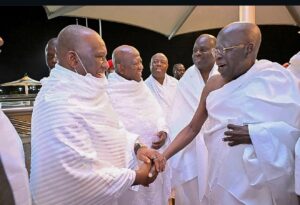
The photographs offer a fascinating chronicle. In Abuja, the men are pictured in the stately surroundings of presidential authority, exchanging the pleasantries of familiarity. In Lagos, their encounters carry the warmth of an association that Rabiu himself describes as a longstanding tradition. And now, in the sacred city of Makkah, thousands of kilometres from the familiar theatre of Nigerian politics, the billionaire has once again appeared in the President’s company, this time beneath the solemn canopy of shared faith and supplication.
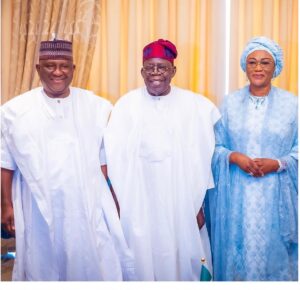
The latest images from Saudi Arabia are particularly evocative. On October 30, 2026, President Tinubu performed Umrah, offering prayers for Nigeria’s peace, unity and stability. Rabiu was among those who accompanied him, speaking of the privilege of joining the President in the holy city and praying for the country’s future. It was another chapter in a relationship that increasingly commands attention beyond the boardrooms of Nigerian enterprise.
And perhaps that is where the true significance of their association lies. For although money may purchase the grandest mansions and command the attention of the marketplace, it cannot, on its own, manufacture genuine familiarity with a President. The corridors of power are littered with wealthy supplicants who possess everything except the one commodity they desire most: the confidence of the man at the summit.
Rabiu, by every outward indication, appears to enjoy an enviable measure of that confidence.
The story stretches beyond the familiar geography of Aso Rock. In March 2026, when King Charles III hosted President Tinubu at Windsor Castle during the Nigerian leader’s state visit to the United Kingdom, Rabiu was among the distinguished guests at the royal banquet. Beneath the splendour of British royalty, amid the ancient rituals of monarchy and diplomacy, the Nigerian industrialist once again occupied a place within the President’s wider circle.
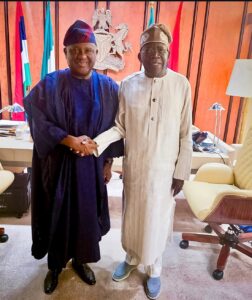
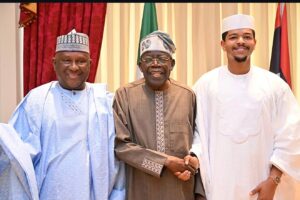
There is something profoundly revealing about such appearances. For in the theatre of power, invitations are seldom without meaning. A seat at a royal banquet may be an honour bestowed upon a distinguished businessman, but when considered alongside a succession of presidential encounters, it becomes another illustration of the remarkable visibility Rabiu enjoys in the highest reaches of national life.
From the cosmopolitan world of Paris, where Rabiu has cultivated formidable business relationships through the France-Nigeria Business Council, to the royal splendour of Windsor, the presidential residences of Lagos and Abuja, and the sacred precincts of Makkah, the industrialist’s international engagements have acquired a fascinating political dimension. His association with Tinubu appears to transcend the occasional courtesy call and the predictable handshakes of ceremonial business diplomacy.
There is, indeed, a certain elegance to the way the relationship has unfolded. Rabiu does not appear to need a public declaration of intimacy with the President. The encounters, the photographs and the recurring gestures of goodwill have done much of the talking.
Perhaps even more instructive is the President’s own assessment of the industrialist.
In August 2025, Tinubu publicly described Rabiu as a trusted partner in Nigeria’s progress, praising his entrepreneurial achievements, philanthropic commitments and contributions to domestic industrialisation. Such an endorsement, delivered from the highest office in the land, provides more tangible evidence of presidential regard than any speculation about the private conversations between the two men.
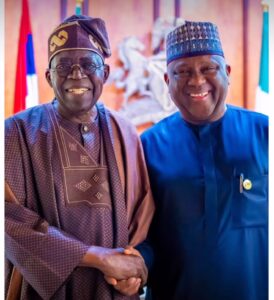
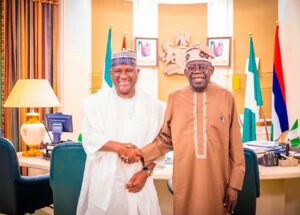
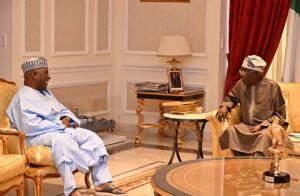
It is easy to understand the foundations upon which their association may have prospered. Tinubu is a politician whose economic philosophy places considerable emphasis on private enterprise, investment and industrial expansion. Rabiu, for his part, has spent decades constructing a sprawling commercial empire across cement, food production, sugar, infrastructure and other strategic sectors. One occupies the summit of political authority; the other commands an industrial establishment whose factories, investments and commercial ambitions are intimately connected to Nigeria’s economic fortunes.
Their interests therefore intersect at a particularly consequential point in the nation’s history.
But the relationship appears to possess something beyond the transactional necessities of government and business. In April 2026, following a visit to Tinubu’s Lagos residence, Rabiu described his habit of extending Sallah greetings to the President as a longstanding tradition. It was a seemingly simple admission, yet it illuminated a dimension of familiarity that official communiqués do not always capture.
That sense of continuity was reinforced in October when Rabiu visited the President alongside his son, Khalifa, during the country’s Independence anniversary celebrations. The photograph of father, son and President carried a symbolism that was difficult to overlook. It suggested not merely the continuing association of two powerful men but the introduction of another generation into the social landscape of that relationship.
Of course, Nigeria’s presidential orbit is inhabited by other formidable figures. Aliko Dangote, Femi Otedola, Tony Elumelu and several other leading industrialists maintain their own relationships with the administration. Each commands influence in different spheres, and the frequency of photographed meetings cannot conclusively establish who enjoys the greatest private access.
Yet Rabiu’s increasingly visible presence makes him difficult to ignore. While other billionaires are photographed with the President at economic summits, business engagements and ceremonial occasions, Rabiu’s encounters extend conspicuously into the more personal territories of religious observance, festive greetings and family introductions.
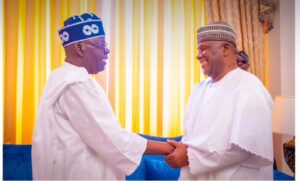
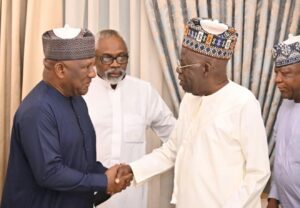
It is this combination of the official and the personal that makes his story particularly intriguing.
The latest pilgrimage to Makkah has only deepened that impression. There, stripped of the ostentatious accessories of earthly achievement, the President and the billionaire participated in a sacred exercise that recognises neither the grandeur of presidential office nor the magnificence of accumulated wealth. Before the Almighty, the distance between the occupant of Aso Rock and the chairman of BUA is rendered inconsequential.
And yet, in the earthly calculations of influence, the significance of their shared journey is unlikely to escape discerning observers.
For Rabiu, whose business interests span vital sectors of the Nigerian economy, proximity to the President can carry both opportunity and responsibility. The privilege of being heard by power is substantial, but so too is the expectation that such access should ultimately contribute to the welfare of the country, the growth of industry and the prosperity of ordinary Nigerians.
Therein lies the larger significance of his association with Tinubu. The true measure of influence is not merely the number of presidential photographs adorning a billionaire’s collection, nor the ease with which he enters rooms inaccessible to lesser mortals. It is what that influence accomplishes when the cameras have been lowered, the handshakes concluded and the doors closed upon conversations the public may never hear.
Still, the images remain compelling. They form a growing album of political familiarity and personal regard, each photograph another fragment in the portrait of a businessman whose relationship with the President has become one of the more fascinating narratives at the intersection of Nigerian wealth and power.
And perhaps, years from now, when historians attempt to reconstruct the intimate architecture of the Tinubu presidency, the photographs of Abdul Samad Rabiu will offer an intriguing glimpse into the social geography of the era.
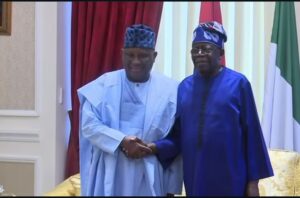
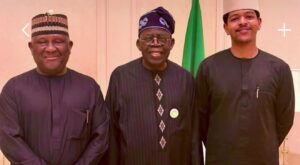
For now, one conclusion seems increasingly difficult to dispute: among Nigeria’s wealthiest entrepreneurs, Rabiu has established himself as one of the most visible and seemingly welcome presences in President Tinubu’s circle.
From the hallowed chambers of Aso Rock to the royal grandeur of Windsor and the sacred sanctuary of Makkah, the story continues to unfold with a remarkable consistency.
For in the magnificent theatre of power, many men possess the wealth to reach the palace gates. Far fewer appear to possess the familiarity that makes the welcome seem assured. And Abdul Samad Rabiu, it would seem, has mastered the delicate art of being not merely received, but repeatedly welcomed.

A funeral ceremony in Aleto, Eleme Local Government Area of Rivers State, reportedly turned tragic on Friday after a pastor collapsed and died while delivering a sermon on the certainty of death.
The cleric was identified as Deacon Steve Eyo, the Resident Pastor of the Redeemed Christian Church of God (RCCG), Aleto.
He was preaching before more than 300 mourners when he suddenly collapsed as he was concluding his message.
Eyo’s sermon was titled “The Certainty of Death and Hope Beyond.” According to eyewitness accounts cited by multiple local news outlets, he began preaching at about 1:10 p.m., speaking about the inevitability of death and urging those present to live their lives with the awareness that nobody knows when death will come.
In illustrating his message, the pastor reportedly compared life to going to the market, explaining that some people leave early while others remain until later, just as some people die young while others live longer.
About 15 minutes into the sermon, at approximately 1:25 p.m., Eyo reportedly collapsed while rounding off his message.
His sudden fall initially confused some mourners, with eyewitnesses saying some thought the pastor was demonstrating the suddenness of death as part of his sermon. The situation quickly became clear, however, as church ministers, choir members and others rushed to his aid.
People at the scene reportedly prayed for him while individuals with medical knowledge attempted to administer first aid. He was subsequently taken to a nearby medical facility in the same ambulance that had been hired to convey the remains of the deceased person whose burial was taking place.
He was reportedly confirmed dead at the hospital, after which his remains were taken to a mortuary.
The circumstances surrounding Eyo’s death have not been publicly established in the reports reviewed, and no specific medical cause of death was disclosed.
However, the timing of the incident has left mourners and members of the Aleto community deeply shocked because of the subject of his final sermon.
According to eyewitness accounts, Eyo had urged the congregation to “number your days and prepare, for it can happen anytime” shortly before he collapsed.
The incident transformed what had begun as a solemn farewell for one deceased person into another moment of mourning, as attendees were confronted with the sudden death of the minister delivering the funeral sermon.
Uncategorized
VIDEO: ‘I Was Just Being Myself’ – Poco Lee Breaks Silence After Release From UK Prison
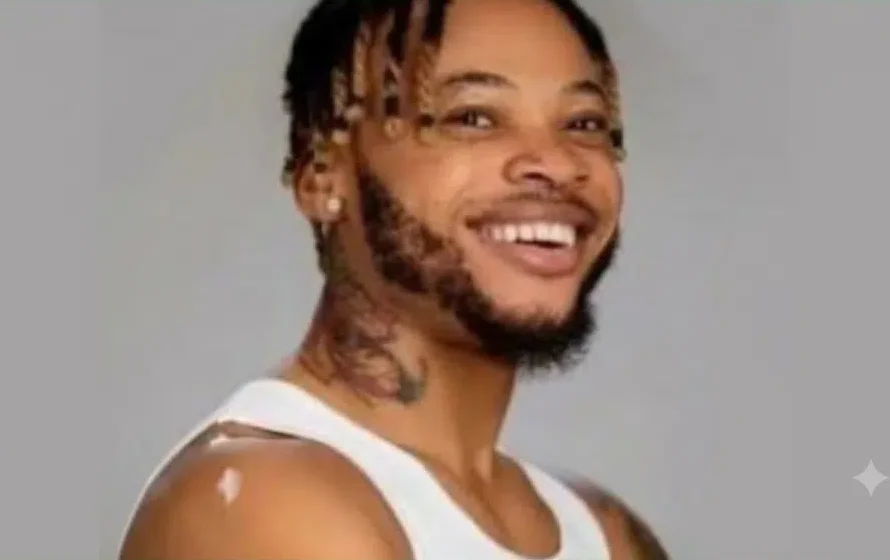
Nigerian dancer cum entertainer, Iweh Odinaka, popularly known as Poco Lee, has spoken about his ordeal following his release on bail in the United Kingdom.
Naija News recalls that Snaresbrook Crown Court had earlier fixed September 15 for plea and trial preparation in Poco Lee’s sexual offence case.
The case stems from Poco Lee’s visit to the UK in August for the Davido and Friends concert, which was held at the Crystal Palace Bowl in London on August 14.
However, during a video call with social commentator, VeryDarkMan, Poco Lee said his main concern while he was away was the welfare of his associates and the impact of his absence on their business activities.
The dancer maintained that he is innocent of the sexual allegation and his mind is pure.
He said, “I was just being myself. God sees my heart. My only worries were about my people. Jago could not do anything business, and I didn’t want to stress anyone.
“If I was inside there and I did what I was accused of, I would have felt I was paying for my sins, but since I knew I didn’t do what I was accused of, my mind is pure.
“Nobody would have wanted to associate themselves with something like that, but Burna Boy stood by me, Jago and some of my other guys.”
VeryDarkMan, who shared the video call on social media, also praised Nigerian singers, Burna Boy and Rahman Jago for their support.
In the caption accompanying the video, VDM wrote: “I just got off a video call with @rahman_jago_ and @poco_lee. I guess the next narrative will be this is AI. THERE IS A REASON WHY I BRAG WITH INTEGRITY, I AM NOBODY’S mate, WHEN I talk take it to the bank.”


News23 hours ago
JUST IN: Nigerian Gov Approves 13th-Month Bonus

News23 hours ago
Full List: 28 States That Approved State Police

Lifestyle2 days ago