
The committee is expected to consider memoranda submitted by stakeholders before presenting its report to the Senate for further legislative action.

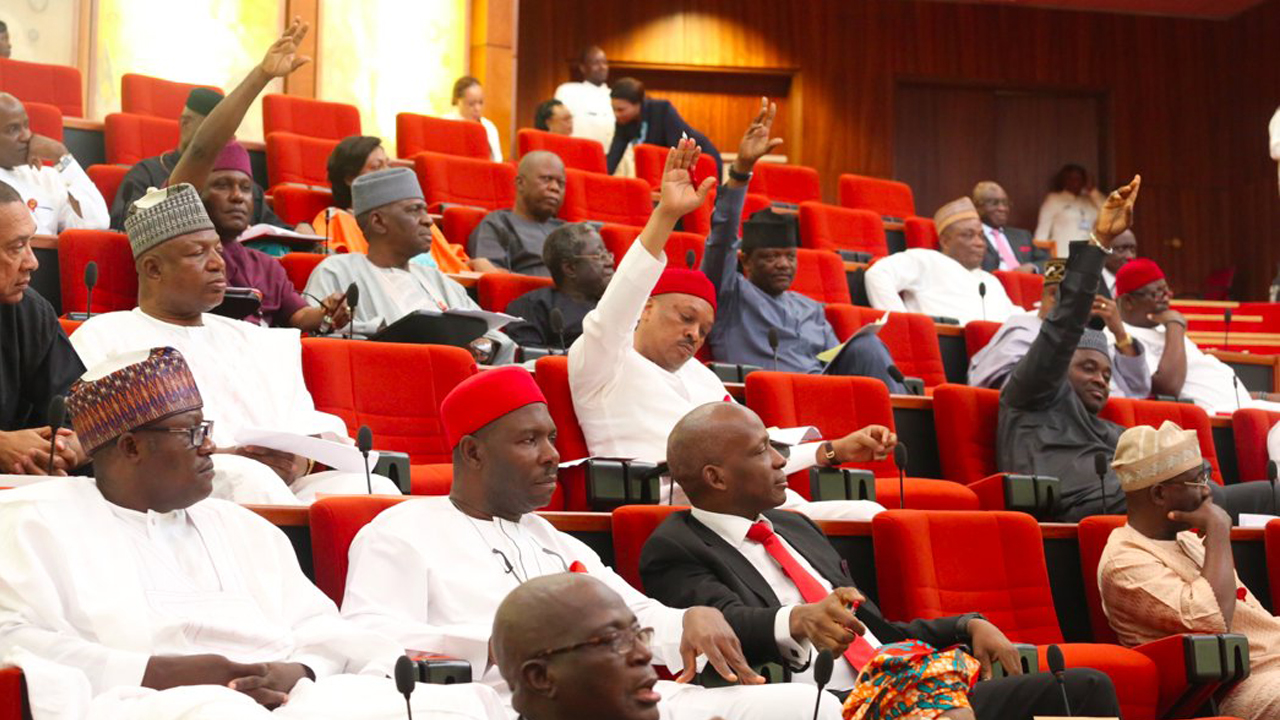
The Senate on Thursday advanced legislative efforts to compel global social media companies operating in Nigeria to establish physical offices in the country, as stakeholders overwhelmingly backed the proposal during a public hearing in Abuja.
The public hearing, organised by the Senate Committee on Information and Communications Technology and Cyber Security, also received broad support for a separate bill seeking to establish an ArtifiThe Senate on Thursday advanced legislative efforts to compel global social media companies operating in Nigeria to establish physical offices in the country, as stakeholders overwhelmingly backed the proposal during a public hearing in Abuja.cial Intelligence Academy in Omuo-Ekiti, Ekiti State.
The proposed legislation on social media platforms, sponsored by Ned Nwoko (Delta North), seeks to amend the Nigeria Data Protection Act, 2023, to mandate social media companies operating in Nigeria to maintain physical offices within the country’s territorial boundaries.
The AI Academy bill is sponsored by the Chairman of the Senate Committee on Media and Publicity, Yemi Adaramodu (Ekiti South).
Declaring the hearing open, Chairman of the Senate Committee on ICT and Cyber Security, Shuaib Salisu (Ogun Central), said the two bills were aimed at strengthening Nigeria’s digital economy and technological advancement.
According to him, while the social media bill seeks to improve the regulation and protection of Nigeria’s cyberspace, the proposed AI Academy is intended to serve as a centre of excellence for artificial intelligence education, research and innovation.
President of the Senate, Godswill Akpabio, represented by the Deputy Senate Leader, Lola Ashiru (Kwara South), described both proposals as forward-looking and nationally significant.

Akpabio said the bill requiring social media companies to establish physical offices in Nigeria was not intended to stifle their operations but to promote greater accountability and engagement with the country.
Also defending the bill, Nwoko dismissed concerns that the legislation could discourage investment or target technology companies.
He said, “This Bill is neither punitive nor hostile to innovation. It is not designed to frustrate investment or discourage technology companies from operating in Nigeria.
“On the contrary, it seeks to deepen their engagement with Nigeria by encouraging them to become true corporate citizens of our country.”
The lawmaker argued that many countries with smaller populations and digital markets than Nigeria had successfully attracted global technology firms to establish local operations.
“Around the world, major technology companies have established headquarters, regional offices, engineering centres and operational hubs in countries such as the United Kingdom, the Netherlands, Spain, Singapore, India, the United Arab Emirates, South Africa, Brazil, Australia, and Japan,” he said.
Nwoko dismissed concerns that the proposed legislation was aimed at targeting or discouraging global technology companies, insisting that it was intended to strengthen their presence and engagement in Nigeria.
He said many countries, including the United Kingdom, India, the United Arab Emirates, South Africa and Brazil, had attracted global technology firms to establish local offices that support engineering, artificial intelligence research, regulatory compliance, customer support and other operations.
“These offices perform diverse functions ranging from engineering and artificial intelligence research to legal and regulatory compliance, public policy, advertising, trust and safety, cloud services, sales, customer support and product development.
“These countries did not attract such investments by accident. They recognised early that the digital economy is now as important as the traditional economy.
“By encouraging global technology companies to establish local operations, they have created employment, expanded tax revenues, strengthened regulatory engagement, promoted innovation and encouraged technology transfer to their citizens,” he stated.
Citing Ireland as an example, Nwoko said the presence of companies such as Meta, Google, LinkedIn, TikTok and X had transformed the country into one of Europe’s leading technology hubs through job creation, innovation and increased foreign investment.
He argued that Nigeria, as Africa’s largest digital market, should enjoy similar economic and technological benefits.
“The question therefore is simple: if countries with significantly smaller populations and digital markets than Nigeria have secured these investments and benefits, why should Nigeria continue to stand on the sidelines? Why should Africa’s largest digital market not enjoy the same opportunities?”
The committee is expected to consider memoranda submitted by stakeholders before presenting its report to the Senate for further legislative action.

Grammy Award-winning Nigerian Afrobeats star Ayodeji Balogun, popularly known as Wizkid, closed the 2026 edition of the Afro Plus Fest in Maryland, United States, on Sunday, marking 15 years since his breakthrough in the music industry.
The 35-year-old singer headlined the final night of the three-day festival, which ran from 4 to 6 September at the Northwest Stadium Complex in Landover, Maryland.
Wizkid’s performance carried added significance as he celebrated a decade and a half in the industry, having first risen to prominence with the hit “Holla at Your Boy” from his 2011 debut album, Superstar.
Wizkid, who shared the stage with a global line-up of Afrobeats, dancehall and hip-hop artists, delivered a mix of career-defining tracks that had the crowd singing along.
The performance included “In My Bed,” “Daddy Yo,” “Bad to Me,” “Slow Down,” “Caro,” “Essence,” “Alaye,” “Jogodo,” “Money Constant,” and “Ojuelegba.”
Since his breakthrough in the industry, Wizkid has built one of the most decorated careers in African music, becoming the first Nigerian artist to reach No. 1 on the Billboard Hot 100 as a co-writer and featured artist on Drake’s “One Dance.”
His catalogue includes albums such as Ayo, Made in Lagos, More Love, Less Ego and Morayo.
Wizkid has also won a Grammy Award for his contribution to Beyoncé’s “Brown Skin Girl” and is the most-streamed African artist on platforms such as Spotify. His Tems-assisted hit “Essence” achieved massive global crossover success.
The artist’s appearance as the final-night headliner underscored both his influence on Afrobeats and the rapid growth of Afro Plus Fest into a major diaspora gathering.
Official announcements for the festival featured Nigerian superstar Davido as the Friday headliner, Jamaican dancehall artiste Alkaline on Saturday, and Wizkid closing on Sunday, with additional acts including Lil Baby, Latto, Tems, Ayra Starr, Tiwa Savage, Olamide and Adekunle Gold among others.
Billed as the largest Afro-Caribbean-Hip Hop festival, the 2026 edition reportedly expanded to a three-day format across two stages, drawing a projected 40,000 fans daily.
Reflecting on the festival’s growth, Founder and Executive Producer Michael Awosanya noted in an earlier statement that the event had evolved into a global diaspora movement.
“The block party we dreamed about for a decade became a reality, and it exceeded every expectation. This sold-out debut proved that Afro Plus Fest is not just an event — it’s a movement. This was only the beginning. Afro Plus Fest is here to stay,” Awosanya stated.

Nollywood actress Deborah Shokoya has reacted to the mixed opinions surrounding the marriage of social media personalities Peller and Jarvis.
Daily Voice reports that the actress said public opinion can change quickly based on what people see.
Shokoya commented on an Instagram post while discussing how people often judge relationships from the outside.
She said that some people who criticize a relationship at one moment may later support and admire the same relationship when circumstances change.
She advised Peller and Jarvis, as well as others facing public scrutiny, to focus on understanding themselves and doing what works for them rather than allowing outside opinions to determine their choices.
The actress also urged people to prioritise their happiness and peace of mind while avoiding self-deception.
She wrote: “I Have Seen People Talk Down On Peller And Jarvis’s Marriage Today, Support And Admire It Tomorrow🤣 Call It Toxic Today, Then Call It Sweet Tomorrow🤣 I Have Come To A Conclusion Of What I Already Know Before Tho… That People Will Always Judge Base On What You Show Them😁😂 Just Do You! Know You! Satisfy You! Do What Works For You! People Will Always Talk Regardless… They Will Always Judge Anyways! You Owe Your Happiness And Sanity To Yourself, Just Best Live By Not Deceiving Yourself👌.”

Nollywood has been thrown into mourning following the death of actress Atinuke Remilekun Kareem, who passed away after battling breast cancer.
Kareem’s death was announced on Tuesday by Owolabi Ajasa, the Ogun State governor of the Theatre Arts and Motion Pictures Practitioners Association of Nigeria (TAMPAN), in a statement shared on his Instagram page.
Ajasa expressed appreciation to colleagues, fans and well-wishers who supported the actress financially and emotionally during her illness, but said their efforts had ultimately not been enough to save her.
“Sadly, despite all our efforts and prayers, Atinuke has passed on and answered the final call,” Ajasa said.
He added that the association remained grateful to everyone who contributed towards Kareem’s treatment, offered prayers or encouraged her and her family during the difficult period.
The actress had publicly appealed for assistance during her battle with breast cancer. In a video circulated online, Kareem disclosed that she had been receiving treatment for some time and that the financial burden had placed considerable pressure on her family.
“I’m a breast cancer patient. It has been going on for a while. My family has spent a lot of money; I’ve come to seek help,” she said in the appeal.
Kareem also revealed that she was a mother of two young children as she appealed to Nigerians and other well-wishers to assist with her treatment.
Her death has triggered an outpouring of grief across the Yoruba film industry, coming barely days after the death of veteran actor Taiwo Hassan, popularly known as Ogogo, who died after a prolonged battle with cancer.
Kareem’s passing has therefore deepened the sense of loss within an industry that has endured a string of bereavements involving actors and other practitioners.
The TAMPAN Ogun chapter described her death as an “irrecoverable loss” and prayed for strength for her family, colleagues and loved ones.
Ajasa said the association could only accept the development and entrust Kareem’s soul to God.
“We cannot question the Almighty God. We can only submit to His will and pray that He grants her eternal rest and gives her family, colleagues, and loved ones the strength to bear this painful loss,” he said