
News
FG Issues Fresh Directive on Government Workers’ Deployment


The Bola Ahmed Tinubu led Federal Government has tightened controls over the deployment and redeployment of civil servants, directing Ministries, Departments and Agencies to stop moving officers belonging to recognised professional pools without approval from the authorities responsible for their postings.
The directive comes as the administration of President Tinubu intensifies efforts to address concerns over fake government agencies, ghost workers and weakness in personnel and institutional control system.
The Office of the Head of the Civil Service of the Federation issued the directive in a circular dated August 24, 2026 with reference number HCSF/3065/V.I/275.
The directive warned that officers posted to MDAs from recognised professional pools must remain in their approved offices, departments, divisions, units or sections unless their deployment is reviewed and approved by the relevant authority.
According to The PUNCH, the circular was addressed to the Chief of Staff to the President, ministers, the Secretary to the Government of the Federation, permanent secretaries, service chiefs, the Inspector-General of Police and heads of relevant Federal Government institutions and agencies.
The Head of Service said it has observed that some MDAs continued to move officers assigned to them from professional pools without obtaining approval from the relevant posting authority.
The circular said: “The Office of the Head of the Civil Service of the Federation has observed that some Ministries, Extra-Ministerial Departments and Agencies have continued to redeploy officers posted to them from the professional pools of the OHCSF and other recognised pool offices without the approval of the relevant posting authorities.”

According to the circular, the practice violates an earlier Circular Ref. No. HCSF/3065/VI/218 dated January 2, 2025, on the prohibition of internal redeployment of pool officers within MDAs.
The OHCSF circular seeks to establish a clearer chain of authority over who can deploy, move and supervise professional officers within the Federal Civil Service.
It directed permanent secretaries may deploy or redeploy only officers on the local staff establishment of their respective MDAs to areas where their services are required for effective and efficient service delivery.
However, officers posted to an MDA by the OHCSF or another recognised professional pool are subject to a different rule.
The circular stated, “Officers posted to Ministries, Extra-Ministerial Departments and Agencies by the OHCSF or any other recognised professional pool shall remain in the offices, departments, divisions, units or sections to which they were specifically posted, in accordance with their posting instructions.
“Such officers shall not be redeployed internally without the prior approval of the relevant posting authority.”
The OHCSF, however, made a qualification for officers on Grade Level 07 to 14 who are posted to fill vacancies in departments.
According to the circular, such officers may be deployed internally to divisions, units and sections where vacancies exist, provided such deployment remains within the scope of their respective pools or cadres.
The circular stated, “Where operational exigencies necessitate any review of such postings, the matter shall be referred to the appropriate posting authority for review and necessary approval.”
Under the Office of the Head of the Civil Service of the Federation, the circular noted that, recognised cadres include Administrative Officers, Executive Officers (General), Store Officers, Stock Verifier Officers, Confidential Secretaries, System/Programme Analysts, Statistical/Data Processing Officers and Library Officers. These officers are managed by the Permanent Secretary, Career Management Office of the OHCSF.
At the Federal Ministry of Justice, the recognised pool consists of State Counsels, with the Solicitor-General/Permanent Secretary serving as the managing authority.
The Bureau of Public Procurement manages the professional pool of Procurement Officers, under the authority of the Director-General of the Bureau.
The Federal Ministry of Information and National Orientation manages the pool of Information, Press and Public Relations Officers, under its Permanent Secretary.
At the Office of the Accountant-General of the Federation, the recognised cadres are Account Officers and Executive Officers (Accounts), with the Accountant-General of the Federation as the managing authority.
The Office of the Auditor-General for the Federation manages the pool of Resident Auditors, under the Auditor-General for the Federation.
The circular also recognised any other duly recognised professional pool office, with the applicable cadre and managing authority.
The detailed listing underscores the fact that professional officers posted to MDAs are subject to defined administrative structures and cannot simply be moved from one establishment to another at the discretion of individual officials.


Gamal Nkrumah, Son Of Ghana’s First President Kwame Nkrumah, Dies At 68 In Egypt
Gamal Gorkeh Nkrumah, son of Ghana’s first president, Kwame Nkrumah, has died at the age of 68 in Cairo, Egypt.
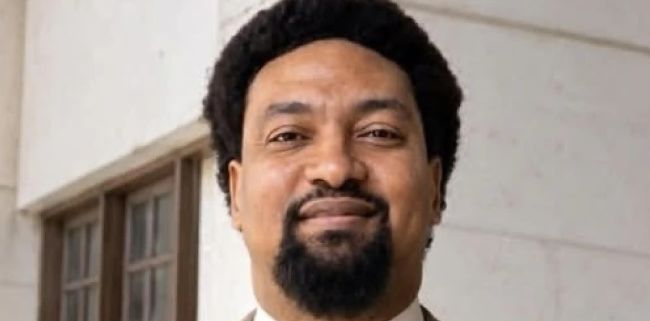
According to Deutsche Welle (DW), family sources said Gamal died peacefully following a prolonged illness. He had been receiving care at a rehabilitation centre after suffering a stroke.
Born in Accra, Ghana, to Kwame Nkrumah and his Egyptian wife, Fathia Nkrumah, Gamal built a career in journalism, becoming known for his coverage of African politics, international affairs and Pan-Africanism.
Borno court sentences woman to two years imprisonment for sxual exploitation of 16-year-old girl
He worked for more than 15 years as an editor and columnist at Al-Ahram Weekly, an English-language publication in Egypt, where he wrote about political developments across Africa and international relations.
His work reflected a longstanding interest in Pan-Africanism, the political and cultural movement advocating solidarity and cooperation among African peoples and people of African descent.
Gamal was the son of Kwame Nkrumah, who led Ghana to independence from British colonial rule in 1957 and became the country’s first president.
His father was a prominent advocate of African unity and played a major role in the development of Pan-African political thought.
Gamal’s burial will take place in Egypt on October 17, in accordance with Islamic traditions, family sources said.
His family added that details of memorial arrangements would be announced at a later date.
News
European Parliament Moves To Ban Muslim Brotherhood Infiltration Of Institutions In Landmark Resolution
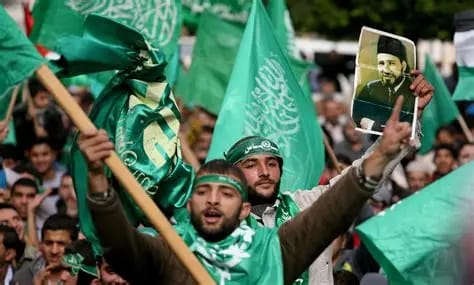
Europe has finally moved from talking to acting!
The European Parliament has stepped up its action against the Muslim Brotherhood, voting on 8 October 2026 in favour of a resolution calling for a unified European strategy to address the networks of the “Muslim Brotherhood” and their influence, in a new move that brings the question of placing the group and entities linked to it on the European terrorist list before EU institutions.
The Strasbourg vote marks a turning point after years of fragmented national debates, intelligence warnings, court battles and street-level fears about parallel societies. For the first time, the EU’s directly elected body has demanded a common continental response, with the threat of a terrorist listing hanging over the Brotherhood’s European network.
The resolution secured 381 votes in favour and 167 against, while 15 members abstained, according to the voting results on the resolution concerning the establishment of a European strategy to address the Muslim Brotherhood network and its influence. The margin, 381 to 167, was not even close. It signals that a broad coalition from the centre-right to parts of the centre-left now believes the threat requires a European answer, not just national patchwork responses. Analysts who have followed the debate in Brussels said the vote reflects months of behind-the-scenes lobbying by French and German lawmakers who brought intelligence dossiers to the Parliament’s committees. According to *independent.ng*, the scale of the vote has sent shockwaves through civil society groups in Brussels, with many now scrambling to understand what a unified listing could mean for funding, advocacy and legal status across the bloc.
A Unified Strategy To Hunt The Network
The Parliament calls for an assessment of the possibility of listing entities and individuals linked to the Muslim Brotherhood on the European Union’s list of terrorist organisations, alongside measures concerning funding and cooperation among member states to counter the activities of networks associated with the group.
This is not just a symbolic statement. The text demands concrete tools: shared intelligence, joint financial investigations, common criteria for defining affiliation, and a freeze on any EU money that could indirectly benefit the network. The resolution is expected to move the issue beyond fragmented national debates towards the pursuit of a common European approach encompassing funding, transparency and institutional relations, as well as an assessment of the possibility of placing entities or individuals linked to the Brotherhood on the European terrorist list, following the expansion of debate in several European countries over the relationship between political Islam and civil society activity.
For years, one EU country would ban a Brotherhood charity while the next country hosted its conference. That era, lawmakers say, is over. The new strategy would force every member state to apply the same standards of transparency and scrutiny, especially around money flows from outside Europe.
FEMYSO Expelled: Brussels Cuts Off Youth Front
In one of its most explosive paragraphs, the resolution calls for the permanent exclusion of the organisation “FEMYSO”, the Forum of European Muslim Youth and Student Organisations, from European institutions. The organisation is considered close to the Muslim Brotherhood.
FEMYSO has for decades positioned itself as a representative of young European Muslims, holding meetings with the European Commission, the Parliament and the Council of Europe. Critics say that was a perfect cover for ideological influence, allowing the network to shape integration policy, youth programmes and anti-discrimination discourse from the inside.
Supporters of FEMYSO deny any operational link to the Brotherhood and describe the move as Islamophobic. But the Parliament’s majority disagreed. The permanent exclusion clause means no more access badges, no more hearings, no more funding applications through EU youth programmes. It is a direct institutional firewall.
Follow The Money: EPP Demands Audit Of Islamic Funding
The European People’s Party Group said that one of the resolution’s main objectives is to call for the tracking of European funds paid to Islamic entities and the cessation of any funding to them.
That pledge strikes at the heart of the network’s survival. Investigators across Europe have long complained that Brotherhood-linked charities receive municipal grants, EU integration funds and donations from Gulf states, then redistribute them to mosques, schools and media outlets that preach the same political Islam ideology.
The EPP wants a forensic audit. Every euro, every grant, every public contract must be traced. If a group is found to be part of the network, the tap must be turned off immediately. The proposal also calls on member states to share banking intelligence and to cooperate with financial intelligence units to stop external funding that fuels separatism.
Infiltration Of Institutions: Germany Raises The Alarm
Meanwhile, Germany’s Federal Office for the Protection of the Constitution, the country’s domestic intelligence agency, has expressed concern over a marked increase in the influence of the “Muslim Brotherhood” in the eastern German state of Saxony.
The head of the agency’s Saxony branch, Gordian Meyer-Plath, announced that the “Muslim Brotherhood” had exploited the shortage of places of worship for Muslims who arrived in Saxony as refugees through organisations such as the cultural association “Saxony Forum”, in order to expand its structures and disseminate its conception of political Islam.
Meyer-Plath’s warning was blunt: the Brotherhood did not need to build new mosques from scratch. It simply took over the ones that desperate refugees needed. By providing prayer space, Arabic lessons, counselling and community support, the network gained trust, then gradually introduced its political doctrine.
Meanwhile, court rulings and administrative decisions reveal that the authorities have begun tracking the channels used by Brotherhood networks to gain access to public-sector jobs, the education sector and integration programmes, while subjecting employees and institutions to assessments of constitutional loyalty, financial transparency and adherence to state values.
Karlsruhe Ruling: Loyalty Test For Civil Servants
The Administrative Court in Karlsruhe upheld the rejection of an appointment to a position in the foreigners’ registration office, citing the requirement that civil servants undergo scrutiny, following information provided by the Office for the Protection of the Constitution concerning the applicant’s proximity to the Muslim Brotherhood. The decision was based in particular on her educational activities within an association and a mosque under security surveillance.
That ruling is now being studied by interior ministries across Europe. It establishes a legal precedent: working in a Brotherhood-linked educational environment can be sufficient to question a candidate’s constitutional loyalty, especially for sensitive posts dealing with foreigners, integration and schools.
Recent European moves point to efforts to close the spaces exploited by Brotherhood networks to operate behind educational or social fronts and to prevent state institutions themselves from becoming channels for ideological influence. According to *independent.ng*, similar loyalty assessments are now being discussed in Austria, Belgium and the Netherlands, where intelligence services have also reported Brotherhood-linked teachers and social workers operating inside state-funded integration programmes.
France: The Epicentre Of The Battle
France is home to the largest Muslim communities in Europe, with the number of Muslims residing in French society estimated at around six million, the highest figure among European countries. The country also has more than 250 Islamic associations spread across its territory, including 51 associations considered affiliated with the Muslim Brotherhood, alongside a number of other entities, such as the “Collective Against Islamophobia”, the “Faith and Practice Association”, the “Centre for Studies and Research on Islam”, the “European Institute of Human Sciences” and the “Ibn Sina Institute”, which trains imams.
The “Union of Islamic Organisations in France” — currently known as “Muslims of France” — is considered one of the most influential Islamic entities in the country. It was established in the Meurthe-et-Moselle département in June 1983 and has since grown into a nationwide federation with youth camps, summer schools, publishing houses and student networks.
French officials have watched this ecosystem expand for decades, often powerless because each association was legally separate. The new French report and the EU resolution now try to connect the dots and treat the network as a single strategic challenge.
The 2025 French Report That Shook The Republic
In this context, a French report published in May 2025 revealed funding for an ideological doctrine that converges with terrorist radical organisations and is promoted under various banners. The report prompted alarm at the highest levels of the country’s leadership, while the French Parliament called on the European Parliament to include the Muslim Brotherhood on terrorist lists.
The report discussed a broad network of institutions linked to the group, amid concerns over the rise of anti-Muslim rhetoric under the guise of combating political Islam. It meticulously documented the ways in which the Muslim Brotherhood had penetrated

Nigerian gospel singer, Toluwanisings is reportedly dead
His death was announced by the Convener of the Coalition of Public Interests Lawyers and Advocates, COPA, Pelumi Olajengbesi on Wednesday.
Expressing concern over the death of young Nigerians, Olajengbesi, in a post on Instagram, pleaded for God’s mercy.
Concerns mount over reports of Toluwanisings’ death
While noting that the death of Toluwanisings is not God’s plan, he wrote, “We say no to untimely death.”
Sharing the singer’s picture, Pelumi said, “My God! What a life! No, Lord! We plead for Your mercy upon Toluwanisings.
“I am deeply troubled by the deaths of young men and women. This is not God’s plan for us.”
Reacting to the sad news, comedian Woli Agba said they are still praying for a miracle.
He wrote on his page, “Please hold on. Please don’t conclude. We are trusting God. Please.”
Responding in the comments section, singer Boyebest wrote, “Yes yes yes. Yeah I have faith in God. I do. God you’ll do this one.”
This came about two hours after the rumour first surfaced on social media.
DAILY POST reports that the circumstances surrounding the singer’s death have not been revealed as of the time of this report


Details Of How Singer Toluwanisings Died Revealed
BREAKING: Tragedy As Former President’s Son Dies In Egypt

European Parliament Moves To Ban Muslim Brotherhood Infiltration Of Institutions In Landmark Resolution

FULL LIST: Top 10 “Tokunbo” Cars You Can Get For ₦3m–₦5m

Former Super Eagles Star Loses Life Savings, Duped By A Pastor of ₦1.2 Billion

I’m A Married Man, I Can Never Get Myself Involved With Such A Thing, Delta Gov Aide Reveals Why He Offered Comfort ₦500,000 Job

-

 Tech1 day ago
Popular Nigerian Gospel Singer Confirmed Dead
-
 News13 hours ago
BREAKING: Tragedy As Former President’s Son Dies In Egypt
-

 Politics2 days ago
Gunmen Kill NDC Member During Attack On Enugu Campaign Office
-

 Entertainment2 days ago
They Almost Squeezed Me To Death – Portable Begs Tinubu, Seyi For More Money
-

 Entertainment2 days ago
Ayra Starr Announces World Tour For 2027
-

 Politics2 days ago
2027: ‘False Battle’ – APC Breaks Silence On Rift Between Wike, Governors
-
 News2 days ago
NAFDAC Uncovers Fake Alcohol, Energy Drinks Factory In Lagos
-

 Entertainment2 days ago
I Don’t Believe In Buying Expensive Clothes – Davido’s Sister