
News
26 States Lean On FAAC As Wage Bills Outstrip IGR

At least 26 state governments could not generate enough internal revenue to cover their personnel costs in 2025, as they continue to depend on allocations from the Federation Account despite a significant improvement in their finances.
An analysis by Daily Voice showed that only eight of the 34 states covered by a new BudgIT report generated Internally Generated Revenue higher than their personnel expenditure during the year. The eight states were Lagos, Enugu, Ogun, Delta, Kaduna, Kwara, Abia and Anambra.
The remaining 26 states generated about N1.16tn internally but spent approximately N1.91tn on personnel, leaving a gap of about N747bn between their combined IGR and wage-related expenditure.
The findings are contained in BudgIT’s 2026 report titled ‘Nigeria’s Economic Reforms: What Has Changed Across Nigeria’s States? An Analysis of State Finances in the Post-Subsidy Years’.
The report analysed actual figures contained in states’ full-year budget implementation reports for 2022 and 2025. Akwa Ibom and Rivers were excluded because of incomplete or unavailable data.
The figures do not imply that states are expected to finance salaries exclusively from IGR because statutory allocations are a legitimate source of government revenue. They, however, show the extent to which many states would struggle to meet even their personnel obligations without revenue distributed by the Federation Account Allocation Committee.
This dependence has persisted despite the sharp rise in revenues available to states following the removal of petrol subsidy, foreign exchange reforms, and higher revenues accruing to the Federation Account.

According to BudgIT, aggregate FAAC allocations increased from N3.43tn in 2022 to N11.38tn in 2025, representing a 232.06 per cent increase and a compound annual growth rate of 50.2 per cent.
IGR also increased substantially, rising from N1.57tn to N4.15tn over the same period, but its 165.01 per cent growth and 38.38 per cent CAGR lagged the expansion in FAAC receipts.
Consequently, states became more dependent on federal transfers despite generating more revenue internally. FAAC accounted for 68.7 per cent of aggregate state revenue in 2022 but increased to 73.3 per cent in 2025. Conversely, IGR’s share fell from 31.4 per cent to 26.7 per cent.
BudgIT said this showed that “despite improvements in domestic revenue mobilisation, many states remained heavily reliant on transfers from the Federation Account.”
It stressed that improving domestic revenue mobilisation would be critical to strengthening states’ long-term fiscal sustainability and reducing their dependence on federal transfers.
The report said, “Although statutory allocations accounted for a larger share of the overall increase in revenues, strengthening domestic revenue mobilisation remains essential for improving long-term fiscal sustainability and reducing dependence on federal transfers.”
A state-by-state comparison by The PUNCH showed wide disparities between personnel expenditure and internally generated revenue. Yobe generated only N15.42bn internally in 2025 but spent N76.34bn on personnel. Its personnel bill was therefore almost five times its IGR, leaving a shortfall of about N60.91bn.
Taraba generated N17.89bn against personnel expenditure of N55.60bn, meaning its personnel costs were more than three times its IGR. Sokoto recorded IGR of N20.58bn but personnel expenditure of N58.65bn, while Adamawa generated N24.14bn internally against a N65.73bn personnel bill.
Jigawa’s personnel expenditure stood at N92.66bn compared with IGR of N35.27bn, while Benue spent N73.94bn on personnel after generating N29.38bn internally.
Similarly, Kogi generated N36.50bn but recorded personnel expenditure of N89.20bn, while Kebbi’s N18.41bn IGR was less than half of its N44.82bn personnel expenditure.
Other states with personnel costs exceeding IGR included Bauchi, Bayelsa, Borno, Cross River, Ebonyi, Edo, Ekiti, Gombe, Imo, Kano, Katsina, Nasarawa, Niger, Ondo, Osun, Oyo, Plateau and Zamfara.
In absolute terms, Oyo recorded the largest gap among the 26 states. The state generated N102.52bn internally but spent N170.04bn on personnel, creating a difference of about N67.51bn.
Yobe followed with a gap of about N60.91bn, while Jigawa recorded N57.39bn. Ondo’s personnel expenditure of N99.58bn exceeded its N45.63bn IGR by N53.94bn, while Kogi recorded a gap of N52.70bn. Bayelsa generated N52.15bn against N98.75bn in personnel expenditure, leaving a difference of N46.60bn.
Some states were much closer to financing their personnel costs internally. Edo generated N98.45bn and spent N99.27bn on personnel, leaving a gap of less than N1bn. Gombe generated N36.36bn compared with personnel expenditure of N53.95bn, while Osun recorded N58.80bn in IGR against N87.46bn in personnel costs.
The data showed that the situation improved slightly compared with 2022, when 28 of the 34 states had personnel expenditure above their IGR. Abia, Delta, Enugu and Kwara moved from having IGR below personnel expenditure in 2022 to generating enough internally to cover their wage-related costs by 2025. However, Ebonyi and Jigawa moved in the opposite direction.
The PUNCH further observed that the weakness in state-level fiscal independence is partly obscured by the enormous size of Lagos’ revenue base. Lagos generated N1.85tn in IGR in 2025, up from N656.35bn in 2022. Its IGR alone accounted for about 44 per cent of the N4.15tn generated by the 34 states covered by the report.
The state spent N333.67bn on personnel, meaning its IGR was more than five times its personnel expenditure. Enugu generated N406.77bn compared with personnel expenditure of N56.40bn, while Ogun generated N237.65bn against N151.27bn in personnel costs. Delta recorded N206.44bn in IGR and N197.81bn in personnel expenditure.
Other states whose IGR exceeded their personnel bills were Kaduna, which generated N86.72bn against N77.63bn; Kwara, N85.21bn against N65.22bn; Abia, N66.86bn against N62.26bn; and Anambra, N54.24bn against N39.95bn.
Lagos’ dominance also means the aggregate IGR position appears considerably stronger than that of the typical state. Excluding Lagos, the remaining 33 states generated about N2.30tn internally in 2025. Their combined personnel expenditure stood at roughly N2.56tn, meaning personnel costs exceeded IGR by about N254bn.
Enugu also recorded an exceptional increase that boosted the overall IGR figure. Its IGR jumped from N25.12bn in 2022 to N406.77bn in 2025, an increase of N381.66bn and a CAGR of 153.01 per cent, the highest among the states.
BudgIT, however, noted that the increase was largely attributable to proceeds collected by the Enugu State Housing Development Corporation from the government’s intervention in the landed property market.
The organisation expressed reservations about the classification and noted the potentially cyclical nature of the receipts. Niger recorded the second-fastest IGR growth, with collections rising from N12.11bn to N66.37bn, while Abia increased from N14.67bn to N66.86bn.
But not every state benefited from the IGR expansion. Three states recorded lower IGR in 2025 than in 2022. Jigawa suffered the biggest decline, falling from N59.40bn to N35.27bn. Sokoto’s IGR dropped from N23.60bn to N20.58bn, while Ebonyi declined marginally from N23.89bn to N23.25bn.
Jigawa’s position was particularly significant because its personnel expenditure rose from N52.37bn in 2022 to N92.66bn in 2025, while its IGR declined, substantially increasing its dependence on other revenue sources.
The Minister of Finance and Coordinating Minister of the Economy, Taiwo Oyedele, recently called for stronger fiscal federalism, improved revenue generation and economic diversification to strengthen Nigeria’s resilience to economic shocks. The minister spoke in Owerri, the Imo State capital, at the 2026 National Council on Finance and Economic Development Retreat.
Speaking on the theme ‘Strengthening Fiscal Federalism for Equity, Sustainable Development and Economic Resilience in a Volatile Global Economy,’ Oyedele insisted on the retreat interrogating the current allocation and derivation principles, even as he called for greater fiscal responsibility, accountability and cooperation among Nigeria’s three tiers of government to achieve sustainable economic growth.
The minister urged state governments nationwide to strengthen their Internally Generated Revenue, attract investments and create jobs rather than rely heavily on federal allocations.
Also speaking, the Imo State Governor, Hope Uzodimma, who was represented at the event by his Deputy, Chinyere Ekomaru, said that states must be empowered to generate more revenue and efficiently manage available resources, pointing out that continued dependence on oil revenue was no longer sustainable.
An economist and former Vice-Chancellor of the University of Uyo, Prof Akpan Ekpo, recently stressed that “states have to think of new ways of increasing their IGRs.” He urged the states to increase their revenue by increasing service delivery, which will attract more revenue.
A renowned economist and Chief Executive Officer of the Centre for the Promotion of Private Enterprise, Muda Yusuf, earlier said that a majority of states were not financially sustainable and were at risk of insolvency without a boost in investment.
He said, “This issue is a fiscal sustainability problem, showing that many states are not fiscally sustainable and need to work towards it; and that the states need to do a lot more to attract more investments to their states so that their level of dependence on the Federal Allocation Accounts Committee would reduce.
He also said that the state governors should reduce their bloated staff and political appointees. “Most of these states have heavy overhead and they have very bloated bureaucracy, political appointees and they are putting a lot of pressure on their resources, so they have to do some rationalisation on their staff, many of them don’t need more than 50 per cent of their workforce but for political reasons, they put all manner of characters on their payroll including the local government,” he said.
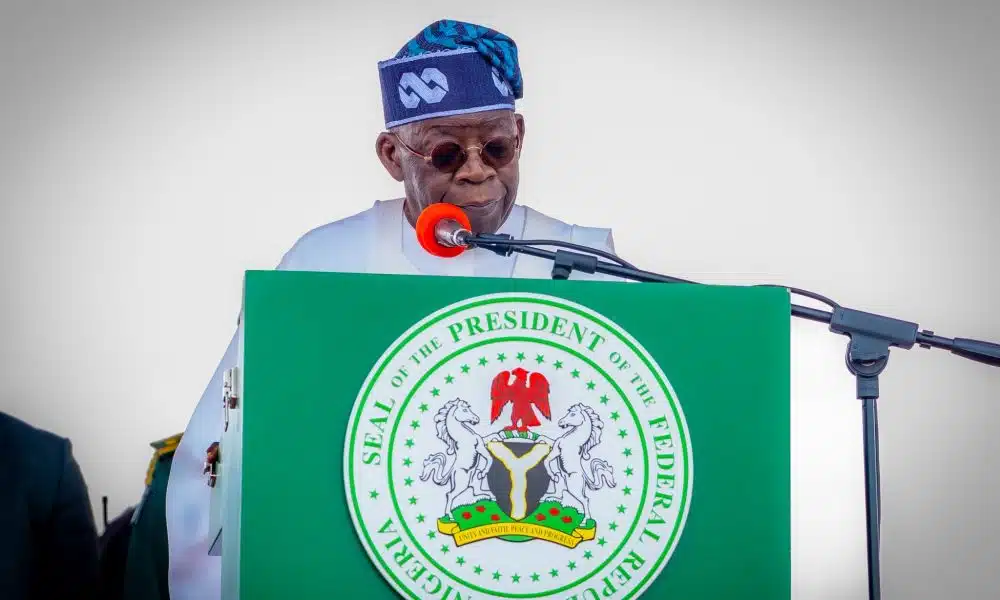
President Bola Tinubu has approved the appointment of the immediate past Director-General of the Department of State Services (DSS), Yusuf Bichi, as the Chairman of the Governing Board of the National Institute for Security Studies (NISS), Lower Usuma Dam, Abuja.
Bichi’s appointment was approved by President Tinubu based on the recommendation of the current Director-General of the DSS, Oluwatosin Adeola Ajayi.
Daily Voice reports that his appointment, according to a statement on Thursday by the Director of Coordination and Liaison of the NISS, Lilian Omo-Odigwe, is for an initial four-year term, effective 22nd October, 2026.
The statement noted that Bichi’s appointment is in accordance with Section 4 of the National Institute for Security Studies (Establishment) Act, 2019.
Bichi, who will succeed A.A. Gadzama, on the Governing Board, handed over leadership of the DSS to the incumbent Director-General in August 2024.
The former DG began his career in the Security Division of the Kano State Cabinet Office before his transfer of service in 1984.
“Bichi’s appointment to Chair the NISS Board brings an extensive experience in intelligence, security administration, operational leadership and institutional training to the governance of the National Institute,” the statement added.
Meanwhile, Nollywood actress Eniola Badmus has defended her continued support for President Bola Ahmed Tinubu, saying her political stance is the reason some people criticize her.
Naija News reports that the actress made this known during an interview with Nigerian comedian and content creator Isbae U on his podcast, Curiosity Made Me Ask.
Badmus explained that the criticism she receives is largely connected to her decision to support Tinubu, adding that she remains committed to the president despite the negative reactions from some Nigerians.
The actress maintained that she would continue to stand by her political choice, regardless of public opinion.
She also noted that democracy allows people to support political candidates and parties of their choice without being attacked for their decisions.
According to Badmus, she does not condemn people for supporting politicians different from the ones she believes in, stressing that everyone should be free to make their own political decisions.
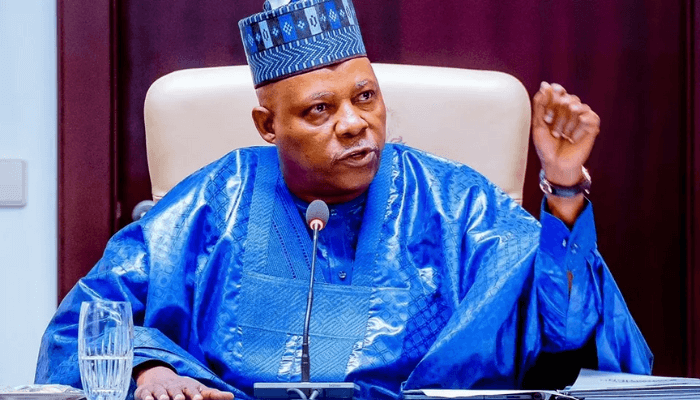
Vice President Kashim Shettima has urged state governments to stop relying solely on the Federal Government to solve Nigeria’s electricity problems and instead establish their own functional power markets to attract private investors.
He said Nigeria’s ambition to build a strong industrial economy would remain difficult to achieve without reliable electricity for businesses, homes, hospitals and schools.
Daily Voice reports that Shettima made the call on Wednesday while declaring open a national stakeholders’ workshop on the Electricity Act 2023 at the Presidential Villa in Abuja.
The Deputy Chief of Staff to the President, Senator Ibrahim Hassan Hadejia, represented the Vice President at the event.
The workshop brought together government agencies, electricity regulators, and other stakeholders to review the law’s implementation and discuss ways to improve power supply across the country.
Shettima said the Electricity Act 2023 had allowed states to regulate electricity markets within their jurisdictions and develop power solutions based on their resources and economic needs.
“Our states must shed the habit of waiting for Abuja to provide every answer,” he said.
He stressed that electricity supply should be treated as a shared responsibility between the Federal Government, state governments and private investors.
The Vice President pointed to the energy resources available in different parts of the country, saying states should take advantage of them to improve electricity supply and support economic growth.
He cited the solar energy potential of Sokoto, Borno and Katsina states, the gas resources in Delta, Rivers and Bayelsa, and the hydropower opportunities in Niger and Kebbi states.
According to him, turning these resources into viable electricity projects would help boost agriculture, manufacturing, healthcare and education.
However, Shettima warned that passing the law alone would not solve the country’s power problems, adding that states needed to establish the right institutions and create an environment that would attract investment.
He urged states that had yet to establish their electricity regulatory bodies to begin the process without further delay.
Shettima also proposed a voluntary National Electricity Reform Peer Review and Implementation Framework involving the Nigerian Electricity Regulatory Commission (NERC), the Federal Ministry of Power, the Nigeria Governors’ Forum and state electricity regulators.
He said the framework would allow states to learn from one another and assess their progress in developing electricity markets, attracting investments, protecting consumers and expanding access to power.
Earlier, the Permanent Secretary of the Ministry of Power, Mahmuda Mamman, said the success of the Electricity Act depended on states establishing credible regulatory institutions and electricity markets that could operate commercially.
On his part, the Director-General of the Nigeria Governors’ Forum, Dr Abdulateef Shittu, said the forum was working to improve cooperation between federal and state institutions on electricity reforms.
Shittu also disclosed that efforts were underway to develop a standard tariff framework that would protect electricity consumers while encouraging private investment in the sector.
Meanwhile, NERC’s Deputy General Manager and Head of Compliance, Hauwa Yakubu, disclosed that the commission had transferred regulatory responsibilities to 17 states.
She said Akwa Ibom was the latest state to receive the transfer, marking another step towards state-level electricity regulation under the Electricity Act 2023.


Obasanjo’s Son Picks Side In 2027 Race

NISS: President Tinubu Makes Fresh Appointment

Ebola fears: FG, States On Alert As Infected Diplomat Suffers Organ Failure


-
 News1 day ago
Kano Assembly Suspends Lawmaker Over Alleged Insult To Governor
-

 Politics1 day ago
PDP Moves to Sanction Wike Over Alleged Support for APC
-
 News1 day ago
Stop Depending On FG For Electricity – Shettima Tells States
-
 News1 day ago
Ebola fears: FG, States On Alert As Infected Diplomat Suffers Organ Failure
-
 News18 hours ago
NISS: President Tinubu Makes Fresh Appointment
-
 Politics17 hours ago
Obasanjo’s Son Picks Side In 2027 Race