
News
Atiku Demands Tinubu Publish $5bn US Health Deal After Ghana Rejected Pact

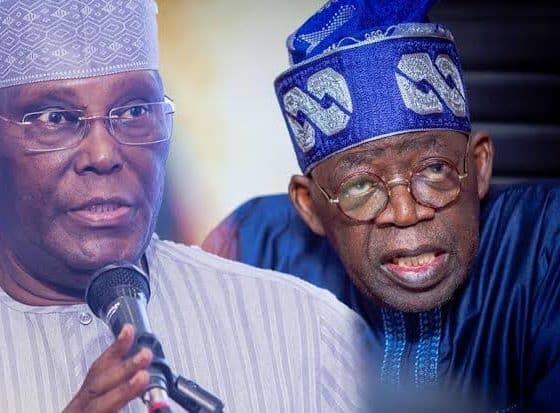
Former Vice President and presidential candidate of the African Democratic Congress (ADC), Atiku Abubakar, has called on President Bola Tinubu’s administration to make public the full details of Nigeria’s $5.1 billion health agreement with the United States.Geographic Reference
Atiku made the demand after Ghanaian President John Mahama disclosed that his government rejected a proposed US health compact because of concerns over medical records, pathogen information, counterpart funding and the powers of the country’s Food and Drugs Authority (FDA).
The development has renewed attention on Nigeria’s own health agreement with Washington, which was signed in December 2025 and is scheduled to run from April 2026 to December 2030.
In a statement issued by his Director of Strategic Communication, Phrank Shaibu, Atiku questioned whether provisions similar to those rejected by Ghana are contained in the agreement signed by the Nigerian government.
“At this point, Nigerians do not know whether the provisions Ghana rejected are in the agreement Tinubu signed,” Atiku said. “That is precisely why the government must publish the full text. Nigerians should not have to guess what has been agreed in their name.”
Nigeria and the United States signed the five-year bilateral health Memorandum of Understanding (MoU) on December 19, 2025.
Under the agreement, the United States is expected to provide nearly $2.1 billion in health assistance, while Nigeria is expected to increase domestic health spending by about $3 billion during the same period.

The combined commitment has been described by the Nigerian government as a $5.1 billion health cooperation agreement.
The Federal Ministry of Health said the agreement covers disease surveillance, outbreak response, laboratory systems, pathogen sample collection and handling, health data systems, essential health commodities and support for frontline healthcare workers.
Nigeria also committed to allocating at least six per cent of executed annual federal and state budgets to health under the arrangement.
The Federal Government said the domestic spending commitment was intended to gradually reduce dependence on external assistance and strengthen Nigeria’s health system.
However, Atiku said the financial obligations attached to the agreement should be examined alongside the condition of Nigeria’s healthcare system.
He particularly raised concerns over maternal mortality in the country, citing estimates that put Nigeria’s maternal deaths at about 75,000 in 2023.
“Every one of those deaths represents a woman whose family expected her to come home,” he said. “This crisis did not begin under Tinubu, but he has had more than three years to show Nigerians how his government is making childbirth safer. Where are the results?”
The ADC presidential candidate also questioned how Nigeria would meet its domestic financial obligations under the agreement.
He referred to comments attributed to Health Minister Muhammad Ali Pate during a budget defence, where only N36 million had reportedly been released from the N218 billion appropriated for capital projects and programmes at the Ministry of Health headquarters in 2025.
“A government that cannot release funds for approved health projects must explain how it intends to honour a multibillion-dollar commitment,” Atiku said. “A signed partnership cannot staff a maternity ward, supply a hospital or save a woman in labour. Nigerians need to see the funding and the care.”
Atiku’s demand followed fresh controversy over Ghana’s decision to reject a similar US health arrangement. Mahama disclosed that Ghana’s Ministry of Health examined the proposed agreement before it was presented to the country’s Cabinet. Several provisions were subsequently flagged.
According to the Ghanaian president, the proposed compact required Ghana to provide the United States with its pathogen profile and medical records.
He also said the country would have been required to provide counterpart funding and that its Food and Drugs Authority would have no inspection powers over certain medicines and medical products supplied under the programme.
“It states that we shall give the United States our pathogen profile. It also says we should give our medical records. I mean, who takes another country’s medical records?” Mahama said.
Mahama said the concerns led Ghana’s Cabinet to reject the proposal.
“It was the compact that was thrown out in record time in our cabinet. I’ve never seen anything thrown out as fast as that. And so, of course, we rejected it,” he said.
The proposed Ghana agreement was part of a wider change in US health assistance arrangements following the restructuring of USAID programmes.
It was reported in April that Ghana had declined a proposed five-year health agreement involving about $109 million in US funding, with concerns over sensitive health data among the issues surrounding the negotiations.
Hence, Atiku wants the Nigerian government to clarify whether the Nigerian agreement contains similar provisions.Geographic Reference
He asked the government to release not only the main MoU but also any protocols, annexes, data-sharing arrangements, specimen-sharing agreements and financial commitments connected to it.
“Can Nigerians’ medical information or pathogen samples leave the country? Who may access them? What safeguards protect patients? Does NAFDAC retain full authority to inspect medicines and medical products? What exactly have the federal government and the states promised to spend? Tinubu should put the documents before Nigerians and answer these questions plainly,” he said.
The demand also comes amid earlier questions about the contents of the Nigeria-US agreement.
In a related development, Politics Nigeria earlier reported that the media aide to Atiku Abubakar, Paul Ibe, has challenged the Federal Government to disclose the full details of its recently signed mining framework with the United States.
Ibe, in a statement posted on his X account on Tuesday, said the $700 billion figure being associated with the agreement was not the amount of investment being provided by the United States, but the estimated value of Nigeria’s mineral resources.

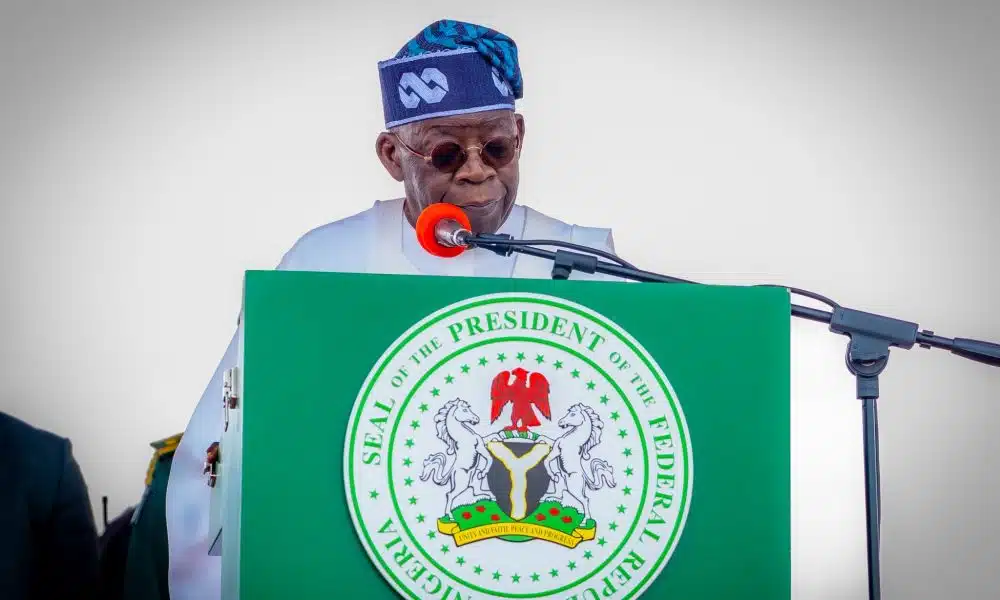
FG Responds to Workers’ Demand for New Salaries, Wage Award
The Budget Office of the Federation has officially acknowledged the demand by civil servants for a wage award, upward review of salaries and allowances, and constitution of a committee for the 2027 national minimum wage review.
In a letter dated 29th September 2026 with reference number DG/BDT/GEN.CORR/2026/V/V7, signed by the Director General of the Budget Office,
Tanimu Yakubu, and addressed to the National Secretary of JNPSNC Trade Union Side in Abuja, the office said it received the council’s letter of 21st September 2026.
The Budget Office said it recognized the concerns expressed by the council regarding the cost of living and its effect on workers purchasing power and the welfare of workers families.
It also appreciated the council’s commitment to constructive dialogue and industrial harmony and said it awaits further directives from higher authorities to finally resolve the matter.
Recall that the JNPSNC had earlier lamented the high cost of living, fuel price and inflation and demanded immediate wage award, stabilization of petrol price at N500 per litre, and early constitution of a tripartite committee for the new minimum wage due in 2027.
The council had threatened a three-day warning strike from October 2 if demands are not met by September 30.
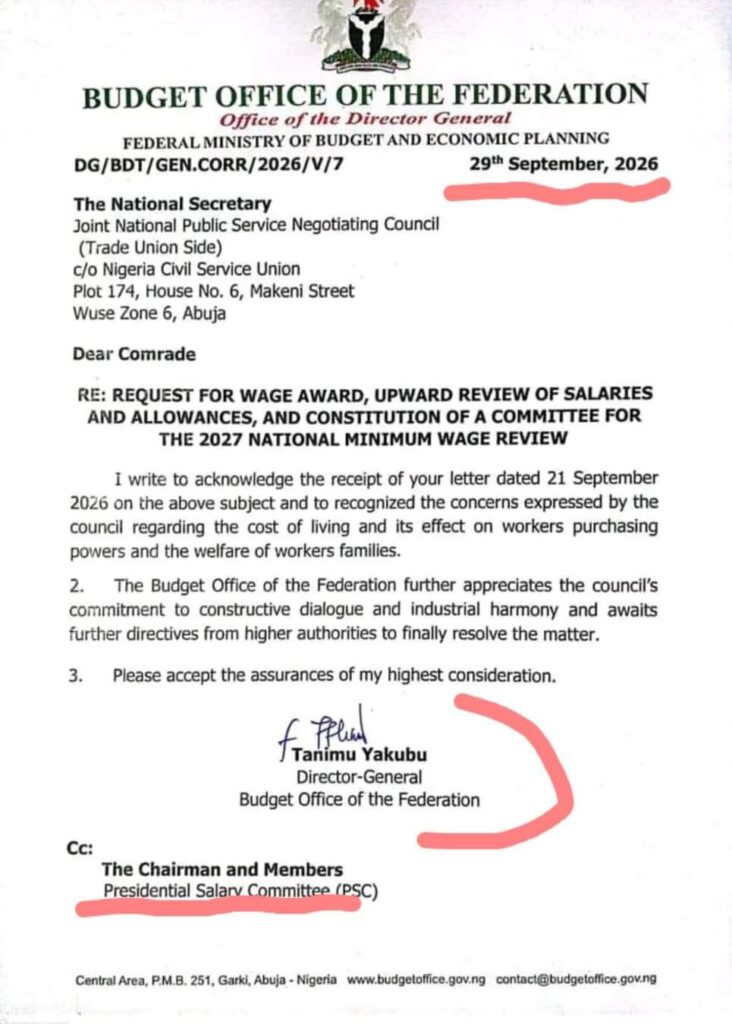
The letter was copied to the Chairman and Members of the Presidential Salary Committee.
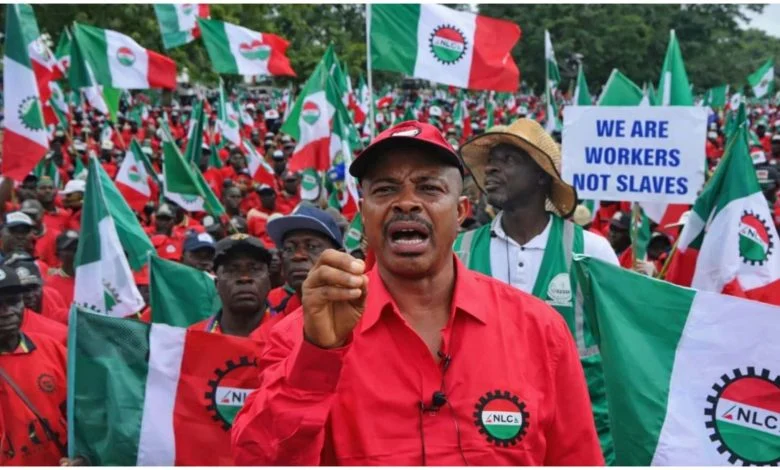
Public servants under the Joint National Public Service Negotiating Council (JNPSNC) have renewed their warning to the Federal Government, insisting that their September 30 deadline over the rising cost of petrol, wage relief and a new minimum wage remains unchanged.
The workers said they would begin a three-day warning strike from Friday, October 2, if the Federal Government fails to respond to their demands before the deadline.
The council is asking the government to reduce the pump price of Premium Motor Spirit, popularly known as petrol, to N500 per litre. It also wants an immediate wage award for workers and the early commencement of negotiations for a new national minimum wage expected to take effect in 2027.
The latest position was contained in a statement issued on Tuesday by the National Secretary of the JNPSNC and General Secretary of the Nigeria Civil Service Union, Gbenga Olowoyo.
The council said the September 30 deadline was still in force and that public servants had been mobilised across the country for the proposed industrial action. The development comes barely days after the JNPSNC formally presented its demands to President Bola Ahmed Tinubu.
The council had earlier asked the Federal Government to intervene in the rising cost of living and take measures that would provide immediate relief to workers and their families.
At the centre of the dispute is the price of petrol, which the workers said had continued to put pressure on household finances.
According to the council, petrol prices had risen to between N1,450 and N2,000 per litre in different locations, while prices in some areas outside major cities could reach N2,500 per litre.
The workers argued that the impact of expensive petrol goes beyond the cost of transportation. They said higher fuel prices also affect the movement of food, production, housing, healthcare, education and other essential services.
In its latest statement, the council said, “The three critical issues requiring urgent attention are as follows: reduction of fuel price to N500 per litre. The Federal Government should take urgent steps to bring down the price of Premium Motor Spirit (PMS) to N500 per litre.
“This can be achieved through the provision of an intervention fund to address landing costs and support oil and gas operators.
“It is equally important for the Federal Government to ensure the sale of crude oil to the Dangote Refinery and operators of modular refineries at appropriate terms to facilitate increased domestic refining and help bring down the price of petroleum products.”
The council maintained that the present petrol price was placing public servants and other Nigerians under severe financial pressure. “The current price of PMS, ranging from N1,450 to N2,000 and, in some locations outside major communities and cities, as high as N2,500 per litre, is unacceptable to Nigerian workers.”
It added, “The council maintains that the economic hardship occasioned by the high cost of fuel is placing the survival of Nigerian workers, their dependants and the general populace under severe pressure, making it increasingly difficult for Nigerians to live normal and dignified lives.”
The demand for cheaper petrol is not the only issue that could trigger the planned strike. The JNPSNC is also asking the Federal Government to approve a wage award for public servants.
The council said the measure would provide temporary relief to workers whose earnings have been affected by the rising cost of living.
“The Federal Government should urgently approve a wage award for Nigerian workers to cushion the effects of the prevailing harsh economic conditions being experienced by workers, their dependants, and vulnerable Nigerians.”
The council also linked the wage demand to productivity and the continued functioning of the public service.
“The council believes that urgent action on this demand will further enable public servants to consolidate their loyalty, commitment and productivity within the public service ecosystem.”
Another major demand is the immediate establishment of a tripartite committee to begin negotiations for a new national minimum wage.
The workers want the process to begin well ahead of 2027 to prevent delays that could affect the implementation of any agreement eventually reached by the government, employers and labour representatives.
“The Federal Government should urgently establish a tripartite committee to commence and facilitate negotiations for the new national minimum wage expected to become due in 2027.
“The Nigerian workers’ demand for the immediate constitution of the committee is informed by the need to avoid any administrative or procedural delay that could affect the implementation of the new National Minimum Wage once it is eventually negotiated and passed into law by the National Assembly,” the statement added.
The JNPSNC had earlier proposed a minimum monthly salary of N500,000 for an officer on Grade Level 01, Step 1, under the proposed 2027 salary structure. It also called for the harmonisation of wages across government institutions and periodic reviews of salaries and allowances in line with economic realities.
The council’s demands cover workers across the public service and involve eight unions.
They include the Nigerian Civil Service Union, Medical and Health Workers Union, Association of Senior Civil Servants of Nigeria and National Association of Nigerian Nurses and Midwives.
Others are the Amalgamated Union of Public Corporations, Civil Service Technical and Recreational Employees; Nigeria Union of Public Service, Reportorial, Secretarial, Data Processors and Allied Workers; National Union of Printing, Publishing and Paper Products Workers; and National Union of Agriculture and Allied Employees.
The proposed industrial action is therefore expected to affect a broad section of the public service if the dispute is not resolved.
The council has also placed particular emphasis on President Tinubu’s Independence Day address, saying the speech should address the concerns raised by Nigerian workers.
“Consequently, the council states that failure by the Federal Government to take the necessary steps to address these issues on or before 30th September 2026 will leave Nigerian workers with no option but to commence a three-day warning strike, with effect from Friday, 2nd October 2026, to press home their demands.
“It is imperative to state clearly that the Independence Day address of the President of the Federal Republic of Nigeria should adequately address these critical issues.”
The council said failure to respond to the demands would further deepen the dissatisfaction among workers and other Nigerians facing the effects of rising living costs.
“Failure to address the concerns raised, according to the Council, will attract the displeasure of Nigerian workers and their dependants, as well as other vulnerable Nigerians who continue to bear the brunt of the prevailing economic hardship,” the statement concluded.
The Independent National Electoral Commission (INEC) has declared that the collection of Permanent Voter Cards (PVCs) ahead of the 2027 elections will commence on October 9, 2026.
INEC made this known in a statement on Monday following an assessment visit by its chairman, Professor Joash Amupitan, and his team to Kaduna State.
The commission said the visit to the North-West is part of its 2027 General Election readiness assessment.
Speaking in Kaduna, Amupitan directed officials to close operational gaps, strengthen neutrality and ensure that no avoidable weakness undermines the credibility of the forthcoming elections.
Daily Voice reports that the INEC Chairman gave the charge on Monday in Kaduna at the North-West Zonal Interactive Meeting with Staff and Readiness Assessment for the 2027 General Election.
The engagement is part of INEC’s six-zone national tour aimed at assessing the Commission’s preparedness for the elections, identifying challenges confronting its field operations and developing practical solutions ahead of the polls.
Declaring the North-West zonal engagement open, the INEC Chairman said the Commission’s presence in Kaduna was not merely an administrative exercise but part of efforts to strengthen the foundations of the country’s electoral process.
Amupitan said election success was ultimately determined at the grassroots, particularly at Local Government Areas, Registration Area Centres and polling units where electoral officials interact directly with voters.
“The true success of any election is not decided solely in the meeting rooms of our headquarters in Abuja. It is decided in the field,” he said.
He urged staff to use the engagement to present practical challenges affecting election administration in their respective areas and work with headquarters to develop solutions before election day.
The Chairman said the Commission was building on lessons from recent elections while preparing for the larger national assignment in 2027.
He warned electoral officials against partisan conduct and administrative negligence, stressing that the neutrality and professionalism of field personnel would be critical to public confidence in the electoral process.
The Chairman said three phases of Continuous Voter Registration had produced 10,772,421 new registrations, subject to Automated Biometric Identification System verification.
The Chairman called for the elimination of PVC distribution bottlenecks at the Local Government Area level so that eligible citizens would not be disenfranchised because of logistics.
He also disclosed that INEC was refining its technological systems, including voter verification and result transmission processes, as well as its Result Management Systems, including the recently introduced eEC8A.
The Commission, he said, was also implementing a “Zero-Failure” approach to logistics, covering early deployment of materials, movement, security coordination and training of ad-hoc personnel.


NNPC Posts N7.2trn Profit As 2025 Revenue Falls To N34.5trn

Obidients Reject INEC Plan to Deploy AI for 2027 Elections

BREAKING: FG Responds to Workers’ Demand for New Salaries, Wage Award

Former Super Eagles Star Loses Life Savings, Duped By A Pastor of ₦1.2 Billion

I’m A Married Man, I Can Never Get Myself Involved With Such A Thing, Delta Gov Aide Reveals Why He Offered Comfort ₦500,000 Job

Lagos Imposes ₦250,000 Fine For Illegal Waste Disposal

-
 News1 hour ago
BREAKING: FG Responds to Workers’ Demand for New Salaries, Wage Award
-

 Business1 day ago
Dollar To Naira Exchange Rate Today, September 29th, 2026
-
 News1 hour ago
Workers Give FG Deadline, Threaten Nationwide Strike Over N500 Petrol Price
-
News1 day ago
AAC Sues Tinubu, National Assembly Over Absence
-
 News24 hours ago
2027: INEC Announces Start Date For PVC Collection
-
 Health2 hours ago
From Monaco to London, Dubai: Inside Femi Otedola’s Private World of Billionaire Friendships
-

 Entertainment1 day ago
I Don’t Feel The Inflation Going On In Nigeria – Adekunle Gold
-
 Politics1 day ago
State police: Rivers Assembly Joins Osun, Edo In backing Bill