
News
Atiku Demands Tinubu Publish $5bn US Health Deal After Ghana Rejected Pact

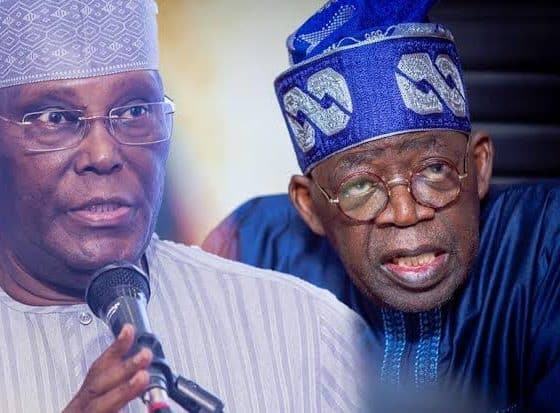
Former Vice President and presidential candidate of the African Democratic Congress (ADC), Atiku Abubakar, has called on President Bola Tinubu’s administration to make public the full details of Nigeria’s $5.1 billion health agreement with the United States.Geographic Reference
Atiku made the demand after Ghanaian President John Mahama disclosed that his government rejected a proposed US health compact because of concerns over medical records, pathogen information, counterpart funding and the powers of the country’s Food and Drugs Authority (FDA).
The development has renewed attention on Nigeria’s own health agreement with Washington, which was signed in December 2025 and is scheduled to run from April 2026 to December 2030.
In a statement issued by his Director of Strategic Communication, Phrank Shaibu, Atiku questioned whether provisions similar to those rejected by Ghana are contained in the agreement signed by the Nigerian government.
“At this point, Nigerians do not know whether the provisions Ghana rejected are in the agreement Tinubu signed,” Atiku said. “That is precisely why the government must publish the full text. Nigerians should not have to guess what has been agreed in their name.”
Nigeria and the United States signed the five-year bilateral health Memorandum of Understanding (MoU) on December 19, 2025.
Under the agreement, the United States is expected to provide nearly $2.1 billion in health assistance, while Nigeria is expected to increase domestic health spending by about $3 billion during the same period.

The combined commitment has been described by the Nigerian government as a $5.1 billion health cooperation agreement.
The Federal Ministry of Health said the agreement covers disease surveillance, outbreak response, laboratory systems, pathogen sample collection and handling, health data systems, essential health commodities and support for frontline healthcare workers.
Nigeria also committed to allocating at least six per cent of executed annual federal and state budgets to health under the arrangement.
The Federal Government said the domestic spending commitment was intended to gradually reduce dependence on external assistance and strengthen Nigeria’s health system.
However, Atiku said the financial obligations attached to the agreement should be examined alongside the condition of Nigeria’s healthcare system.
He particularly raised concerns over maternal mortality in the country, citing estimates that put Nigeria’s maternal deaths at about 75,000 in 2023.
“Every one of those deaths represents a woman whose family expected her to come home,” he said. “This crisis did not begin under Tinubu, but he has had more than three years to show Nigerians how his government is making childbirth safer. Where are the results?”
The ADC presidential candidate also questioned how Nigeria would meet its domestic financial obligations under the agreement.
He referred to comments attributed to Health Minister Muhammad Ali Pate during a budget defence, where only N36 million had reportedly been released from the N218 billion appropriated for capital projects and programmes at the Ministry of Health headquarters in 2025.
“A government that cannot release funds for approved health projects must explain how it intends to honour a multibillion-dollar commitment,” Atiku said. “A signed partnership cannot staff a maternity ward, supply a hospital or save a woman in labour. Nigerians need to see the funding and the care.”
Atiku’s demand followed fresh controversy over Ghana’s decision to reject a similar US health arrangement. Mahama disclosed that Ghana’s Ministry of Health examined the proposed agreement before it was presented to the country’s Cabinet. Several provisions were subsequently flagged.
According to the Ghanaian president, the proposed compact required Ghana to provide the United States with its pathogen profile and medical records.
He also said the country would have been required to provide counterpart funding and that its Food and Drugs Authority would have no inspection powers over certain medicines and medical products supplied under the programme.
“It states that we shall give the United States our pathogen profile. It also says we should give our medical records. I mean, who takes another country’s medical records?” Mahama said.
Mahama said the concerns led Ghana’s Cabinet to reject the proposal.
“It was the compact that was thrown out in record time in our cabinet. I’ve never seen anything thrown out as fast as that. And so, of course, we rejected it,” he said.
The proposed Ghana agreement was part of a wider change in US health assistance arrangements following the restructuring of USAID programmes.
It was reported in April that Ghana had declined a proposed five-year health agreement involving about $109 million in US funding, with concerns over sensitive health data among the issues surrounding the negotiations.
Hence, Atiku wants the Nigerian government to clarify whether the Nigerian agreement contains similar provisions.Geographic Reference
He asked the government to release not only the main MoU but also any protocols, annexes, data-sharing arrangements, specimen-sharing agreements and financial commitments connected to it.
“Can Nigerians’ medical information or pathogen samples leave the country? Who may access them? What safeguards protect patients? Does NAFDAC retain full authority to inspect medicines and medical products? What exactly have the federal government and the states promised to spend? Tinubu should put the documents before Nigerians and answer these questions plainly,” he said.
The demand also comes amid earlier questions about the contents of the Nigeria-US agreement.
In a related development, Politics Nigeria earlier reported that the media aide to Atiku Abubakar, Paul Ibe, has challenged the Federal Government to disclose the full details of its recently signed mining framework with the United States.
Ibe, in a statement posted on his X account on Tuesday, said the $700 billion figure being associated with the agreement was not the amount of investment being provided by the United States, but the estimated value of Nigeria’s mineral resources.
The National Agency for Food and Drug Administration and Control (NAFDAC) has arrested two men over alleged production and repackaging of counterfeit alcoholic and energy drinks at a facility in Ojo, Lagos State.
The suspects, identified as Chibuzor Okafor and William John, were arrested during a raid on a two-storey building at Zamfara Plaza, BBA Trade Fair Complex, along the Badagry Expressway.
NAFDAC said its officers recovered drums, filters, packaging materials, a heating device and other equipment allegedly used in the illegal operation.
The agency disclosed that the raid followed intelligence gathering and surveillance on suspected counterfeiters operating within the Trade Fair International Market.
Speaking during the operation, the Assistant Director of NAFDAC’s Investigation and Enforcement Directorate, Kunle Ojo, said some of the suspects were caught in the act.
“Gentlemen of the press, as you can see today, when we came, we caught some red-handed people producing all kinds of alcoholic drinks,” Ojo said.
He described the discovery as alarming, adding that the operation was part of efforts to protect Nigerians from potentially dangerous products.
Ojo said NAFDAC had intensified enforcement activities ahead of the festive season, when demand for alcoholic beverages and other drinks usually increases.
He warned that counterfeit drinks could pose serious health risks and urged those involved in the trade to stop.
“You are killing Nigerians in order to make money, which is not good,” he said.
The NAFDAC official added that the agency would investigate the sources of the products and raw materials, as well as identify those allegedly financing or directing the operation.
He said the recovered products and materials would be moved to the agency’s warehouse for further action, including destruction in line with established procedures.
Ojo warned that those arrested would face administrative action and prosecution in accordance with the law.
One of the arrested suspects, Chibuzor Okafor, who identified himself as a drinks dealer in the market, said he changed the bottles of some drinks because the original containers were damaged.
Speaking to Vanguard at the scene, Okafor said, “I deal in drinks. I change the bottle of the drink. It’s not that the bottle is not good. It’s the drink in there, because the other one is already damaged. So that’s why we are putting it in the next bottle.”
NAFDAC has yet to establish publicly the full details of the products involved or the extent of the suspected operation.
The agency’s Deputy Director of Public Relations, Christiana Obiazikwor, said NAFDAC continued to carry out surveillance, seize unregistered and counterfeit products, arrest suspects and destroy offending goods.
She dismissed claims that the agency was not doing enough to tackle counterfeit products, saying its officers regularly visited markets and suspected production sites.
“NAFDAC is still at work. We are on the streets. We are in the markets. We are everywhere,” she said.
Obiazikwor explained that some enforcement operations were not publicized to avoid alerting suspected offenders or creating unnecessary tension.
She said journalists were invited to observe the latest operation to show the public the agency’s efforts to protect consumers.
The official urged Nigerians to report suspected counterfeit production and distribution directly to NAFDAC instead of relying on social media posts that could spread unverified information.
“There’s no point going to social media to create fear. Report to NAFDAC, and we’ll do the needful,” she said.
She assured members of the public that the identities of people who provide credible information would be protected.
The Assistant Director and Head of Public Relations at the Investigation and Enforcement Directorate, Victoria Jennifer Akudu, said the raid formed part of the agency’s routine operations against illegal manufacturing and distribution.
Akudu said enforcement officers regularly confiscated suspected counterfeit products and shut down facilities linked to illegal activities.
She disclosed that the suspected operators had allegedly moved from an earlier location following enforcement action, prompting officials to continue tracking their activities.
“We have confiscated and sealed off the place. They moved to another place. This time around, we passed through the back door. And that is how we are able to get them,” she said.
Akudu urged Nigerians to report suspected counterfeit products directly to the agency and avoid spreading unverified claims that could cause unnecessary public concern.
“I will ask Nigerians not to fear. We are alert, and we are alive. We are doing our statutory function the way it should be,” she said.
NAFDAC said the operation was part of its ongoing efforts to remove counterfeit, adulterated and unregistered products from the Nigerian market.
The agency warned that repackaging drinks in the bottles of established brands without proper quality checks could expose consumers to serious health risks, particularly when the contents and production conditions have not been verified.

Human rights activist and presidential candidate of the African Action Congress (AAC), Omoyele Sowore, has filed a ₦5 billion fundamental rights enforcement suit against the Department of State Services (DSS) over an alleged assault and forcible removal from the Federal High Court in Abuja.
Daily Voice reports that the suit, marked FHC/ABJ/CS/2480/2026, was instituted on Tuesday, October 13, 2026, against the DSS, its Director-General, Tosin Ajayi, the Attorney-General of the Federation, Lateef Fagbemi and a deputy director of the security agency, Benjamin Bulus.
Sowore alleged that DSS operatives assaulted and forcibly removed him from the court premises on June 22, 2026, despite an existing judicial order directing that he be remanded at the Kuje Correctional Centre.
He disclosed that the alleged assault occurred after Justice Mohammed Garba Umar of the Federal High Court, Abuja, ordered his remand at the Kuje Correctional Centre pending the hearing and determination of his application seeking a stay of the order revoking his bail and the bench warrant issued against him.
According to him, armed DSS operatives, including men and women wearing hoods, stormed the fourth floor of the court building while he was waiting for correctional officers to arrive and implement the remand order.
The activist alleged that the operatives physically assaulted him, forcibly removed him from the area and transported him against his will to the basement of the court complex using elevators reserved for Federal High Court judges, thereby resulting in physical injuries.
He maintains that the remand order did not authorise the security operatives to assault him, forcibly remove him or subject him to degrading treatment within the court premises.
Sowore is asking the court to determine whether the DSS operatives acted outside the scope of the judicial order and whether their conduct violated his fundamental rights.
The presidential candidate is seeking ₦5 billion in aggravated damages for alleged violations of his constitutional rights to dignity and personal liberty.
A significant part of the case concerns video footage allegedly recorded during the incident using Ray-Ban Meta smart glasses.
According to the court processes, the recording forms part of the evidence Sowore intends to rely on to establish the circumstances of the alleged assault and the conduct of the operatives involved.

Nigeria Police Force operatives arrested former Imo state governor and Senator Rochas Okorocha on Monday evening, October 12, 2026, at the REIZ Continental Hotel in central Abuja.
The police linked the arrest to allegations of criminal conspiracy, forgery, and impersonation, all connected to a criminal investigation that had been ongoing for some time before Monday’s development.
According to available information, Okorocha was first invited to report to the Force Headquarters in Abuja on September 2, 2026.
His legal team subsequently requested a rescheduling of the appointment to September 8, 2026 — an appointment the former governor also failed to honour.
The Sun reported that with Okorocha having evaded two separate police invitations, the authorities moved to secure a bench warrant, which gave officers the legal authority to proceed with his arrest rather than continue with voluntary invitations.
However, Channels TV confirmed that the former governor of Imo state was released on bail after one hour of interrogation. The development was confirmed by the Imo state police command’s Public Relations Officer, CSP Aniete Iniedu.
The police spokesperson also disclosed that Okorocha was asked to return to the force headquarters on Tuesday, October 13, for the continuation of the investigation into the allegation.
Rochas Okorocha? Okorocha served as governor of Imo state and later represented the Imo West Senatorial District in the Nigerian Senate. He has remained a prominent figure in Nigerian politics since leaving office as governor.
No further details on the specific circumstances surrounding the allegations against him were immediately available at the time of his arrest on Monday night.


Ayra Starr Announces World Tour For 2027

I Don’t Believe In Buying Expensive Clothes – Davido’s Sister

They Almost Squeezed Me To Death – Portable Begs Tinubu, Seyi For More Money

FULL LIST: Top 10 “Tokunbo” Cars You Can Get For ₦3m–₦5m

Former Super Eagles Star Loses Life Savings, Duped By A Pastor of ₦1.2 Billion

I’m A Married Man, I Can Never Get Myself Involved With Such A Thing, Delta Gov Aide Reveals Why He Offered Comfort ₦500,000 Job

-
 News1 day ago
BREAKING: Police Arrest Prominent APC Ex-Governor; Reason Emerges
-

 News12 hours ago
Sowore Drags DSS DG, AGF, Others To Court, Demands ₦5 Billion
-
 Business1 day ago
Dangote Refinery Announces Fresh Job Vacancies for Nigerians
-
 Politics12 hours ago
Gunmen Kill NDC Member During Attack On Enugu Campaign Office
-
 Politics12 hours ago
2027: ‘False Battle’ – APC Breaks Silence On Rift Between Wike, Governors
-
 News11 hours ago
NAFDAC Uncovers Fake Alcohol, Energy Drinks Factory In Lagos
-
 Entertainment11 hours ago
They Almost Squeezed Me To Death – Portable Begs Tinubu, Seyi For More Money
-
 Entertainment11 hours ago
I Don’t Believe In Buying Expensive Clothes – Davido’s Sister