Lifestyle
Why Next Of Kin Can’t Access Funds After Account Owners’ Death – Lawyer


Lagos-based legal practitioner and Principal/Founder, Muhammed Adam & Associates, Muhammed Adam, speaks to VICTORIA EDEME on issues associated with writing a will
Can you explain the importance of having a will?
There are so many advantages to having a will. It is important for everyone, particularly those with assets in different parts of the country or worldwide. It becomes important for the person to take inventory of all their assets. Experience has shown that many people acquire property without a will, their family members do not know what they own while they are alive. So, a will helps the testator, the maker of the will, take proper inventory of their assets.
Under native law and custom, you can’t give your property to people who are not related to you. However, when you desire to give your property to non-relatives, a will can help you do so. Due to the nature of conflicts that have arisen in the past over the distribution of assets, the making of the will can easily resolve such disputes because it (a will) states who is to get what and what should be given to whom. In Nigeria, there are some native laws and customs that apply to inheritance. With the making of the will, there is a limit to which these native laws can apply to the distribution of assets. In some parts of Nigeria, women do not inherit property, or the first child is limited to certain properties. However, the making of the will reduces the impact of customary law on some of these assets.
What are the key components that should be included in a will?
There are four key components in a will. Firstly, a will must identify the testator i.e. the maker of the will and owner of the assets. The will must contain the full name, address, and age of the testator. Secondly, a will must clearly show who the executors are. Executors are people who will administer the will when the testator is no longer alive. Their names and addresses must be stated. Another important component of the will is the details of the beneficiaries. The beneficiaries are people who will inherit the properties of the testator after death. Also, the details of the property belonging to the testator must be stated in the will.
The testator must also state properties that do not belong to them. For example, you may entrust your property to my care as a lawyer. So when I’m writing my will, I need to state who such property belongs to. There is a saying that ‘you cannot give what you don’t have’. If a property does not belong to the testator, he cannot will it out. Also, the signature of the testator is very important because it validates the making of the will. A will without the testator’s signature is as good as a worthless piece of paper. The law requires that the signature must be in the presence of witnesses. If the witnesses are not present when the testator is signing the will, that will is not valid. These are the important components of a proper will.
Are there any legal requirements or formalities that must be met when drafting a will?
One of the requirements of a will is that it must be in writing. A will cannot be in oral form. The age of the testator is also a legal requirement. Under the law, you cannot make a will when you’re less than 18 because you’d be considered a minor. Even though a minor can acquire a property, a minor cannot give out a property. Signatures of the testator and witnesses are legal requirements. The date is also a legal requirement because a will is ambulatory, as it takes effect after the death of the testator. It is valid when the date of the will precedes the date of death. But if the date of death precedes the date of the will, it is invalid.


What happens if someone dies without a will?
When someone dies without a will, the person is said to have died intestate. But when someone dies with a will, the person is said to have died testate. If someone dies without a will, their property is subject to the estate law of their state of residence. The will subdues the effect of customary law and Islamic law. For example, if the person who dies without a will is a Muslim, the Islamic personal law will be fully activated. If the person is subject to native laws and customs, the customary law of that person will be fully activated.
Does this mean that the will supersedes customary and religious laws?
It supersedes them to the extent that it allows the testator to decide on how to distribute their properties and to also give people who are not related to them. Under Islamic law and customary law, there is a list of people that you can only give your properties to. There is an order that you must follow. There is a percentage that you must give to your child, father, daughter, mother, or surviving spouse under native law and custom. For instance, when a man is subject to customary law, and the person dies, the first child is the only child entitled to live on the property that the man was living on when he was alive. If he dies intestate, the customary law will be fully activated.
If the person is neither a Muslim nor someone subject to customary law, what applies is the administration of the estate law of that state. If the person is married under the statute, i.e. when they did the marriage in a registry or a licensed place of worship, certain people would apply for a letter of administration. So, the person that is number one, for instance in Lagos State, under the administration of its estate law is the surviving spouse, followed by the children, mother of the deceased, father of the deceased, uncle of the deceased, brothers, and so on. But the point is that if someone dies without a will, you apply for letters of administration. The letter of administration is a document that allows a third party to administer the estate of a deceased person.
The letter of administration can only be given to at least two people. The people that can apply for it are the surviving spouse and the children. If the surviving spouse is not alive, then the children, at least two of them who are above 18 years, can apply. If there is nobody like that, then it goes down to the mother of the deceased and so on. To enable those survivors to transfer or acquire those properties, they must get a letter of administration. Otherwise, they will not be able to get it. And this includes having access to bank accounts, having access to the pension, cooperatives, shares in companies, and all of that. A letter of administration is an important document that must be obtained when someone dies without a will and they have properties in their name.

How do the next of kin of account holders and pensionable workers get access to the accounts once the holder dies?
By law, a next of kin is someone who is required for information purposes only, i.e. someone who can be reached immediately if the account holders are unreachable. Being a next of kin, however, does not confer a legal right to acquire property or to have access to property or assets, money in an account, pension, and all of that. The obligation of the next of kin is to be able to bring the death of the account holder to the attention of the bank or to the attention of someone who holds the money so that they can recognise whoever comes forward as the owner of the letter of administration. I’ll give you an example. Let’s say you are my next of kin, and I have N20m in a bank. If I die today, your obligation by law is to only inform the bank that this person is no more. The bank will not transfer the money to you because you are just for information purposes.
In a real-life case that I was involved in, a woman was named as next of kin to a successful businessman, who was her husband. She wrote the bank to give her the money in her husband’s account because she’s the next of kin. The bank refused and she went to court. We argued before the court that the fact that she’s the next of kin does not mean that she’s automatically entitled to the money. By law, she still requires a letter of administration to be able to have access to the money. The advantage is that the next of kin may be someone who is disqualified by law from applying for a letter of administration. I’ll give you an example.
If a man now names his friend as next of kin, the friend does not have power, access, or rights to his money and he cannot apply for the letter of administration. But when there is a will, that will should automatically tell you who the money in the account is going to. The bank will work with what the will says concerning who will now have access to the account. But when there’s no will, it will work with the letter of administration. So to ensure that the transfer of wealth is moved to the next of kin, that account holder must have a will that states such.
Can you clarify the role of executors and how they are appointed in the will?
The role of the executor is the role of the administrator. He is the person who will assist the beneficiaries in getting the properties to them. For instance, if you name me as the beneficiary of your will, after death, the administrators need to transfer the property to me. There’s a document that the administrators must give to me as the beneficiary. That document is called assent. It’s only the executors who can issue that document. Before the administrators or the executors can issue assent to me, they must also apply to the probate registry of the High Court of the state to get probate. A document issued to executors or administrators to be able to administer a will is called probate. After the probate has been given by the probate registrar, it is their role again to now issue documents called assent so that the beneficiary can have access to the property. How executors are appointed is at the discretion of the testator. There is no special procedure to it.
Can an executor be a beneficiary too?
As a general rule, no. The reason behind that general rule is so that there is no conflict of interest between being a beneficiary and being an executor. If you are an executor and a beneficiary at the same time, you may want to favour yourself more than other beneficiaries, or you may want to administer the assent faster towards getting the property compared to when you are not an executor and a beneficiary. But the testator, maybe because of their relationship, may name an executor as a beneficiary. For instance, if you name your spouse an executor of your estate, ordinarily that person is supposed to benefit from your estate, even without being an executor. So such a person can be named beneficiary and executor at the same time.
In an instance where the executor is not a beneficiary, what are the benefits that the executor will get?
One of the provisions for executors is how they will be paid. The testator will make provision for how the executors will be paid. If I make a will, and I appoint you as my executor, I may say that the sum of N5m should be paid to you every month during the administration of the estate. That way, you are not benefiting as a beneficiary now. You are being paid for your professional engagement. A lawyer can be an executor. If you name me as an executor in your will, and I’m being paid my professional fee for being an executor, I can’t be said to be a beneficiary of the will.
What options are available for distributing assets if the beneficiary dies before the testator?
If the beneficiary dies before the testator, such assets can go back to the estate. There is something called residual estate, which constitutes undistributed property. In some instances, it can be re-willed to another person, or to the survivor of that beneficiary. If the testator is still alive, he can use his discretion to change whatever he or she wants to change. But normally what happens in this instance is that the property will be re-willed to another person or the survivor of the beneficiary.
How often should a will be updated or reviewed?
A will should be updated if there is any change in your financial situation. It can be when you have a new child, you get married, a beneficiary dies, an executor dies, or there is a change in personal relationship. For instance, I have a son and I’ve made my will. If tomorrow I have another child, I will update my will. A codicil is an amendment made to a will. So you can have an original will and as many wills as possible. But the wiser thing to do is that if there’s a change in financial situation or family relationship, you update your will.
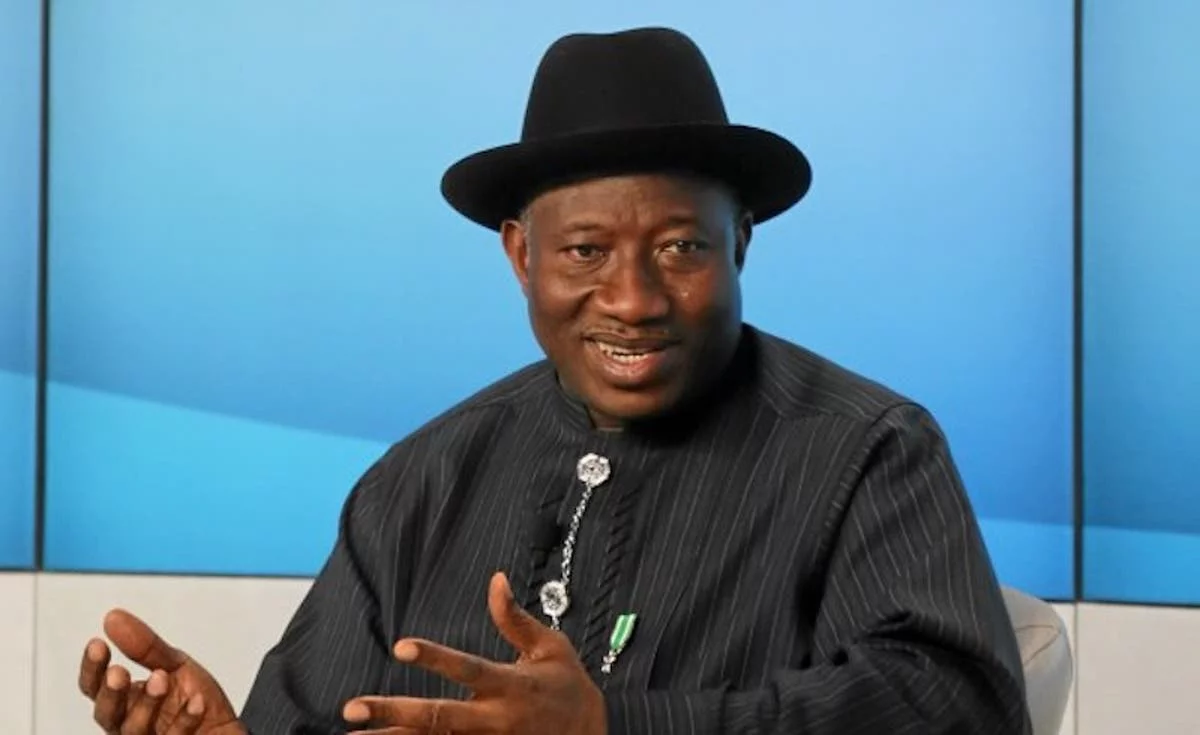

Dr Ayima Lott-Jonathan, the relatively unknown second wife of former President Goodluck Jonathan, is set to offer Nigerians a glimpse into her private life, marriage, motherhood and personal struggles in a new memoir marking her 50th birthday.
The book, titled Gold Dust: Treasures of Quiet Years, will be unveiled on Thursday, November 19, at Aduvie International School, Jahi, Abuja.
Ayima, who has largely remained outside the political spotlight despite being married to one of Nigeria’s former presidents, reportedly shares intimate experiences, including the joys and pains of childbirth, miscarriage, bereavement and the challenges surrounding her decision to marry.
A review of the memoir by Professor Steve Sinikiem Azaiki, published in The Guardian, offers a glimpse into some of the deeply personal issues explored in the book.
According to Azaiki, the author takes readers through her university years, marriage and the difficult experiences that shaped her life, rather than presenting only an account of her achievements.
One particularly revealing aspect of the memoir is her description of the delicate balance between her husband’s public responsibilities and her own ambitions.
Azaiki quoted her as describing herself as “a kind of cushion” for Jonathan during some of his most difficult seasons.
However, the memoir also highlights her determination to build an identity beyond her husband’s political position.Follow Politics
Born in Yenagoa, Bayelsa State, in 1976, Ayima studied Law at the Rivers State University of Science and Technology and was called to the Nigerian Bar in 2003.
She later pursued educational leadership and administration, obtaining additional qualifications from the National Teachers’ Institute, as well as master’s and doctoral degrees from Walden University in the United States.
One of her biggest achievements is the establishment of Aduvie International School in Abuja in 2008.
Interestingly, the school reportedly started in a rented five-bedroom bungalow in Wuse, with just four staff members and two pupils.
According to Azaiki’s review, the institution has since grown into a major educational establishment occupying 6.1 hectares and serving more than 1,000 children.
The school also established a special-needs programme known as Jewel Class to accommodate children with additional learning needs.
The memoir further recounts her Niger Delta upbringing, including a frightening experience in which a speedboat’s wake reportedly overturned her canoe on the Ekule River, bringing her close to drowning.
Her family background also features prominently in the book. Her father, His Royal Highness Festus Dikebi Lott, is a lawyer and traditional ruler who served as Attorney-General and Commissioner for Justice.
Ayima’s book reportedly uses her personal experiences to explore patience, faith, courage, determination, motherhood and purposeful living, with lessons for younger generations.
The November 19 presentation is expected to attract prominent political figures.Follow Politics
Former Vice-President Namadi Sambo will chair the occasion, while Bauchi State Governor Bala Mohammed will serve as Chief Book Presenter.
Bayelsa State Governor Douye Diri will be the Chief Host and Book Presenter, while Rivers State Governor Siminalayi Fubara will serve as Co-Presenter.
Jonathan is expected to attend as the Chief Special Guest of Honour.
The Chairman of the Bayelsa State Council of Traditional Rulers, King Bubaraye Dakolo Agada IV, will serve as Royal Father of the Day, while Professor G.G. Darah is expected to review the book.
For Ayima, the memoir marks an opportunity to introduce a side of her life that has received considerably less public attention than her husband’s political career
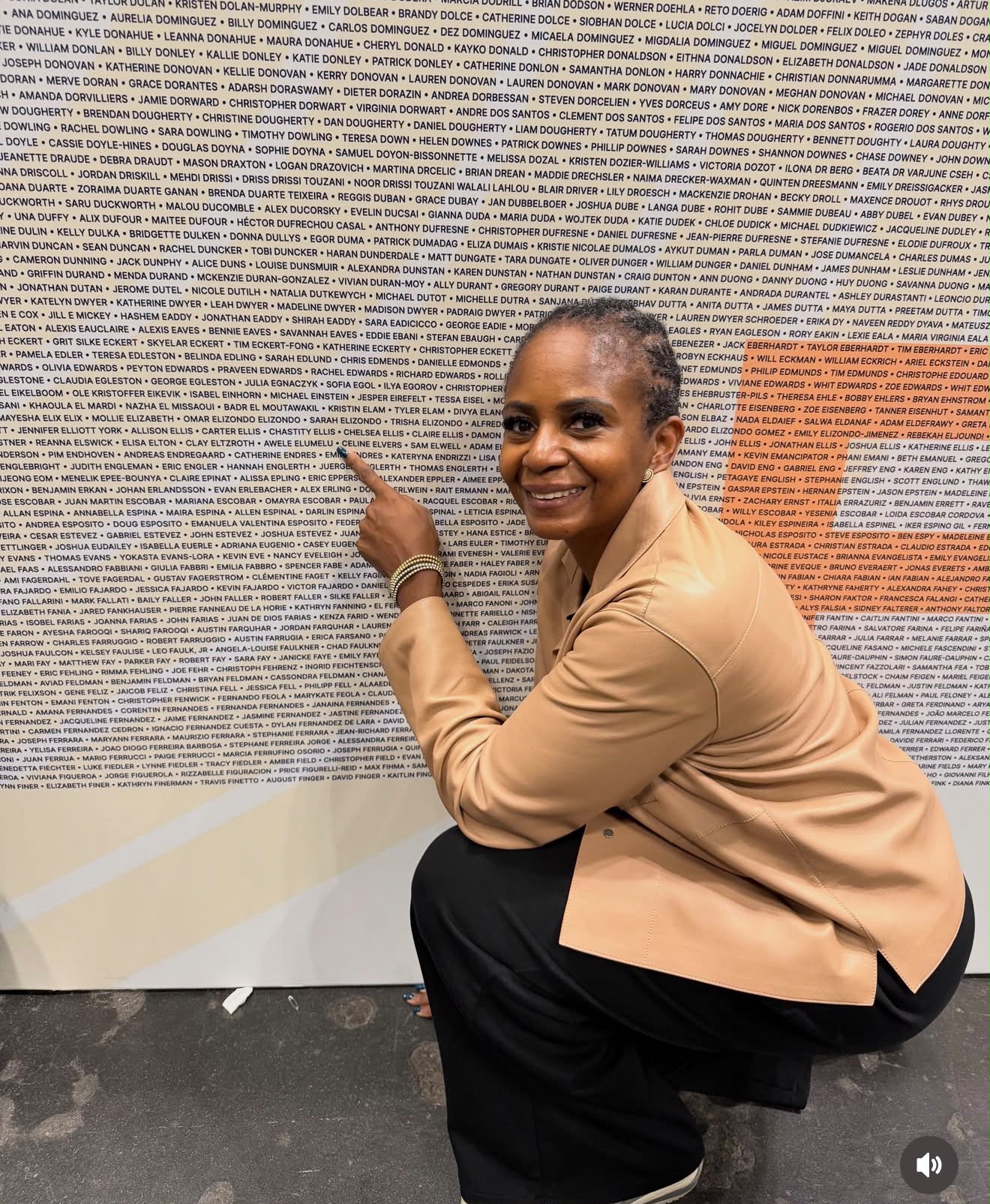

●Awele Elumelu Conquers New York in Her Eighth Marathon
●The Woman Who Runs Beyond Her Fortune
She arrived with the spirit of a conqueror, her heart thrumming at the pace of a dexterous runner poised for yet another feat of endurance. Dr. Awele Vivian Elumelu, the wife of multibillionaire Tony Elumelu, set foot in New York, United States of America, last weekend, her latest marathon destination, exuding the quiet determination that has become synonymous with her name.
Taking to social media to capture the moment, she enthused: “Six years ago I joined virtually. Now, I finally get to experience the real thing, in person! This Sunday, I’ll be running the iconic New York City Marathon! Let’s run, NYC.” It was a declaration of her arrival and readiness to breast the finish tape.
In the end, Dr. Awele earned the bragging rights that came with completing her eighth marathon. At the finish line on American soil, she declared triumphantly: “New York, I did it! 42.2KM #NYCMarathon.”
Now that she has conquered New York, Dr. Awele stands on the threshold of seeking out and fulfilling yet another monumental feat. For her, this was more than just a race; it was a reaffirmation of strength, a dance of endurance, a celebration of a body and mind honed by purpose. Her arrival in the United States was hardly the ultimate destination but merely another milestone in an unrelenting odyssey of passion and perseverance.
Indeed, marathon running is more than a pastime for her; it is a purposive philosophy, a self-hewn culture of discipline, resilience and transformation. Each stride taken across cities is a step further into the infinite realm of self-mastery. Having conquered the London, Tokyo and Berlin Marathons, among others, her foray into New York further establishes her growing legacy in the global running community, solidifying her position as not merely a participant but a formidable force, one who embraces endurance as both a physical feat and a metaphor for life itself.
To run a marathon is to court pain and perseverance in equal measure. It is to embark on a dialogue between the body and the will, where the mind must be the arbiter of doubt and determination. Dr. Awele knows this well. Her marathon journey began with an earnest desire to challenge herself beyond the walls of business and medicine, beyond the boundaries of routine wellness. From the pulsating streets of London to the historic roads of Berlin, she has proven that endurance is not merely about finishing a race but about mastering the art of resilience.
Her competitive outing at the 2024 London Marathon saw her achieve a personal best, an accomplishment that drew admiration from Tony Elumelu, who took to social media to laud her: “Congratulations #MrsTOE on your fourth city marathon and a new personal best! You inspire!” And when she crossed the Berlin Marathon finish line, marking her fifth triumph, he once again celebrated her indomitable spirit: “Well done #MrsTOE on completing the 42.195km Berlin Marathon – 5th marathon in the bag.”
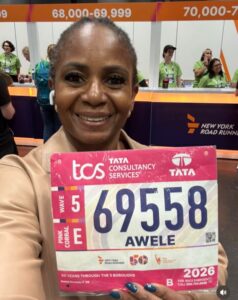
More than just a physical undertaking, Dr. Awele’s participation in marathons underscores her belief that the harmony of body and mind is essential to a life of purpose. As the Founder and Chairperson of Avon Healthcare Limited, she understands that wellness is the cornerstone of both personal and professional success. A thriving enterprise, much like a well-conditioned body, demands discipline, balance and adaptability.
Entrepreneurship, with its high stakes and relentless demands, often leads individuals to neglect personal well-being. Dr. Awele’s marathon journey is a clarion call, a reminder that the body must be nourished for the mind to flourish. Her commitment to physical fitness is not vanity; it is strategy. It is the fuel that powers clarity, resilience and the unwavering determination needed to lead and inspire.
Behind this formidable runner, however, stands a pillar of support and an ardent cheerleader: her husband. His enthusiastic cheers and admiration for her achievements reflect a deeper narrative, one of partnership, mutual respect and the shared pursuit of excellence.
For Dr. Awele, every marathon is an unfolding narrative, a personal scripture of discipline and perseverance. The gruelling months of preparation, dawn runs, meticulously planned nutrition and the mental fortitude required to sustain momentum mirror the journey of building an enterprise, where foresight, patience and grit dictate success. Each race is not merely about the medal at the end but about the story woven into every step, the small victories hidden in each mile conquered.
Beyond the exhilaration of race day, her advocacy for wellness extends to a broader audience. She champions the ethos that self-care is a non-negotiable tenet of success. The rigours of modern life, whether in corporate boardrooms or entrepreneurial pursuits, necessitate a commitment to health, a truth she embodies with every marathon she runs.
Dr. Awele Elumelu is not just running marathons; she is scripting a legacy, inspiring a generation to lace up and chase their own dreams, one mile at a time. In New York, as she took her place among thousands of runners, she carried with her the spirit of an achiever, the heart of a warrior and the boundless energy of a woman who refuses to be anything less than extraordinary.
In every stride she takes, in every finish line she crosses, she personifies the power of ambition, the beauty of resilience and the infinite possibilities awaiting those who dare to challenge their own limits.
By completing the New York Marathon, Awele offered Africa yet another compelling spectacle: that of a dogged runner crossing the finish line and a heroine whose accomplishment manifests as a living parable for generations of ambitious youths.
At 56, when convention might suggest a retreat into leisure and the insulation of affluence, Awele chose instead sweat, blisters and endurance. Each stride declared defiance against inertia, each kilometre a proclamation that wealth need not be a pretext for waste, nor privilege a licence for sloth.
In a glaring contradiction of the glamourised narrative of the so-called “baby girl life” that pervades social spaces, Awele persistently asserts her worth, far removed from that ode to indulgence, conspicuous leisure, indolence and curated ease.
She offers the antithesis. Hers is no theatre of idle consumption but of spirited exertion. She embodies an ethic of resilience, where true elegance emerges from endurance, honest labour and an unwavering commitment to excellence.
Her eighth marathon tells of a spirit that does not yield to shortcuts. It speaks to younger generations, particularly women, reminding them that meaning often manifests where sweat and purpose meet. She has become an emblem of a new aspiration, a counter-idol to the gaudy myths of frivolity.
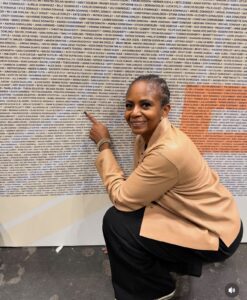
Each race tells of persistence beyond the pageantry of medals. The finish line is never merely a physical ribbon; it is a metaphorical crown of resilience, a consecration of hours spent in training, mornings stolen from sleep and afternoons reclaimed from comfort. Where others might wear jewellery as tokens of success, Awele collects marathons as proof of tenacity.
Behind her passion lies an abiding conviction: success without health is a hollow edifice. As a medical doctor and healthcare entrepreneur, she does not merely preach this truth; she lives it. Her marathon running becomes both metaphor and manifesto, a living argument that the preservation of body and mind is the first wealth of any enduring enterprise.
Indeed, if you asked Awele, she might well tell you that entrepreneurship is a marathon disguised as commerce; that it is endurance masked as enterprise. It demands of its practitioners resilience, clarity, recovery and consistency, the very traits required to conquer the 42-kilometre course.
At 56, she does not slow down. She runs forward, carrying with her the aspirations of young girls longing for authentic role models, the pride of a husband who celebrates her courage and the admiration of a continent that sees in her a different kind of heroism.
For Awele Elumelu, the road is more than a passage between cities, and the marathon more than a contest of physical endurance. It is a testament to the triumph of purpose over privilege, discipline over indulgence and the irrepressible human spirit over the seductive comforts of affluence.
And as she continues to conquer the world’s great marathon courses, one truth becomes increasingly evident: while fortune may purchase the finest luxuries of life, it cannot buy the glory of a finish line earned through sweat, sacrifice and sheer determination.
Business
From Kabiru to Khalifa: How Abdul Samad Rabiu is Quietly Positioning his Son in the Corridors of Business and Power
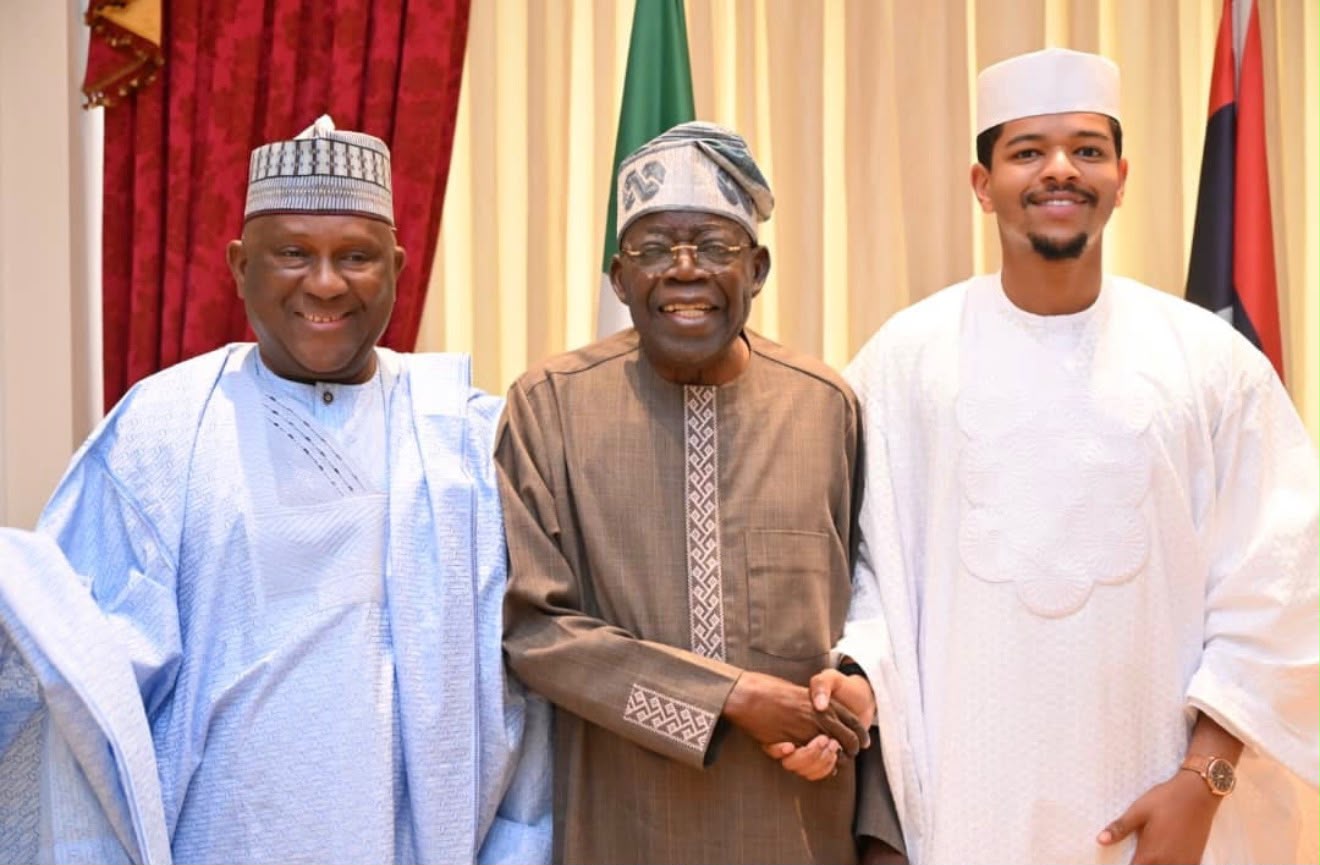
Once, his younger brother Kabiru was one of the familiar family figures around the BUA empire. Now another generation is moving steadily into view as Abdul Samad Rabiu brings his son, Khalifa, closer to the business, relationships and rarefied circles surrounding one of Africa’s largest industrial fortunes.
On Friday, October 2, 2026, when Abdul Samad Rabiu went calling on President Bola Ahmed Tinubu at his Ikoyi residence in Lagos, he did not go alone. Beside the billionaire industrialist was his son, Isyaku Abdulsamad “Khalifa” Rabiu, the young BUA executive whose presence increasingly seems to accompany his father into rooms where business, government and influence converge. Rabiu said the visit afforded an opportunity to reflect on Nigeria’s journey and its future, while other reports confirmed that the BUA chairman was among several prominent business and political figures received by the President that day.
On the surface, there was nothing extraordinary about it. Wealthy fathers travel with their sons, introduce them to friends and take them to important engagements every day. Yet, when the father is Abdul Samad Rabiu, founder of an industrial empire painstakingly assembled over decades, and the son has recently moved into a strategic executive position within that empire, the optics acquire a different texture. A photograph becomes more than a photograph; a handshake begins to look like an introduction, and what appears to be a simple father-and-son outing starts to resemble that ancient ritual through which successful men gradually acquaint the next generation with the world they may one day have to navigate without them.
For those who have watched Abdul Samad through the years, the changing silhouette around him is difficult to miss. There was a time when his younger brother, Kabiru Rabiu, represented one of the most prominent family presences within the BUA establishment, rising through the group’s operations and eventually becoming Group Executive Director, while also serving as a non-executive director of BUA Foods and BUA Cement. He remains firmly embedded in the conglomerate, with more than two decades of experience across edible oils, cement and infrastructure.
Kabiru belongs to Abdul Samad’s generation, however, and that distinction matters because every family empire, no matter how vast or professionally managed, eventually encounters the question that money alone cannot answer: what happens when the generation that built it begins to make room for the generation that must preserve it?
It is within that quiet, complicated passage that Khalifa is increasingly becoming interesting.
His emergence has not arrived with trumpets, ceremonial titles or the public unveiling of a successor. Abdul Samad has not declared him heir to BUA, and nothing in the public record justifies such a conclusion. What has become visible instead is something subtler and perhaps more meaningful: a gradual accumulation of responsibility, exposure and proximity, the three ingredients through which the children of powerful business families are often introduced to the burden behind the privilege.
Khalifa is no longer merely the billionaire’s son appearing occasionally beside his father. On January 29, 2026, BUA Foods appointed him Chief Officer, Global Procurement and Strategic Operations, giving him responsibility for the company’s end-to-end global procurement function and strategic operational initiatives. Before that appointment, he served as Director for Special Operations at BUA Group, where his work included transformation projects, supplier relationships, wheat sourcing, animal-feed production, the commercial reintroduction of BUA rice and other operational initiatives.
There is something instructive about where he has been placed. For the son of one of Africa’s wealthiest industrialists, a grand office and ornamental designation would have been easy enough to manufacture, the sort of corporate embroidery with which family businesses sometimes decorate heirs who have yet to acquire the scars of enterprise. Khalifa, however, has been taken closer to procurement, supply chains and operations, into the less glamorous entrails of an industrial organisation where fortunes are not discussed in abstract terms but depend on the relentless movement of wheat, sugar, machinery, ships, suppliers, currencies, warehouses and markets.
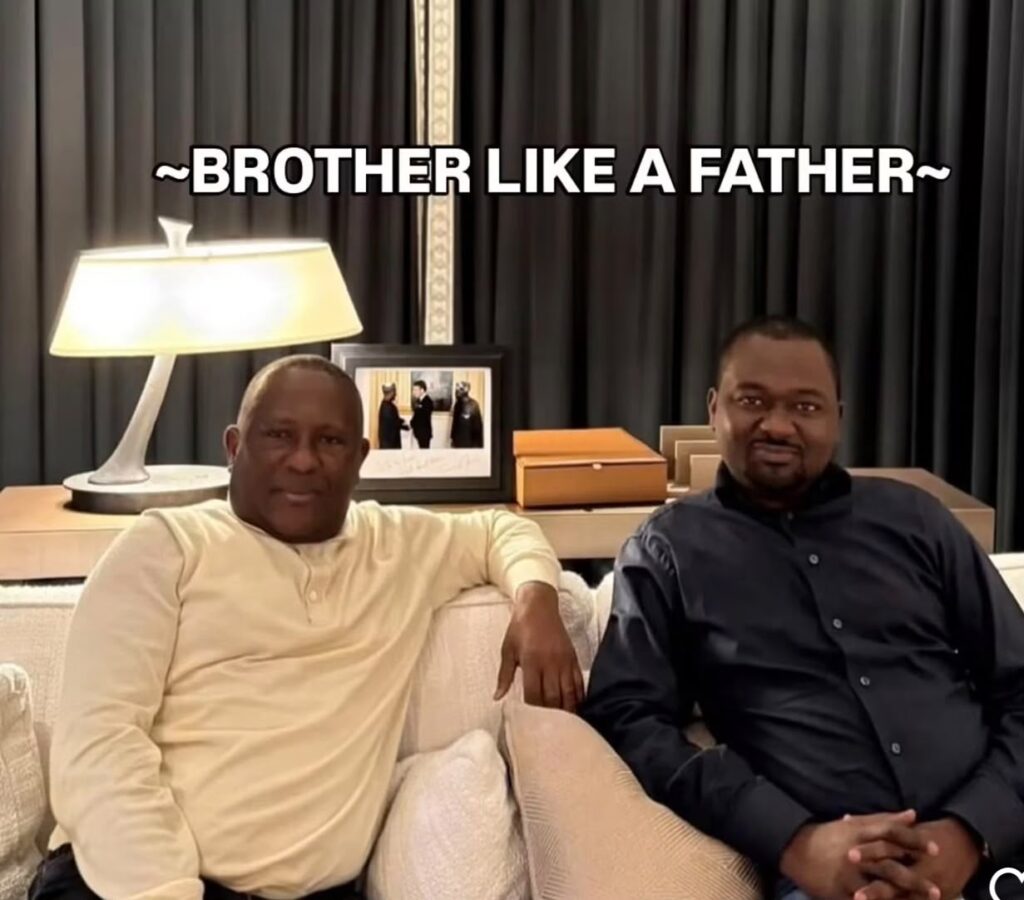
Perhaps that is the more revealing education his father is giving him. Abdul Samad appears less interested in merely showing the young man the assets than in allowing him to understand how those assets breathe.
Factories photograph beautifully, particularly when they rise from acres of land in steel and concrete, but the real life of an industrial empire occurs away from the cameras, in the anxious arithmetic of raw-material costs, shipping schedules, exchange rates, energy, regulation, financing and distribution. The young man who may someday occupy a larger place within such a system must learn that wealth is not sustained by the serenity of the chairman’s office but by countless decisions made under pressure, many of them invisible to the public until one of them goes wrong.
Khalifa’s academic preparation seems almost tailored to the wider world awaiting him. He studied International Relations at Regent’s University London and later earned a Master’s in Management from Georgetown University’s McDonough School of Business, combining an education in states, diplomacy and institutions with the language of management and enterprise.
That marriage of disciplines becomes particularly interesting when considered against the circles into which he has been born and the ones into which he is now increasingly being introduced.
There is, of course, another dimension to his story. Khalifa is one of the children from Abdul Samad Rabiu’s former marriage to Hannatu Musawa, the lawyer, writer and public official who currently serves in President Tinubu’s cabinet as Minister of Art, Culture, Tourism and the Creative Economy. Musawa has herself spoken publicly about her former marriage to Rabiu and the enduring ties between their families.
There is nothing publicly established to suggest that he is preparing to contest an election or embark on a conventional political career. What he possesses instead is exposure: a father situated at the commanding heights of Nigerian private enterprise and a mother operating within the upper reaches of government, two worlds that remain distinct but inevitably encounter each other wherever industry, regulation, investment and public policy meet.
That is why Friday’s visit to President Tinubu is noteworthy without needing to be exaggerated. Its importance lies less in whatever may have been discussed behind closed doors than in the simple fact that Khalifa was there, standing beside his father and becoming familiar with another environment in which his surname, responsibilities and future may eventually carry their own weight.
Such encounters form a peculiar education unavailable in lecture halls. Universities can teach capital allocation and international relations, but they cannot completely teach the temperament of power: how an industrialist speaks to a president without becoming obsequious, how one carries disagreement without converting it into hostility, how old relationships are tended, how new ones are cultivated, or how to distinguish those who are merely attracted to wealth from those whose trust survives difficult seasons.
Those lessons are absorbed by watching.
They reside in airport lounges and factory inspections, private dinners and waiting rooms, board meetings and courtesy visits, in introductions that appear inconsequential until, perhaps ten years later, a name remembered from a handshake becomes the person sitting across a negotiating table.
This is how relationships are inherited, if relationships can ever truly be inherited at all. A father may leave his son factories, shares, houses and an enviable portfolio of assets, but he cannot simply insert forty years of trust into an estate document. The son must accumulate his own credit among bankers, investors, regulators, political leaders, employees and business partners, even when the father’s name opens the first door.
Abdul Samad should understand the intricacies of that inheritance better than most. He was himself born into the formidable commercial tradition of the late Khalifah Isyaku Rabiu, the Kano merchant, scholar and industrialist whose name carried considerable weight long before BUA became the corporate colossus it is today. Abdul Samad inherited a tradition of enterprise but did not merely preserve it; he recast it for another age, moving far beyond the familiar pathways of trading into manufacturing on a scale that turned cement, sugar, flour and other essential commodities into the pillars of a modern industrial fortune.
Now the wheel appears to be turning again.
There is an almost poetic symmetry in the fact that another Khalifa is moving towards the centre of the Rabiu story, although it would be simplistic to describe what is happening as a transfer of the crown. BUA is today too sprawling and professionally structured to be reduced to a princely succession tale, and Kabiru Rabiu remains an important figure in its leadership. The more compelling point is that Khalifa has moved beyond merely being part of the family photograph; he now occupies a position where he can be tested by responsibility, measured by results and introduced gradually to the ecosystem surrounding the family enterprise.
That is how serious succession often begins, not with coronation but with apprenticeship. A young man is first handed work that can expose his weaknesses, then brought into relationships that can test his temperament, before the people who have dealt with his father for decades begin, cautiously, to deal with him in his own right. The family name may secure the introduction, but eventually the young man must demonstrate whether there is substance behind it.
For Abdul Samad, therefore, legacy will one day amount to considerably more than deciding how factories, shares and investments are distributed among heirs. The harder inheritance will be culture, discipline, judgement and the instinct for survival that allowed a family trading heritage to become an industrial institution. Kabiru represents an important part of the generation that travelled that journey alongside him; Khalifa increasingly represents the question of what follows after it.
Seen from that perspective, the young man’s growing presence around his father acquires a meaning beyond privilege. He is watching a man who has spent decades learning the peculiar choreography of Nigerian capitalism, where enterprise lives constantly in conversation with government, regulation, foreign capital, infrastructure and politics without necessarily becoming politics itself. He is being allowed to observe not simply how a fortune is enjoyed but how influence is managed, relationships are preserved and institutions are kept alive through changing governments and economic seasons.
That may ultimately be the most valuable thing Abdul Samad can give him.
Factories can be inherited. Shares can change names on a register. Houses and aircraft can pass from father to son with the neat efficiency of lawyers and trustees. What cannot be transferred so easily is the confidence of people who matter, the discipline to remain composed when markets rebel, the instinct to recognise danger before it announces itself and the ability to enter a room full of powerful men without being diminished by them or intoxicated by their attention. Those things take time.
And perhaps that is the deeper meaning of Khalifa walking beside his father into President Tinubu’s Lagos residence on Friday: the young man is no longer being shown only the empire.
He is being introduced, carefully and gradually, to the world around it.


Govt Release Identities Of Death Rows Inmates Who Escaped From Nigerian Prison

Just In: Tinubu Announces Top New Appointment