
News
BREAKING: Tinubu Directs INEC Chairman Yakubu To Immediately Proceed On Leave For ‘Betraying APC,’ Set To Nominate Successor

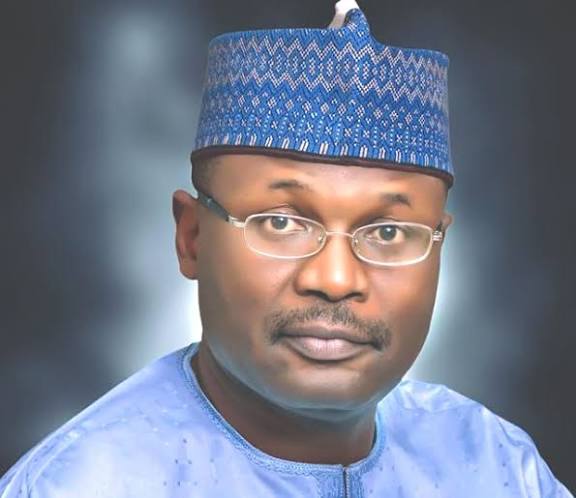
President Bola Ahmed Tinubu has reportedly directed the Chairman of the Independent National Electoral Commission (INEC), Prof. Mahmood Yakubu, to proceed on leave ahead of the expiration of his tenure.
Insider sources say the move comes in response to what they described as Mahmood’s “last-minute betrayal” of the All Progressives Congress government that appointed him.
Imo State Governor Hope Uzodimma reportedly met with President Tinubu shortly after the president returned from a 12-day working vacation, alleging that Mahmood’s efforts to register new political parties at the end of his tenure had disrupted Tinubu’s preparations for a second term.
The governor also claimed that Mahmood was covertly backing a candidate in the Imo State governorship election.

Following this briefing, Tinubu reportedly requested that Mahmood suspend all official duties and proceed on terminal leave.
The decision has thrown the commission’s schedule into disarray, leading to the abrupt cancellation of Mahmood’s final quarterly consultative meeting with political parties, as well as a planned session with civil society organisations.
Tinubu is now expected to submit the name of a new INEC Chairman to the National Assembly in the coming days.
Mahmood was appointed to office by then-President Muhammadu Buhari on October 21, 2015, succeeding acting chairperson, Amina Zakari.

In March, SaharaReporters reported that a prominent politician from Oghara, Delta State, was actively pushing for a compromised figure to become the next INEC chairman, setting the stage for widespread electoral fraud.
Sources close to the matter implicated former Delta State Governor James Ibori, a convicted ex-governor who returned to Nigeria after serving a sentence in the United Kingdom for looting public funds.
It was learnt that Ibori was maneuvering to position his associate and kinsman, Moses Ogbe, as the next INEC Chairman to ensure direct control over the rigging of the 2027 elections.
Ibori’s influence in the current political landscape remains significant. His past political manipulations include the appointment of his in-law, Chinedu Ebie, as Chairman of the Niger Delta Development Commission (NDDC) Governing Board, and his daughter, Erhiatake Ibori-Suenu, as Chairperson of the House Committee on NDDC.
Moses Ogbe is a former Resident Electoral Commissioner (REC) under Prof. Maurice Iwu’s tenure.
Moses Ogbe’s Troubling Track Record
SaharaReporters’ investigation into Ogbe’s past reveals a deeply concerning history of electoral manipulation. Ogbe, once a staunch member of the Peoples Democratic Party (PDP), was nominated by Ibori for a REC position during a period marked by widespread election rigging.
He was allegedly part of a network of election manipulators working closely with Prof. Iwu, notorious for overseeing Nigeria’s deeply flawed 2007 general election, an election so discredited that then-President Umaru Musa Yar’Adua admitted its failures and initiated electoral reforms.
Ogbe’s tenure as REC in Lagos State during the 2003 elections reportedly saw significant electoral malpractices under the administration of then-Governor Bola Tinubu.
Tinubu has a habit of surrounding himself with individuals he has previously worked with or known, as he advances politically.
For example, in 1999, the current Inspector General of Police, Kayode Egbetokun, served as Tinubu’s Chief Security Officer, holding the rank of Deputy Superintendent of Police at the time. At the time, Tinubu was the governor of Lagos State.
Earlier in September, INEC officially recognised former Senate President, Senator David Mark, as National Chairman and former Osun State Governor, Rauf Aregbesola, as National Secretary of the African Democratic Congress (ADC), bringing to an end to months of internal wrangling over the party’s leadership.
The electoral body also confirmed Dr. Mani Ibrahim as National Treasurer, alongside Akibu Dalhatu and Professor Oserheimen Osunbor, who now serve as National Financial Secretary and National Legal Adviser, respectively.
SaharaReporters confirmed that the names of the newly recognised ADC leaders had been uploaded to the Commission’s official website.
-Source: SaharaReporters
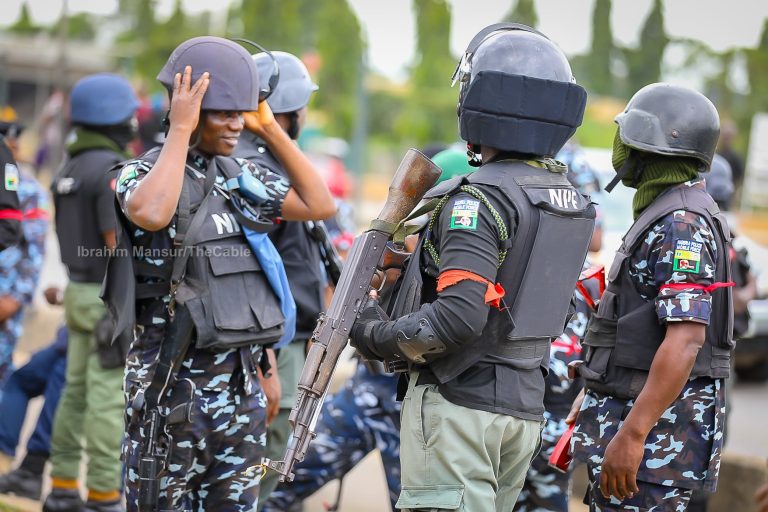
Five state governments have said they plan to transform their existing local security outfits into state police once the constitutional process is finalised, following the House of Representatives’ passage of an Executive Bill.
Legit reports that the House of Representatives passed the Executive Bill on state police during plenary session on Thursday, July 23, 2026.
The bill’s passage marked a major shift in Nigeria’s policing structure, with the House withdrawing its earlier constitutional amendment proposal in favour of the Executive Bill.
As reported by The Punch, while some states are waiting for the process to conclude before deciding on a structure, Ondo, Kaduna, Anambra, Zamfara, and Abia have all indicated they intend to build on what already exists rather than start from scratch.
Officials across the five states argued that their security outfits already have the personnel, community knowledge, and operational frameworks needed for a smooth handover.
They said building entirely new institutions would take longer and cost more, while the existing agencies had already established intelligence networks and local trust.
In Ondo State, the Special Adviser to Governor Lucky Aiyedatiwa on Strategic Communication, Allen Sowore, said the Amotekun Corps was well placed to make the transition
“The men and officers of the Amotekun Corps would also be well positioned for recruitment into the state police system. Their years of experience, knowledge of the local terrain, community relationships, and understanding of the security challenges confronting our people are invaluable assets that should not be discarded.”
The Governor’s Chief Press Secretary, Ebenezer Adeniyan, added that Amotekun’s current structure offered a ready implementation template. Kaduna’s Commissioner for Internal Security and Home Affairs, Sule Shu’aibu, told a training programme for personnel of the Kaduna State Vigilance Service (KADVIS) on Wednesday that the state was already upgrading the outfit to serve as the starting point for state police.
“When the Constitution is eventually reviewed, and state police become operational, where do we start from? You can rest assured it will start from here.”
A senior government official who spoke anonymously confirmed that the focus was on strengthening KADVIS rather than creating a new agency.
In Zamfara, Special Assistant to Governor Dauda Lawal on Media and Publicity, Mustafa Kaura, said the Civilian Protection Guards would be converted, given the experience its personnel had gained fighting insecurity in the state.
The Senior Special Adviser to Anambra Governor on Media, Dr Ejimofor Opara, said the state’s Agunechemba security outfit would be “rejigged to fulfil the mandate of the state police.”
Opara noted that the existing Anambra State Homeland Security Law already shared many features with the incoming legislation. Abia’s Commissioner for Information, Okey Kanu, said the state intended to merge its Homeland Security outfit and community vigilante groups into the new state police structure, with modalities to be worked out ahead of the take-off.
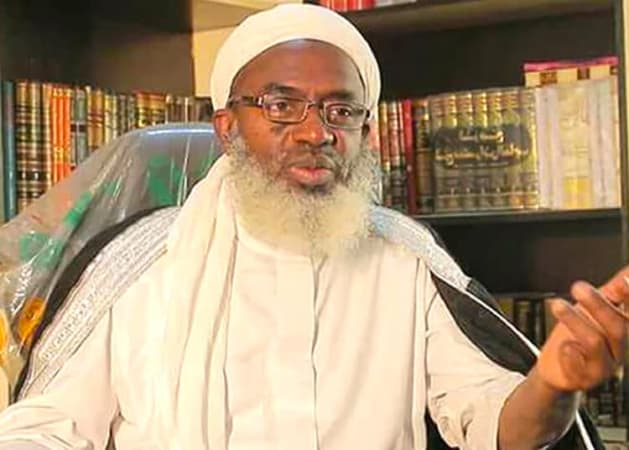
Islamic cleric Sheikh Ahmad Gumi has raised questions about why no Nigerian government official has engaged Boko Haram terrorists and bandits through direct negotiations, drawing a comparison with the high-level outreach that helped end Niger Delta militancy
Gumi made the argument in a Facebook post on Saturday, July 25, citing how former President Goodluck Jonathan and former Vice President Yemi Osinbajo personally entered the Niger Delta creeks to meet armed militants and returned with frameworks that reduced the violence.
“The former President Jonathan visited delta militants in the creeks, so also the former vice president Osinbajo. They all came up with a program to tame the militants.”
He then directed a pointed question at critics of such engagement in the North: “Who is going to visit BH and bandits to tame them without fools castigating them?”
He then directed a pointed question at critics of such engagement in the North: “Who is going to visit BH and bandits to tame them without fools castigating them?”
The retired soldier has spent years positioning himself as a mediator between the Nigerian state and armed groups operating in the North-West and North-East, making repeated visits to bandit camps in Zamfara and other states to hear their demands. His core argument has remained consistent — that negotiation ended Niger Delta militancy and should be tried in the North.
His interventions have not been without controversy. Some Nigerians accuse him of legitimising groups responsible for kidnappings, killings and cattle rustling, while others credit his work with securing the freedom of kidnap victims. Gumi has denied backing terrorism, saying his goal is to end bloodshed through dialogue and rehabilitation.
The amnesty programme that Gumi referenced was launched in 2009 under the late President Umaru Yar’Adua and continued under Jonathan. Thousands of militants were disarmed in exchange for training, monthly stipends and reintegration support, which significantly reduced attacks on oil infrastructure in
Jonathan’s first direct engagement with Niger Delta militants came in 2007, when he was serving as vice-president.
He entered the creeks in Warri, Delta State, without armed protection to meet ex-militant leader Government Ekpemupolo, known as Tompolo. Jonathan later said that the meeting laid the groundwork for the amnesty programme, which remains operational today.
Osinbajo undertook a similar mission in 2017, visiting Niger Delta communities as acting president and meeting directly with militants and traditional leaders.
He justified the visits by describing those in the creeks as citizens with genuine grievances rather than purely security threats.

The Independent National Electoral Commission has urged eligible Nigerians to take advantage of the remaining days of the Continuous Voter Registration, warning that the registration window will close on Sunday, July 26, 2026.
In a public notice issued on its X handle on Saturday the electoral body reminded prospective voters that they could complete their registration online from start to finish through its dedicated CVR portal or visit designated registration centres nationwide for physical assistance.
“Your future won’t wait. Neither should you. The Continuous Voter Registration (CVR) exercise ends Sunday, 26 July 2026,” the commission said.
INEC encouraged Nigerians who require assistance to visit any of its state offices, local government area offices or designated registration centres to complete the process in person.
The commission also stated that all registration centres would remain open daily, including weekends, from 9:00 a.m. to 3:00 p.m. until the exercise ends.
“You can complete your voter registration online from start to finish via cvr.inecnigeria.org. If you need assistance, visit any INEC State Office, LGA Office, or designated registration centre to complete your registration in person,” the commission added.
The CVR exercise is part of INEC’s preparations for the 2027 general elections, enabling eligible Nigerians and those seeking to update their voter information to be included in the national register of voters.


2027: ADC Gov Candidate Announces Top Ex-Lawmaker as Running Mate

2027 Presidency: Kwankwaso Breaks Silence on Peter Obi’s Controversial One-Term Commitment

REVEALED: Five Governors Set to Convert Local Security Groups Into State Police

Former Super Eagles Star Loses Life Savings, Duped By A Pastor of ₦1.2 Billion

I’m A Married Man, I Can Never Get Myself Involved With Such A Thing, Delta Gov Aide Reveals Why He Offered Comfort ₦500,000 Job

Lagos Imposes ₦250,000 Fine For Illegal Waste Disposal

-

 Tech1 day ago
BREAKING: Painful, APC Chairman Bereaved
-
 Politics1 day ago
2027 Election: Tinubu’s Ex-Minister Adelabu Speaks On Dumping APC
-

 Business1 day ago
UK Lists 10 Requirements Nigerians Need To Secure Work Visa
-

 Business6 hours ago
Top 10 Richest Yoruba Billionaires: South West Wealthiest Entrepreneurs, Key Factors Behind Their Wealth
-

 News1 day ago
Voter Registration Ends Sunday, INEC Reminds Nigerians
-

 News20 hours ago
SHOCKER! Sheikh Gumi Mentions Two Top Nigerian Leaders Who Visited Militants
-
 Business9 hours ago
FG Unveils Employment Portal, Targets 26,961 Nigerians for New Jobs
-
 Politics51 minutes ago
2027: ADC Gov Candidate Announces Top Ex-Lawmaker as Running Mate