Business
Oando Records N4.1trn Revenue In 2024

Oando PLC, Africa’s leading integrated energy company listed on both the Nigerian Exchange Group (NGX) and Johannesburg Stock Exchange (JSE), has posted a 44per cent increase in revenue to N4.1trillion in 2024, compared to N2.9 trillion recorded in 2023.
In the upstream, Oando’s production witnessed a 3per cent increase to 23,727 boepd; made up of crude oil production which increased by 27per cent to 7,558 bopd, while NGL production and gas decreased respectively by 35per cent to 156 bpd, and 5per cent to 16,013 boepd.
The company’s 2P reserves grew 95per cent year-on-year to 983 MMboe (2023: 505 MMboe), representing a 188per cent reserves replacement ratio and underscoring the strength of the company’s upstream portfolio post-acquisition.
The company also reported a sustained operational uptime of 86per cent, supporting off-take reliability and reducing deferred production.
Similarly, other indigenous players have also reported significant revenue growth following the recent wave of International Oil Company divestments.
Seplat recorded a revenue of ₦1.65 trillion, representing a 137per cent increase from 2023, while Aradel posted ₦581.2 billion in revenue, a 162per cent increase compared to the previous year.
Speaking on the company’s upstream performance, Group Chief Executive, Oando PLC, Wale Tinubu said, “2024 was a defining year for Oando, with the successful acquisition and integration of NAOC marking the culmination of a decade-long strategic growth journey which has significantly deepened our upstream portfolio, resulting in our assumption of operatorship of the OML 60–63 series and the doubling of our working interest in the assets from 20per cent to 40per cent, as well as our 2P reserves from 500 million barrels of oil equivalent to 1 billion barrels.

In the downstream, Oando’s trading subsidiary reported that it sold 20.7 million barrels of crude oil in 2024; a 37per cent decline from 2023 due to structural changes in the Nigerian oil market.
Additionally, refined product volumes declined by 64per cent to just over 599 kMT, due to weakened domestic demand, driven by the challenging macroeconomic in-country.
Projections for global oil prices and demand in 2025 remain uncertain due to persistent macroeconomic and trade policy uncertainties.
JP Morgan pegs Brent to peak at $66/bbl in 2025 and $58/bbl in 2026 while the U.S. Energy Information Administration’s (EIA) predictions project Brent crude oil prices to fall from an average of $81 per barrel (b) in 2024 to $74/b in 2025 and $66/b in 2026 citing an increase in global production coupled with slower global demand growth.
Within its renewable energy business, the company continued to advance its clean energy agenda recording measurable progress across multiple verticals.
By the end of 2024 the electric mass transit programme had covered 121,145 km, transported over 205,000 passengers, displacing 163,546 kg of CO₂ emissions and saving more than 60,000 litres of diesel.
Other notable achievements include signing MoUs for wind projects with Cross River and Edo State as well as launching a geothermal feasibility study in collaboration with NNPC, exploring the conversion of mature wells to renewable power assets.
As the company continues to integrate its expanded portfolio following its most recent strategic acquisition, current projections show it’s gone into 2025 with strong momentum and clear ambition.
Tinubu further remarked that “Looking ahead, 2025 will be our year of execution. Our key priorities shall include unlocking synergies from the acquisition, addressing above-ground security risks through the implementation of a revamped security framework aimed at curbing the persistent theft of oil, cost optimization, balance sheet restructuring, enhancing operational efficiency, and leveraging technology to improve productivity across our operations.
“In our bid to ramp up production towards achieving our target of 100,000 bopd and 1.5 tcf of gas by 2029, we shall pursue a dual-track approach of rig-less interventions and well workovers, complemented by an aggressive drilling program.
“We are excited by the opportunities that lie ahead and remain committed to delivering enhanced shareholder returns, shared prosperity and maintaining our position as a leading player in Africa’s evolving energy landscape,” he said.
The published audited FY 2024 results also include approximately four months of contribution from Nigerian Agip Oil Company (NAOC), following the completion of the acquisition on August 22, 2024. Following this, the company has set a production guidance of 30,000–40,000 barrels of oil equivalent per day (boepd) in its 2025 outlook.
This aligns with its post-acquisition optimisation plans to maximise portfolio value and supports its four-year target of reaching 100,000 barrels per day.
It is evident that local players, particularly those that have become operators following the recent IOC divestments, are increasingly well-positioned to drive the future of the Nigerian energy sector.
These indigenous companies possess unique insights and contextual experience that enable them to more effectively manage onshore and shallow water assets.
Also, this shift is expected to generate a ripple effect across the economy by increasing local employment, enhancing capacity development, and improving government revenue through taxes retained within the country, revenue that was previously repatriated to the home countries of the International Oil Companies (IOCs).
Championsnews.com.ng

The Emir of Kano, Muhammadu Sanusi II, has warned prospective investors against using their children’s school fees or selling their homes to invest in shares.
Sanusi gave the warning on Thursday while speaking at the Dangote Refinery Initial Public Offering investor roadshow in Kano.
He urged Kano residents and other prospective investors to invest only money they could afford to set aside for some time, saying they could consider amounts such as N10,000, N20,000 or N30,000.
He said, “Do not take your children’s school fees and put in shares, Do not sell the house that you live in and put in shares.
“But what you can afford,10,000, 20,000, 30,000, what you can afford to set aside for some time, set it aside. And if you look at the fundamentals of the economy, over time you can be assured that this investment will grow, and you will not regret it.”
The Emir was speaking as part of the ongoing investor outreach for the Dangote Refinery IPO, which opened on September 14.
Sanusi urged Kano residents to participate in the capital market, saying they should seek to become shareholders in the refinery founded by Kano-born businessman, Aliko Dangote.
“I speak as the Emir of Kano, I would like my people to be owners of this company.
“I do not want us to be left behind in the capital markets. I do not want us to be left behind in financial inclusion. So this is the time and this is the opportunity,” he said.
The Emir also urged representatives of unions and other groups to educate their members about the opportunity to invest.
He advised prospective investors to adopt a long-term approach rather than buying shares in anticipation of quick profits.
“And I’m not talking about someone who will buy 5,000 shares and want to sell tomorrow and believe he will get 10,000. No, I’m talking about you have some money, put it in, leave it there for some time, and just watch your money grow.
“Forget about it for some time. You’ll be surprised in five years the 10,000 Naira you invest today, what it will be. The 100,000 Naira you invest, what it will be,” Sanusi said.
Sanusi also said the location of the refinery should not discourage Kano residents from investing, stressing that shareholders, rather than the location of the facility, determine ownership of the company.
“It doesn’t matter where the refinery is located. It could be located in Lagos, or Ibadan, or on the moon. It is the shareholders who own it.
“It is the shareholders who own it. It’s the shareholders who take the return. It is the shareholders who own the profit,” he said.
The Emir described Dangote as a son of Kano and urged residents to take advantage of the IPO to have a stake in the company.
“We have heard Lagos claim Aliko. I know very soon even Egypt will claim him, America will claim him. But we all know where he comes from,” Sanusi said.
He added, “I would like to say that this is his grand homecoming. We are happy to donate him.
“We are happy to share him, but please do not take him away from us.”
Sanusi also highlighted the refinery’s operations, saying prospective shareholders could see the assets and activities of the company, including its production of refined petroleum products and fertiliser.
He said the refinery was also creating direct and indirect jobs and had secured its gas supply, port access and markets.
-Punch

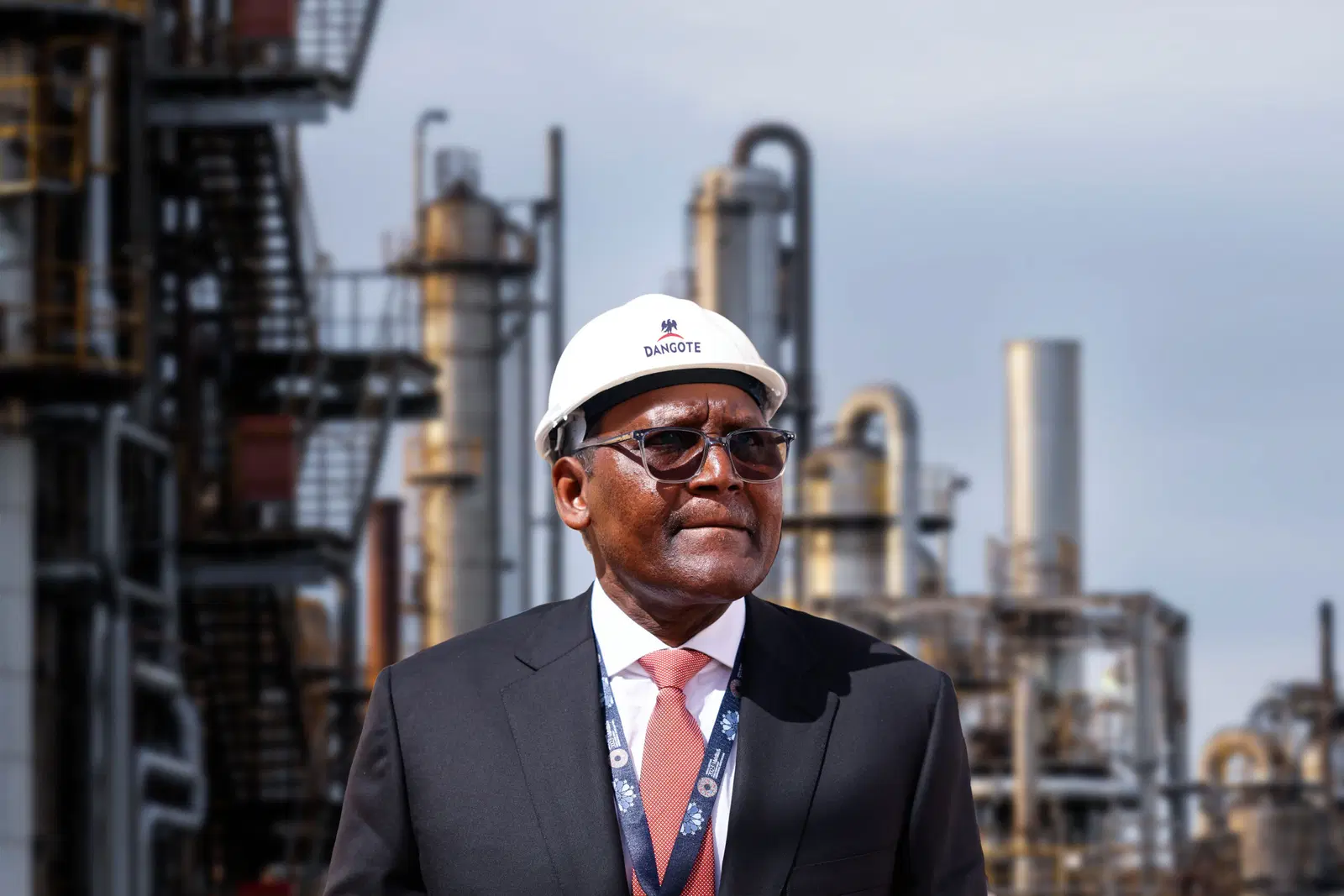
Alhaji Aliko Dangote, President and Chief Executive Officer of Dangote Industries Limited, has said the Initial Public Offering, IPO, of Dangote Petroleum Refinery and Petrochemicals, FZE, would democratise wealth creation by giving Nigerians and investors globally an opportunity to own shares in one of Africa’s major industrial projects.
Dangote stated this yesterday at the “Facts Behind the Offer” presentation and opening gong ceremony for the refinery’s IPO in Lagos, where the Nigerian Exchange Limited, NGX, formally opened the N2.2 trillion offer.
The IPO comprises 4.1 billion new ordinary shares offered at N525 per share, with a minimum subscription of 10 shares valued at N5,250. The offer is scheduled to close on October 13, subject to the terms contained in the prospectus.
Describing the offer as a historic moment for Nigeria’s capital market, the Dangote Group and Africa, Dangote said: “It would enable ordinary Nigerians and investors globally to own shares in one of Africa’s major industrial projects.
“What initially belongs to a country, begins in a deeper sense, now belongs to the people. Today is such a moment; today is a historic day
“The IPO is not simply about listing a company but creating a new possibility for Nigeria and Africa by broadening ownership of a major industrial asset.
“The decision to offer shares to the public was driven by the desire to allow more people participate in and benefit from the prosperity created by the refinery.
“An asset of this magnitude should not create value for only a very few people. It should create value for millions of people, not only Nigerians, but all over the world.”
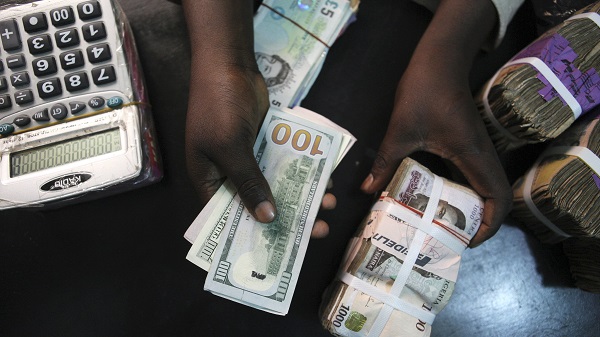
The Nigerian currency, Naira (₦), continued its battle against the United States dollar at the official foreign exchange market on Saturday.
Daily Voice reports that data from the Central Bank of Nigeria (CBN) showed that the local currency sold at ₦1,321.2160/1$ on Sunday.
The latest rate is the same as Saturday’s rate of ₦1,321.2160/1$.
At the parallel market (black market), however, the naira closed on Sunday at ₦1,400 to the dollar.
The offers by commercial banks, Bureau de Change (BDC) operators, and other foreign exchange dealers may, however, differ from the reference rates due to transaction margins and prevailing demand and supply conditions.
Market participants will continue to monitor foreign exchange inflows, demand for dollars, and CBN policies for indications of whether the naira can sustain its gains through the month.


Government Declares Monday, September 21 Public Holiday
BREAKING: Tears as Prominent Nigerian Ex-Governor Dies in UK

2027: Rufai Oseni Online Poll Reveals Winner of Presidential Election. Nigerians React

Former Super Eagles Star Loses Life Savings, Duped By A Pastor of ₦1.2 Billion

I’m A Married Man, I Can Never Get Myself Involved With Such A Thing, Delta Gov Aide Reveals Why He Offered Comfort ₦500,000 Job