Foreign
Tension as Nigerians Hit in Iran Missile Strikes, Details Emerge


Iran’s missile attack has injured over 140 residents, including Nigerians, in the United Arab Emirates (UAE). The UAE’s air defence intercepted nine missiles and 33 drones amid escalating tensions in the Middle East. Six fatalities were reported, with casualties among foreign nationals, including Nigerians, Pakistanis, and Bangladeshis.
Dubai, UAE – Amid the US/Israel-Iran war, Nigerians were among more than 140 residents injured after Tehran launched multiple ballistic missiles and unmanned aerial vehicles at the United Arab Emirates (UAE).
As reported on Sunday morning, March 15, by The Punch, the development raised fresh fears for thousands of Nigerians living and working in the Gulf nation.
The UAE Ministry of Defence disclosed on Saturday, March 14, that its air defence systems intercepted several missiles and drones fired from Iran, describing the attack as a major escalation in the ongoing regional tensions.
In a statement posted on its official X (formerly Twitter) handle, the ministry said its air defence units engaged nine ballistic missiles and 33 drones during the latest assault, adding that the attacks left six people dead and 141 others injured, including foreign nationals.
The ministry stated:
“The UAE air defence systems on March 14 engaged nine ballistic missiles and 33 UAVs launched from Iran.”

“Since the onset of this blatant Iranian aggression, UAE air defences have engaged 294 ballistic missiles, 15 cruise missiles, and 1,600 UAVs launched from Iran.”
UAE’s authorities’ post can be viewed below via X:
الدفاعات الجوية الإماراتية تتعامل مع 9 صواريخ باليستية و 33 طائرة مسيرة.
تعاملت الدفاعات الجوية الإماراتية (14 مارس 2026) مع 9 صواريخ باليستية، و 33 طائرة مسيرة قادمة من إيران.
ومنذ بدء الاعتداءات الإيرانية السافرة تعاملت الدفاعات الجوية الإماراتية مع 294 صاروخاً باليستياً، و… pic.twitter.com/UOVjVpjh7b
— وزارة الدفاع |MOD UAE (@modgovae) March 14, 2026
According to the ministry, those killed in the attacks included citizens of the UAE as well as foreign nationals from Pakistan, Nepal and Bangladesh. Although the authorities did not specify the exact locations where the casualties occurred, the ministry said the injured victims were from several countries, including Nigeria.
Meanwhile, when contacted about the situation, Nigerian resident Yinka Sodiq in the UAE expressed hope for safety, saying he is closely monitoring regional tensions amid reports of increased military activity in the Gulf. He also expressed full confidence in the country’s security measures to safeguard both residents and visitors.
He told Legit.ng:
“Alhamdulillah (praise be to God), for now, I am safe. We are also keeping our heads. May Allah continue to protect us all.”
Another resident, Remi Susan, addressed occasional sounds heard in the skies, clarifying that they pose no threat but are part of a defensive system designed to protect the population and secure the UAE’s airspace, a reflection, she said, of the country’s advanced defence capabilities and preparedness.
Susan said:
“Yes, there has been a lot of noise in the sky, even from my house. I saw like some missile or drone or whatever. But they have been intercepted. I trust the government.”
Dailyvoice.ng reports that escalating hostilities in the Middle East have sent shockwaves through Nigeria, grounding pilgrimages, disrupting travel plans, rattling the oil market and prompting anxious calls from Nigerians abroad. Besides, some members of the Islamic Movement in Nigeria (IMN), the Iran-inspired Shiite organisation founded in the late 1970s by Sheikh Ibrahim El-Zakzaky, have been staging protests in solidarity with the Iranians in some parts of the country, such as Kano, Kaduna and Lagos.
The Iranians, under attack from the United States (US) and Israel because of a long-running disagreement over Iran’s nuclear enrichment programme, have been firing retaliatory missiles at Israel and other countries considered US allies in the Gulf region, including Saudi Arabia, the UAE, Qatar, Bahrain, Jordan, among others.
So far, Iran’s supreme leader, Ayatollah Ali Khamenei, his family members and more than 700 citizens have died.

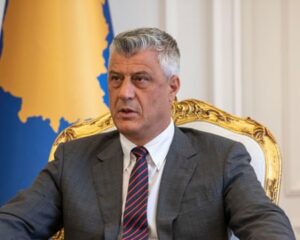
A court in The Hague sentenced Kosovo’s former president Hashim Thaci to 25 years in prison on Thursday after finding him guilty of war crimes committed during the late 1990s conflict in which Kosovo broke away from Serbia
The Kosovo Specialist Chambers convicted Thaci, 58, of murder, torture, cruel treatment, and the illegal detention of civilians
The tribunal determined that he bore criminal responsibility as the top commander of the Kosovo Liberation Army (KLA), the ethnic Albanian separatist force that fought Serbian security forces between 1998 and 1999. Presiding judge Charles Smith said Thaci “actively participated in and encouraged crimes.”
The court established that KLA forces under his command murdered 96 people identified as political opponents or perceived collaborators with Serbian authorities. A further 385 people were arbitrarily detained, 303 were tortured, and around 50 others suffered cruel treatment.
Judge Smith told the court: “The scale and nature of the crimes committed were very serious. The so-called intelligence on which many of these victims were arrested, detained and killed was little more than unverified rumours. Based on that information, victims were called and described as spies and collaborators and violently treated.”
The American judge was careful to clarify that the proceedings were “not about the legitimacy of the Kosovo Liberation Army” or Kosovo’s goal of independence. Thaci, who denied all charges, stood in silence as the sentence was delivered. He retains the right to appeal.
Three other former senior KLA figures were tried alongside Thaci. Jakup Krasniqi also received a 25-year sentence, while Kadri Veseli was jailed for 18 years and Rexhep Selimi for 13 years. All four had denied the charges.
The panel acquitted the four men on six counts of crimes against humanity, ruling that prosecutors failed to prove those crimes were part of a widespread and systematic attack on civilians.
The verdicts drew an immediate public response in Kosovo, where Thaci remains a revered figure for many ethnic Albanians. Thousands had gathered in the capital Pristina ahead of the ruling, with crowds filling a central square waving red and black Albanian flags and banners calling for the men’s acquittal. When the guilty verdicts were announced on a big screen, many in the crowd booed and wept.
Thaci had resigned from the Kosovo presidency in late 2020 to face the charges, after nearly three years of trial proceedings. In his closing address to the court in February, he said: “Throughout my life, I stood with the people of Kosovo defending freedom, life and dignity. I was always guided by the Western ideals of democracy, equality and justice.”
Albania’s Prime Minister Edi Rama reacted to the verdict by posting an image of barbed wire stretched across a map of Europe, with a single word: “Unbelievable.”
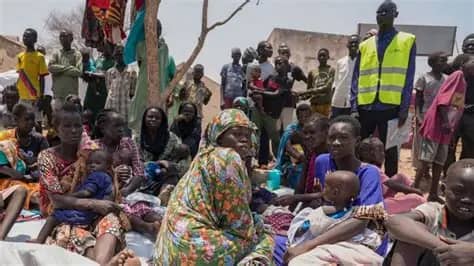
A new investigation by The New York Times claims Sudan’s military ran an organized program in 2024 to develop and produce chlorine-based munitions, escalating long-standing allegations of chemical weapons use in the country’s war.
According to the report, the Times reviewed nearly 150 documents, plus photos, videos, audio recordings and thousands of messages. The materials describe months of work to design, test and manufacture about 300 bombs filled with chlorine.
Brigadier General Tariq Hussein is named as one of the principal supervisors. The documents detail a munition that combined explosives with large quantities of chlorine, and tests carried out before production.
One of the most serious claims involves the source of the chemical. The dossier alleges that some chlorine was taken from a water-treatment facility in Omdurman, at a time when Sudan is facing cholera outbreaks and a collapse of basic services.
The investigation also points to senior leadership. Voice and text messages reportedly implicate army chief Gen. Abdel Fattah al-Burhan in knowledge of the program, and in orders to “remove all traces” after U.S. pressure and sanctions.
This is not the first time chemical weapons have been alleged in Sudan. Independent.ng reported that the Sudanese Alliance for Rights filed a case at the International Criminal Court against four senior Port Sudan Authority leaders, including al-Burhan, accusing them of using chemical weapons and committing serious violations against civilians. The lawsuit also names Yasser al-Atta, Shams al-Din al-Kabashi and Major General Taher Mohammed, and calls for an urgent ICC investigation.
The U.S. has already acted on earlier findings.
Independent.ng noted that Washington imposed additional penalties in May 2025 over the alleged use of chemical weapons, further linking Sudan’s war to international politics.
Chlorine is permitted for water purification, but using it as a weapon violates the Chemical Weapons Convention, which Sudan ratified. Experts say its civilian availability makes it easier to obtain and harder to monitor than military-grade agents.
With the conflict since April 2023 already causing mass displacement and famine, rights groups are now calling for an independent international investigation with access to sites, documents and the chain of command.
The retired Nigerian Army Major General, Danjuma Hamisu Ali-Keffi, has alleged that two prominent members of the All Progressives Congress (APC) secretly sought confidential records on President Bola Ahmed Tinubu from United States government agencies.
Ali-Keffi, a former General Officer Commanding (GOC) 1 Division of the Nigerian Army, made the claim while speaking about the events that shaped Tinubu’s emergence as the APC presidential candidate.
According to him, the alleged attempt was brought to his attention by former Director of the Nigerian Financial Intelligence Unit (NFIU), Modibbo Hamman-Tukur.
The retired general said the incident happened during the period when powerful figures within the APC were struggling to determine who would secure the party’s ticket for the 2023 presidential election.
Ali-Keffi said the information came to him while he was serving as Commander of Operation Service Wide, an operation he described as being focused on terrorism financing and the leadership structures of terrorist organisations.
He explained that Hamman-Tukur later told him about an alleged move by two influential APC figures who were opposed to Tinubu’s presidential ambition.
According to Ali-Keffi, the individuals allegedly gained access to the office of the NFIU director without authorisation and sent requests to American government agencies for information concerning Tinubu.
“Two prominent APC people who were against Tinubu entered illegally into the office of NFIU director and sent messages to the US government agencies requesting confidential records of Bola Ahmed Tinubu on those issues – terrorism financing,” Ali-Keffi said.
The retired military officer said the former NFIU director was uncomfortable with the development.
He claimed Hamman-Tukur later went to his office at about 2am after becoming aware of what was happening.
According to Ali-Keffi, the people allegedly involved realised that the NFIU director had arrived and subsequently left the office.
Ali-Keffi further claimed that a response was later received from the United States concerning the request.
He, however, said he was not aware of the exact information contained in the response.
“I don’t know what the record is or related to current issues regarding his forfeiture and other issues, if I am not mistaken,” he said.
The former army commander was careful to distinguish between the alleged request for information and any conclusion about Tinubu.
He said he had no personal knowledge of the contents of the records allegedly requested from the US authorities.
He also did not claim that the records established that Tinubu committed any offence.
Instead, he said his account was based on information he received from Hamman-Tukur at the time.
Ali-Keffi also alleged that NFIU officials connected to the incident were later dismissed. He said the matter eventually became the subject of legal proceedings.
The retired general further brought former Kaduna State Governor, Nasir El-Rufai, into the account.
Ali-Keffi alleged that El-Rufai was aware of some of the information relating to the request for Tinubu’s records.
He said the former Kaduna governor was among the political figures who had knowledge of the matter but did not support the idea of using confidential information against Tinubu.
Tinubu eventually defeated other contenders at the APC presidential primary in June 2022.
He went on to defeat Atiku Abubakar of the Peoples Democratic Party (PDP) and Peter Obi of the Labour Party in the February 2023 presidential election.
Ali-Keffi said his own decision to support Tinubu at the time was influenced partly by El-Rufai’s argument that power should move from the North to the South.
He recalled that the argument was based on the need to maintain a sense of balance and national unity after former President Muhammadu Buhari, a northerner, had completed his second term.
The retired general said the political situation could have been different if the alleged information obtained from the United States had been made public before the APC primary.
“Had people like the former NFIU Director and people like El-Rufai who were in the know, who were aware of that documents that were sent in respect of candidate Bola Ahmed Tinubu, had they allowed it to get to public domain at that time, I believe it would have perhaps hurt the candidaty of Ahmed Bola Tinubu. Certainly, he wouldn’t have gotten the ticket to fly the flag of APC at that time,” Ali-Keffi said.
Several prominent politicians had shown interest in the APC presidential ticket before Tinubu eventually emerged as the party’s candidate.
Ali-Keffi said those considerations played an important role in the eventual decision by some politicians to back Tinubu.
He also recounted a separate conversation involving former Federal Inland Revenue Service (FIRS) chairman, Muhammad Nami, and an unnamed powerful minister who was said to have been close to Buhari.
According to Ali-Keffi, Nami approached the minister during the United Nations General Assembly in New York in an effort to persuade him to support Tinubu.
The retired general said the minister expressed reservations about Tinubu and warned that he could take action against some people if he eventually became president.
“Look, Ahmed Tinubu is going to come after them. He was going to do this and that. You people don’t know this,” Ali-Keffi recalled the minister as saying.
Nami, according to Ali-Keffi, continued to make the case for a Southern presidency and argued that handing the APC ticket to a Southern candidate would promote national balance.
However, years after the 2023 election, Ali-Keffi said he now regrets his decision to support Tinubu.
“I regret actually voting for him,” he said.
He also stated that he would not vote for the ruling party in the next election.
“I’m not going to vote APC next election,” Ali-Keffi said.
The Independent National Electoral Commission (INEC) has published the personal particulars of candidates nominated for the 2027 presidential and National Assembly elections, with President Bola Tinubu’s nomination documents showing that the sections for his primary and secondary education were left blank.
The Independent National Electoral Commission (INEC) has published the personal particulars of candidates nominated for the 2027 presidential and National Assembly elections, with President Bola Tinubu’s nomination documents showing that the sections for his primary and secondary education were left blank.
In a related development, POLITICS NIGERIA reported in August that fresh controversy had emerged over Tinubu’s academic credentials.
This came after the Independent National Electoral Commission (INEC) explained why his primary and secondary school certificates were not included among the documents displayed for the 2027 election.
The commission said it displayed the documents submitted by candidates and did not have the authority to demand additional credentials or alter the information contained in their submissions.
Source: Politics Nigeria


Courts Sacks ADC Prominent Candidate

Ex Police Commissioner Dies

Minimum Wage: Proposed Salary Structure for Nigerian Workers, Levels 1–17 Emerges

Former Super Eagles Star Loses Life Savings, Duped By A Pastor of ₦1.2 Billion

I’m A Married Man, I Can Never Get Myself Involved With Such A Thing, Delta Gov Aide Reveals Why He Offered Comfort ₦500,000 Job