
Sports
‘A Clear Idea’ – What Is Man Utd’s Transfer Strategy?

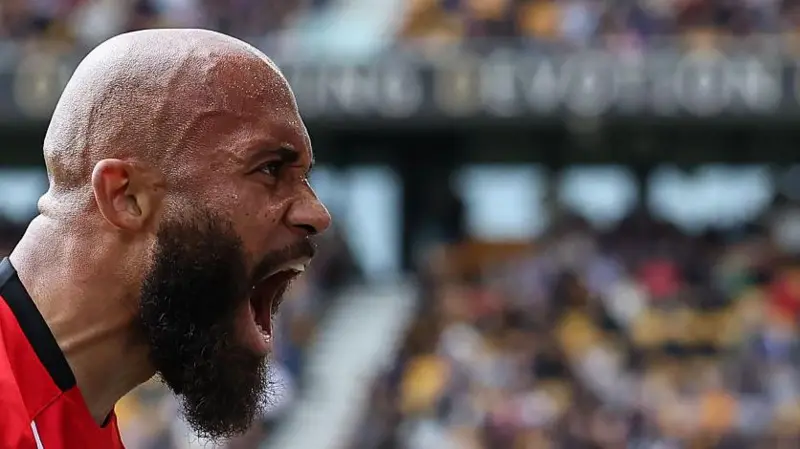
It’s been a busy few days at Manchester United.
From agreeing to sign Matheus Cunha, speaking with Brentford’s Bryan Mbeumo, finding out Bruno Fernandes won’t be joining Saudi Arabian side Al Hilal and that Jadon Sancho will return from Chelsea, along with a £5m payment, it has been a whirlwind return from their troubled post-season tour of Asia.
So, where are they now and what is their transfer strategy moving forward?
What is Man Utd’s transfer strategy?
Fernandes took a bit of time mulling over the Al Hilal offer after United head coach Ruben Amorim said in Hong Kong on Friday he thought his captain would stay at the club.
The 30-year-old wanted to talk it through with his family as, after all, the sums being offered were truly staggering and could not just be dismissed out of hand.
At this point last week, many at United thought Fernandes would go. Now we know he won’t.
Lost amid his assertions about Fernandes, Amorim said something else that resonated.

Knowing nailing him down on individuals and specifics would be impossible, I asked Amorim if he knew what he wanted his squad to look like when pre-season training began at the start of July.
“Yes,” he said. “I have a clear idea what we want.
“As you know, we are bit limited and can’t do it all in one summer. But there is a clear picture for what we want.”
The initial approach – and as a guide it still holds – was to go for younger, hungry players, who can improve.
That is the basis on which 20-year-old Denmark international Patrick Dorgu arrived in a £25m deal from Serie A outfit Lecce in February to address the problematic left wing-back berth. It was the same with 18-year-old Arsenal central defender Ayden Heaven.
Both players made promising contributions, albeit in a struggling team.
However, some issues are so urgently in need of addressing, no time for development is available.
And, what Amorim wanted, as an absolute priority, was to reinforce his attack.
Time and again towards the end of the Premier League season, the United boss had lamented his side’s ability to make the most of the chances they were creating.
Between them, Wolves’ Cunha and Mbeumo scored 35 league goals last season. The campaign before, it was 21.
They are proven in England in a way Rasmus Hojlund and Joshua Zirkzee were not before moving to United for a combined fee of almost £110m in the summers of 2023 and 2024 respectively.
Two signings alone is a bit early to confirm a significant shift away from buying in from overseas – and the arrival of Mason Mount from Chelsea in 2023 is proof United had not completely ignored the domestic market before.
But it does take out some of the risk when you buy players who know the challenges that lie ahead.
“I think they are players who can come in and hit the ground running,” former United skipper Gary Neville told Sky Sports.
“United has become a very difficult place for new signings to operate in the last 10 years. Cunha and Mbeumo have got Premier League experience and lots of games under their belt.
“When I watch Manchester United’s wide players, they have to be able to get from box to box quickly, and they have to be able to travel with the ball and without the ball. Mbeumo and Cunha can do that, they both run forward with real intent and purpose.
“The players who are going to leave are more jinkers and play in smaller spaces.”
The great unknown is whether Amorim would play Cunha and Mbeumo – if he signs and, as yet, United have not made contact with Brentford – behind a number nine in the two ’10’ slots, or if one of them will operate as a main striker, or they will swap.
Who could leave and what are the challenges ahead?
Rasmus Hojlund ended the 2024-25 season with two goals in his final 13 games after the March international break
Amorim was adamant in Hong Kong that United could work around Fernandes staying at Old Trafford from a financial point of view.
However, the situation is not straightforward.
With no European football of any sort next season, finances will be tight. Amorim has already said he can operate with a smaller squad given there are fewer matches, so sales are inevitable.
Broadly speaking, there are three categories.
Players Amorim just does not want – so the likes of Sancho, Antony, Marcus Rashford and Alejandro Garnacho.
Players who have struggled and it would make sense to sell – Hojlund and Zirkzee fit into this group, as does Casemiro.
Then, the bulk are players who have something to offer and United would be open to keeping but would let go if the right bid came in.
Yet the major issue around all of this is how long would it take to do a deal and how much would it cost?
Take Sancho for example.
It has been established Chelsea would have signed him on reduced terms, which he was not prepared to accept.
If a Premier League club that has just qualified for the Champions League are baulking at Sancho’s wages, it is fair to assume most other clubs will reach the same conclusion.
If Sancho refuses to drop his demands and Amorim wants him out, United will have to negotiate some kind of compromise.
This puts them back in the uncomfortable position of paying a player to play for a rival. It is the kind of situation minority owner Sir Jim Ratcliffe finds so irritating and wants to end.
Yet, when you take a realistic approach to Sancho, Antony and Rashford in particular, it is hard to see how that situation is avoided. The same could also be said of many United players who remained at the club last season.
The matches may have finished but for United technical director Jason Wilcox and chief negotiator Matt Hargreaves, the hard work is just beginning.
It is how well they do, getting players in and out, that will determine how much progress Amorim can be expected to make.
Bbc.com



Sixteen-year-old Oluwakemi Adegbuyi has been named Player of the Tournament after helping Edo Queens win the 2026 WAFU-B Women’s title and qualify for the 2026/27 CAF Women’s Champions League.
The Nigerian champions defeated Ghanaian side Ampem Darkoa 4-1 on penalties after the final ended 2-2 in regulation time in Burkina Faso on Sunday.
Edo Queens looked set to suffer defeat after conceding an early penalty, but they refused to give up and found a late equaliser in the 90+3rd minute to force the game into a shootout.
They held their nerve from the spot, converting four penalties while Ampem Darkoa managed just one to claim the WAFU-B crown and secure their place in the Champions League.
Adegbuyi was one of the standout performers throughout the competition.
The Nigeria U-17 international scored twice in Edo Queens’ 3-1 win over ASEC Mimosas, finding the net on her debut before scoring again in her second appearance.
Her impressive displays earned her the Golden Ball award as the tournament’s best player.
The teenager also enjoyed a remarkable 2025/26 season with FC Robo Queens, scoring 11 goals during the NWFL Premiership regular season and Super Six playoffs. Her form earned her the NWFL Premiership Player of the Season award.
Adegbuyi has now added the WAFU-B Player of the Tournament prize to her growing collection of individual honours and will be among the players to watch at the 2026 FIFA U-17 Women’s World Cup in Morocco from October 17 to November 7.
Meanwhile, Edo State Deputy Governor Dennis Idahosa described Edo Queens’ qualification for the CAF Women’s Champions League as a remarkable achievement for the state and Nigerian women’s football.
In a statement issued by his Chief Press Secretary, Friday Aghedo, in Benin, Idahosa praised the players and technical crew for their resilience, discipline and determination.
“The feat is a remarkable achievement that has further placed Edo State at the forefront of women’s football in Nigeria and West Africa,” he said.
Idahosa also commended Governor Monday Okpebholo for his administration’s investment in sports development and praised Edo State Sports Commission chairman Amadin Enabulele for his leadership and support.
“I congratulate the players, coaches, technical crew, officials and the entire Edo Queens family on this well-deserved qualification,” Idahosa said.
“You have made Edo State and Nigeria proud. Your victory is a testament to what can be achieved when talent is matched with discipline, commitment and the right investment.
“We are proud of you and look forward to seeing you make an even greater mark on the continental stage.”
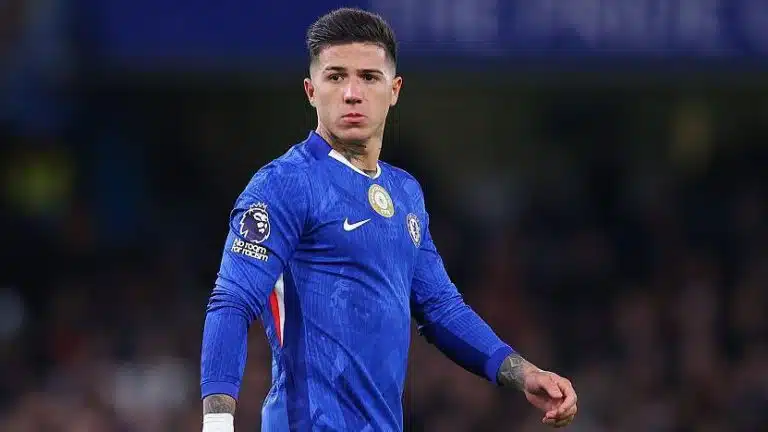
Manchester City are preparing an opening bid for Chelsea midfielder Enzo Fernandez as manager Enzo Maresca looks to rebuild his midfield before next week’s transfer deadline.
The Argentina international has emerged as a priority target for Maresca following several high-profile departures from the Etihad Stadium this summer. The 25-year-old also shares a strong relationship with his former Chelsea manager, who left Stamford Bridge on New Year’s Day before taking charge of City in June.
Chelsea know about City’s interest. Naija News reports that the Blues previously set an unofficial deadline for a potential deal and placed a minimum £120m valuation on Fernandez, but that deadline passed without an agreement.
City are now expected to return for the midfielder before the window closes. A successful move could make Fernandez one of the most expensive signings in Premier League history, behind only Liverpool’s £125 million deal for Alexander Isak.
The Premier League champions have already paid £116 million for Elliot Anderson from Nottingham Forest and could break their transfer record for a second time in the same window.
Maresca wants another midfielder after a major reshuffle in the department. Tijjani Reijnders joined Saudi Arabian club Al-Qadsiah for £52 million; Barcelona signed Rodri for £65 million; Newcastle agreed a £52 million deal for Nico Gonzalez; and Bernardo Silva left earlier in the summer before joining Real Madrid.
Fernandez’s future has remained under scrutiny since Chelsea’s Champions League elimination by Paris Saint-Germain in March. He and his agent, former PSG midfielder Javier Pastore, attracted interest from Real Madrid, although the Spanish giants later issued a statement denying any attempt to sign the midfielder.
Chelsea manager Xabi Alonso also revealed in July that he had held a private conversation with Fernandez, who joined the club from Benfica for £107m in 2023, but declined to disclose what they discussed.
The midfielder came on as a second-half substitute during Monday’s 3-2 win over Fulham and faced boos from home supporters over his role in England’s World Cup exit. After celebrating briefly with the travelling fans and his teammates, Fernandez headed straight down the tunnel at the final whistle.
Coventry sign Pinnock from Brentford

Meanwhile, Coventry City have completed the signing of Jamaica centre-back Ethan Pinnock from Brentford for an undisclosed fee, reported to be around £6m.
The 33-year-old joins the Sky Blues after six years with Brentford, where he made 216 appearances and scored 12 goals. He arrived at the West London club from Barnsley in 2019 and played an important role in their promotion to the Premier League.
Pinnock, however, lost his regular place in Brentford’s starting side and made only eight appearances in all competitions last season.
“I’m really excited to join Coventry City and continue my footballing journey with this great club,” Pinnock said.
“After 25 years, the club are back in the Premier League, and I know how much it must mean to everyone involved. I can’t wait to be part of it.”
Pinnock becomes Coventry’s 10th signing of the summer and their second defensive addition after Aurele Amenda arrived from Eintracht Frankfurt in July.
He also joins former Brentford teammate Frank Onyeka at Coventry. The Sky Blues have spent more than £100m this summer as they prepare for their return to the Premier League.
Chelsea make Martinez enquiries
Chelsea are also considering a move for Aston Villa goalkeeper Emiliano Martinez after making contact with the Argentina international’s representatives.
Villa could allow the 33-year-old to leave after signing Japan goalkeeper Zion Suzuki from Parma for around £30m earlier this month.
A move for Martinez could lead to further business between Chelsea and Villa. Chelsea signed Morgan Rogers for a club-record £117m, while Alejandro Garnacho moved in the opposite direction on an initial loan deal. Nicolas Jackson, valued at around £65m, could also join Villa and reunite with former manager Unai Emery.
The clubs have developed a strong transfer relationship and previously completed a deal widely described as a PSR swap, which took Ian Maatsen to Villa and Omari Kellyman to Chelsea.
Juventus also tried to sign Martinez earlier in the window, but the move collapsed amid concerns over a finger injury. The Italian club instead signed Tottenham goalkeeper Guglielmo Vicario on loan.
Chelsea’s interest comes amid growing concerns over Robert Sanchez’s recent performances. The Spaniard was beaten at his near post by Josh King against Fulham before spilling another effort into a dangerous area, allowing Gonzalo Garcia to score in Chelsea’s 3-2 win at Craven Cottage.
Chelsea’s second-choice goalkeeper Mike Penders, who returned from a successful loan spell at Strasbourg this summer, could start against Luton.

Manchester City midfielder Nico O’Reilly has been named the Professional Footballers’ Association Young Player of the Year for the 2025/26 season.
The 21-year-old was announced as the winner at the 53rd annual PFA Awards ceremony in Manchester, United Kingdom, on Tuesday.
O’Reilly emerged ahead of five other nominees after players voted for their preferred candidate in the category.
The other nominees were Manchester City teammate Rayan Cherki, Arsenal youngster Max Dowman, Bournemouth forward Junior Kroupi, Manchester United midfielder Kobbie Mainoo and Liverpool winger Rio Ngumoha.
The PFA Young Player of the Year award is determined by votes from professional footballers, with players recognising the outstanding young performers from the season.
O’Reilly enjoyed a breakthrough campaign with City, featuring in 53 matches across competitions and contributing directly to 15 goals. He impressed in both midfield and at left-back during the season.
His performances had already earned him the Premier League Young Player of the Season award, with the league describing the England international as one of the standout young players of the 2025/26 campaign.
O’Reilly was also instrumental in Manchester City’s domestic campaign, including scoring both goals in the club’s 2-0 victory over Arsenal in the Carabao Cup final.
His latest recognition makes him one of the young players to have enjoyed the biggest breakthrough seasons in English football, having established himself as an important member of Pep Guardiola’s squad.
O’Reilly’s victory also means Manchester City continue their strong record in the PFA Young Player of the Year category, with the club having produced previous winners including Leroy Sane, Raheem Sterling and Phil Foden.


Salary: Fresh Update Emerges On Payment To Nigerian Workers

Obasanjo’s Son Picks Side In 2027 Race