
Opinion
Trump Is Letting Putin Win

Every day without leadership from Washington means more bloodshed in Ukraine – and more cracks in global security.
Russian and Ukrainian delegations met in Istanbul for the second time in a month on June 2 to explore the possibility of a ceasefire. The talks lasted just over an hour and, once again, produced no meaningful progress. As with the May 16 negotiations, both sides claimed they had laid the groundwork for prisoner exchanges. But despite Ukraine’s offer to hold another meeting before the end of June, a deep and unbridgeable divide remains between Kyiv and Moscow.
More meetings are unlikely to change that. Russia continues to demand Kyiv’s capitulation to the full list of conditions President Vladimir Putin set at the war’s outset: Ukrainian neutrality, a government reshaped to suit Moscow’s interests, and the surrender of the Donetsk, Luhansk, Zaporizhia and Kherson regions. Between the two rounds of talks, Putin even raised the stakes, adding a demand for a “buffer zone” in northern Ukraine.
After Putin call, Trump says Russia, Ukraine will start ceasefire talks
end of list
Kyiv, meanwhile, remains resolute. It refuses to cede any territory and maintains that a full ceasefire along all fronts is a non-negotiable precondition for serious negotiations.
Still, both sides appear prepared to continue the diplomatic charade.
That’s because these talks are not truly about achieving peace or securing a lasting bilateral agreement. Neither side is genuinely negotiating with the other. Instead, both are using the forum to send messages to the United States – and to Donald Trump, in particular.

This dynamic persists despite Trump’s recent efforts to distance himself from the war he once claimed he could end within 24 hours of returning to the White House. That shift in rhetoric has been echoed by key figures in his administration. Vice President JD Vance and Secretary of State Marco Rubio, who just six months ago represented opposite ends of the Republican spectrum on Ukraine – with Vance nearly endorsing surrender to Putin, and Rubio among the Senate’s most vocal Ukraine hawks – have both signalled that Trump’s White House is no longer interested in mediating the conflict. Reflecting that disengagement, there was no high-level prenegotiation meeting between US and Ukrainian officials in Turkiye ahead of the latest talks, unlike those held in May.
Yet despite Rubio’s apparent reversal – likely intended to align with Trump – Ukraine still enjoys broad support in the US Senate, including from senior Republicans. A bipartisan bill aimed at codifying existing sanctions on Russia and imposing new ones – thereby limiting Trump’s power to roll them back – has garnered 81 Senate co-sponsors. The bill’s authors, Senators Lindsey Graham (R–South Carolina) and Richard Blumenthal (D-Connecticut), recently travelled to Kyiv to reaffirm their backing. Graham has suggested the bill could move forward in the coming weeks.
Still, Ukraine knows the bill stands little chance in the House of Representatives without Trump’s blessing. Despite Trump’s enduring animosity towards Ukrainian President Volodymyr Zelenskyy, Kyiv has recently adopted a more deferential posture, particularly after their disastrous February meeting in Washington. The Ukrainian government quickly signed and ratified the so-called “minerals deal” that Trump demanded last month. A subsequent meeting between the two leaders – held on the sidelines of Pope Francis’s funeral – was notably more productive.
So far, Kyiv’s strategy of appeasement has yielded little change in Trump’s approach. While Trump has occasionally hinted at taking a tougher stance on Putin – usually in response to particularly egregious Russian attacks on Ukrainian civilians – he consistently deflects when asked for specifics. For months, he has promised to reveal his plan for Ukraine “in about two weeks,” a vague assurance that remains unfulfilled. A new sanctions package reportedly prepared by his own team over a month ago still sits untouched.
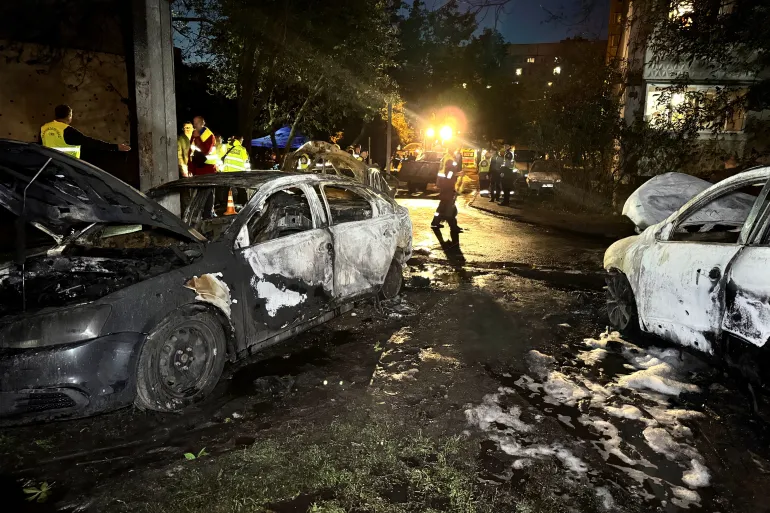
Hoping that mounting battlefield violence or bipartisan pressure from the US Senate might force Trump to act, Kyiv presses on with negotiations. Just one day before the Istanbul talks, Russia launched a record-setting overnight assault on Ukraine, firing more than 430 missiles and drones. Ukraine responded forcefully: on June 1, it conducted a large-scale drone strike deep inside Russia, destroying dozens of military aircraft, including airborne command platforms and nuclear-capable bombers.
Yet these high-profile losses have done little to shift Putin’s strategy. He continues to use the negotiation process as a smokescreen, providing Trump with political cover for his inaction. Meanwhile, Russian forces are advancing, making incremental gains in northern Ukraine’s Sumy region – where they hope to establish a “buffer zone” – and pushing forward on the southwestern Donetsk front.
Ultimately, Ukraine’s ability to strike deep inside Russian territory, including potentially vulnerable targets like oil infrastructure, may have more bearing on the war’s trajectory than any outcome from the Istanbul talks. Yet neither military escalation nor stalled diplomacy seems likely to bring a swift end to the conflict.
Trump says he abhors the civilian toll of this war, even if he stops short of blaming Putin for starting it. But it is Trump’s lack of strategy – his hesitation, his mixed signals, his refusal to lead – that is prolonging the conflict, escalating its brutality and compounding its risks for global stability.
Trump’s advisers may call it “peace through strength,” but what we are witnessing is paralysis through posturing. Russia’s delegation in Istanbul was never a step towards resolution – it was a diplomatic decoy, shielding a brutal military advance. If Trump refuses to back a serious escalation in pressure on Moscow – through expanded sanctions and renewed military aid to Kyiv – he won’t just fail to end the war. He will become complicit in prolonging it. The choice before him is clear: lead with resolve, or let history record that under his watch, weakness spoke louder than peace.
Aljazeera.com



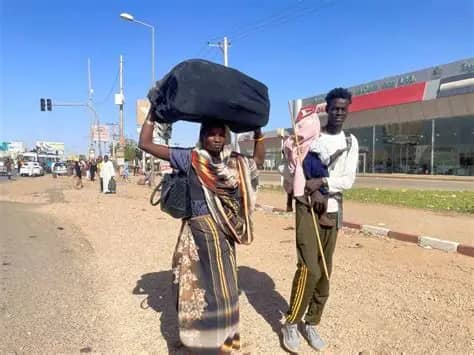
The war in Sudan is no longer a Sudanese war. What began on April 15, 2023 as a power struggle between the Sudanese Armed Forces (SAF) under General Abdel Fattah al-Burhan and the paramilitary Rapid Support Forces (RSF) led by Mohamed Hamdan Dagalo, has mutated into one of the world’s worst humanitarian catastrophes and a full-blown proxy conflict.
The numbers are staggering.
According to UN estimates, nearly 200,000 people have been killed. More than 12 million have been displaced internally and across borders. Famine is no longer a risk — it is a reality in Darfur and parts of Khartoum. UN agencies have warned repeatedly that conditions will worsen as the fighting escalates and humanitarian access shrinks.
And yet, no regional initiative from IGAD, no African Union roadmap, no UN Security Council resolution has managed to halt the violence. Control of the war has slipped beyond the two belligerents. Weapons, money, drones and mercenaries flow in from outside, ensuring that the battlefield evolves faster than diplomacy.
This week, Massad Boulos, the US President’s Senior Adviser for Arab and African Affairs, made a fresh appeal on X: “The warring parties in Sudan must accept a humanitarian truce as the first step toward lasting peace,” he wrote, adding that Sudanese people deserve “an opportunity to engage in a political process leading to peace in a united Sudan.” It was a familiar call. What is unfamiliar is what Washington is now alleging happened on the battlefield.
America’s Position: No Legitimate Government In Khartoum
According to PMnewsnigeria.com,
Washington’s assessment of Sudan’s political legitimacy is brutally frank. The US State Department has stated that neither the SAF nor the RSF, nor their leaders, constitute a legitimate and constitutional government. Both rule solely by force of arms, and therefore both are unqualified to govern the country.
In practice, however, the international system still treats the army as Sudan’s de facto official authority. Burhan’s administration in Port Sudan issues passports, sits in international meetings, and addresses the UN. This is despite the fact that he came to power through a military coup in 2021, derailing a civilian transition, and despite grave allegations of abuses including indiscriminate airstrikes, killings of civilians, and obstruction of humanitarian aid.
The State Department says it has repeatedly demanded an unconditional humanitarian truce and a commitment to an inclusive political dialogue that leads to civilian rule. Those demands have been ignored.
The diplomatic rupture deepened this week. Reuters reported that the United States refused to grant a visa to General Burhan ahead of his scheduled address to the 81st UN General Assembly on Thursday.
Sudanese sources said the move was linked to a US-backed ceasefire proposal that Port Sudan opposes. The decision, if confirmed, would mark the lowest point in US-Sudanese relations since the war began. A Sudanese source told Reuters that Foreign Minister Mohieddin Salem would deliver the speech instead.
PMnewsnigeria.com notes it is not an isolated sanction. In January 2025, the United States imposed sanctions on Burhan personally, accusing the SAF under his leadership of violating international humanitarian law, targeting civilians and civilian infrastructure, carrying out extrajudicial killings, and obstructing aid delivery. Yet Burhan remained a central interlocutor for international diplomats.
Dragging Sudan Into The Prohibited
It is against this background that the chemical weapons allegation has emerged — potentially the most serious escalation in the war’s legal and moral dimension.
Sudan has been a State Party to the Chemical Weapons Convention (CWC) since 1999.
The Convention bans the development, production, stockpiling and use of chemical weapons. Membership was supposed to close that chapter forever.
In May 2025, the US State Department declared that it had determined that the Sudanese Armed Forces had used chemical weapons against the RSF. Washington imposed sanctions on Sudan as a consequence. It did not stop there.
It brought the case to the Organisation for the Prohibition of Chemical Weapons (OPCW) in The Hague, calling on Sudan to comply fully with its obligations and to allow independent verification.
Khartoum responded with a national investigation that concluded no evidence of chemical weapons use had been found.
Washington rejected the national mechanism outright, stating that a self-investigation cannot substitute for independent international verification.
For months, the issue simmered. Then in September 2026, two major American newspapers — The Washington Post and The New York Times — published investigative reports citing classified documents and intelligence. Both alleged that the Sudanese army had established a stockpile of chemical weapons, including munitions and bombs containing chlorine gas, and had used them against RSF positions during the ongoing war.
The army categorically denies the allegations.
The OPCW is the only specialized international body technically capable of confirming such use through sample collection, chain-of-custody procedures and laboratory analysis. But its ability to operate inside an active war zone like Sudan is severely limited. So far, the independent international investigation has been minimal compared to the seriousness of the allegation.
The Justice Gap The World Cannot Ignore
This creates what analysts call a normalization of alleged war crimes. The RSF is rightly pursued for documented atrocities, including ethnically motivated killings in Darfur and widespread sexual violence. But the SAF, despite allegations of chemical weapons use, indiscriminate bombing, and the suspension of Burhan’s visa, continues to be presented as the legitimate voice of Sudan at the UN.
According to PMnewsnigeria.com, the United Nations International Independent Fact-Finding Mission for Sudan has tried to correct that imbalance. Its report states that both sides have committed serious violations of international law and that some drone operations could amount to war crimes. It also notes that recruitment of foreign fighters and external support networks are fueling the war, strengthening the military capabilities of both parties and enabling increasingly sophisticated operations with devastating civilian consequences.
The Mission reminds states linked to these supply chains that they have strict obligations under international law to exercise due diligence, investigate and halt illicit mercenary and supply networks operating from or through their territories, prevent violations, and enforce the UN arms embargo.
The central question for the international community is no longer whether Sudan’s war is dangerous — it is how dangerous it has become. If chemical weapons have indeed been used, Sudan has crossed a red line that implicates not just Burhan, but the global non-proliferation regime itself.

The Economic and Financial Crimes Commission (EFCC) has arrested Olori Halima Tejuoso in connection with an alleged N600 million fraud involving Mrs Mary Oluwaseye Sholoye and Mallam Ibrahim Gidado.
Tejuoso was arrested on Tuesday, September 15, 2026, after allegedly failing to honour an invitation by the Commission following her release on administrative bail.
Confirming the development, EFCC spokesman, Dele Oyewale, said Tejuoso was arrested after she allegedly jumped the administrative bail earlier granted to her by the Commission.
According to Oyewale, Gidado, who is also linked to the investigation, had been arrested earlier and arraigned before a court.
Tejuoso was reportedly accused of obtaining about N600 million from Sholoye by false pretence in connection with Gidado.
She had earlier appeared before the EFCC, where she reportedly told investigators that Gidado had allegedly defrauded her of the money she was accused of collecting from Sholoye.
However, following Gidado’s arrest and subsequent invitation by the Commission, Tejuoso reportedly failed to appear and could not be reached.
The EFCC subsequently declared her wanted on April 27, 2026, as part of its investigation into the alleged fraud.
Her arrest on September 15 brings to an end several months during which the Commission had been seeking her whereabouts.
The latest development is expected to allow the EFCC to proceed with further investigation into the circumstances surrounding the alleged N600 million transaction and Tejuoso’s relationship with the other parties involved.
The Commission’s position indicates that the matter involving Gidado has already progressed to court, while further legal steps concerning Tejuoso are expected to follow the completion of the ongoing investigation and necessary legal processes.
However, the allegations against Tejuoso remain unproven until determined by a court of competent jurisdiction.
All parties involved are presumed innocent unless and until found guilty by a court of law.
-Source: Daily Times Nigeria
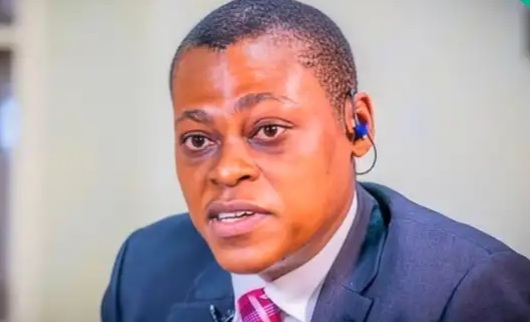
Arise Television co-host Rufai Oseni has faced backlash online after sharing the outcome of an online civic opinion poll that showed Peter Obi leading a hypothetical 2027 presidential field by a wide margin.
On Tuesday, September 15, 2026, Oseni posted a screenshot from the Nigeria Elections Intelligence System (NEIS) platform with a single-word caption: “Polling.”
The image showed Peter Obi of the Nigeria Democratic Congress (NDC) commanding 87.4 per cent of counted responses.
Atiku Abubakar of the African Democratic Congress (ADC) followed with 5.1 per cent, President Bola Ahmed Tinubu of the All Progressives Congress (APC) at 4.6 per cent, and Oluseyi Abiodun Makinde of the Allied Peoples Movement (APM) at 1.9 per cent.
The figures were drawn from more than 2,500 counted responses. NEIS describes itself as an independent, non-partisan election intelligence platform that conducts pre-election civic opinion polls and maps polling units across Nigeria. The results Rufai Oseni shared were from one such online exercise and carry no official electoral weight.
The post sparked immediate pushback. Several social media users argued that Rufai Oseni’s own follower base tilts heavily towards Peter Obi supporters, known as Obidients, making the poll’s findings a reflection of his audience rather than the broader Nigerian electorate.
Others pointed out that real elections are decided by voters at polling units, not by online participants, and that the results had no bearing on what a 2027 contest would actually look like. The debate unfolds as preparations for the 2027 general elections gain momentum.
Nigeria’s Independent National Electoral Commission (INEC) has already published a final list of presidential candidates, which includes Tinubu, Obi, Atiku and Makinde running on their respective platforms.
Check out Rufai Oseni’s X post about the results of the online 2027 presidential poll below: 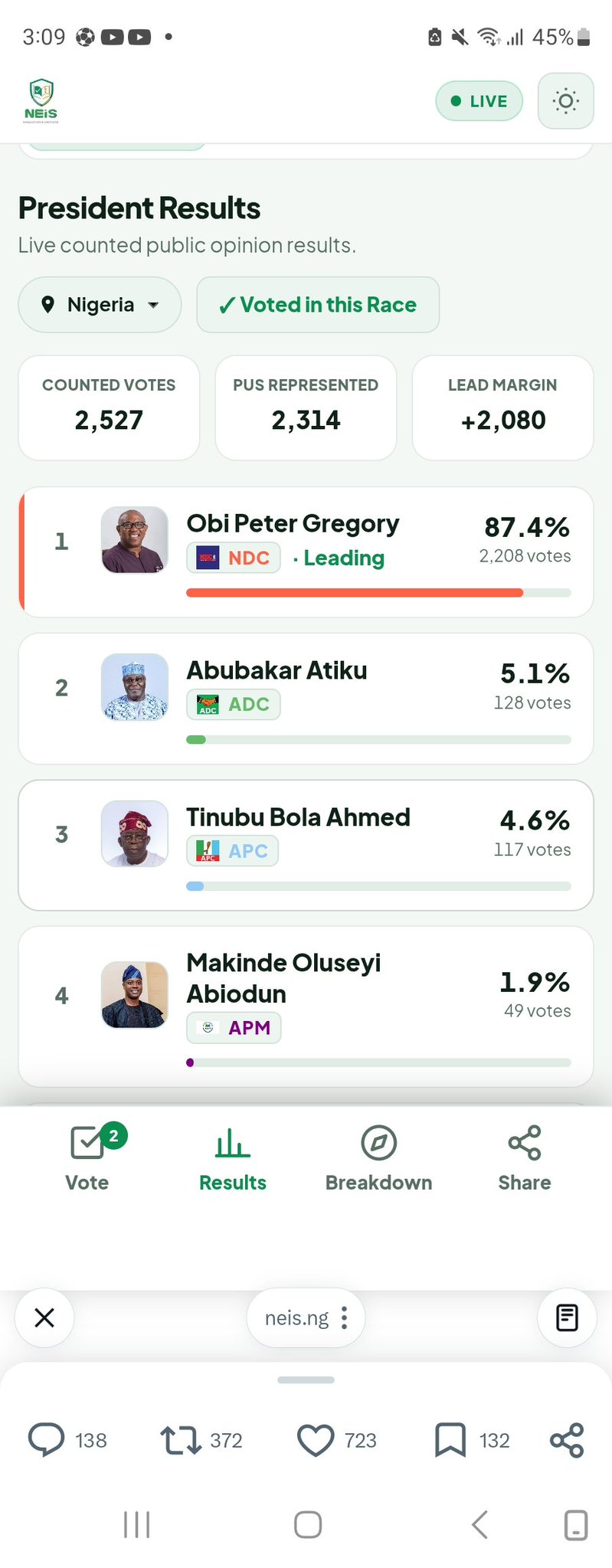
@gsbabatunde wrote: “Rufai will remain immature. You packed Obidense as followers and you are conducting Polls among them knowing fully well that the actual election involves real Voters and not Bots. What sort of ‘Childish Journalist’ are You???”
@Dailymercytye said: “They’ve start their online election gaslighting again. When they lose the real election, it’ll suddenly become a ‘rigged election’ to them and they’ll start shouting rigging.”
@adewalenisa reacted: “Same way you misled Olumide Akpata in Edo Governorship……”
@IsraelYusuf13 commented: “Twitter no be polling unit. Enough of all this online noise and let face our country”
@Commyhot1 wrote: “Online President PitObi @PeterObi,
@ruffydfire the online chairman has declared you winner oooh! Congratulations online president. Una go collect woto woto come January 16”
@AdekunleAdelaj1 stated: “Some people will call for presidential debate where this type of person will be one of them and say it’s going to be a fair one. It’s only Morons that can hold such beliefs. Online president i congratulate you as your OLOFO, chairman has declared you winner.”
@tman_musa added: “Rufai when you really want to wise up and understand online polls is not real life.”


Salary: Fresh Update Emerges On Payment To Nigerian Workers

Obasanjo’s Son Picks Side In 2027 Race