Petroleum marketers and truck owners have protested the Lagos State Government’s enforcement of a controversial N12,500 e-call-up levy on trucks operating along the Lekki-Epe corridor.
There are fears that the action may launch the country into another round of fuel scarcity.
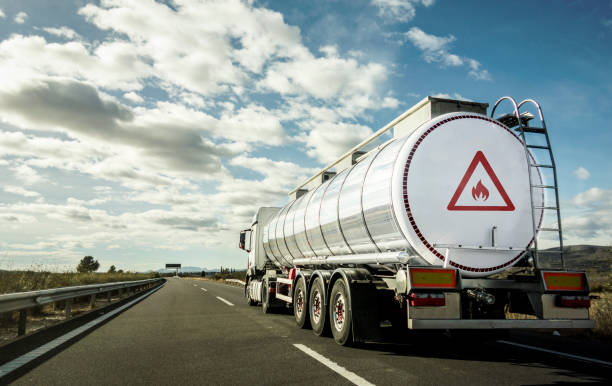
On Monday, members of the Independent Petroleum Marketers Association of Nigeria (IPMAN) and the National Association of Road Transport Owners (NARTO) withdrew haulage and fuel trucks from the corridor in rejection of the burdensome policy.
Stakeholders said the action raises serious concerns about fuel distribution in Lagos and other parts of the country, as the Lekki axis plays a strategic role in supplying petroleum products, particularly with the presence of the massive Dangote Refinery and associated facilities.
The protesters said the e-call-up levy—part of a public-private partnership (PPP) initiative—is being enforced without adequate infrastructure or stakeholder input.
According to them, the policy does not address any actual traffic congestion, which government officials have cited as the primary reason for its implementation.
Speaking, Dele Tajudeen, immediate past Chairman of IPMAN in the South-West, said all efforts to reach accord with the government fell flat
He added:“We have had several meetings, but the government has remained adamant,” Tajudeen said. “There is no gridlock along the corridor. So why this levy? This policy is not about solving a traffic problem—it’s about enriching private interests under the pretense of public benefit.”
He further argued that the funds from the levy are not being remitted directly to the state government but rather to private partners, raising questions about transparency.
“We already pay N7,000 at the toll gate. Now an additional N12,500 is being demanded. That’s N19,500 before we even load fuel. And this money, we hear, is going to a private account—not government. This is not sustainable.”
Truck owners warned that the cost burden will be transferred to consumers, worsening economic hardship in the country.
They also said new levy could ground many businesses in the fuel distribution chain due to the rising price of diesel, vehicle maintenance, and spare parts.
Gbenga Olubasusi, Chairman of NARTO at the Lekki Free Trade Zone, said: “Trailer tyres now cost over N700,000, and trucks that used to cost N4.5 million now go for over N40 million. We are already managing so much inflation. This new levy will drive up fuel prices and everything else.”
He also faulted the absence of basic facilities for truckers in the area.
He said:“There is no government trailer park here. We use private parks and pay between N3,000 and N5,000 daily. Now they want to charge us an additional N12,500 with nothing to show in return?”
Also, Comrade Wale Oladeinde, Zonal Secretary of NARTO Southwest, explained that the action is not a strike but a strategic withdrawal of services.
“This is not industrial action. We’re simply exercising our right to stop work under unfair conditions. The trucks are privately owned, and no one can force us to operate under such policies. If Lagos insists on this levy, fuel supply will suffer, and so will the economy.”
Lamenting, Lagos State NARTO Chairman, Kayode Odunowo, said the industry cannot absorb the additional costs.
“We are totally against this charge. We cooperated in Apapa years ago with similar promises from the government, but they failed to deliver. This time, we won’t play along.”
He warned that any disruption in truck movement would have a cascading effect on the national economy.
“Containers, fuel, food—all rely on trucks. When we stop, everything stops. No NARTO, no Nigeria.”
Olaniyan Yekini, Vice Chairman of IPMAN, Mosimi Depot, questioned the rationale behind levies without infrastructure.
“Other states like Oyo and Ogun have proper trailer parks. Lagos provides parks for buses but not trucks. Yet, they want us to pay more. Are we not part of Nigeria?”
Both IPMAN and NARTO waved an olive branch, imploring the Lagos State Government to suspend the levy and invite stakeholders for genuine consultations aimed at building practical, inclusive solutions that address transport challenges without punishing operators.
“We are not against regulation,” said Oladeinde, adding that :“But it has to be fair and transparent. You don’t tax a sector without providing the enabling environment.”
Independent.ng