
Opinion
Shola Fasure’s Response To Mayor Akinpelu: Deploying Lies To Attack Truths

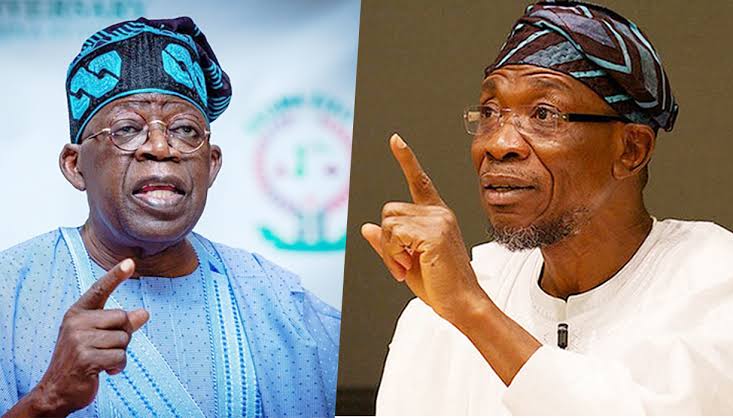
By Kola Odepeju
I doubt if Shola Fasure will ever cease to amuse the people in his blind defense of his paymaster, Ogbeni Rauf Aregbesola who was recently described as “Asín ti kò mò pé òhun n rùn” (the shrew that doesn’t know that it smells) by governor Adeleke of Osun for verbally attacking his benefactor, PBAT. But little can one be surprised about Fasure’s blind defense of his boss because he must justify his earnings and secondly, since he himself lacks integrity, it’s easy for him to always come out to come up with drivels in the name of defending his boss.
Fasure’s continued attempts to distort history only shows that he’s either a poor student of history or he’s simply being mischievous. But I like to believe more in the latter being in his DNA. Just like the leopard that doesn’t change its spots, so will a person given to mischief comes out regularly to ply his/her trade. This is the case with Fasure who himself doesn’t believe his own stories with respect to Tinubu/Aregbesola political relationship. Fasure has been trying so hard to distort history though; misinforming the public that Aregbesola is the one that made Tinubu but not vice-versa, he subjects himself to ridicule each time he comes out to turn history upside down and to do surgery to the already battered image of his boss.
One of Nigeria’s veteran journalists, Mayor Akinpelu came out recently to call a spade a spade by telling the public the truths about Aregbesola/Tinubu political relationship. Of course his narration wasn’t in any way different from what the general public had already known before about Aregbesola and his relationship with Tinubu. There was no addition or subtraction in what Mayor Akinpelu said about Aregbesola. All what he said about him are nothing but the truth. No attempt did he make – in the least – either to blackmail Aregbesola or tarnish his image. So my question is; when has saying the truth become an offense under the sky for Fasure to now come out again from his shell and be attacking Akinpelu, an apolitical person who was just doing his job as a social commentator?
Like Akinpelu said in his article, was Aregbesola not scruffy looking prior to his being catapulted by Tinubu? Wasn’t he a pauper before his path crossed with that of Tinubu? Was his usual and regular wear then not Jalamia? Wasn’t his car rickety and smoky like a locomotive? The point is that Aregbesola was a complete pauper before he met Tinubu, a fact known to so many people – except only Fasure – and a fact Aregbesola himself testified to in some occasions; that it was Tinubu that God used to uplift him. I recall here that Aregbesola said in one of our media meetings with him at the State House in Osogbo when he was governor that “if l had not met Tinubu, l would have also still be struggling like you people by now”.
Ogbeni Aregbesola had also said in a video which is in public domain that after God, he owes whatever he’s today to Tinubu. So only God knows where Fasure conjures his own side of the story from which l see as only tales by moonlight different from reality. His story can only be believed by fools and accepted by idiots.
Comparing Aregbesola’s case with that of Yemi Osibajo, Babafemi Ojudu and other names he mentioned in his write-up is preposterous and doesn’t align with common sense in the least. One, these are people who had recorded appreciable successes in their chosen careers and living comfortably before their paths crossed with Tinubu. They were accomplished professionals on their own as at the time their political relationships with Tinubu started; unlike Aregbesola who was a nobody by the time he met Tinubu. I say this without any fear of contradiction because l was on ground at Cresta Laurel where these people served on the transition committees set up by Tinubu then as the governor-elect.

Two, even though these people may have at one time or the other had disagreements with Tinubu, did they ever insult Tinubu as Aregbesola did? Did they display insolence to Tinubu like Rauf? Disagreements are normal in politics but attacking your God-sent benefactor is the most unwise and stupid thing to do by anybody. This is where Shola Fasure’s boss disappointed many of his admirers including this writer.
In conclusion, Shola Fasure in his warped thinking opined that “Batists have slavery in their DNA”. This, to me, is a fallacious opinion of a mind filled with ingratitude. Rather than proving Mayor Akinpelu wrong with evidence about what he (Akinpelu) said about Aregbesola, Fasure was busy attacking him and calling Batists names.
This is a fallacy of ad hominem. Of course Fasure cannot pretend not to know that politics is about hundred percent loyalty. It’s either you’re completely loyal or you take the exit door. Batists are loyal to Tinubu because he deserves it as he has proven to be a reliable and dependable leader. But if Fasure in his wrong perception of Batists as having slavish mentality in their DNA still holds on to this fallacy, then they’re by far better than Aregbesola’s followers who have ingratitude in their DNA just like their leader.
● Odepeju, newspaper columnist and political activist writes from Lagos.
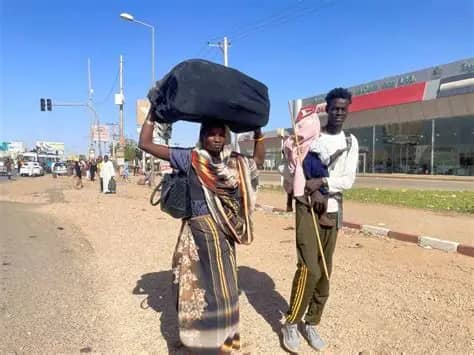
The war in Sudan is no longer a Sudanese war. What began on April 15, 2023 as a power struggle between the Sudanese Armed Forces (SAF) under General Abdel Fattah al-Burhan and the paramilitary Rapid Support Forces (RSF) led by Mohamed Hamdan Dagalo, has mutated into one of the world’s worst humanitarian catastrophes and a full-blown proxy conflict.
The numbers are staggering.
According to UN estimates, nearly 200,000 people have been killed. More than 12 million have been displaced internally and across borders. Famine is no longer a risk — it is a reality in Darfur and parts of Khartoum. UN agencies have warned repeatedly that conditions will worsen as the fighting escalates and humanitarian access shrinks.
And yet, no regional initiative from IGAD, no African Union roadmap, no UN Security Council resolution has managed to halt the violence. Control of the war has slipped beyond the two belligerents. Weapons, money, drones and mercenaries flow in from outside, ensuring that the battlefield evolves faster than diplomacy.
This week, Massad Boulos, the US President’s Senior Adviser for Arab and African Affairs, made a fresh appeal on X: “The warring parties in Sudan must accept a humanitarian truce as the first step toward lasting peace,” he wrote, adding that Sudanese people deserve “an opportunity to engage in a political process leading to peace in a united Sudan.” It was a familiar call. What is unfamiliar is what Washington is now alleging happened on the battlefield.
America’s Position: No Legitimate Government In Khartoum
According to PMnewsnigeria.com,
Washington’s assessment of Sudan’s political legitimacy is brutally frank. The US State Department has stated that neither the SAF nor the RSF, nor their leaders, constitute a legitimate and constitutional government. Both rule solely by force of arms, and therefore both are unqualified to govern the country.
In practice, however, the international system still treats the army as Sudan’s de facto official authority. Burhan’s administration in Port Sudan issues passports, sits in international meetings, and addresses the UN. This is despite the fact that he came to power through a military coup in 2021, derailing a civilian transition, and despite grave allegations of abuses including indiscriminate airstrikes, killings of civilians, and obstruction of humanitarian aid.
The State Department says it has repeatedly demanded an unconditional humanitarian truce and a commitment to an inclusive political dialogue that leads to civilian rule. Those demands have been ignored.
The diplomatic rupture deepened this week. Reuters reported that the United States refused to grant a visa to General Burhan ahead of his scheduled address to the 81st UN General Assembly on Thursday.
Sudanese sources said the move was linked to a US-backed ceasefire proposal that Port Sudan opposes. The decision, if confirmed, would mark the lowest point in US-Sudanese relations since the war began. A Sudanese source told Reuters that Foreign Minister Mohieddin Salem would deliver the speech instead.
PMnewsnigeria.com notes it is not an isolated sanction. In January 2025, the United States imposed sanctions on Burhan personally, accusing the SAF under his leadership of violating international humanitarian law, targeting civilians and civilian infrastructure, carrying out extrajudicial killings, and obstructing aid delivery. Yet Burhan remained a central interlocutor for international diplomats.
Dragging Sudan Into The Prohibited
It is against this background that the chemical weapons allegation has emerged — potentially the most serious escalation in the war’s legal and moral dimension.
Sudan has been a State Party to the Chemical Weapons Convention (CWC) since 1999.
The Convention bans the development, production, stockpiling and use of chemical weapons. Membership was supposed to close that chapter forever.
In May 2025, the US State Department declared that it had determined that the Sudanese Armed Forces had used chemical weapons against the RSF. Washington imposed sanctions on Sudan as a consequence. It did not stop there.
It brought the case to the Organisation for the Prohibition of Chemical Weapons (OPCW) in The Hague, calling on Sudan to comply fully with its obligations and to allow independent verification.
Khartoum responded with a national investigation that concluded no evidence of chemical weapons use had been found.
Washington rejected the national mechanism outright, stating that a self-investigation cannot substitute for independent international verification.
For months, the issue simmered. Then in September 2026, two major American newspapers — The Washington Post and The New York Times — published investigative reports citing classified documents and intelligence. Both alleged that the Sudanese army had established a stockpile of chemical weapons, including munitions and bombs containing chlorine gas, and had used them against RSF positions during the ongoing war.
The army categorically denies the allegations.
The OPCW is the only specialized international body technically capable of confirming such use through sample collection, chain-of-custody procedures and laboratory analysis. But its ability to operate inside an active war zone like Sudan is severely limited. So far, the independent international investigation has been minimal compared to the seriousness of the allegation.
The Justice Gap The World Cannot Ignore
This creates what analysts call a normalization of alleged war crimes. The RSF is rightly pursued for documented atrocities, including ethnically motivated killings in Darfur and widespread sexual violence. But the SAF, despite allegations of chemical weapons use, indiscriminate bombing, and the suspension of Burhan’s visa, continues to be presented as the legitimate voice of Sudan at the UN.
According to PMnewsnigeria.com, the United Nations International Independent Fact-Finding Mission for Sudan has tried to correct that imbalance. Its report states that both sides have committed serious violations of international law and that some drone operations could amount to war crimes. It also notes that recruitment of foreign fighters and external support networks are fueling the war, strengthening the military capabilities of both parties and enabling increasingly sophisticated operations with devastating civilian consequences.
The Mission reminds states linked to these supply chains that they have strict obligations under international law to exercise due diligence, investigate and halt illicit mercenary and supply networks operating from or through their territories, prevent violations, and enforce the UN arms embargo.
The central question for the international community is no longer whether Sudan’s war is dangerous — it is how dangerous it has become. If chemical weapons have indeed been used, Sudan has crossed a red line that implicates not just Burhan, but the global non-proliferation regime itself.
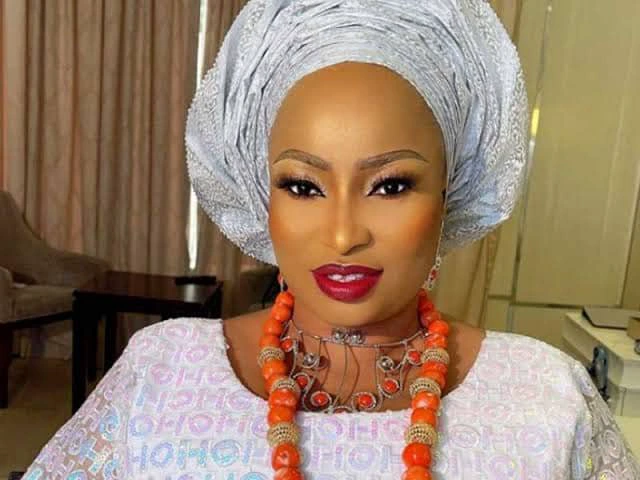
The Economic and Financial Crimes Commission (EFCC) has arrested Olori Halima Tejuoso in connection with an alleged N600 million fraud involving Mrs Mary Oluwaseye Sholoye and Mallam Ibrahim Gidado.
Tejuoso was arrested on Tuesday, September 15, 2026, after allegedly failing to honour an invitation by the Commission following her release on administrative bail.
Confirming the development, EFCC spokesman, Dele Oyewale, said Tejuoso was arrested after she allegedly jumped the administrative bail earlier granted to her by the Commission.
According to Oyewale, Gidado, who is also linked to the investigation, had been arrested earlier and arraigned before a court.
Tejuoso was reportedly accused of obtaining about N600 million from Sholoye by false pretence in connection with Gidado.
She had earlier appeared before the EFCC, where she reportedly told investigators that Gidado had allegedly defrauded her of the money she was accused of collecting from Sholoye.
However, following Gidado’s arrest and subsequent invitation by the Commission, Tejuoso reportedly failed to appear and could not be reached.
The EFCC subsequently declared her wanted on April 27, 2026, as part of its investigation into the alleged fraud.
Her arrest on September 15 brings to an end several months during which the Commission had been seeking her whereabouts.
The latest development is expected to allow the EFCC to proceed with further investigation into the circumstances surrounding the alleged N600 million transaction and Tejuoso’s relationship with the other parties involved.
The Commission’s position indicates that the matter involving Gidado has already progressed to court, while further legal steps concerning Tejuoso are expected to follow the completion of the ongoing investigation and necessary legal processes.
However, the allegations against Tejuoso remain unproven until determined by a court of competent jurisdiction.
All parties involved are presumed innocent unless and until found guilty by a court of law.
-Source: Daily Times Nigeria
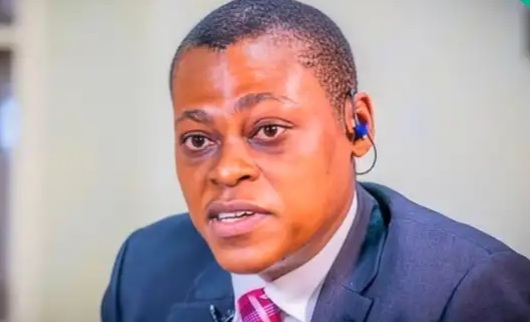
Arise Television co-host Rufai Oseni has faced backlash online after sharing the outcome of an online civic opinion poll that showed Peter Obi leading a hypothetical 2027 presidential field by a wide margin.
On Tuesday, September 15, 2026, Oseni posted a screenshot from the Nigeria Elections Intelligence System (NEIS) platform with a single-word caption: “Polling.”
The image showed Peter Obi of the Nigeria Democratic Congress (NDC) commanding 87.4 per cent of counted responses.
Atiku Abubakar of the African Democratic Congress (ADC) followed with 5.1 per cent, President Bola Ahmed Tinubu of the All Progressives Congress (APC) at 4.6 per cent, and Oluseyi Abiodun Makinde of the Allied Peoples Movement (APM) at 1.9 per cent.
The figures were drawn from more than 2,500 counted responses. NEIS describes itself as an independent, non-partisan election intelligence platform that conducts pre-election civic opinion polls and maps polling units across Nigeria. The results Rufai Oseni shared were from one such online exercise and carry no official electoral weight.
The post sparked immediate pushback. Several social media users argued that Rufai Oseni’s own follower base tilts heavily towards Peter Obi supporters, known as Obidients, making the poll’s findings a reflection of his audience rather than the broader Nigerian electorate.
Others pointed out that real elections are decided by voters at polling units, not by online participants, and that the results had no bearing on what a 2027 contest would actually look like. The debate unfolds as preparations for the 2027 general elections gain momentum.
Nigeria’s Independent National Electoral Commission (INEC) has already published a final list of presidential candidates, which includes Tinubu, Obi, Atiku and Makinde running on their respective platforms.
Check out Rufai Oseni’s X post about the results of the online 2027 presidential poll below: 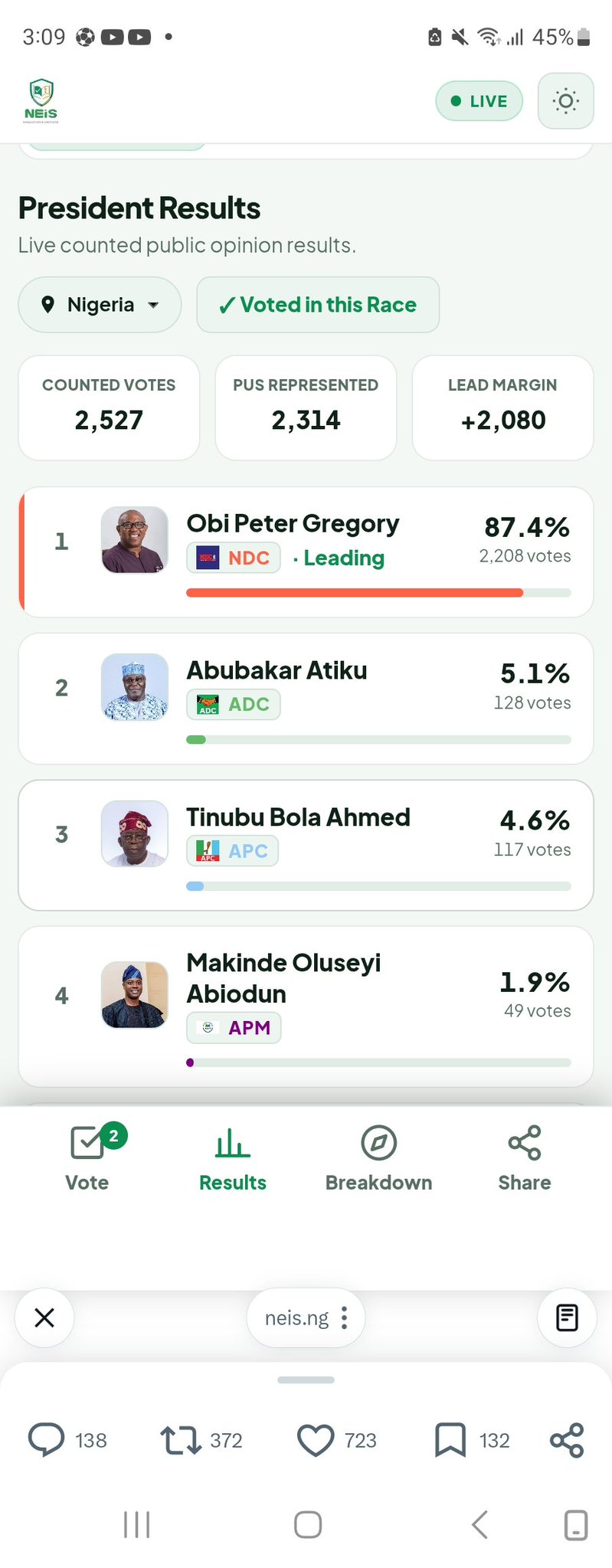
@gsbabatunde wrote: “Rufai will remain immature. You packed Obidense as followers and you are conducting Polls among them knowing fully well that the actual election involves real Voters and not Bots. What sort of ‘Childish Journalist’ are You???”
@Dailymercytye said: “They’ve start their online election gaslighting again. When they lose the real election, it’ll suddenly become a ‘rigged election’ to them and they’ll start shouting rigging.”
@adewalenisa reacted: “Same way you misled Olumide Akpata in Edo Governorship……”
@IsraelYusuf13 commented: “Twitter no be polling unit. Enough of all this online noise and let face our country”
@Commyhot1 wrote: “Online President PitObi @PeterObi,
@ruffydfire the online chairman has declared you winner oooh! Congratulations online president. Una go collect woto woto come January 16”
@AdekunleAdelaj1 stated: “Some people will call for presidential debate where this type of person will be one of them and say it’s going to be a fair one. It’s only Morons that can hold such beliefs. Online president i congratulate you as your OLOFO, chairman has declared you winner.”
@tman_musa added: “Rufai when you really want to wise up and understand online polls is not real life.”


Salary: Fresh Update Emerges On Payment To Nigerian Workers

Obasanjo’s Son Picks Side In 2027 Race