
Business
Updated: Meet The Dozie Brothers Who ‘Left’ Diamond Bank to Start Different Banks

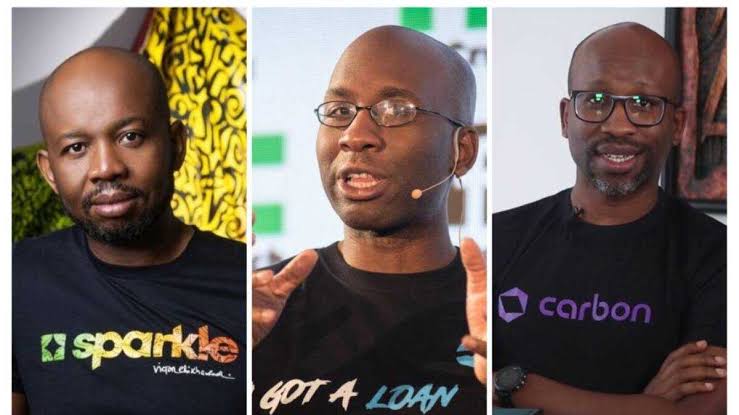
Uzoma Dozie is the most popular of his siblings, but the others in his family have also shown a desire for banking
Like Uzoma, Chijioke and Ngozi are running their banking industry projects operating in the fintech ecosystem
Uzoma went on to launch a digital Microfinance Bank named Sparkle after he left Diamond Bank as its chief executive
They grew up in an environment where banking was all they knew. From seeing their father, Pascal Dozie, pilot the affairs of one of the most visible banks in Nigeria, Uzoma, Chijioke and Ngozi Dozie, the sons of the erstwhile Diamond Bank and MTN Nigeria chairman, now run separate shows in the banking industry.
Pascal Dozie founded Diamond Bank in 1990 to provide financial services to underserved communities and support small and medium-sized enterprises in Nigeria, particularly in the southeast.
Under his visionary leadership, Diamond Bank grew from a modest operation into one of Nigeria’s most respected financial institutions.
As the bank’s CEO until 2006 and later as Chairman, Dozie emphasised innovation, professionalism, and customer service.

His leadership helped Diamond Bank expand both locally and internationally.
In 2019, the bank merged with Access Bank, marking the end of an era but cementing Dozie’s legacy as a pioneer in Nigeria’s modern banking landscape.
Tongues wagged when Access Bank, under the leadership of Uzoma Dozie, took over Diamond Bank, making many believe the Dozies must have sold common patrimony to a stronger competitor.
It is not clear where Chijioke and Ngozi were at the time the landmark decision to hand over their father’s sweat, as many would call it, was made.
However, it was clear that Chijioke and Ngozi were invested in banking, like Uzoma, who was taunted for selling their father’s inheritance.
Maybe they were led by the desire to cut their teeth in Nigeria’s highly competitive banking industry.
The question of whether selling Diamond Bank to Access Bank was the best idea is no longer essential. What’s important is that the three siblings are still very much invested in banking, each making giant strides in their personal space.
Carbon Finance, founded by Chijioke Dozie, is in its 12th year with a promise to transform the banking industry.
Digital banks want to make banking more accessible and flexible for customers.
According to the Guardian, Carbon Finance was initially set up as a lending company with over a million users across Nigeria and operates in two African countries.
It began operations in 2012 as One Credit, a consumer lender. In 2016, the firm became a digital lender through its app, Paylater.
Chijioke Dozie, the co-founder and CEO of Carbon Finance, said the company seeks to focus on its customers’ needs and adapt to market demands.
Ngozi Dozie, also a co-founder, said that the company’s newly launched product gives its customers the flexibility to shop when they want at zero per cent interest rates. In 2019, the bank processed over $240 million in payments.
Uzoma Dozie – Sparkle MFB
Uzoma Dozie has remained in banking after exiting Diamond Bank as Managing Director/Chief Executive Officer. Diamond Bank was sold or merged with Access Bank, depending on which side of the divide you belong to.
Uzoma founded Sparkle Microfinance Bank, operating as a fintech company. In October 2021, his latest invention raised $3.1 million to expand operations.
Uzoma told TechCrunch that they do not see their customers from accounts, payments, deposits or credit angles but from how they can help them do what they want to do at any time.
He said the bank wanted to provide Nigerians with financial, lifestyle and business support services.
The bank launched Sparkle Business in April last year to acquire several underserved users from small and medium businesses.

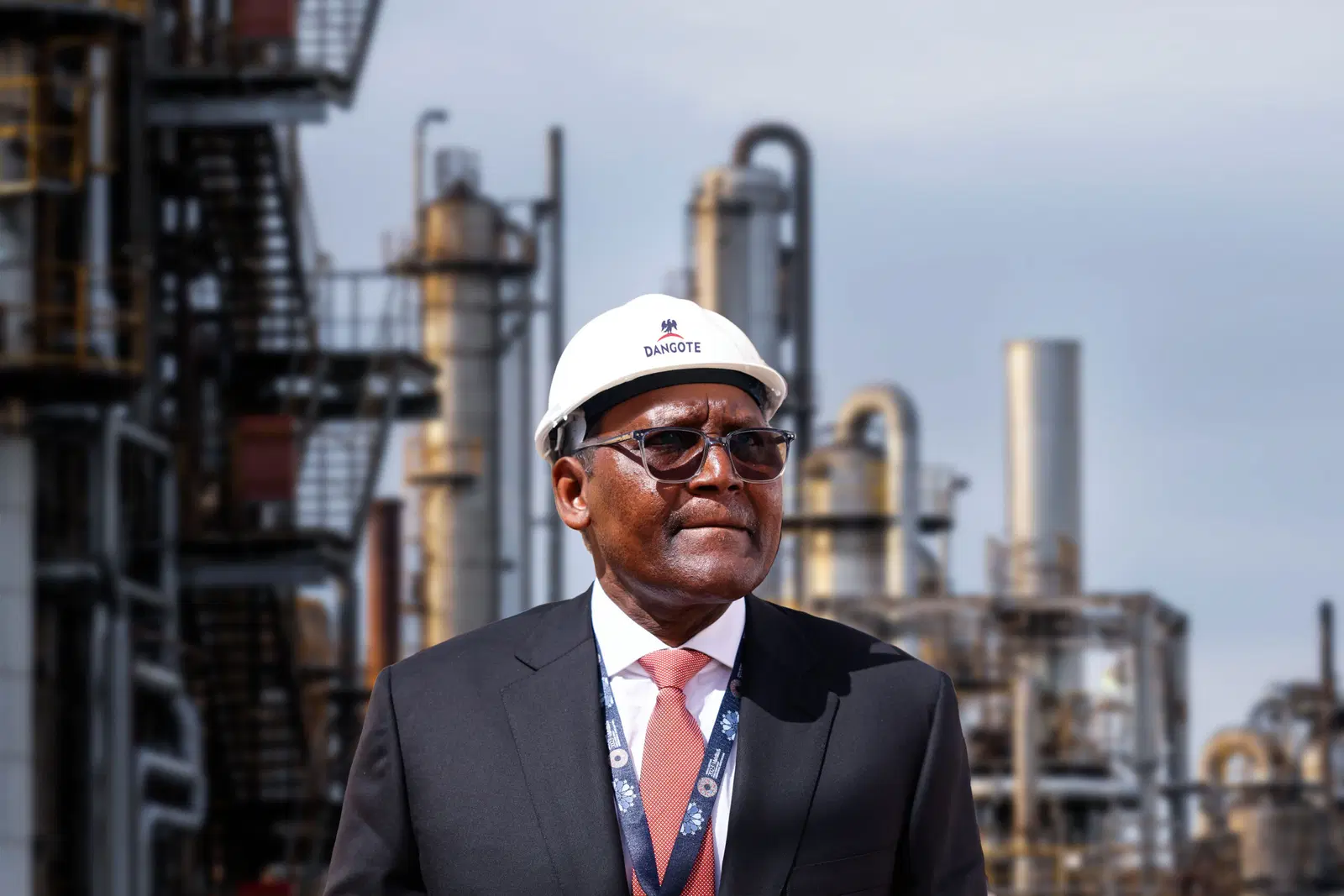
Alhaji Aliko Dangote, President and Chief Executive Officer of Dangote Industries Limited, has said the Initial Public Offering, IPO, of Dangote Petroleum Refinery and Petrochemicals, FZE, would democratise wealth creation by giving Nigerians and investors globally an opportunity to own shares in one of Africa’s major industrial projects.
Dangote stated this yesterday at the “Facts Behind the Offer” presentation and opening gong ceremony for the refinery’s IPO in Lagos, where the Nigerian Exchange Limited, NGX, formally opened the N2.2 trillion offer.
The IPO comprises 4.1 billion new ordinary shares offered at N525 per share, with a minimum subscription of 10 shares valued at N5,250. The offer is scheduled to close on October 13, subject to the terms contained in the prospectus.
Describing the offer as a historic moment for Nigeria’s capital market, the Dangote Group and Africa, Dangote said: “It would enable ordinary Nigerians and investors globally to own shares in one of Africa’s major industrial projects.
“What initially belongs to a country, begins in a deeper sense, now belongs to the people. Today is such a moment; today is a historic day
“The IPO is not simply about listing a company but creating a new possibility for Nigeria and Africa by broadening ownership of a major industrial asset.
“The decision to offer shares to the public was driven by the desire to allow more people participate in and benefit from the prosperity created by the refinery.
“An asset of this magnitude should not create value for only a very few people. It should create value for millions of people, not only Nigerians, but all over the world.”
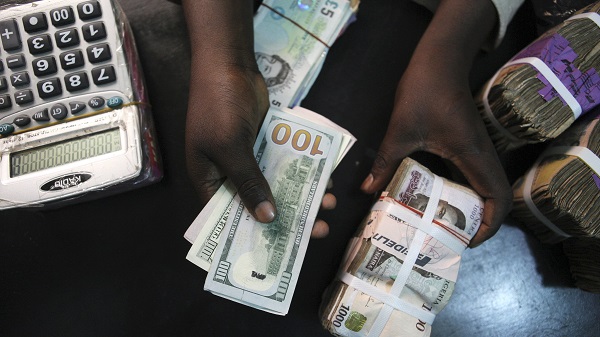
The Nigerian currency, Naira (₦), continued its battle against the United States dollar at the official foreign exchange market on Saturday.
Daily Voice reports that data from the Central Bank of Nigeria (CBN) showed that the local currency sold at ₦1,321.2160/1$ on Sunday.
The latest rate is the same as Saturday’s rate of ₦1,321.2160/1$.
At the parallel market (black market), however, the naira closed on Sunday at ₦1,400 to the dollar.
The offers by commercial banks, Bureau de Change (BDC) operators, and other foreign exchange dealers may, however, differ from the reference rates due to transaction margins and prevailing demand and supply conditions.
Market participants will continue to monitor foreign exchange inflows, demand for dollars, and CBN policies for indications of whether the naira can sustain its gains through the month.
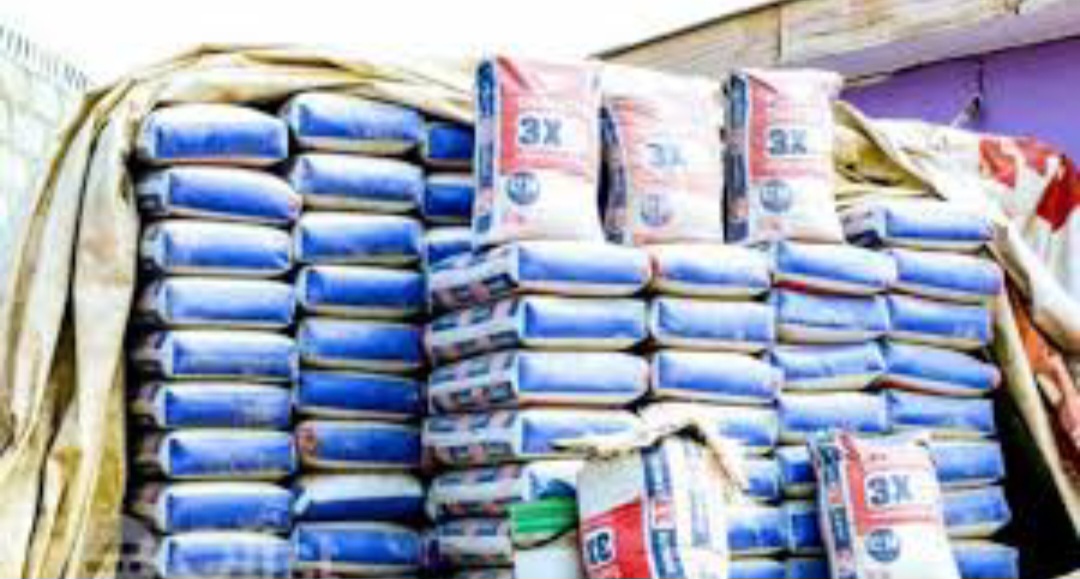
Cement prices in Nigeria remain elevated, with a 50kg bag selling for between ₦12,000 and ₦15,000 in many markets, putting further pressure on builders, contractors and Nigerians planning construction projects.
The latest market data shows that although some brands are currently available below the ₦15,000 mark, the industry remains significantly more expensive than it was at the end of 2025 and early 2026.
Recent market quotations show the following indicative prices for a 50kg bag:
Note: prices may vary by location and transportation costs.
These figures are based on a September 1 market report and can vary depending on location, transportation costs, dealer margins and supply conditions.
However, July industry data painted a more expensive picture. CementNet reported retail prices of ₦12,000 to ₦15,000, with Dangote selling for about ₦13,000–₦15,000, BUA at ₦12,000–₦14,500, and HBM Nigeria, formerly Lafarge Africa, at ₦12,000–₦13,500.
The latest figures suggest that cement prices may have eased from the highest quotations seen earlier in the year, but the broader trend remains upward.
In July, The Guardian reported that a 50kg bag typically sold for ₦12,500–₦15,000 across major markets including Lagos, Abuja and Abia.
The Federal Competition and Consumer Protection Commission (FCCPC) also reported that prices had reached between ₦13,000 and ₦15,000 in some locations during the first half of 2026.
This means the current ₦12,000–₦14,000 quotations for several major brands should be viewed as some market-level moderation rather than a broad collapse in cement prices.
Why cement remains high
High energy and transportation costs continue to weigh heavily on the industry. Cement manufacturing requires significant amounts of energy, while moving cement from factories and depots to retail markets adds further costs.
Location is also playing an important role. Buyers in areas farther from production centres can pay substantially more because of haulage and distribution expenses.
The situation is particularly significant because Nigeria has substantial cement production capacity, yet retail prices remain high. The Guardian reported that domestic production exceeds consumption, with surplus output exported to neighbouring countries.


Refinery: Our N2.2trn IPO’ll Democratise Wealth Creation —Dangote

VIDEO: ‘I Was Just Being Myself’ – Poco Lee Breaks Silence After Release From UK Prison

INEC: 52 Senators Lose Return Ticket To 11th National Assembly

Former Super Eagles Star Loses Life Savings, Duped By A Pastor of ₦1.2 Billion

I’m A Married Man, I Can Never Get Myself Involved With Such A Thing, Delta Gov Aide Reveals Why He Offered Comfort ₦500,000 Job

Lagos Imposes ₦250,000 Fine For Illegal Waste Disposal

-

 News2 days ago
Nigerian Gov Declares Public Holiday
-

 Politics2 days ago
2027: INEC Final List Sets Off Senate Race
-
 News2 days ago
2027 Budget: FG Gives MDAs September 18 Deadline
-

 News2 days ago
Terrorists kill Nine Passengers, Six Others In Plateau Attack
-
 News2 days ago
Anambra Still Repaying Loans Borrowed Under Peter Obi – Soludo Govt
-
 Politics1 day ago
INEC: 52 Senators Lose Return Ticket To 11th National Assembly
-
 Uncategorized1 day ago
VIDEO: ‘I Was Just Being Myself’ – Poco Lee Breaks Silence After Release From UK Prison
-
 Business1 day ago
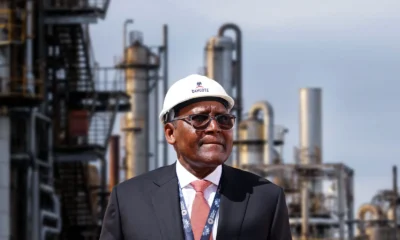
Refinery: Our N2.2trn IPO’ll Democratise Wealth Creation —Dangote