
News
ASUU Rejects Tinubu’s Pay Rise Offer

The ongoing salary renegotiation between the Federal Government and the Academic Staff Union of Universities (ASUU) may suffer another setback as the union has rejected the proposed 35 per cent pay increase for lecturers.
All 89 ASUU branches in public universities are said to have voted against the offer at the union’s recent National Executive Council (NEC) meeting held in Abuja.
Naija News reports that the rejection raises concerns about a possible breakdown in discussions between the government’s re-negotiation team and the university lecturers’ union.
ASUU President, Prof. Chris Piwuna, confirmed the development, explaining that the union remains firm on the salary structure recommended by the former government re-negotiation committee led by Prof. Nimi Briggs.
The recent offer by the Federal Government to us was a 35 per cent increase. When we had our meeting to suspend the warning strike, none of the 89 branches accepted the 35 per cent increase,” Piwuna told Daily Sun.
“All the 89 branches of ASUU in Nigeria rejected the 35 per cent increase. So, it’s a non-starter for us. We have Prof. Nimi Briggs’ benchmark, which we are discussing with them in the team, and we believe that’s what they should use.”
Naija News reports that the Nimi Briggs committee, which concluded its work in 2022, recommended a new salary scale for university lecturers, including a monthly pay of ₦1.2 million for professors in public universities.
The report, however, was shelved by the government. Currently, professors in Nigeria’s public universities earn less than ₦500,000 per month, less than half of what was proposed.
The union maintains that implementing the Briggs report is crucial to restoring dignity to the teaching profession and halting the exodus of academic talent from Nigeria’s university system.
In 2022, the Committee of Vice-Chancellors of Nigerian Universities (CVCNU) had recommended a compromise salary of ₦800,000 for professors, representing a 50 per cent increase, as against the ₦1.2 million earlier proposed by the Briggs panel.
That recommendation was also not implemented by the Federal Government, further widening the gap between the two parties.
With ASUU insisting on the Nimi Briggs template and rejecting the government’s 35 per cent offer, analysts fear that the ongoing renegotiation could reach a dead end, potentially setting the stage for renewed industrial unrest in the tertiary education sector.
Union leaders have repeatedly warned that without fair remuneration and improved working conditions, the nation’s universities will continue to lose qualified lecturers to better-paying institutions abroad.
For now, the ball appears to be in the Federal Government’s court as the academic union stands its ground on a deal it says reflects both economic realities and the true value of intellectual labour.

The US has deployed security agents to Nigeria, focusing on combating terrorism, with increased collaboration between American and Nigerian forces. President Donald Trump ordered airstrikes on insurgents amid allegations of religious persecution in Nigeria. Nigeria faces escalating threats from ISIS-linked terrorists and criminal gangs, complicating security efforts in the West African nation.
Washington, USA – The United States (US) has sent a small team of troops to Nigeria, Dagvin Anderson, the general in charge of America’s command for Africa, disclosed on Tuesday, February 3, 2026. As reported by Reuters, this is the first acknowledgement of US forces on the ground since Washington struck Nigeria by air on Christmas Day 2025.
Recall President Donald Trump ordered airstrikes on what he described as Islamic State (ISIS) targets in Nigeria in December 2025 and said there could be more US military action there. The US had been conducting surveillance flights over the country from Ghana since at least late November 2025.
Anderson, a top general, stated that the US team was sent after both countries agreed that more needed to be done to combat the terrorist threat in West Africa. Anderson told newsmen during a press briefing on Tuesday, February 3, 3026: “That has led to increased collaboration between our nations to include a small US team that brings some unique capabilities from the United States.” The military expert did not, however, provide further details about the scope and size of their mission.
On his part, Christopher Musa, Nigeria’s minister of defence, confirmed that a team was working in the African nation but did not provide further details. Speaking in the same vein, a former US official disclosed that America’s team appeared to be heavily involved in intelligence gathering and enabling Nigerian forces to strike terrorist-affiliated groups.
Dailyvoice.ng reports that Nigeria has come under intense pressure from Washington to act after President Trump accused the West African nation of failing to protect Christians from Islamist militants operating in the core north. The Nigerian government denies any systematic persecution of Christians, saying it is targeting Islamist fighters and other armed groups that attack both Christian and Muslim civilians.
The US launched “powerful and deadly” strikes against militants linked to the Islamic State group (IS) in north-western Nigeria, where militants have sought to establish a foothold. Trump had earlier designated Nigeria a country of particular concern over alleged Christian genocide.
Trump told Politico he ordered the December 25, 2025, strikes as “a Christmas present”. Camps allegedly run by the terrorist groups in Sokoto State were reportedly hit near the border with Niger, the US military said. Casualty numbers were not clear, but US officials said the terrorists were killed. Yusuf Tuggar, minister of foreign affairs, told the BBC that it was a “joint operation” and had “nothing to do with a particular religion”.
Trump told Politico otherwise in an interview.
The American leader said of the airstrikes:
“They were going to do it earlier. And I said, ‘nope, let’s give a Christmas present.’ They didn’t think that was coming, but we hit them hard. Every camp got decimated.” The US military said an “initial assessment” suggested “multiple” fatalities in Sokoto State. However, a special report by HumAngle in January 2026 described the attack as “performative,” with some local conflict and terrorism experts saying the airstrike largely failed to achieve its publicly stated mission.
Meanwhile, General Anderson said that President Bola Tinubu’s administration is working closely with American forces to eliminate terrorists in the West African region. Anderson, the commander of Africa Command (AFRICOM), said Nigeria was a shining example among other African nations leveraging the US’ sophisticated arsenal and “unique capabilities” in intelligence-gathering to exterminate the Boko Haram and the Islamic State – West Africa Province (ISWAP) insurgents.
The US general made the statement at the press briefing on Tuesday, February 3, 2026, when asked about AFRICOM’s counterterrorism efforts in African partner countries. He noted that the command wanted to expand operations in West Africa, using Nigeria as a case study.
AUDIO FILES available now from today’s virtual press briefing with General Dagvin R.M. Anderson, U.S. Air Force Commander, @USAfricaCommand on AFRICOM priorities on the African continent. #AFHubPress
English:https://t.co/m0Nax6gZV2
French:https://t.co/V8gziCkUD3 pic.twitter.com/MJQpDbMvdF
— US Africa Media Hub (@AfricaMediaHub) February 3, 2026
In the north, Boko Haram, Nigeria’s homegrown armed group, in 2025, mounted a major resurgence. The group took up arms in 2009 to fight Western education and impose its radical version of Islamic law. Meanwhile, criminal groups specialising in kidnapping for ransom and looting, commonly referred to as bandits, are also dominant. In recent months, armed group fighters have repeatedly overrun military outposts, mined roads with bombs and raided civilian communities, raising fears of a possible return to the peak insecurity of a decade ago.
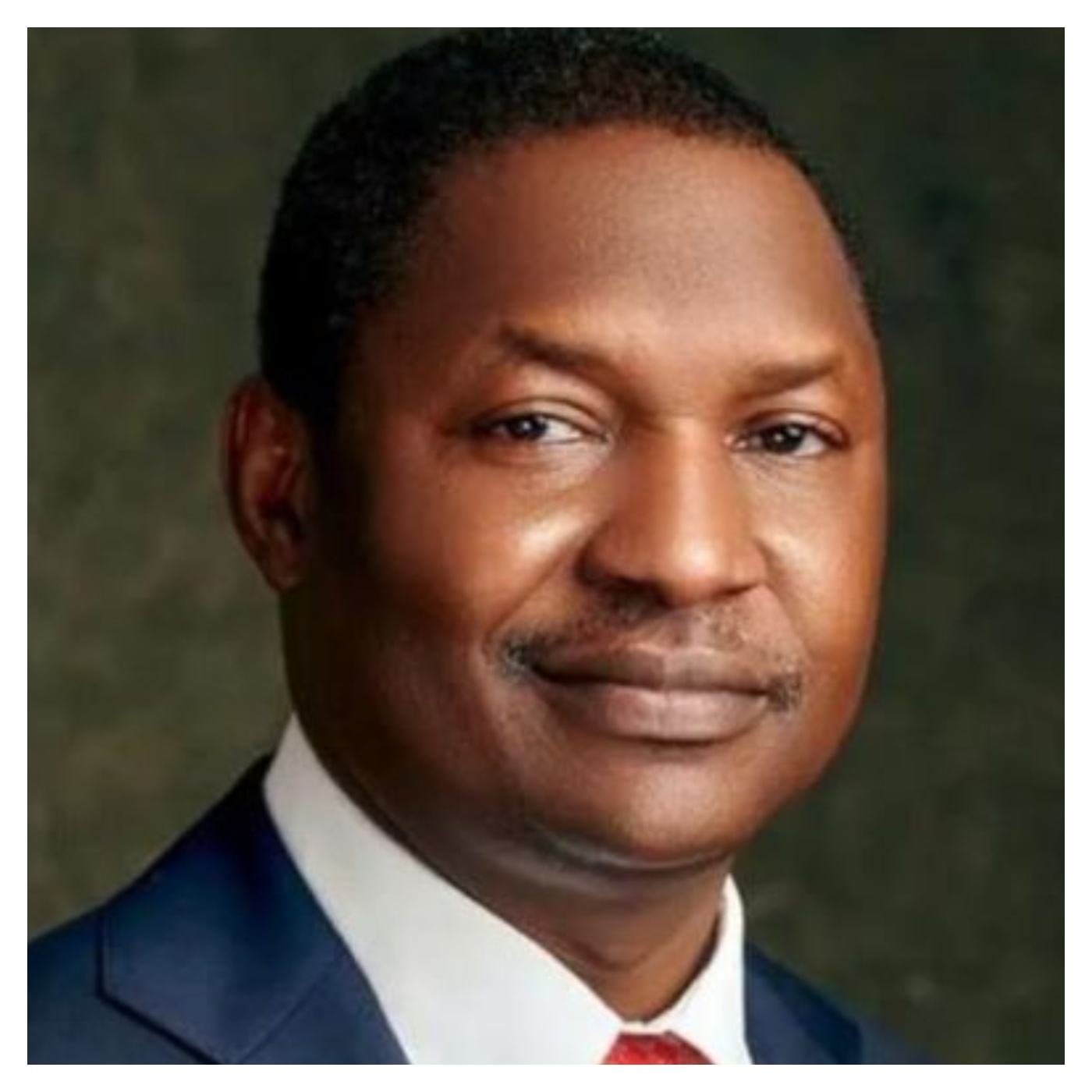
The Department of State Services, DSS, on Tuesday arraigned former Attorney General of the Federation, AGF, Abubakar Malami and his son, Abdulaziz, over alleged terrorism financing, aiding and abetting terrorism, as well as illegal possession of firearms.
Malami and his son were arraigned before Justice Joyce Abdulmalik of the Federal High Court, Abuja.
The ex-AGF and his son pleaded not guilty to the allegations levelled against them by the Nigerian government, through the DSS. Thereafter, the prosecuting counsel, Dr C.S. Eze, applied that both defendants be remanded in DSS custody pending commencement of trial.
Malami’s counsel, S.A. Alua, SAN, made an oral application for bail.
The presiding judge, Justice Joy Abdulmalik, ruled that the court is a court of record and as such can only entertain a written application for bail. The case was adjourned till February 20 for hearing of the bail application and commencement of trial.
Below are the five counts in the charge against ex-AGF Abubakar Malami and his son, Abdulaziz Abubakar Malami:
Count 1
That you, Abubakar Malami of Gesse Phase II Area, Birnin Kebbi LGA, Kebbi State, Adult, male, sometime in November, 2022 at Federal Ministry of Justice, Maitama, Abuja, within the jurisdiction of this honourable court, did knowingly abet terrorism financing by refusing to prosecute terrorism financiers whose casefiles were brought to your office as the Attorney-General of the Federation, for prosecution, and thereby committed an offence contrary to and punishable under Section 26 (2) of Terrorism (Prevention and Prohibition) Act, 2022.
Count 2
That you, Abubakar Malami and Abdulaziz Abubakar Malami of Gesse Phase II, Area, Birnin Kebbi LGA, Kebbi State, adults, males, sometime in December, 2025, in your residence at Gesse Phase II Area, Birnin Kebbi LGA, Kebbi State, within the jurisdiction of this Honourable Court, did engage in a conduct in preparation to commit act of terrorism by having in your possession and without licence, a Sturm Magnum 17-0101 firearm, Sixteen (16) Redstar AAA 5°20 live rounds of Cartridges and Twenty-Seven (27) expended Redstar AAA 5’20 Cartridges, and thereby committed an offence contrary to and punishable under Section 29 of Terrorism (Prevention and Prohibition) Act, 2022 .
Count 3
That you, Abubakar Malami and Abdulaziz Abubakar Malami, of Gesse Phase II Area, Birnin Kebbi LGA, Kebbi State, adults, males, sometime in December, 2025, in your residence at Gesse Phase II Area, Birnin Kebbi LGA, Kebbi State, within the jurisdiction of this honourable court, without licence, did have in your possession a Sturm Magnum 17-0101 firearm, and thereby committed an offence contrary to Section 3 of Firearms Act 2004 and punishable under Section 27 (1) of the same Act.
Count 4
That you, Abubakar Malami and Abdulaziz Abubakar Malami, of Gesse Phase II Area, Birnin Kebbi LGA, Kebbi State, adults, males, sometime in December, 2025, in your residence at Gesse Phase II Area, Birnin Kebbi LGA, Kebbi State, within the jurisdiction of this honourable court, without licence, did have in your possession sixteen (16) Redstar AAA 5’20 live rounds of cartridges, and thereby committed an offence contrary to Section 8(1) of Firearms Act 2004 and punishable under Section 27 (1) of the same Act.
Count 5
That you, Abubakar Malami and Abdulaziz Abubakar Malami, of Gesse Phase II Area, Birnin Kebbi LGA, Kebbi State, adults, males, sometime in December, 2025, in your residence at Gesse Phase II Area, Birnin Kebbi LGA, Kebbi State, within the jurisdiction of this honourable court, without licence, did have in your possession twenty-seven (27) expended Redstar AAA 5’20 cartridges, and thereby committed an offence contrary to Section 8(1) of Firearms Act 2004 and punishable under Section 27 (1) of the same Act.
Justice Emmanuel Danjuma Sibilim of the National Industrial Court, Abuja, has restrained the Nigerian Labour Congress, NLC, Trade Union Congress, TUC, and three others from embarking on any form of industrial action or protest in the Federal Capital Territory, FCT, Abuja.
The three others restrained by the court on Monday are Comrades Benson Upah, General N.A. Toro, and Stephen Knabayi. Justice Sibilim issued the order following an ex-parte application filed by the Minister of the FCT, Nyesom Wike, and the FCT Administration against the labour unions and their leaders, dated February 2.
The motion, drawn from Suit No: NICN/ABJ/30/26, was filed by Dr. Ogwu James Onoja (SAN) on behalf of the Minister and the FCTA.
After hearing the Claimants, Justice Sibilim granted an interim order restraining the 1st to 5th respondents and their agents or privies from embarking on any strike pending the hearing and determination of the motion on notice. The court also directed the 5th to 9th defendants, who are security agencies, to ensure law and order is maintained in the FCT.
The Claimants told the court that the Chairman of the FCT Council of Labour Unions had sent a mobilization message to members and affiliated unions for a mass protest scheduled for February 3, which they said violates previous court orders.
According to the Claimants, following a ruling on January 27, the court’s order was served on the defendants the same day. Despite this, the NLC and TUC issued a statement directing all affiliated unions to intensify and sustain the strike.
The joint statement, signed by both unions, instructed striking workers to resume the strike, citing that the unions’ counsel, Femi Falana (SAN), had filed an appeal against the interlocutory ruling. Following this, JUAC issued a circular directing all employees to continue the strike.
The Claimants argued that this action was aimed at causing a breakdown of law and order in the nation’s capital. Meanwhile, the court has adjourned the matter until February 10 for the hearing of the motion on notice. The FCT Minister and FCTA said the application was predicated on the fact that:
“On January 19, 2026, workers employed by the 2nd Claimant, acting under the aegis of the Joint Unions Action Committee (JUAC), commenced an industrial action by locking entrances to offices and the secretariat of the Federal Capital Territory Administration, including schools and all departments and agencies of the 2nd Claimant, thereby bringing governmental functions and activities to a standstill.”
They noted that being law-abiding, the Claimants instituted action at the National Industrial Court, Abuja, in Suit No: NICN/ABJ/17/2026 between the FCT Minister & Anor v. Rifkatu Iortyer & Anor, wherein the court on January 27, 2026, granted an interlocutory injunction restraining JUAC, its affiliate unions, and employees of the 2nd Claimant from further industrial action and ordered them to resume work pending the substantive suit.
“Immediately the order was served, the 1st Defendant, acting through the 3rd Defendant, issued a directive titled: ‘REINFORCEMENT DIRECTIVE TO ALL AFFILIATE UNIONS IN THE FCT,’ urging workers to resume industrial action.”
“On January 28, 2026, the 1st and 2nd Defendants jointly issued another directive titled: ‘DEFEND YOUR RIGHTS WITH COURAGE AND DIGNITY: WE ARE WITH YOU,’ directing workers to resume industrial action and disregard the National Industrial Court order of January 27, 2026.”
“JUAC, the umbrella body for the employees and affiliate unions, followed these directives and instructed members to resume strike, as documented in the directive dated January 28, 2026, signed by Comrade Abdullahi Umar Saleh, Secretary, JUAC.”
“Acting on these directives, the 5th Defendant, as chairperson of the 1st Defendant FCT Council, issued a directive on January 31, 2026, mobilizing members for a mass protest in the FCT on February 3, 2026, at 7:00 am. This action was intended to cause chaos, disrupt law and order, and prevent the smooth administration of the 2nd Claimant.”
The Claimants expressed apprehension over potential lawlessness, obstruction of vehicular movement, and violation of the rights of residents, including those in the private sector, other government establishments, expatriates, and tourists, prompting them to seek judicial intervention.


Security on Edge: US Military Moves Into Nigeria Under Tinubu’s Watch

‘Cooking Gas, Petrol Prices Crash Nationwide’ [DETAILS]

REVEALED: Details Of Alleged Terrorism Financing Charge Against Ex AGF Malami

Former Super Eagles Star Loses Life Savings, Duped By A Pastor of ₦1.2 Billion

These ’90s fashion trends are making a comeback in 2017

I’m A Married Man, I Can Never Get Myself Involved With Such A Thing, Delta Gov Aide Reveals Why He Offered Comfort ₦500,000 Job
-
 Politics2 days ago
2027: Peter Obi Rejects Vice President Role, Declares Next Political Move
-
 Politics2 days ago
APC Break Silence On Shettima’s Appointment As Vice President In 2027
-
 Politics20 hours ago
BREAKING: Tinubu Reportedly Issues Strong Orders To wike And Fubara
-
 Sports2 days ago
Transfer: Cristiano Ronaldo blocks moves for Benzema, Kante
-
 News2 days ago
FCT: Court Bars NLC, TUC, Others From Embarking On Planned Protest
-

 Sports2 days ago
Transfer: Aribo seals loan move to Leicester City
-
 News20 hours ago
REVEALED: Details Of Alleged Terrorism Financing Charge Against Ex AGF Malami
-
 Business19 hours ago
‘Cooking Gas, Petrol Prices Crash Nationwide’ [DETAILS]