
Business
Govt Restores 450MW To Grid After Power Fleet Revamp

The four-week extended minor inspection, coThe Federal Government, through the Niger Delta Power Holding Company, has restored 450 megawatts of generation capacity to the national grid following the completion of scheduled maintenance works on the Geregu National Integrated Power Project plant in Kogi State.nducted by Siemens Energy, was executed to improve the facility’s reliability and operating efficiency. The intervention also extended the plant’s Equivalent Operating Hours, strengthening one of the country’s most strategic generation assets.
The development was disclosed in a statement on Monday by the Head of Corporate Communications and External Relations at NDPHC, Emmanuel Ojor.
According to the Managing Director/Chief Executive Officer, Jennifer Adighije, the Geregu recovery forms part of a wider effort to revive previously dormant assets across the company’s power fleet.
The statement read, “The Niger Delta Power Holding Company has successfully restored an additional 450MW of generation capacity to the national grid following the completion of scheduled maintenance on the Geregu NIPP plant.
“The four-week extended minor inspection, undertaken by Siemens Energy, was executed to enhance the facility’s operational reliability, performance, and efficiency, thereby extending the plant’s Equivalent Operating Hours and operational life span.”
She revealed that six gas turbines that had been idle for years have been restored within the last 12 months, including GT4 at the Calabar NIPP, GT1 at Omotosho II, GT1 and GT2 at Benin NIPP, GT4 at Sapele NIPP, and GT3 and GT4 at Alaoji NIPP, which are now awaiting pre-commissioning once gas supply constraints are resolved.
Collectively, the restored units will contribute about 875MW to NDPHC’s mechanically available capacity, one of the largest single-year recoveries by a power generation company in recent years.
“The company has also recovered six previously dormant gas turbines across the NDPHC fleet of gas turbines. These include GT4 at the Calabar NIPP, GT1 at Omotosho II, GT1 and GT2 at Benin NIPP, GT4 at Sapele NIPP, and currently GT3 and GT4 at Alaoji NIPP on standby for pre-commissioning after gas supply remedial works,” the statement added.
Adighije also announced the commencement of restoration works on the 225MW Gbarain NIPP plant in Bayelsa State, which has been out of service since 2020.
She described the project as “a major step toward recovering dormant national power assets,” adding that its rehabilitation will support the company’s commercialisation plans aimed at powering key industrial and commercial clusters in the Niger Delta.
Despite persistent challenges relating to gas supply shortages, grid instability, and liquidity pressures across the power sector, NDPHC said it had recorded significant operational and financial breakthroughs.
These include the recovery of 110 containers loaded with critical turbine parts and Heat Recovery Steam Generator components, which were abandoned at Onne Port for more than nine years.
Other milestones include: commencement of the Light Up Nigeria, Agbara industrial cluster project designed to deliver stable electricity to the Agbara Industrial Estate; development of a 10MW embedded solar plant for an industrial zone in Kano; completion of key transmission and distribution projects in Borno and Delta States; and completion of the Afam–Ikot Ekpene 330kV double-circuit line, a long-delayed grid-expansion project.
NDPHC also recovered over $10m from legacy bilateral customers, secured $15m insurance claims for the Alaoji power plant fire incident, and is currently working with the Nigerian Electricity Regulatory Commission on mechanisms for recovering its investments in Transmission Company of Nigeria’s infrastructure.
The company further resolved longstanding commercial disputes with ACCUGAS, leading to an amendment of the gas supply agreement that reduces exposure to the Federal Government.
Beyond infrastructure, Adighije said the company had introduced internal reforms to improve accountability and staff welfare. These include a procurement benchmarking desk to streamline processes, computer-based testing for performance evaluation, and a management support allowance to cushion the impact of fuel subsidy removal.
She explained, “Other success stories include recovery of over $10 million in legacy debts from bilateral customers, securing $15 million in insurance claims for the Alaoji plant fire incident, advanced engagements with NERC on recovering NDPHC’s investments in TCN’s transmission expansion projects, resolution of longstanding commercial issues with ACCUGAS, leading to an amendment of gas supply agreement which reduces government’s exposure.
“To strengthen accountability and staff welfare, the management of NDPHC has introduced a procurement benchmarking desk for streamlining procurement practices, Computer-Based Testing for enhanced staff performance management, and a management support allowance to cushion the impacts of fuel subsidy removal.”
Reaffirming NDPHC’s long-term mandate, Adighije said the company remained committed to “restoring dormant capacity, stabilising operations and supporting Nigeria’s goal of a more reliable and sustainable electricity supply chain.”
She added that the management would continue to prioritise transparency, accountability, and stakeholder engagement as it works to “unlock universal access to electricity that powers businesses and households across the country.”
NDPHC is the special-purpose vehicle managing Nigeria’s National Integrated Power Project, created in 2005 to accelerate power infrastructure development. Many NIPP plants have suffered years of underutilisation due to gas shortages, delayed transmission projects, and liquidity challenges in the electricity market.
The recent restoration efforts mark one of the most aggressive recovery drives undertaken by the company since its inception.

The steady rise in the pump price of Premium Motor Spirit (PMS), commonly known as petrol, has intensified economic hardship across Nigeria, with prices climbing to nearly N1,400 per litre in several parts of the country, triggering widespread anxiety among transporters, commuters, and businesses.
Findings across major cities indicated that the latest surge, driven largely by rise in the price of crude oil, is shrinking incomes, inflating transport fares, and worsening the cost-of-living crisis for millions of Nigerians.
With the price of crude oil hitting almost $120 per barrel last week before settling at $112 over the weekend as the Middle East crisis rages, Dangote also adjusted its gantry price from N1,175 to N1,245 per litre.
In response to the latest increase, marketers also adjusted pump prices across the country with new prices ranging from N1,310; N1,325; N1,370 and N1,400 per litre depending on locations.
In Lagos, commercial drivers say the rapid increase in fuel prices is eroding their profits and threatening their livelihoods. At several filling stations, prices fluctuated between N1,320 and N1,330 over the weekend, with some outlets briefly selling as high as N1,380 before adjusting downward.
At stations operated by the Nigerian National Petroleum Company Limited (NNPCL), pump prices were revised upward twice within days, reflecting the volatility in the downstream sector.
Toheeb Sulaimon, a commercial driver operating along the Ogba–Ikeja route, said his daily earnings have dropped drastically due to rising fuel costs and declining passenger traffic.
“When fuel was around N800 per litre, I could spend about N9,000 on fuel and still make up to N30,000 in a day. Now, everything has changed. The cost has doubled, but passengers are fewer,” he said.
Maduka Chibo, another operator, said his daily fuel expenditure has risen sharply to over N20,000, compared to about N10,000 when petrol sold at N800 per litre.
Northern cities hit N1,390
In Kano, petrol prices climbed as high as N1,390 per litre, with several independent marketers adjusting their rates upward in response to supply costs.
Stations such as AA Rano and others revised prices from around N1,330 to between N1,385 and N1,390.
The increase has triggered a ripple effect on transportation, with commercial tricycle operators hiking fares significantly.
A resident, Ismail Mabo, recounted being charged N4,000 for a trip that would normally cost about N1,000, accusing operators of exploiting the situation.
Another resident, Abba Kabir, warned that the sustained rise in fuel prices could force many car owners to abandon their vehicles.
“At this rate, people will stop using their cars. Some may even convert them to commercial use just to survive,” he said.
Abuja, Kwara record fresh hikes
In Abuja, pump prices have also surged, with several filling stations now selling between N1,361 and N1,370 per litre. The increase followed a fresh pricing template issued by MRS Oil Nigeria Plc to its dealers, signaling a new benchmark for the market.
The company pegged its pump price at N1,332 per litre, with variations depending on delivery and collection terms, further highlighting the influence of supply chain costs.
Across filling stations in the Federal Capital Territory, prices have continued to edge upward, deepening concerns among residents already grappling with high living expenses.
In Ilorin, Kwara State, the situation is no different. A survey showed petrol selling between N1,295 and N1,343 per litre, depending on the outlet.
Residents say the persistent increases are stretching household budgets to the limit. Oladuni Lateefat, a civil servant, said her family’s daily expenses have surged beyond manageable levels.
“What we used to manage with N4,000 daily is no longer enough. Transportation alone is taking a huge part of our income,” she said, adding that she may stop using her car to commute.
Businesses are also feeling the impact. A cement dealer in Ilorin reported that rising fuel costs have already pushed up the price of cement by N500, with fears of further increases.
South-South faces black market surge
In Port Harcourt and Yenagoa, petrol prices have risen to between N1,300 and N1,400 at official stations, while black market rates have soared as high as N1,800 per litre.
The disparity has worsened the burden on residents, particularly in areas where access to formal filling stations is limited.
Commuters say transport fares have doubled in some cases. A trip that previously cost N300 to N400 in Port Harcourt now goes for as much as N700, reflecting the direct pass-through effect of fuel costs.
Similarly, inter-state transport fares have increased, with journeys such as Yenagoa to Uyo rising from about N9,000 earlier in the year to N11,000.

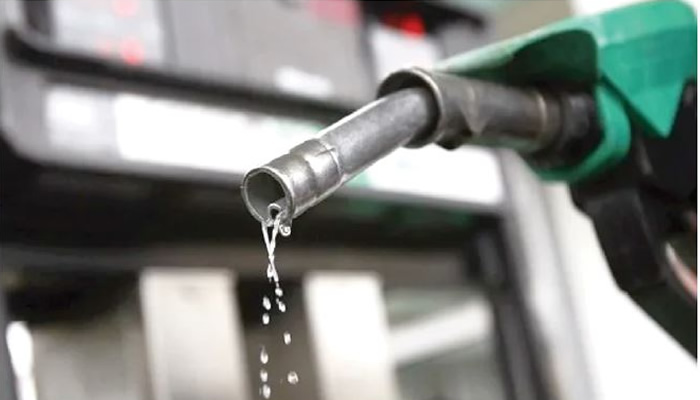
The Nigerian National Petroleum Company Limited (NNPCL) has reduced the pump price of petrol at its retail outlets to ₦1,130 per litre in Lagos and ₦1,165 per litre in Abuja. represents a reduction of ₦100 from the previous ₦1,230 per litre in Lagos and ₦95 from ₦1,260 per litre in Abuja.
Checks showed that the revised price was already reflected at several NNPC retail outlets in Lagos, including stations along Isheri Oshun Road, Apple Junction, and Ago Palace Way.
Similarly, motorists in Abuja observed the new price of ₦1,165 per litre at NNPC filling stations located in Jabi and Wuse.
The development offers slight relief to consumers who have faced repeated petrol price increases in srecent months.
The latest adjustment comes despite many oil marketers yet to reflect the earlier reduction in the gantry price of petrol by the Dangote Petroleum Refinery.
The refinery had recently reduced its gantry price by ₦100 per litre to ₦1,075, following a decline in global crude oil prices.
The earlier spike in crude oil prices was linked to rising geopolitical tensions involving the United States, Iran, and Israel, which raised fears of disruptions to global oil supply.
Particular concerns were centred around the Strait of Hormuz, through which a significant portion of the world’s oil shipments passes.
However, oil prices began to decline after Donald Trump indicated that the conflict could end soon, easing concerns about prolonged supply disruptions.
Market data showed that Brent crude, the global oil benchmark, dropped by about 8.45 per cent, falling from roughly $110 per barrel to around $92 per barrel.
The decline followed discussions among European ministers about the possible release of strategic oil reserves to stabilise global energy markets.
State governments have called for a forensic audit of Nigeria’s crude oil-backed borrowing arrangements, warning that opaque crude-for-loan and swap deals may be undermining inflows into the Federation Account.
The PUNCH earlier reported that the Nigerian National Petroleum Company Limited pledged 272,500 barrels per day of crude oil through a series of crude-for-loan deals totalling $8.86bn, according to an analysis of a report by the Nigeria Extractive Industries Transparency Initiative and the NNPC’s financial statements.
According to The PUNCH’s findings, NNPC has already fully repaid $2.61bn in loans, representing 29.4 per cent of the total credit facility, while $6.25bn or 70.6 per cent, remains outstanding. Also, out of the $8.86bn credit facility, only about $6.97bn has been received from seven crude-for-loan deals, as of December 2023.
However, state governments, through their commissioners of finance, are demanding an audit of these deals.
The demand was contained in a communiqué issued at the end of the 2026 retreat of the Federation Account Allocation Committee Post-Mortem Sub-Committee, obtained by The PUNCH on Thursday, which stated that, “All crude oil-backed borrowing arrangements should be subjected to legislative approval, full disclosure, and independent audit. Existing arrangements should be reviewed, with forensic audits conducted to restore confidence and protect future Federation revenues.”
The communiqué followed a three-day retreat held in Enugu between February 9 and February 11, where fiscal authorities, state representatives, revenue agencies, and policy experts met to examine persistent revenue leakages affecting the Federation Account.
The retreat, which focused on “Assessing Fiscal and Sectoral Policies for Closing Revenue Leakage in the Federation Account,” was organised to critically assess fiscal frameworks and administrative practices affecting federal revenue collections and distribution to the three tiers of government.
According to the communiqué, the meeting was convened by the FAAC Post-Mortem Sub-Committee to “critically assess fiscal and sectoral policies contributing to revenue leakage in the Federation Account and to reposition the Sub-Committee for a more proactive revenue assurance role.”
The retreat was formally opened by the Governor of Enugu State, Dr Peter Mbah, who was represented by the Secretary to the State Government, Prof Chidiebere Onyia. In his goodwill message, Onyia welcomed participants and reaffirmed the importance of fiscal coordination and transparency in managing public finances.
He also emphasised the need for stronger accountability mechanisms in the management of Federation revenues, while commending the FAAC Post-Mortem Sub-Committee and the Revenue Mobilisation Allocation and Fiscal Commission for their efforts to strengthen public finance governance in the country.
The communiqué indicated that the welcome address was delivered by the Chairman of the FAAC Post-Mortem Sub-Committee, Abdulazeez King.
Goodwill messages were also delivered by the Chairman of the Revenue Mobilisation Allocation and Fiscal Commission, Dr Mohammed Shehu, who was represented by Federal Commissioner, Ntufam Whiley.
The former Minister of State for Finance, who is now the Minister of State for Budget, Dr Doris Uzoka-Anite, and the Permanent Secretary of the Federal Ministry of Finance, Mr Raymond Omachi, were represented at the event by Dr Ali Mohammed, Director of Home Finance.
A keynote address on the theme of the retreat was delivered by the Accountant-General of the Federation, Mr Shamseldeen Ogunjimi, who was represented by Mrs Rita Okolie, Director of the Federation Account at the Office of the Accountant-General of the Federation.
Participants at the retreat included representatives of the Federal and State Governments, revenue-generating agencies, oversight institutions, and technical experts.
According to the communiqué, deliberations during the sessions were enriched by presentations covering a broad range of fiscal governance issues, including the Federation Account framework, reforms in the petroleum sector, tax policy changes, audit oversight, crude oil-backed borrowing, and administrative practices affecting government revenue inflows.
Participants at the retreat reaffirmed the constitutional importance of the Federation Account as the central pool through which revenue is shared among the three tiers of government.
The communiqué noted that the account, established under Section 162 of the 1999 Constitution, “remains the backbone of fiscal sustainability for the three tiers of government.”
However, it warned that several structural challenges continue to erode the volume of distributable revenues available to the Federal Government, states, and local governments.
The communiqué stated that participants unanimously observed that “persistent revenue leakages, opaque deductions, institutional inefficiencies, and weak oversight continue to erode distributable revenues.”
The retreat also expressed concern over the increasing scale of quasi-fiscal deductions from Federation revenues. These deductions, according to participants, include power sector subsidy obligations, debt write-offs, and operational expenses deducted at source before revenue is remitted into the Federation Account.
The communiqué stated that these practices were widely viewed as inconsistent with the principles of transparency and fiscal discipline.
It said, “The retreat noted with concern the growing scale of quasi-fiscal deductions from Federation revenues, including power-related subsidy obligations, debt write-offs, and operational costs deducted at source. These practices were considered inconsistent with transparency, budgetary discipline, and constitutional intent.”
Participants also examined the implications of the Petroleum Industry Act and its impact on the management of oil and gas revenues. While acknowledging that the legislation has created opportunities for improved governance in the petroleum sector, the retreat raised concerns about certain operational practices under the new framework.
According to the communiqué, participants noted that issues surrounding the transfer of joint venture assets to NNPC Limited, management fees, production sharing contract profit oil administration, and the Frontier Exploration Fund had raised serious concerns among stakeholders.
“These developments were observed to have materially reduced inflows into the Federation Account and weakened oversight,” the communiqué stated.
The retreat further stressed the importance of transparency, accountability, and stronger oversight mechanisms in the management of public finances. Participants agreed that unrestricted access to Federation Account data by oversight institutions was essential for effective monitoring and recovery of government revenues.
The communiqué stated, “Transparency, accountability, and oversight are indispensable to closing revenue leakages. It was resolved that unrestricted access to Federation Account data by oversight institutions, particularly the Office of the Auditor-General for the Federation, is critical for effective monitoring, audit, and recovery of revenues.”
Participants also highlighted the role of the Supreme Audit Institution in preventing and detecting revenue leakages. The retreat emphasised the need to strengthen audit capacity and improve the timeliness of audit reporting to ensure that audit findings lead to concrete revenue recovery and deterrence against financial misconduct.
According to the communiqué, “Participants underscored the constitutional role of the Supreme Audit Institution in preventing and detecting revenue leakages. The retreat called for strengthened audit capacity, timely audit reporting, and enforceable follow-up mechanisms to ensure that audit findings translate into actual revenue recovery and deterrence.”
The meeting also raised concerns about the high cost of revenue collection by some government agencies. Participants described these costs as a major drain on the Federation Account and called for reforms to align collection charges with global best practices.
“The high cost of revenue collection by certain agencies was identified as a major drain on the Federation Account,” the communiqué said.
It added that participants resolved that cost-of-collection arrangements should be periodically reviewed and benchmarked against international standards. The retreat also welcomed ongoing tax reforms aimed at expanding the tax base and improving compliance across the country.
Participants noted that the reforms could significantly boost government revenue if implemented effectively. The communiqué stated that tax reforms should focus on strengthening compliance mechanisms and reducing fragmentation within the tax system.
Another major area of concern discussed at the retreat was the growing reliance on crude oil-backed borrowing and crude-for-product swap arrangements. The communiqué specifically mentioned arrangements such as Project Gazelle and the Direct Sale Direct Purchase scheme.
The retreat noted that such arrangements could reduce transparency in revenue flows and weaken accountability in the management of oil revenues. It was, therefore, recommended that any future crude-backed financing arrangements must receive legislative approval and be subject to full disclosure and independent audits.
Participants also called for stronger collaboration between RMAFC and NNPC Limited to ensure proper accounting for oil revenues. The communiqué recommended that RMAFC should intensify engagement with the national oil company to obtain complete documentation relating to joint venture asset transfers and to compute net revenues due to the Federation.
It said the commission should also pursue appropriate recovery actions where discrepancies are identified.
The PUNCH earlier reported that about 14.66 per cent of Nigeria’s crude oil production in 2025 was likely committed to servicing crude-backed loan facilities, based on estimates derived from disclosures in the Nigerian National Petroleum Company Limited’s 2024 financial statements and official production data.
An analysis by The PUNCH shows that four major crude-secured arrangements — Project Gazelle, Project Yield, Project Leopard, and Eagle Export Funding — are backed by a combined 213,000 barrels of crude oil per day.
If this allocation remained unchanged throughout 2025, the total volume committed to debt servicing would amount to 77.75 million barrels for the year, calculated by multiplying 213,000 barrels per day by 365 days.
Data from the Nigerian Upstream Petroleum Regulatory Commission indicate that Nigeria produced 530.41 million barrels of crude oil between January and December 2025.
The 77.75 million barrels tied to crude-for-loan arrangements therefore represent 14.66 per cent of total annual production. Using the 2025 average Bonny Light price of $72.08 per barrel, the 77.75 million barrels translate to about $5.60bn.
Converted at the official exchange rate of N1,492 to the dollar, the crude potentially deployed to service the loans is valued at approximately N8.36tn. This implies that out of the estimated gross crude oil earnings for 2025, a sizeable portion of output by volume was effectively earmarked for debt servicing before revenues could fully accrue to government coffers.
The obligations span multiple forward-sale and project-financing arrangements expected to be serviced through substantial crude oil and gas deliveries. These commitments have become a central pillar of NNPC’s funding framework following years of fiscal strain, volatile production, and declining upstream investment.
Several of the facilities were used to refinance legacy debts, fund refinery rehabilitation, support cash flow, and meet government revenue obligations.
The Chief Executive Officer of AHA Strategies, Mr Ademola Adigun, earlier linked declining oil earnings to opaque crude-for-cash arrangements and undisclosed loan repayments that have tied up part of the country’s output.
“Some of our crude is already tied up in loan agreements. The problem is that Nigeria doesn’t know the full details of these transactions because there’s little transparency around them,” Adigun said.
He added that several crude-backed projects, including Project Gazelle, were executed without adequate public disclosure or parliamentary scrutiny, urging the Nigeria Extractive Industries Transparency Initiative to strengthen its audits.
Development economist and Chief Executive Officer of CSA Advisory, Dr Aliyu Ilias, said Nigeria’s crude trading structure had grown increasingly complex, involving swaps and oil-to-naira transactions that might not be fully captured in official records.
The Director of the Centre for the Promotion of Private Enterprise, Dr Muda Yusuf, recalled that during the tenure of former Central Bank Governor, Godwin Emefiele, several forward-sale deals were signed to raise emergency funds amid fiscal pressure.
“During the Emefiele years, Nigeria committed a lot of its crude upfront,” he said. “Those forward sales are still eating into our current earnings.”
Yusuf, however, noted that transparency and professionalism within the NNPCL had improved under the current administration of Bayo Ojulari. “Under the new management of the NNPC, there’s better professionalism and openness,” he said.
He added that full disclosure of crude swap and forward-sale agreements is necessary to restore confidence in oil revenue reporting.
The Chief Corporate Communications Officer of NNPC Limited, Andy Odeh, had not responded to enquiries sent to him regarding the crude-for-loan arrangements as of the time this report was filed.


2027: Tinubu Accused Of Plot To Relocate Nigeria’s Capital From Abuja – Details Emerge

JUST IN: Nigerian’s Woes Deepen As Fuel Price Hits Record High; DETAILS

“I am Under Pressure”: Top Northern Governor Cries Out

Former Super Eagles Star Loses Life Savings, Duped By A Pastor of ₦1.2 Billion

These ’90s fashion trends are making a comeback in 2017

I’m A Married Man, I Can Never Get Myself Involved With Such A Thing, Delta Gov Aide Reveals Why He Offered Comfort ₦500,000 Job
-

 Politics2 days ago
REVEALED: APC Governor Defies Tinubu’s SGF, Goes Rogue
-
 Politics2 days ago
APC Fixes Date For Screening Of National Convention Aspirants
-
 Politics2 days ago
“I am Under Pressure”: Top Northern Governor Cries Out
-
 Politics2 days ago
Senate Explains Silence On Bill Criminalising Dual Party Membership
-
 Business1 day ago
JUST IN: Nigerian’s Woes Deepen As Fuel Price Hits Record High; DETAILS
-
 News4 hours ago
2027: Tinubu Accused Of Plot To Relocate Nigeria’s Capital From Abuja – Details Emerge