
Uncategorized
NNPC’s N17.5tn Pipeline Security, Fuel Subsidy Bill

THE astonishing revelation that the Nigerian National Petroleum Company Limited spent N17.5 trillion in a single financial year on fuel subsidies and pipeline security once again raises questions about the government’s declared abolition of fuel subsidies and the opaque financial management within Nigeria’s oil sector.
This massive expenditure not only outpaced Nigeria’s annual fuel subsidy records of past years but also surfaced amid sharply higher petrol prices for ordinary Nigerians. This contradiction demands urgent scrutiny and accountability.
Central to this anomaly is NNPC’s 2024 financial statement, which shows an unprecedented N17.5 trillion spent ostensibly on securing oil pipelines and energy security operations.
This outlay encompasses N7.13 trillion classified as energy-security costs aimed at stabilising petrol prices, plus N8.67 trillion related to “under-recovery” on refined petroleum products, which refers to the price gap between the regulated pump price and the higher actual import cost absorbed by NNPC.
Another N8.84 trillion is recorded as receivables for advances and security costs incurred, reinforcing the sheer scale of the company’s financial exposure.
Despite this massive operational cost, no clear government reimbursement plan has been outlined, placing tremendous strain on NNPC’s cash flow and raising concerns about long-term fiscal sustainability.
Indeed, the figures rubbish the NNPC’s N5.4 trillion profit declared for 2024, a 64 per cent rise over the N3.29 trillion posted in 2023.
This financial opacity that has defined NNPC’s operations for decades echoes concerns raised by analysts about endemic corruption, operational inefficiencies, and systemic leakages.
Industry watchers and experts have slammed this expenditure as outrageous, urging the government to commission a comprehensive forensic audit.
Given that Nigeria’s crude daily production is hovering at roughly 1.4 to 1.5 million barrels, well below its potential of at least 2.2mbpd recorded during the COVID pandemic, the justification for such exorbitant pipeline security and subsidy-related costs strains credulity.
It is bewildering how the NNPC managed to incur such a huge fuel subsidy cost when pump prices averaged N1,189/litre in December 2024, up 77 per cent from N761/litre a year earlier, while petrol landing cost was approximately N970 per litre for the same period, per the Major Energies Marketers Association of Nigeria.
Even the fact that the naira closed at N1,535/dollar on December 31, 2024, after fluctuating widely for most of the year and suffering a 40.9 per cent depreciation overall, cannot explain these figures.
Finance Minister, Wale Edun’s Accelerated Stabilisation and Advancement Plan, presented in June 2024, projected fuel subsidy to gulp about N5.4 trillion in 2024 as against the N3.6 trillion budgeted for the same intervention in 2023. The NNPC’s figures show that the projections were overshot significantly.
The Petroleum Industry Act 2021 partially explains the government’s role in this quagmire.
By designating NNPC as “supplier of last resort” under Section 64(m), the Act mandates the company to absorb subsidy costs temporarily when the regulated pump price is lower than NNPC’s actual landing cost for imported fuel, with the Federation expected to reimburse these under-recoveries later.
This defeats the purpose of the oil sector liberalisation, as price regulation and fuel subsidy remain in place despite record petrol prices.
It raises questions about the impact of the entry of Dangote Petroleum Refinery on the market since January 2024, given its persistent problems with local crude supply and other operational bottlenecks.
Nigeria still imported petrol worth N12.8 trillion in the 15 months between August 2024 and October 2025, per the Nigerian Midstream and Downstream Petroleum Regulatory Authority data.
Compounding the issue is the staggering rise in pipeline protection costs.
Allegations abound that pipeline security contracts are awarded opaquely to politically connected cronies, enabling systemic corruption and even tacit collusion with militant groups controlling “pipeline protection” zones through crude allocations rather than cash.
The Muhammadu Buhari administration awarded a N4 billion per month pipeline security contract starting August 2022 to Tanita Security Services controlled by ex-Niger Delta militant, Government Ekpemupolo, aka Tompolo.
Therefore, open contracting, detailed contract disclosures, independent third-party audits, and parliamentary oversight are indispensable to reclaiming accountability and restoring public confidence.
The NNPC’s notable increase in total revenue and profit after tax in 2024, including gains from crude sales, refined petroleum products, gas, and power, indicates improved operational efficiency at some levels.
However, rising finance costs and liability ratios erode sustainability and point to recklessness in managing public funds.
Addressing these issues demands political will for openness, tighter controls, and reforms that align Nigeria’s oil wealth with national development, rather than allowing it to be cornered by vested interests.

A chieftain of the Peoples Democratic Party (PDP), Umar Sani, has revealed details of a private conversation he had with the Minister of the Federal Capital Territory, Nyesom Wike, regarding the political future of Siminalayi Fubara, the governor of Rivers State.
Sani made the disclosure during an interview on Symfoni TV while commenting on the ongoing political tension in the state and growing speculation about whether Governor Fubara will seek a second term in office.
According to the PDP chieftain, Wike has deliberately chosen not to discuss the issue publicly.
He said the former Rivers governor made it clear that he does not want to be drawn into conversations about the governor’s political future.
Sani said the FCT minister believes that raising such discussions too early could trigger unnecessary arguments within the party and create divisions among supporters.
He explained that debates about re-election or succession often become sensitive when they begin long before party primaries or official political processes start.
According to him, premature political conversations can cause confusion within a party. Members may begin to interpret statements differently. That situation, he noted, can weaken internal unity and distract leaders from governance.
He said: “Wike recently told me that nobody should ask him whether Fubara is going to do a second term or not. This is to avoid premature debates that can scatter the party. For now, the people of Rivers State are watching closely, hoping that this political ‘robasese’ does not stop the development of the state. Wike is keeping his cards close to his chest.”
Sani added that experienced political leaders often prefer to wait until the appropriate time before discussing candidates or succession matters. According to him, such restraint helps prevent internal conflicts and keeps the focus on governance.
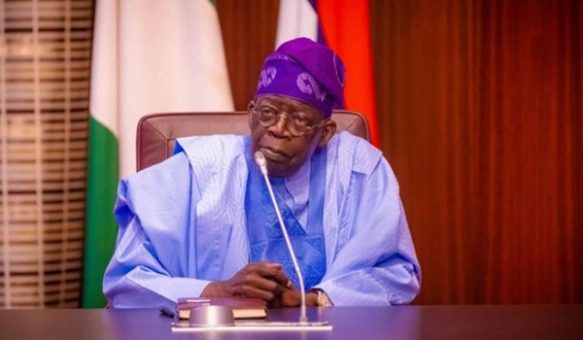
President Bola Ahmed Tinubu on Thursday convened a nearly two-hour security meeting with service chiefs at the Presidential Villa, marking the first such gathering since Tunji Disu assumed office as Inspector-General of Police.
According to reports, the service chiefs arrived at the Villa without their usual official vehicles, making them difficult to identify, and left the premises at approximately 5:10 pm after extended deliberations with the President.
The chiefs and the IGP were later identified as they exited the forecourt following the closed-door session.
The meeting comes amid rising security concerns nationwide, particularly following recent killings of military commanding officers in various operational theatres.
In the past week alone, the military lost at least three commanding officers in charge of forward operating bases, following a surge of attacks on security formations and personnel, especially in the North-East where Boko Haram and Islamic State West Africa Province insurgents have intensified assaults.
Notable incidents include the attack on Ngoshe in Borno State, which resulted in abductions, as well as separate attacks on Konduga, Marte, Jakana, and Mainok, all in Borno State.
Thursday’s security meeting is IGP Disu’s first formal engagement with the President and service chiefs since his appointment on February 28, 2026, following the resignation of his predecessor.
While details of the discussions have not been publicly disclosed, the meeting likely focused on the recent spike in attacks on security personnel, the vulnerability of communities in the North-East, and coordination among security agencies.
Uncategorized
Abuja Polls: Tension At Collation Centre As Party Agents Reject Results, Clash With INEC
There was a tense tension at a ward collation centre in Garki, Abuja, following a dispute between party agents and officials of the Independent National Electoral Commission over the handling of councillorship election results. The disagreement started during the collation of votes for the councillorship contest. Party agents accused electoral officials of blocking access to the result sheets before announcing the final figures.
Witnesses at the centre said party representatives were earlier allowed to cross-check figures for the chairmanship election. This process was reportedly carried out calmly and in line with procedure. However, the atmosphere changed when officials moved to declare councillorship results without permitting agents to verify the numbers with their own records.
The move triggered loud protests and heated exchanges inside the collation hall. Several agents insisted that the same level of transparency given during the chairmanship collation should apply to the councillorship exercise. One aggrieved party agent openly challenged the officials and demanded that the figures be reviewed before any declaration was made.
“Sir, we disagree with this final figures. Let’s confirm them with our record. You were there when during the chairmanship, they brought the figures, we checked, so can’t they allow us to do the same for councillorship? They just declare it like that without us checking the figures?” the agent said.
He added, “We disagree with these figures, let’s check them. Who does that? Let’s see it.”
The confrontation briefly disrupted the collation process and caused confusion among voters and party supporters present at the centre. The incident is one of several disputes recorded during the Federal Capital Territory Area Council elections, which have been marked by complaints of procedural lapses, delays and low voter turnout in some wards.
Meanwhile, early results released from the chairmanship elections show that the All Progressives Congress has taken the lead in key councils. The party has so far secured victories in Abuja Municipal Area Council (AMAC), Bwari Area Council and Kwali Area Council. Two other chairmanship results are still being awaited.
The Peoples Democratic Party won the Gwagwalada Area Council seat.
In AMAC, APC candidate Christopher Maikalangu polled 40,295 votes to defeat his closest challenger from the African Democratic Congress, who scored 12,109 votes. The PDP candidate recorded 3,398 votes. Maikalangu is the incumbent chairman.
In Bwari Area Council, APC’s Joshua Ishaku emerged winner with 18,466 votes. The ADC candidate came second with 4,254 votes, while the Zenith Labour Party candidate secured 3,515 votes.


2027: Tinubu Accused Of Plot To Relocate Nigeria’s Capital From Abuja – Details Emerge

JUST IN: Nigerian’s Woes Deepen As Fuel Price Hits Record High; DETAILS

“I am Under Pressure”: Top Northern Governor Cries Out

Former Super Eagles Star Loses Life Savings, Duped By A Pastor of ₦1.2 Billion

These ’90s fashion trends are making a comeback in 2017

I’m A Married Man, I Can Never Get Myself Involved With Such A Thing, Delta Gov Aide Reveals Why He Offered Comfort ₦500,000 Job
-
 Politics2 days ago
REVEALED: APC Governor Defies Tinubu’s SGF, Goes Rogue
-
 Politics2 days ago
APC Fixes Date For Screening Of National Convention Aspirants
-
 Politics2 days ago
“I am Under Pressure”: Top Northern Governor Cries Out
-
 Business1 day ago
JUST IN: Nigerian’s Woes Deepen As Fuel Price Hits Record High; DETAILS
-
 Politics2 days ago
Senate Explains Silence On Bill Criminalising Dual Party Membership
-
 News4 hours ago
2027: Tinubu Accused Of Plot To Relocate Nigeria’s Capital From Abuja – Details Emerge