Connect with us

Opinion

Ogun 2027: Kings Have Spoken, Yayi Belongs, Let the Campaign Begin

Published

on

By Kunle Somorin

For nearly half a century, Ogun State has stood as a federation of Yoruba subgroups – Egba, Ijebu, Remo and Yewa. Yet one fact remains: since 1976, Yewa has never produced a governor. Equity – affirmed by the Nigerian Constitution and Yoruba custom – demands that no part of a polity be permanently excluded from its highest offices. The late Awujale of Ijebuland, Oba Sikiru Kayode Adetona, foresaw this imbalance and urged that Yewa should produce the next governor of Ogun State. His prognosis carries truth to its destination. Democracy without fairness descends into exclusion by another name.

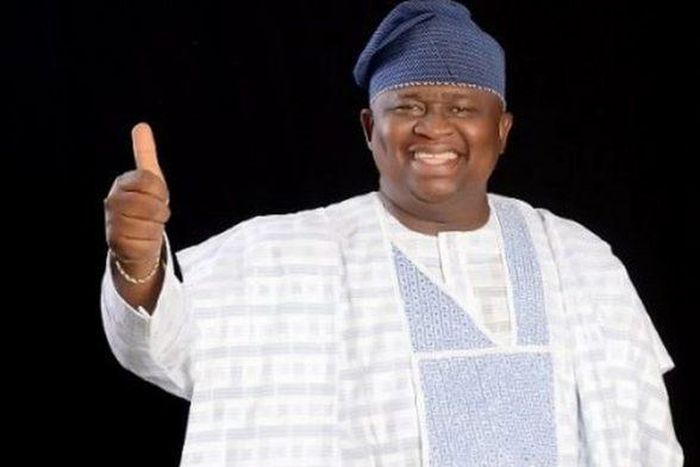
Against this backdrop, Senator Solomon Olamilekan Adeola (Yayi) emerges not as a mere aspirant but as a corrective to historical imbalance – a moral and democratic necessity. Attempts to weaponise genealogy – casting him as an outsider – have now met their answer. Yoruba wisdom cautions: Àlejò kì í mọ ìtàn ilé – a stranger cannot know the full story of the house. That story has been affirmed by those who keep it, and by the institutions that preserve lineage and belonging. As a Yoruba saying reminds us, ìrò lè rìn pẹ́, òtítọ́ ní í dé l’ẹ́yìn – falsehood may travel far, but truth arrives all the same.

In Yewaland, Oba Kehinde Olugbenle, the Olu of Ilaro and paramount ruler, publicly affirmed Adeola as a son of Yewa. Indeed, Adeola holds the traditional title of Aremo (prime son) of Yewaland, underscoring a lineage rooted in place and custom. The maternal seal followed. At Kemta Day the previous Sunday, Adeola declared: “Ilu iya mi ni mo wa yi. Emi omo Abibat Olasumbo, omo Akinola Baba Pupa from Kemta Odutolu.” The Alake and paramount ruler of Egbaland, Oba Adedotun Aremu Gbadebo, then added a defining pronouncement: “Kemta ti fun wa ni Governor!” In Yoruba cosmology, kings are custodians of heritage; their declarations carry authority. Agbà kì í wà l’ọjà, kí orí ọmọdé tuntun wó – elders do not stand by while a child’s head is misshapen. To question Adeola’s indigeneity now is, effectively, to challenge the crowns.

Constitutionally, a governorship candidate must be an indigene. Nigerian courts often consider attestations by traditional rulers when questions of lineage arise, recognising that in matters of ancestry, custodians of custom provide important context. With these royal affirmations, the central question – indigeneship – can reasonably be regarded as resolved. Eligibility is clear. Whether Yewa or Egba, count Senator Adeola a bona fide candidate. A kì í fi ẹ̀tẹ̀ sílẹ̀ pa lápálápá – one does not abandon leprosy to treat ringworm. The debate must now shift from ancestry to governance.

On that score, Adeola’s record is measurable and visible across all three senatorial districts of Ogun State. He has facilitated over 270 infrastructure projects across Ogun West alone; empowered 15,000 market men and women with cash grants; trained thousands in entrepreneurship; and supported over 5,000 students through a Scholarship and Bursary Board. He helped reopen the Ikenne–Ilishan road, a corridor associated with the Awolowo era, long overdue for rehabilitation, and donated 102 transformers serving 435 communities. In Sagamu, youths point to empowerment schemes; in Ifo, traders speak of solar-lit markets; in Abeokuta, students recall scholarships; in Yewa, elders reference roads linking their villages. These are not promises; they are monuments. The works that touch daily life are the truest testimonials across the three senatorial districts.

Politically, the Egba Lokan sentiment has broadened into a wider call for justice, grounded in the ethos of balance and inclusion. This call aligns with the current profile of the Chairman of the Senate Committee on Appropriations, a son of Yewa with an Egba mother. High Chief Bode Mustapha, the Osi of Egbaland, has publicly commended Adeola’s service and described him as highly qualified among the field of contenders in terms of public service records. One voter captured governance’s essence in practical terms: the road he built reduced her car repair costs. Adeola’s dual heritage – paternally Yewa, maternally Egba – is a bridge, not a burden. Tí kì í ṣe ti bàbá ẹni, ó lè ṣe ti ìyá ẹni – what is not of one’s father may be of one’s mother. For advocates of the Egba Lokan agenda, this is a conundrum that requires wisdom. Agbájọ ọwọ́ la fi n s’ọ̀yà; ọwọ́ kan kì í gb’ẹrù d’órí – it takes joined hands to lift a load. In a state sometimes strained by sub-ethnic rivalry, such a bridge can steady the polity.

Legitimacy, philosophers remind us, is earned. Aristotle wrote: “The good ruler is not he who is born to rule, but he who rules well.” Yoruba thought echoes this in omolúàbí – honour, responsibility and service. Ìwà l’ẹwà – character is beauty. Adeola’s record is his manifesto; his projects are his pledges in brick and mortar, in kilowatts and scholarships. The question of origins is closed by law and custom. The campaign must now be fought on competence, character and outcomes.

History also counsels balance. Since 1976, Ogun’s leadership has passed from Olabisi Onabanjo (Ijebu), through periods of military rule, to Olusegun Osoba (Egba), Gbenga Daniel (Remo), Ibikunle Amosun (Egba) and now Dapo Abiodun (Remo). Yewa’s omission is glaring. The spirit of federal character – understood as an ethic of inclusion and fair representation – reminds us that cohesion is strengthened when all components see themselves in leadership. When law, custom and conscience converge, the argument is unassailable: justice demands that Yewa should have its turn.

Service-delivery indicators reinforce the case. In numerous town halls and community meetings, stakeholders point to reopened roads, restored power, improved market lighting, bursaries and training programmes that have equipped young people to start small enterprises. These are lived realities, not abstractions. As policy moves from spreadsheet to street, citizens measure leadership by the bridges they cross, the lights that stay on and the opportunities that open. The test of governance is not rhetoric but results – how many lives are tangibly improved through would‑be leaders’ interventions.

It is only fair to acknowledge that Yewa/Awori sons and daughters have every right to aspire to the governorship of Ogun State, even as I acknowledge Yayi’s edge. I do not consider any aspirant a footnote. Each is a chapter in this long‑drawn struggle that has marginalised people of Yewa/Awori origin. Over the years, names such as Gboyega Isiaka, Abiodun Akinlade, Noimot Salako-Oyedele, Biyi Otegbeye and others have surfaced – each carrying the hopes of their people. Many observers argue that the seat has eluded Yewa not for lack of talent or ambition, but for want of unity and a common front. Fragmentation, multiple candidacies and internal rivalries have, at times, diluted the collective claim. The lesson is clear: a house divided against itself cannot stand. The right to contend is sacrosanct, but it is best exercised with caution, dignity and a commitment to the larger cause of Yewa’s long‑awaited turn.

If Senator Adeola has been deemed worthy to sit in the hallowed chambers of the National Assembly, where he has distinguished himself with tangible service and verifiable delivery, then it follows by both logic and justice that he is equally qualified to occupy the Governor’s Office at Oke Mosan. The Constitution does not prescribe a lesser standard for the Senate than for the governorship; indeed, both demand competence, integrity and commitment to the people. Having facilitated infrastructure, empowered communities, and touched thousands of lives through scholarships and social programmes, he has already demonstrated the capacity to translate vision into dividends of democracy. To deny him the gubernatorial ticket after such a record would be to contradict both law and custom, and to deprive Ogun State of a tested hand whose service has spoken louder than rhetoric.

Within this context, the emergence of Senator Solomon Olamilekan Adeola should be seen not as a threat but as an opportunity. If he is qualified to be a senator and has delivered verifiable dividends of democracy – roads, scholarships, empowerment and infrastructure – what principle would justify denying him a fair contest for the gubernatorial ticket? The crowns have spoken, the Constitution is satisfied and his record is manifest. What remains is for all aspirants to embrace consensus where possible, coalition where necessary and civility at all times. Campaigns should elevate issues, not inflame identities; they should test plans, not impugn persons. A race anchored on programmes, capacity and probity will serve Ogun better than one framed by whispers of ancestry.

The road to 2027 will be defined by three questions that every contender must answer plainly. First, what is your plan to accelerate inclusive growth across Ogun’s three senatorial districts – industrial corridors, agribusiness value chains, urban renewal and rural connectivity alike? Second, how will you deliver reliable power, water, primary healthcare and basic education to communities that have waited too long? Third, what is your approach to youth employment – skills, finance and markets – so that entrepreneurship is not a slogan but a pathway? On these questions, Adeola’s portfolio of projects provides an opening bid. Others should place their records alongside his and let the people compare, line by line.

Good politics is, at heart, good governance. It listens, learns and builds. It makes room for difference without turning difference into division. It honours tradition without becoming captive to nostalgia. It remembers that in a republic, leadership is stewardship: those who seek the people’s mandate must show the people’s returns. As the saying goes, ohun tí a bá fi ọwọ́ ṣe, kì í bà ẹnìkan lórí – the work of one’s hands vindicates. In a competitive field, the voters will look for what is concrete and measurable.

The argument, then, is complete. Indigeneity has been addressed in law and affirmed by custom. The historical omission of Yewa has been acknowledged by monarchs and widely recognised in public discourse. The service record in question is tangible and verifiable. The Constitution demands fairness; Yoruba tradition demands balance; democracy demands justice. All three converge on a simple conclusion: it is Yewa’s turn. And if the race is to be run on competence, delivery and character, Adeola enters it with a record that can be examined without fear or favour.

For now, the crowns have spoken. History calls. Let the campaign begin. In that campaign, one name stands – not as a slogan, but as a standard; not as a whisper, but as a monument; not as a claimant, but as a custodian. Yayi.

  • Somorin, former Chief Press Secretary to Governor Dapo Abiodun, writes from Crescent University, Abeokuta.
Click to comment

Leave a Reply

Your email address will not be published. Required fields are marked *

Opinion

Has the South-East Traded Kanu and Obi for Political Access? By Mohammed Bello Doka

Published

on

When Nnamdi Kanu was handed a life sentence, expectations were clear and historic. Across Nigeria, many anticipated a decisive political reaction from the South-East: emergency meetings, coordinated resistance, forceful statements from governors, and a re-assertion of the region’s long-held grievance narrative.

What followed instead was something far more revealing — a loud, deliberate silence.

No collective pushback by South-East governors.
No political reprisal.
No price imposed on the centre.

And in that silence lies a deeper story — one that goes beyond Nnamdi Kanu alone.

For the first time in Nigeria’s political history, all five South-East governors are aligned — directly or indirectly — with President Bola Tinubu and his re-election project. This is not speculation. Public statements and political signaling from the zone confirm that the governors have closed ranks around Abuja. Some openly endorse Tinubu; others maintain strategic silence while cooperating fully with the centre. Either way, the outcome is the same: regional power has moved away from confrontation to accommodation.

This alignment explains much more than the silence after Kanu’s sentence. It also explains the quiet abandonment of Peter Obi’s presidential ambition by the same elite class that once benefited from his momentum.

For years, the South-East sustained a dual political narrative:

Nnamdi Kanu represented resistance — a symbolic struggle against marginalisation.
Peter Obi represented reform — a constitutional path back to relevance at the centre.

Today, both pillars have been set aside.

Unlike previous moments in history when South-East elites distanced themselves from regional causes out of weakness or isolation, this time is different. This retreat did not happen in defeat. It happened from a position of leverage:

The region had unprecedented national sympathy after 2023.
It commanded a powerful youth-driven political movement.
It had emotional capital across Nigeria and the diaspora.
Yet, despite this strength, the elite chose survival.

South-East governors — the true controllers of the political system — have clearly decided that confrontation carries higher costs than alignment. Federal access, security cooperation, budgetary relevance, and political protection now outweigh symbolic struggles. In plain terms, Kanu became a political risk, Obi an electoral uncertainty.

This raises unavoidable rhetorical questions.

If the South-East remains as marginalised as long argued, why was Kanu’s life sentence not treated as a regional emergency?
If injustice still defines the regional condition, why has no political consequence followed?
Or has political access softened the meaning of marginalisation itself?

Even more unsettling is what this silence suggests about the future.

Will there be consequences from the people?
Governors may control the machinery, but history shows that South-East grassroots sentiment does not always move in sync with elite calculations. Suppressed anger, when ignored, rarely disappears — it mutates.

Has the South-East finally been subdued?
Or is this only a strategic pause — a recalibration before another political rupture?

And perhaps the most dangerous question of all:
What becomes of the Biafra agitation in a post-elite world?

If the political class no longer carries the banner — and the state believes resistance has been neutralised — the struggle may not end. It may simply lose its intermediaries and become harder to predict, harder to control, and more radical in form.

For now, the facts are clear.
South-East elites have chosen power over protest.
Access over agitation.
Survival over symbolism.

Whether the people follow — or resist — that choice will define the region’s political future far more than any endorsement ever could.

And until then, the silence after Kanu’s sentence remains the loudest statement the South-East political class has ever made.

Continue Reading

Opinion

The Americans Are Coming

Published

on

The Americans are coming and Nigerians are running helter-skelter, clawing at each other. In the space of a week, every Nigerian—Muslim, Christian, non-affiliate—has become a religious Voltron and a foreign policy expert. In the storm of public commentaries, “expert” analysis and social media expressions, it became clear that we are not listening to each other. We are, both Muslims and Christians alike, more spurred by emotions than reason. This emotive state of the nation made me quite reluctant to even address this issue because I doubt there will be any sort of objective reading of any kind of opinion. But in the end, these are issues that must be addressed.

I will try to avoid issues that have been over-analysed across several fora in the last few days. At this point, it doesn’t seem like any Nigerian can be convinced one way or the other whether there is a “Christian genocide” or not, as not many people are willing to change their opinion on this.

So, I will start by acknowledging that even a broken clock is right at least twice a day, and in all his rants, US President Donald Trump may be wrong about many things, but he is right on one issue—labelling Nigeria a “disgraced country.”

What country with any self-worth allows itself to be disgraced by a bunch of rag-tag groups of terrorists, criminals, militias, militants, gunmen, looters and every scallywag with balls? What sort of resource-and-population-rich country allows itself to be in a position to be threatened with the withholding of foreign aid or “military action” by a foreign power over a rascally lot we should have efficiently dealt with years ago?

Our ancestors said one should not look to where one fell but at where one tripped. There have been a series of mistakes and oversights that have got us to this point where our sovereignty is being dragged through the mud of the international village square. We caused it. Our governments did.

The first mistake we made was tolerating the existence of terrorist and criminal gangs across the country. Nigeria has successfully, through gross negligence, incompetence, complicity and corruption, democratized violence. The rise of ethnic militias that were unleashed at our return to democracy in 1999 and the communal violence that we witnessed in places like Kano, Kaduna, Jos, Sagamu, Lagos, etc., and the vigilantisation of the South East region, along with the government’s woeful handling of these situations, set us on this track.

Successive governments’ failure to secure Nigerians at that time was only compounded by the failure to dispense justice after those irrational bursts of violence. Mass murderers were shielded by this lack of justice; their crimes were waved away and they were allowed to continue walking among the people whose loved ones they killed.

This directly gave birth to militias and terrorists hiding under the guise of addressing these injustices the state overlooked. Fulani militias will claim they are avenging the murders of their loved ones and the rustling of their cattle by “Christian youths,” who in turn will claim they are avenging the injustices done to them when the herdsmen raided their farmlands. Even the worst scourge we have had in this country, Boko Haram and ISWAP, claimed they were fighting social injustice and carving out an “Islamic state” from Nigeria for themselves, to be governed by their twisted notion of justice, as their only option. The same arguments are being made by IPOB, who seek to carve out a separate state that they believe will be just to their people, as the Nigerian state has been unjust to them. The Niger Delta militancy, though not aspiring to secession, was fuelled by the decades of social and environmental injustices the region had suffered. This same rationale fuelled the OPC agitations.

Instead of dispensing justice, Nigeria has cavorted with terrorists and criminal gangs, cultivated them for political positioning and nurtured them for corrupt gains. “Repentant” Boko Haram members are pardoned and reintegrated into society without ever facing justice and with no regard for their victims; pro-tempore “repentant” bandits who have abducted hundreds and murdered dozens are presented before the press and treated as celebrities at “peace” events, where they come wearing their weapons like war medals, and leave with them only to resume their killings after a short while.

Our failure to handle this insecurity better—from Jonathan, to Buhari and now Tinubu, who all made campaign promises centring on this issue, and failed to follow up on them—led us here. I have written columns on massacres in Zamfara, Katsina, Plateau and Benue, where the government promises to find the horde of perpetrators and promptly sweeps aside the issue. We have been disgraced by these terrorists and the steady stream of headlines reporting mind-boggling massacres long before Trump decided to strip us naked in the village square.

This culture of neglect directly led to the second mistake—our failure to appoint ambassadors for two years. How any country, especially one that aspires to play a major role in the comity of nations, cannot have ambassadors to secure and advance its national interest is something that confounds. It is possible that the presence of an ambassador in the US, for example, might have mitigated the strength of misinformation deployed to push this narrative. Of course, there is no guarantee that would have prevented the stupendous misreading and oversimplification of the situation by the US government, but there is no way of knowing that, is there?

Other mistakes we have made have included not being deliberate about fostering national unity—which admittedly is a hard task when our concept of social justice is dangerously kwashiokored. Neither have we bothered to properly document the killings in the country to acknowledge the sheer scale of it, to honour and remember the victims, and remind ourselves never to let it happen again. Instead, we content ourselves with ineffectual presidential condemnations.

On the other hand, it would be really easy to dismiss Trump’s posturing and declaration as the actions of an impulsive man, but upon closer scrutiny, it may be far from it. For over a century, the US has lifted from a tested playbook. Most recently, we saw the deployment of the “Weapons of Mass Destruction” and other disinformation campaigns to put US boots on the ground in Iraq, to firebomb Gaddafi’s convoy in Libya and intervene in several countries where the populace anticipated the intervention would improve their lot. Most of these countries and their people have discovered that that hasn’t been the case.

Nigeria must be careful how it responds to this play by the US and not rush into the mistake that Colombia made. In 1928, striking Colombian banana plantation workers demanding better pay and working conditions threatened the interests of powerful US businesses—the United Fruit Company (UFC), which at the time had enormous influence and control over the banana trade in South and North America, generating billions in revenue.

To protect its interests, UFC worked closely with the US Ambassador to Colombia, Jefferson Caffery, who dispatched telegrams to the US Secretary of State portraying the strike as a communist uprising that must be quelled immediately.

Much as it is doing today, the US government of Calvin Coolidge, deliberately misinformed and misled, pressured the Colombian government to deal with the striking workers or risk being invaded by the US marines stationed just off the coast. In its panic to avoid invasion and end the strike, the Colombian government opened fire on its own citizens, killing about 2000 people who just wanted to be paid for their labour in what has become known as the Banana Massacre.

As in that case, a lot of disinformation and manipulation was employed, as was the case in Iraq and Libya, and other places the US had set eyes upon, and as is the case in Nigeria today. Whatever interest is being pursued by this narrative must not come at the expense of more Nigerian lives than are being lost already, but make no mistake, the terrorists killing Nigerian Muslims and Christians must be dealt with decisively and efficiently.

If there is anything worthwhile in this shameful episode, it is that Trump’s words and posturing might have lighted the fire that will force the Nigerian government to act decisively. Our government needs the kick in the backside. If the wails and whimpers of thousands of dying Nigerians and the streams of our blood have failed to convey the urgency of the situation, then perhaps these scathing words might serve the purpose.

It would be a terrible shame for the Americans to come; their words should suffice. Nigeria cannot afford to mismanage this crisis as we have mismanaged our security situation in the last two decades. But it is high time we put this house in order. After all, we can blame Trump’s unilateralism, but there has to be a crack in the wall for a lizard to crawl into.

Continue Reading

Opinion

Rivers: Why Fubara May Fight Again!

Published

on

"No Single-Term Deal For Fubara," Declares Ijaw Youth President

By Ismail Omipidan

The return of Governor Siminalayi Fubara after the expiration of the six-month emergency rule has been widely applauded by many Nigerians. To avoid any unguarded utterances, the governor, on his return to the state, appeared to tactfully distance himself from his army of supporters who had thronged the Rivers State Government House on Thursday. Instead, he showed up yesterday, and promptly delivered a statewide broadcast to the people of the state.

Before his return, there were concerns over the details of the peace deal that paved the way for his reinstatement. While some argued that he would serve only one term, others insist that the arrangement heavily favours his estranged godfather and current FCT Minister, Nyesom Wike.

Wike was on Politics Today with Seun Okinbaloye on Thursday. He declined to reveal details of the peace deal. But any peace deal whose terms remain shrouded in secrecy cannot, in my view, be regarded as fair or just. I stand to be corrected.

For now, it appears that only Wike, Fubara, and perhaps President Bola Ahmed Tinubu know the exact contents of the peace deal or understanding.

However, as a trained political communication specialist, I find that Fubara’s statewide broadcast offers a glimpse into parts of the agreement. This is particularly evident in paragraph 10 of his speech, where he stated: “To those who have expressed genuine fears, frustrations, and uncertainty over the nature of the peace process, I assure you that your concerns are valid and understood.” In essence, the governor acknowledged that the public’s fears and doubts about the peace deal are not unfounded. By validating these concerns and admitting that he understands them, Fubara tacitly concedes that there are indeed contentious aspects of the arrangement.

The governor was, however, quick to add that “nothing has been irretrievably lost; there remains ample opportunity for necessary adjustments, continued reconciliation, and inclusiveness.” My understanding of these lines are these: One, even if there is a clause for now in that peace deal that would prevent him from seeking a second term, his good behaviour and willingness to play ball, going forward may make change their minds, thereby adjusting the peace deal to allow him seek a second term. Two, certain things that he was not too pleased with could equally be adjusted as time goes by, once he showed genuine reconciliation efforts. And by shunning the crowd on Thursday, the governor appears to be ready for a genuine reconciliation.

For me, the only reason Fubara may be willing to fight again is if, after abiding religiously by the terms of the peace deal without reservations, he is still denied a second-term bid.

Already, he has been stripped of critical levers of power: he has no control over the local governments in the state, he is not in charge of the House of Assembly, and, if the feelers I’m getting are anything to go by, he is unlikely to be in full control of his cabinet either. Having been politically weakened on all fronts, it would be unwise and indeed provocative to further deny him a re-election ticket. In our recent political history, the only governor who was denied a second-term ticket on the basis of non-performance was Chinwoke Mbadinuju of Anambra State under the PDP in 2003. So far, no one can say Fubara hasn’t performed, as such, non performance cannot be adduced as a reason should they decide to strike. My point is, if they do, as being planned, it will be on the basis of politics, a development that may trigger another round of political unrest in the state.

With the benefit of hindsight, Fubara would have already seen the end of Wike’s dominance in Rivers politics, if not for Wike’s current status as a minister, backed firmly by the very man who appointed him.

Continue Reading

Trending