
Politics
Presidency, Opposition Clash Over Alleged Weaponising Of EFCC

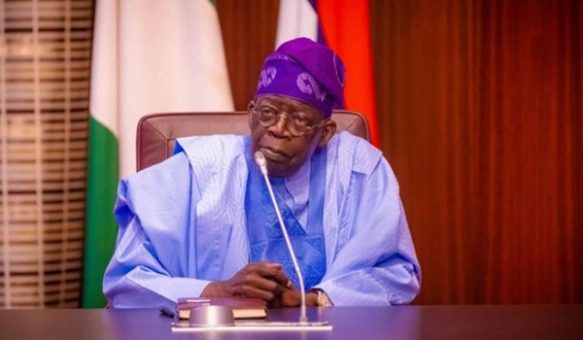
Prominent opposition figures, including former Vice President Atiku Abubakar, 2023 Labour Party presidential candidate Peter Obi, and PDP elder statesman Bode George, on Sunday, accused President Bola Tinubu’s administration of deliberately undermining opposition parties ahead of future elections.
In a joint statement released on Sunday, also signed by ADC National Chairman David Mark, former APC National Chairman John Odigie-Oyegun, and Lawal Batagawara, the opposition called for an independent audit of federal, state, and local government accounts from 2015 to 2025, alleging that state authority is being weaponized against political opponents rather than used to combat economic crimes.
The statement follows a wave of defections by governors, National Assembly members, and other influential figures to the ruling APC, including the recent defection of Rivers State Governor Siminalayi Fubara from the PDP.
The opposition claimed that major national institutions—including the Economic and Financial Crimes Commission, Nigeria Police, and Independent Corrupt Practices and Other Related Offences Commission—are increasingly being used as instruments of political intimidation, selectively enforcing justice against opposition figures while shielding ruling party members.
“Across our nation, state power is being deployed not for the prevention of economic crimes, but for the persecution of perceived political adversaries, with the ultimate aim of weakening opposition voices and dismantling Nigeria’s multiparty democracy,” the statement said.
The leaders alleged a covert agenda to bring all state governments under APC control, using anti-corruption agencies to intimidate opposition governors into defection. They warned that this pattern, if unchecked, threatens Nigeria’s democratic stability. “Recent defections reinforce public suspicion that political pressure, rather than ideological or personal persuasion, is driving this realignment,” the statement added, highlighting a broader project targeting key opposition figures ahead of the 2027 general election.
They also criticised the EFCC’s selective prosecution pattern, citing comments by former APC National Chairman Adams Oshiomhole that “once you have joined APC, all your sins are forgiven,” as symbolic of the administration’s approach.
The opposition proposed embedding anti-corruption operatives in government payment processes and creating an independent review body with full access to public accounts to expose selective prosecutions and strengthen the EFCC.
The ADC Kebbi State chapter criticised the EFCC for the detention of former Attorney-General of the Federation, Abubakar Malami (SAN), describing it as unconstitutional and politically motivated. Malami, through his spokesperson Mohammed Bello Doka, denied allegations linking him to terrorism financing or operating 46 bank accounts, describing them as “false, baseless, and part of a coordinated media trial.”
In response, the Presidency on Sunday rejected claims that President Tinubu is weaponising the EFCC, describing the opposition’s attacks as “scapegoating by a dying political party” and “failed aspirants regrouping on an unstable platform.”
In a statement signed by Special Adviser on Information & Strategy Bayo Onanuga, the Presidency accused critics of seeking “cheap political gains” by alleging a threat to multi-party democracy because politicians are freely joining the APC.
“They alleged a threat to multi-party democracy because many top politicians are joining the governing APC of their own free will,” Onanuga said. Citing constitutional guarantees of freedom of association, the Presidency insisted that defections were voluntary and motivated by “noticeable gains” from Tinubu’s reform programme, not coercion.
Onanuga reaffirmed the EFCC’s independence, stating that the commission investigates and prosecutes financial crimes irrespective of political affiliation or personality, and that prosecutions are determined by the courts, not the Presidency.
“The EFCC is an independent institution established by law and empowered to carry out its statutory responsibilities without interference or favour,” he said. “Those who have cases to answer should be bold enough to defend themselves if they are clean. No one is above the law. Everyone must be accountable for their actions, both in and out of office.”
The Presidency also argued that some opposition figures had previously been investigated or prosecuted before Tinubu took office in 2023, and some had faced foreign money-laundering probes. Onanuga suggested that their criticism reflects mounting pressure: “Are they now signing statements because their chickens are coming home to roost?”
Warning against undermining national institutions, the Presidency urged critics to stop “weaponising politics to escape accountability,” stressing that the fight against corruption is a collective responsibility and must not be trivialised by “baseless, jaundiced or politicised narratives.”
The dispute underscores growing tensions between the Presidency and opposition over perceived politicisation of anti-corruption agencies, with both sides framing the controversy as central to the future of Nigeria’s democracy. At the time of filing this report, the EFCC had not officially responded to the allegations.
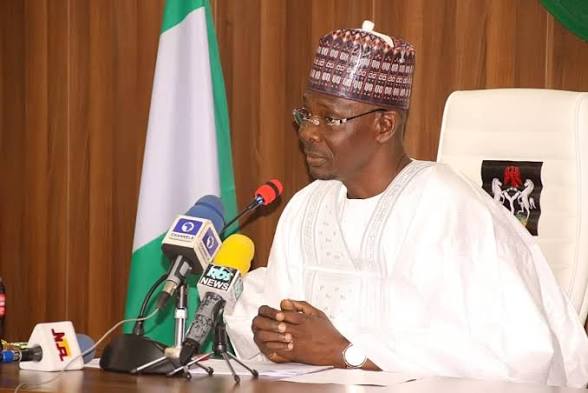
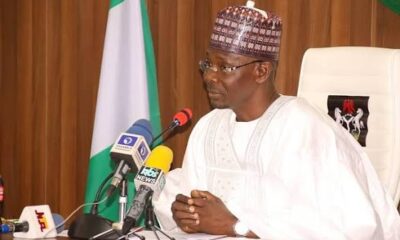
Nasarawa State Governor Abdullahi Sule has claimed that he has been under pressure to contest for the Nasarawa North Senatorial seat in the 2027 election.
The governor made the disclosure during the visit of the state executive members to his country home in Akwanga LGA on Saturday, March 21.
Governor Sule also revealed the identity of those pressuring him to contest in the election, a development that has led to mixed reactions from Nigeria.
Abdullahi Sule, the governor of Nasarawa State, has claimed that he has been under pressure to contest for the Nasarawa North senatorial seat in the 2027 general elections.
The governor made the revelation while hosting the state executive council members, led by Deputy Governor Emmanuel Akabe, at his residence in Gudi Country Home in the Akwanga local government area of the state.
According to Daily Trust, Governor Sule cited pressure from some stakeholders who are asking him to contest, and the need for Nasarawa North to have quality representation.
With all the pressure coming from our leaders, and so I don’t want them to feel offended that I have not been responding, I promise them I will contest when the time comes.”
Governor Sule disclosed that he had been planning to support one person, but had a change of mind when the person joined the call on him to contest for the position.
He went further to explain that he is consulting with stakeholders before he makes the final decision and that traditional rulers and senior politicians from Nasarawa North are also persuading him to contest for the senatorial seat.
However, the governor’s claim has started generating reactions from the people of the state. Below are some of their reactions:
Mohammed Zakariyau said it is the governor’s interest:
“You are interested in going and nothing else because that’s your sole choice, nobody can decide your future for you, and therefore, the issue of ‘under pressure from certain quarters is immaterial here'”.
Cos Mafuyai projected that the governor may not perform if elected as a senator:
“People who are pressured don’t perform once elected, but people who nurse the ambition into elective office and work hard to win do.”
Bem Haanya urged the governor to be wary of betrayal:
“Na so dem mount pressure on Darius Dickson Ishaku o. Groups from Southern Taraba were flocking to Government House, Jalingo, to persuade him to contest for the senatorial seat, yet on election day, they abandoned him.”
Emmanuel Yohanna Allu questioned the governor’s claim:
“If you want to contest, no one is stopping you, but don’t use the word pressure. If I may ask, who is pressuring you?”
Longji Goro Job criticised the governor:
“One or two clowns that they normally give pocket money will tell them, ‘Oga, why not go for senate,’ and they will say under pressure.”
The All Progressives Congress has scheduled Tuesday, March 24, 2026, for the screening of aspirants vying for national offices ahead of its forthcoming national convention.
In a notice released by the party’s Aspirants’ Screening Committee, all candidates who have purchased and submitted their Expression of Interest and Nomination Forms were invited to participate in the exercise.
According to the notice, the screening will take place at the Transcorp Hilton, Abuja, with proceedings expected to begin at 9:00 am.
The committee stressed that attendance is compulsory for all aspirants, who must appear in person with the necessary documents for verification.
The notice, signed by the Secretary of the Screening Committee, Isa Yuguda, was also shared via the party’s official X (formerly Twitter) platform, alongside contact details for further enquiries.
Aspirants were advised to arrive early and ensure they come with all required documentation to facilitate a smooth screening process.
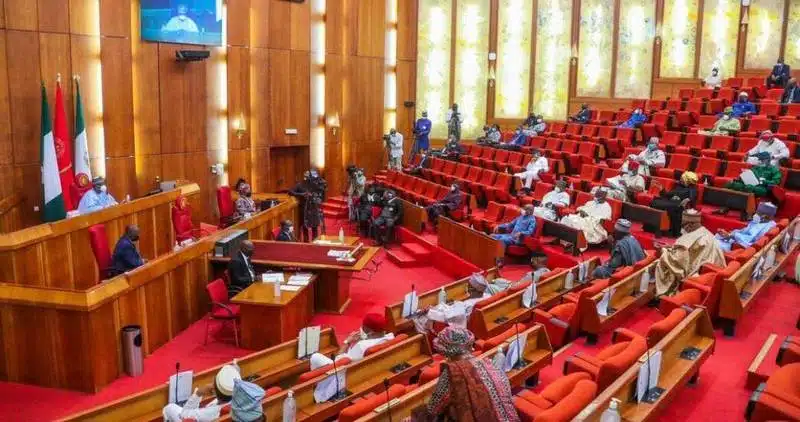
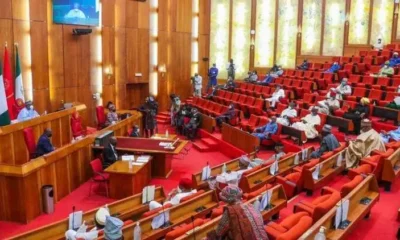
The Nigerian Senate has clarified why it is yet to take a position on the proposed amendment to the Electoral Act seeking to criminalise dual party membership, insisting that the bill must first be formally transmitted from the House of Representatives.
Chairman of the Senate Committee on Media and Publicity, Yemi Adaramodu, said the upper chamber could not deliberate on a bill that had not been passed to it.
Even if any amendment is coming, we are running a bicameral legislature. So, we can’t comment on it until it gets to us,” he said.
He explained that legislative procedures must be completed at the House of Representatives before the Senate can consider the proposal.
According to Adaramodu, the process requires that any bill must: Pass first and second readings in the House; Undergo public hearing; Be deliberated upon and passed; Be transmitted to the Senate for concurrence.
Speaking to The PUNCH, he stressed that until these steps are completed, the Senate cannot officially engage with the amendment.
The proposed amendment to the Electoral Act 2026 seeks to: Prohibit individuals from belonging to more than one political party; Void any dual party membership; Impose stricter penalties on offenders.
Under the bill: Offenders risk a ₦10 million fine; Or up to two years imprisonment; Or both penalties upon conviction.
It also provides that anyone found to hold dual membership will lose recognition in all political parties until their status is regularised.
The move is aimed at addressing long-standing concerns over: Political defections; Manipulation of party membership registers; Weak enforcement of party discipline.
Although current laws discourage multiple party memberships, enforcement has largely been administrative, with little or no criminal consequences.
For the amendment to become law: It must be passed by both chambers of the National Assembly of Nigeria; It will then be forwarded to the President for assent.
Until then, the Senate maintains it cannot take any official position on the proposal.


2027: Tinubu Accused Of Plot To Relocate Nigeria’s Capital From Abuja – Details Emerge

JUST IN: Nigerian’s Woes Deepen As Fuel Price Hits Record High; DETAILS

“I am Under Pressure”: Top Northern Governor Cries Out

Former Super Eagles Star Loses Life Savings, Duped By A Pastor of ₦1.2 Billion

These ’90s fashion trends are making a comeback in 2017

I’m A Married Man, I Can Never Get Myself Involved With Such A Thing, Delta Gov Aide Reveals Why He Offered Comfort ₦500,000 Job
-
 Politics2 days ago
REVEALED: APC Governor Defies Tinubu’s SGF, Goes Rogue
-

 Politics2 days ago
APC Fixes Date For Screening Of National Convention Aspirants
-
 Politics2 days ago
“I am Under Pressure”: Top Northern Governor Cries Out
-
 Business1 day ago
JUST IN: Nigerian’s Woes Deepen As Fuel Price Hits Record High; DETAILS
-
 Politics2 days ago
Senate Explains Silence On Bill Criminalising Dual Party Membership
-
 News4 hours ago
2027: Tinubu Accused Of Plot To Relocate Nigeria’s Capital From Abuja – Details Emerge