
Uncategorized
Awujale: Wasiu Ayinde Drags Governor Abiodun, Others To Court; Gives Reason


Renowned Fuji musician, Otunba Wasiu Ayinde Adesanya, has approached the Ogun State High Court sitting in Ijebu-Ode, seeking an interim order restraining the Ogun State Government and other parties from taking further steps in the installation process of the next Awujale of Ijebuland.
In the suit, the musician, popularly known as K1 De Ultimate (KWAM 1), joined Governor Dapo Abiodun as the first respondent, alongside five others.
Others in the suit are the Chairman of Ijebu-Ode Local Government; the Commissioner for Local Government and Chieftaincy Affairs; the Secretary of Ijebu-Ode Local Government; the Chairman of the Awujale Interregnum Administrative Council; and the Chairman of the Fusengbuwa Ruling House.
The action with suit number HC3/238/2025 before High Court II, is contained in a motion ex parte dated December 16, 2025.
The application was brought pursuant to Order 38 Rule 4 and Order 39 Rule 1 of the High Court of Ogun State (Civil Procedure) Rules, 2024, Section 36 of the 1999 Constitution (as amended), and under the inherent jurisdiction of the court.
KWAM 1 is seeking an order of interim injunction restraining the respondents from taking any further action in the selection or installation process of the next Awujale, pending the hearing and determination of the substantive suit.
The applicant claimed that the interim relief is necessary to preserve the subject matter of the dispute and prevent actions that could render the court proceedings nugatory.
The suit follows the musician’s earlier expression of interest in the vacant stool of the Awujale, which he linked to his alleged lineage from the Jadiara Royal House, a branch of the Fusengbuwa Ruling House.
However, the Fusengbuwa family had rejected the claim, stating that the Olori Omoba of Ijebuland has no ancestral connection with the royal house.
Recall that Wasiu Ayinde was installed as the Olori Omooba of Ijebuland by the late Awujale from the Fidipote ruling house and not Fusengbuwa ruling house.
During the burial of his mother, Alhaji Halimah Anifowose in January 2025, the musician also claimed to be from Fidipote total family white throwing jabs at islamic clerics who had thronged his residence instead of Fidipote family house.
As at the time of filing this report, the court had yet to fix a date for the hearing of the application.

A chieftain of the Peoples Democratic Party (PDP), Umar Sani, has revealed details of a private conversation he had with the Minister of the Federal Capital Territory, Nyesom Wike, regarding the political future of Siminalayi Fubara, the governor of Rivers State.
Sani made the disclosure during an interview on Symfoni TV while commenting on the ongoing political tension in the state and growing speculation about whether Governor Fubara will seek a second term in office.
According to the PDP chieftain, Wike has deliberately chosen not to discuss the issue publicly.
He said the former Rivers governor made it clear that he does not want to be drawn into conversations about the governor’s political future.
Sani said the FCT minister believes that raising such discussions too early could trigger unnecessary arguments within the party and create divisions among supporters.
He explained that debates about re-election or succession often become sensitive when they begin long before party primaries or official political processes start.
According to him, premature political conversations can cause confusion within a party. Members may begin to interpret statements differently. That situation, he noted, can weaken internal unity and distract leaders from governance.
He said: “Wike recently told me that nobody should ask him whether Fubara is going to do a second term or not. This is to avoid premature debates that can scatter the party. For now, the people of Rivers State are watching closely, hoping that this political ‘robasese’ does not stop the development of the state. Wike is keeping his cards close to his chest.”
Sani added that experienced political leaders often prefer to wait until the appropriate time before discussing candidates or succession matters. According to him, such restraint helps prevent internal conflicts and keeps the focus on governance.
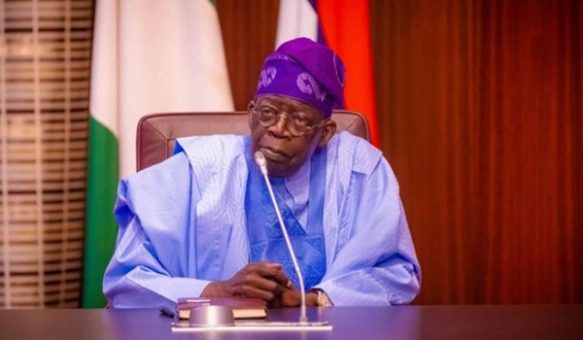
President Bola Ahmed Tinubu on Thursday convened a nearly two-hour security meeting with service chiefs at the Presidential Villa, marking the first such gathering since Tunji Disu assumed office as Inspector-General of Police.
According to reports, the service chiefs arrived at the Villa without their usual official vehicles, making them difficult to identify, and left the premises at approximately 5:10 pm after extended deliberations with the President.
The chiefs and the IGP were later identified as they exited the forecourt following the closed-door session.
The meeting comes amid rising security concerns nationwide, particularly following recent killings of military commanding officers in various operational theatres.
In the past week alone, the military lost at least three commanding officers in charge of forward operating bases, following a surge of attacks on security formations and personnel, especially in the North-East where Boko Haram and Islamic State West Africa Province insurgents have intensified assaults.
Notable incidents include the attack on Ngoshe in Borno State, which resulted in abductions, as well as separate attacks on Konduga, Marte, Jakana, and Mainok, all in Borno State.
Thursday’s security meeting is IGP Disu’s first formal engagement with the President and service chiefs since his appointment on February 28, 2026, following the resignation of his predecessor.
While details of the discussions have not been publicly disclosed, the meeting likely focused on the recent spike in attacks on security personnel, the vulnerability of communities in the North-East, and coordination among security agencies.
Uncategorized
Abuja Polls: Tension At Collation Centre As Party Agents Reject Results, Clash With INEC


There was a tense tension at a ward collation centre in Garki, Abuja, following a dispute between party agents and officials of the Independent National Electoral Commission over the handling of councillorship election results. The disagreement started during the collation of votes for the councillorship contest. Party agents accused electoral officials of blocking access to the result sheets before announcing the final figures.
Witnesses at the centre said party representatives were earlier allowed to cross-check figures for the chairmanship election. This process was reportedly carried out calmly and in line with procedure. However, the atmosphere changed when officials moved to declare councillorship results without permitting agents to verify the numbers with their own records.
The move triggered loud protests and heated exchanges inside the collation hall. Several agents insisted that the same level of transparency given during the chairmanship collation should apply to the councillorship exercise. One aggrieved party agent openly challenged the officials and demanded that the figures be reviewed before any declaration was made.
“Sir, we disagree with this final figures. Let’s confirm them with our record. You were there when during the chairmanship, they brought the figures, we checked, so can’t they allow us to do the same for councillorship? They just declare it like that without us checking the figures?” the agent said.
He added, “We disagree with these figures, let’s check them. Who does that? Let’s see it.”
The confrontation briefly disrupted the collation process and caused confusion among voters and party supporters present at the centre. The incident is one of several disputes recorded during the Federal Capital Territory Area Council elections, which have been marked by complaints of procedural lapses, delays and low voter turnout in some wards.
Meanwhile, early results released from the chairmanship elections show that the All Progressives Congress has taken the lead in key councils. The party has so far secured victories in Abuja Municipal Area Council (AMAC), Bwari Area Council and Kwali Area Council. Two other chairmanship results are still being awaited.
The Peoples Democratic Party won the Gwagwalada Area Council seat.
In AMAC, APC candidate Christopher Maikalangu polled 40,295 votes to defeat his closest challenger from the African Democratic Congress, who scored 12,109 votes. The PDP candidate recorded 3,398 votes. Maikalangu is the incumbent chairman.
In Bwari Area Council, APC’s Joshua Ishaku emerged winner with 18,466 votes. The ADC candidate came second with 4,254 votes, while the Zenith Labour Party candidate secured 3,515 votes.


2027: Tinubu Plot To Relocate Nigeria’s Capital From Abuja – Timi Frank

JUST IN: Nigerian’s Woes Deepen As Fuel Price Hits Record High; DETAILS

“I am Under Pressure”: Top Northern Governor Cries Out

Former Super Eagles Star Loses Life Savings, Duped By A Pastor of ₦1.2 Billion

These ’90s fashion trends are making a comeback in 2017

I’m A Married Man, I Can Never Get Myself Involved With Such A Thing, Delta Gov Aide Reveals Why He Offered Comfort ₦500,000 Job
-

 Politics2 days ago
APC Fixes Date For Screening Of National Convention Aspirants
-
 Politics2 days ago
“I am Under Pressure”: Top Northern Governor Cries Out
-
 Business1 day ago
JUST IN: Nigerian’s Woes Deepen As Fuel Price Hits Record High; DETAILS
-
 Politics2 days ago
Senate Explains Silence On Bill Criminalising Dual Party Membership
-
 News7 hours ago
2027: Tinubu Plot To Relocate Nigeria’s Capital From Abuja – Timi Frank