
Business
Nigerians Get Relief as Petrol Prices Drop at Filling Stations Nationwide

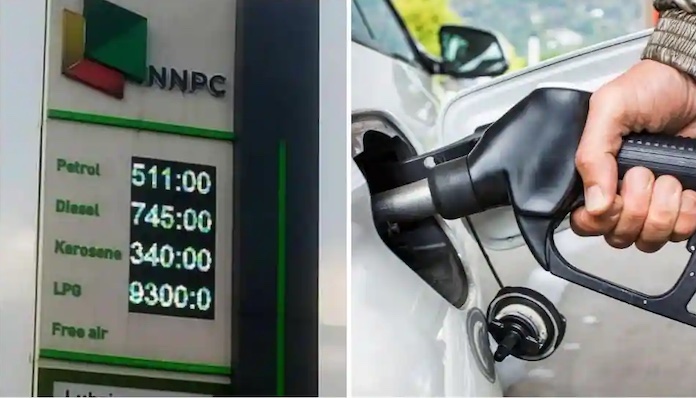
Pump prices of Premium Motor Spirit (PMS) have begun to drop at filling stations in some parts of Lagos and Ogun states following the recent reduction in the gantry price of petrol by the Dangote Petroleum Refinery. This price adjustment responds to the reduction in global crude oil prices as Iran and the United States reached an agreement.
Punch reports that at the SGR filling station in Mowe, Ogun state, a litre of petrol sells for N1,199, the lowest price encountered at the stops we visited. NIPCO, SAO, AP and MRS filling stations dispense a litre of fuel at N1,205 per litre, while Mobil petrol stations sell at N1,220 per litre.
A litre at Heyden’s station in Iperu went for N1,285 per litre. Other filling stations selling petrol at N1,245 per litre include NNPC Retail outlets in Ogun state.
Chinedu Ukadike, the Public Relations Officer of the Independent Petroleum Marketers Association of Nigeria (IPMAN), told Legit. during an interview that many filling stations are yet to reduce prices below N1,300 per litre because they are still managing old stock purchased at higher rates.

He explained that immediate price cuts could lead to losses for marketers still holding expensive inventory.
Ukadike said: “This announcement is enabling people who have old stocks to clear out their stocks, not only clearing out their stocks but also enabling them to prepare to take the fresh stocks.”
“Once the Dangote refinery announces a new price, there is a serious pause in loading. It will enable people who just bought new products to see how they can clear the old stocks within a window of a day or two.” He said once new products enter circulation, pricing adjustments will naturally follow.
Ukadike identified the cost of funds as another key factor affecting petrol pump prices, noting that financing expenses influence how quickly marketers adjust prices.


The Federal Government has disclosed that local petrol production has increased from effectively zero in 2023 to about 48 million litres per day. Special Adviser to the President on Oil and Gas, Mrs. Olu Verheijen, disclosed this at the Nigerian-British Chamber of Commerce Energy Day 2026.
A text of her presentation at the event, held recently in Lagos, was made available to the News Agency of Nigeria on Tuesday.
Speaking on the topic, “Energy in Nigeria: From Potential to Reality”, Verheijen noted that, for the first time in a generation, the majority of the petrol Nigerians consume is now refined at home. “This is where energy reform meets the strength of the Naira.
“For decades, every cargo of imported petrol was a standing demand for scarce dollars, a structural drain that weakened our currency. “As local refining has risen, that drain has eased: petrol imports fell from about N2.3 trillion in the first quarter of 2025 to under N90 billion a year later.
“Fewer dollars spent on fuel means less pressure on the Naira. Energy security and currency stability are not separate goals. They are the same goal,” she said.
On crude oil and condensate production, the Special Adviser said the country had restored investors’ confidence. According to her, crude oil and condensate production averaged 1.64 million barrels per day in 2025. She said the production was up by roughly 400,000 barrels a day since 2023, and the highest onshore level in two decades.
Verheijen also disclosed that over
four billion dollars in international oil company divestments had been concluded.
She said the divestment had helped to deepen indigenous participation in onshore, while the majors re-focused on deep-water and integrated gas.
“Every additional barrel matters — for revenue, for jobs, and for the strength of the federation,” she said
Reflecting on what the administration met on the ground in 2023, Verheijen said that the sector was under severe strain. She recalled that subsidies had become fiscally unsustainable while foreign-exchange distortions had weakened investment. “Production was below potential; Power-sector debt was strangling the gas-to-power chain. “The country had resources, but the system was not converting them into national value.
“So our first task was to stop the bleeding and rebuild the foundations,” she said.
In addressing the challenges, Verheijen recalled that President Tinubu’s administration restored fiscal credibility by removing the fuel subsidy and reforming the exchange rate.
According to her, the decisions were hard, but necessary.
“The results are visible. Total federation revenue rose to about N21 trillion in 2024, up from roughly N12 trillion in 2023 – nearly doubling in a single year,” she said.
She noted that, despite the deregulation, the government has prevented the chronic nationwide petrol queues that once defined scarcity.
NAN

Nigeria’s current account surplus rose sharply by 255.7 per cent quarter-on-quarter to $4.98bn in the first quarter of 2026, driven by higher crude oil, gas and refined petroleum exports, as well as a steep decline in petroleum product imports, according to the latest Balance of Payments report released by the Central Bank of Nigeria on Wednesday.
The apex bank, in its Q1 2026 Balance of Payments Highlights, stated that “provisional balance of payments statistics for Q1 2026 show a current account surplus of $4.98bn, which was higher than the $1.40bn and $3.41bn recorded in the preceding quarter (Q4 2025) and corresponding period (Q1 2025), respectively.”
The report showed that the current account surplus expanded by 255.71 per cent from the $1.40bn recorded in the fourth quarter of 2025 and was 46.04 per cent higher than the $3.41bn surplus posted in the corresponding period of 2025.
According to the CBN, the improvement was supported by increased earnings from crude oil exports, gas exports and refined petroleum product exports, alongside a significant reduction in refined petroleum product imports and lower net out-payments on the primary income account.
A breakdown of the external sector data showed that the goods account, which is the largest component of the current account, recorded a surplus of $5.95bn in Q1 2026, compared with $1.77bn in Q4 2025 and $3.35bn in Q1 2025.
The CBN said, “The goods account (a major sub-account in the current account) recorded a significantly higher surplus of $5.95bn in Q1 2026, as against $1.77bn and $3.35bn recorded in the preceding quarter and corresponding period of 2025.”
The stronger goods account position was underpinned by a rise in total exports to $15.49bn from $13.36bn in the previous quarter, largely due to higher crude oil and gas exports. Meanwhile, total imports fell to $9.54bn from $11.59bn, reflecting lower imports of refined petroleum products and non-oil goods.
Crude oil exports increased by 19.79 per cent quarter-on-quarter to $8.11bn, while gas exports rose by 12.95 per cent to $2.53bn. Refined petroleum product exports jumped by 20.3 per cent to $2.37bn. Non-oil exports also improved marginally by 4.62 per cent to $2.49bn.
On the import side, non-oil imports declined by 10.49 per cent to $7.85bn, while refined petroleum product imports dropped sharply to $0.31bn from $2.48bn. However, crude oil imports rose to $1.39bn from $0.34bn recorded in Q4 2025.
The report also showed mixed performances across other current account components. Net out-payments on services increased to $3.71bn from $3.32bn, driven largely by higher net debits in travel and other business services.
“The increase in net out-payments for services was largely due to increases in net debits in travel and other business services,” the bank stated.
The primary income deficit narrowed to $2.83bn from $3.27bn in the preceding quarter, reflecting lower dividend and interest payments to foreign investors. According to the report, “This was largely attributable to a decrease in out-payments (dividend and interest) to non-residents’ investments, mostly to direct investors.”
The secondary income account surplus, which largely captures remittance inflows, declined to $5.57bn from $6.21bn. Personal transfers from Nigerians in the diaspora fell to $5.30bn from $5.72bn in Q4 2025.
Despite the stronger current account position, the financial account remained in a net borrowing position. The report showed that net borrowing increased to $2.51bn in Q1 2026 from $1.96bn in the previous quarter.
Portfolio investment inflows strengthened during the period, rising to $6.03bn from $5.27bn in Q4 2025, while direct investment inflows moderated slightly to $1.03bn from $1.11bn. Nigerian investments abroad recorded outflows of $0.20bn under direct investment assets and $0.26bn under portfolio assets.
The CBN attributed developments in the financial account to increased portfolio investment inflows, a marginal decline in direct investment inflows, accretion to external reserves, and increased acquisition of portfolio investment assets abroad by residents.
Further analysis of the balance of payments data showed that Nigeria recorded an overall balance of payments surplus of $2.38bn in Q1 2026, lower than the $2.67bn surplus achieved in Q4 2025. The stock of external reserves, however, rose significantly to $48.35bn at the end of March 2026 from $45.75bn at the end of December 2025.
The report also highlighted a deterioration in net errors and omissions, which widened to negative $7.49bn in Q1 2026 from negative $3.36bn in the preceding quarter.
The latest figures indicate that improvements in oil production, rising petroleum exports and reduced dependence on imported fuel continued to strengthen Nigeria’s external position during the first quarter, helping to offset weaker remittance inflows and higher service-related outflows.
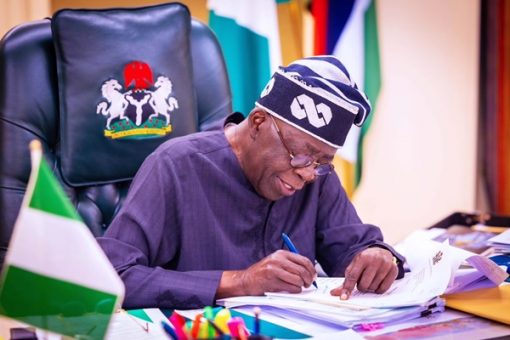
The Federal Government has released about N2.68tn for the construction, rehabilitation and maintenance of roads and bridges across the country between 2023 and April 2026, findings by The PUNCH from the Open Treasury Portal have shown.
The analysis, however, revealed a significant disparity between approved budgets and actual releases, with the government making provisions totalling N54.93tn for road-related projects within the period under review.
The figures highlight both the growing emphasis on infrastructure development and the persistent financing constraints that continue to affect capital project execution in the country.
The development also comes amid the ongoing Renewed Hope Media Tour organised by the Presidential Communications Team, designed to showcase projects being implemented under President Bola Tinubu’s Renewed Hope Agenda.
Data obtained from the Open Treasury Portal on Tuesday showed that road projects attracted a combined budgetary allocation of N2.53tn in 2023, out of which N631.51bn was released, representing an implementation rate of 24.95 per cent.
The Treasury data, however, did not specify the road projects to which the funds were released and did not indicate whether the government’s four legacy highway projects formed part of the expenditure.
A year-by-year breakdown showed that road construction projects received N280.14bn from a budget of N1.09tn during the year, while rehabilitation and repair works attracted N345.93bn from an allocation of N1.42tn. Road and bridge maintenance projects also received N5.44bn out of a total provision of N14.68bn.


JUST IN: FG Announces Another Top Appointment

Nigerians Get Relief as Petrol Prices Drop at Filling Stations Nationwide

BREAKING: Ex-APC Chairman Dies in Bandits’ Custody (PHOTO)

Former Super Eagles Star Loses Life Savings, Duped By A Pastor of ₦1.2 Billion

I’m A Married Man, I Can Never Get Myself Involved With Such A Thing, Delta Gov Aide Reveals Why He Offered Comfort ₦500,000 Job

Lagos Imposes ₦250,000 Fine For Illegal Waste Disposal

-

 Politics2 days ago
BREAKING: Ex-First Lady Wins House of Reps Ticket
-

 News1 day ago
Tinubu Announces Top Fresh Appointment (PHOTO)
-

 News1 day ago
BREAKING: Police Releases Fresh Updates on Rescue of Oyo Abducted Pupils, Teachers
-
 Tech2 days ago
BREAKING: Tragedy as Popular TV Broadcaster, Security Guard Assassinated [Photo Emerges]
-
Tech2 days ago
BREAKING: Popular Nigerian Cleric Mysteriously Dies Inside Hotel as Details Emerge
-
 Politics5 hours ago
Fresh Crisis Hits APC as Popular Serving Senator Dumps Party
-

 Tech15 hours ago
Fact Check: What We Know About Viral Claims on Obasanjo’s Death
-

 Tech2 days ago
Controversial APC Voters’ Quote Linked to Bishop Oyedepo Sparks Debate Online; Truth Emerges