
Business
New Cement Prices Emerge as Dangote, BUA Release Fresh Rates

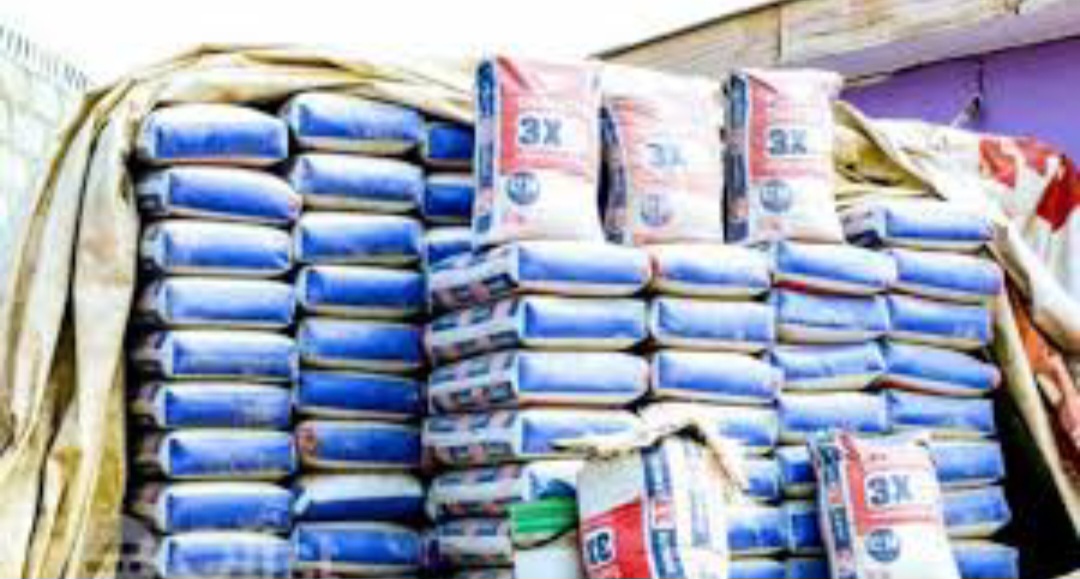
The Federal Government has expressed concern over the continued rise in cement prices, warning that the trend is piling pressure on ongoing infrastructure projects across the country.
Minister of Works, David Umahi, said the persistent increase in cement prices is driving up the cost of road and other public infrastructure projects, forcing contractors to seek contract reviews due to escalating construction expenses.
According to the minister, the Federal Government is investing heavily in critical infrastructure and requires the support of cement manufacturers through more affordable pricing to ensure the timely execution of projects.
Market prices have continued to climb despite appeals by the government. A 50kg bag of cement, which sold for between ₦7,500 and ₦10,000 in 2025, now retails for between ₦11,500 and ₦15,000 in many parts of the country, with some locations recording prices as high as ₦13,000 and above.

Current market checks also show that Dangote Cement and BUA Cement are selling for between ₦11,500 and ₦13,000 per 50kg bag in several states, depending on the location and distributor.
Umahi attributed the growing concern to the impact of rising cement prices on the cost of delivering major infrastructure projects, urging manufacturers to reduce prices and expand production capacity to support the government’s infrastructure agenda and ease the burden on contractors and Nigerians.
Nigerian lenders Providus Bank and Unity Bank have completed their merger after obtaining all regulatory approvals and court clearance, the newly combined institution announced on Friday, June 26.
ProvidusUnity Bank described the merger as a milestone in building a stronger, more resilient institution that is better positioned to serve customers, support businesses, and contribute to Nigeria’s economic growth. The bank added that it expects to begin operations shortly. The bank said the merger combines Providus Bank’s innovation, agility, and customer-focused approach with Unity Bank’s nationwide network, market reach, and years of banking experience.
The merger was finalized just weeks after a court dismissed a legal challenge filed by shareholders of both banks seeking to block the transaction.
Under the approved terms, Unity Bank shareholders will receive 18 Providus Bank shares with a par value of 50 kobos each (100 kobos equal one naira) for every 17 Unity Bank shares they own. The court also ordered that all of Unity Bank’s assets, liabilities, and obligations be transferred to Providus Bank and approved the dissolution of Unity Bank’s board without winding up the company.
The merged institution will operate about 230 branches across Nigeria, placing it among the country’s banks with the largest physical branch networks.
Merger Reflects Nigeria’s Banking Recapitalization Drive
The merger process, which began in August 2024, is part of a broader consolidation of Nigeria’s banking sector following the recapitalization program launched by the Central Bank of Nigeria (CBN) in March 2024. Under the program, the regulator significantly increased the minimum capital requirements for commercial banks.
By the March 31, 2026 recapitalization deadline, 33 banks had met the new capital requirements. The CBN said the higher capital thresholds were intended not only to strengthen the banking system against external shocks but also to enable lenders to finance larger projects, particularly in strategic sectors such as energy and infrastructure.

Unity Bank was created in 2006 through the merger of nine smaller financial institutions. It is among several small and mid-sized Nigerian banks that struggled to raise additional capital after being weakened by the country’s 2016 economic crisis, which followed the collapse in global oil prices.
Providus Bank, meanwhile, was among the 16 banks that had already met the new minimum capital requirements by November 2025.
Walid Kéfi
The Central Bank of Nigeria (CBN), in a circular released today, July 1, 2026 has revoked the operating licences of 46 microfinance banks across the country with effect from immediately.
Here are the list of Revoked Microfinance Banks:
Minji-Se Churchill MFB
Merchant MFB
Janmaa MFB
Busu MFB
Gold MFB
Zain MFB (formerly Dawakin Tofa MFB)
Bompai MFB
Ajwa MFB (Formerly Gezawa)
NOW NOW DIGITAL MFB
Crystabel Microfinance Bank
Chanelle MFB
Abia SME MFB
Kamba MFB
Iwade MFB
Winview MFB
Zuru MFB
Minjibir MFB
Shanono MFB
Sumaila MFB
Rimin Gado MFB
Mwaghavul MFB
Sycamore MFB
TOFA MFB
Safegate MFB
Creekline MFB
Bestar MFB
Livingspring MFB
Apple MFB
Stanford MFB
Frontline MFB
Zafec MFB
Supreme MFB
Bejin-Doko MFB
Kanopoly MFB
Bellbank MFB (formerly Tsanyawa)
Yeneng MFB
Creditville MFB
MBAG MFB
STRAIGHT SAHARA MFB
OURPASS MFB
VERDANT MFB
BASAWA MFB
CASHA MFB
ESTEEM MFB
ENTREPRENEUR MFB
AVANTUS MFB

Fuel marketers have declared that their filling stations will stop selling petrol should the Federal Government try to enforce price control.
The National Publicity Secretary of the Independent Petroleum Marketers Association of Nigeria, Chinedu Ukadike, issued the warning on Tuesday during an interview with our correspondent.
The Minister of State for Petroleum Resources (Oil), Heineken Lokpobiri, warned on Monday that the government would not tolerate profiteering and other practices that exploit fuel consumers. Lokpobiri said that, though the era of government-fixed petrol prices was over, deregulation did not mean regulators should abdicate their responsibility to protect consumers.
The minister spoke in Abuja at the opening ceremony of the 2026 General Counsel and Legal Advisers Forum organised by the Nigerian Midstream and Downstream Petroleum Regulatory Authority.
His remarks came amid renewed public concerns over the failure of refiners and importers to lower the gantry prices of petroleum products even as crude prices fell from a high of $120 during the US-Iran war to as low as $72 a barrel.
On Sunday, the Federal Competition and Consumer Protection Commission expressed concern over what it described as possible consumer exploitation in the downstream petroleum sector following the failure of fuel prices to decline significantly despite the sharp drop in global crude oil prices.
During the Monday engagement, the oil minister told the NMDPRA to ensure Nigerians are not exploited by fuel marketers. “As part of the requirements of deregulation, prices have to be determined by market forces. The NMDPRA has a unique responsibility, compounded by the PIA, to ensure not only that products are available but also that unnecessary profiteering is stopped.


FULL LIST: 5 New Things That Will Happen to NYSC Members as Tinubu Takes Fresh Action

Major Banking Shake-Up as Two Nigerian Banks Merge, Unveil New Name
CBN Shuts Down 46 Microfinance Banks Nationwide (FULL LIST)

Former Super Eagles Star Loses Life Savings, Duped By A Pastor of ₦1.2 Billion

I’m A Married Man, I Can Never Get Myself Involved With Such A Thing, Delta Gov Aide Reveals Why He Offered Comfort ₦500,000 Job

Lagos Imposes ₦250,000 Fine For Illegal Waste Disposal

-
 Business7 hours ago
Major Banking Shake-Up as Two Nigerian Banks Merge, Unveil New Name
-
 Politics1 day ago
APC Removes Top Ex-Governor, 24 Other Candidates from Party’s Final List
-

 News14 hours ago
BREAKING: Kenneth Okonkwo Gets Top Appointment Ahead of 2027 Elections
-
 News1 day ago
BREAKING: Tinubu’s Ex-Minister Arrested (PHOTO)
-

 Business1 day ago
Marketers Reject Fuel Pricing Curbs, Threaten Shutdown
-
 Politics1 day ago
APC Drops Six Senatorial, 19 Reps Candidates In Final List To INEC
-

 Entertainment1 day ago
VIDEO: I Quit Acting In 2019 Over Poor Pay, Mediocre Work – Deyemi Okanlawon
-

 News1 day ago
Oyo Schools To Reopen Thursday As NUT Suspends Strike