
News
Full List: How Sylva’s Alleged Coup Funds Were Shared Among Soldiers, Clerics

Full List: How Sylva’s Alleged Coup Funds Were Shared Among Soldiers, Clerics
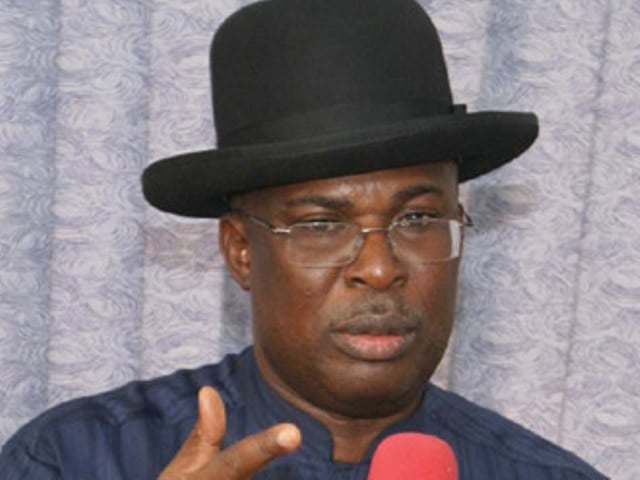
The investigation records alleged that a former Bayelsa State governor, Timipre Sylva, provided ₦785m through Purple Waves Limited, an Abuja-based construction and real estate company accused of serving as a financial intermediary for the purported plot.
The funds were allegedly transferred from the company to accounts controlled by a Kano-based Bureau de Change operator, Abdullahi Sani Mohammed, who reportedly disbursed the money on the instructions of the suspected coup leader, Col. Mohammed Ma’aji.
The claims remain allegations and are subject to determination by the General Court Martial and the Federal High Court, where several suspects are standing trial.
Sylva, who is believed to be outside Nigeria, has denied involvement in the alleged plot.
According to investigation records reviewed by PREMIUM TIMES, Mohammed made 47 payments to various beneficiaries between September 20 and 30, 2025, as preparations for the alleged coup intensified.
The transactions occurred shortly before dates reportedly considered by the alleged conspirators for the operation, including September 27, October 1 and October 4.

The plan collapsed following Ma’aji’s arrest on September 29, 2025.
Investigators said several members of the alleged network were unaware of his arrest, allowing the BDC operator to continue making transfers until September 30.
Mohammed also reportedly continued receiving funds from Purple Waves until October 2.
In an extra-judicial statement to investigators, Mohammed said he had maintained a longstanding foreign exchange relationship with Ma’aji before the Purple Waves transactions began.
“Sometimes, Oga Ma’aji will call me to ask for a dollar price. If he asks me, I’ll tell him,” he wrote.
“Sometimes, he will ask if he can buy $1,000 or $3,000. Sometimes, he will ask for $10,000 or $9,000.”
He said their dealings later expanded to larger transactions involving accounts operated by A&A Express Link, ASA Multipurpose Concept and Luji Trade and Investment Limited.
Mohammed recalled receiving the first two major payments of ₦150m each into his Providus Bank account around September 18.
“Oga Ma’aji called me around 18 September 2025. He told me his people would pay money into the account,” the statement read.
“As I checked the account, I saw ₦150,000,000 in A&A Express in Providus Bank.”
He said Ma’aji subsequently sent instructions through a WhatsApp voice note directing him to pay ₦10m into a First Bank account.
Mohammed claimed another ₦150m was later credited to the same account, followed by transfers of ₦100m, ₦50m, another ₦100m and ₦50m into his Luji Trade and Investment account at Fidelity Bank.
He confirmed receiving a total of ₦785m from Purple Waves between September 20 and October 2, 2025.
Investigators alleged that some serving and former military personnel received payments for operational responsibilities in the planned takeover.
Lt. Col. Shamsudeen Bappah, allegedly assigned to seize and hold the 102 Battalion in Zuma, Niger State, reportedly received ₦5m on September 27.
Lt. Felix Sunday Stephen, who was allegedly tasked with surveying an airport in Lagos, gathering intelligence and disrupting flights on the proposed operation day, reportedly received an initial ₦5m on September 23 and another ₦12m two days later.
An army officer identified as Lt. Aminu John allegedly received ₦10m on September 22.
Maj. Mundi Usman, who was reportedly assigned to lead an operation at the Presidential Villa, allegedly received multiple transfers, including ₦10m on September 23, another ₦10m on September 25 and ₦5m on September 28.
Squadron Leader Zuzu Noel Goddy of the Nigerian Air Force allegedly received ₦1m on September 28 to deploy gun trucks onto the Abuja airport runway and halt flight operations.
Another officer, Squadron Leader Sani Bubara Adamu, allegedly received ₦1m on September 25 for a purported operation targeting the Air House. Investigators said he remained at large.
Other alleged beneficiaries included former Capt. Abubakar Mohammed, Corporal Aliyu Ibrahim and Warrant Officer Nasiru Ibrahim, who reportedly received ₦5m each.
The records also identified an Islamic cleric, Goni Bukar, as one of the largest individual beneficiaries.
Investigators alleged that Bukar was engaged to provide spiritual support for the planned operation.
He reportedly received ₦10m on September 20, ₦20m on September 23 and another ₦20m on September 29, bringing the total transferred to him to ₦50m.
The cleric has maintained in statements attributed to him that money received from Ma’aji was intended for prayers, charity and mosque-related activities rather than an attempt to overthrow the government.
Investigators also traced several transfers to corporate accounts.
An account belonging to Cutzbytz Cakes reportedly received ₦10.3m on September 22, ₦20m on September 26 and ₦1.2m the following day.
Other recipients listed in the records included Co-fran Spinfluence, which allegedly received ₦32m; Aduko Engineering Services, ₦3.5m; Schutmann Nigeria Limited, ₦10m; Overere Services Limited, ₦15m; and Auto Revive, ₦6.26m.
An auto dealer identified as Ahmed Abdulganiyu allegedly received ₦46.5m on September 27.
Alhaji Abubakar Maliki reportedly received two payments totalling ₦55m, while Christopher Elube allegedly received two transfers totalling ₦36m on September 28.
Investigators said the use of corporate accounts suggested that some beneficiaries received the alleged coup funds through business entities rather than personal accounts.
Mohammed reportedly admitted transferring more than ₦700m to the listed beneficiaries on Ma’aji’s instructions.
The investigation records showed that the BDC operator received names, account details and payment amounts from the colonel.
“Later, he called me to his house in Lokogoma to calculate some money that I paid into people’s accounts,” Mohammed stated.
“He brought out his paper and his list to show me and tell me to buy $5,000 to bring to his house.”
The Nigerian Army reportedly recovered the funds that had not been disbursed when the BDC operator was arrested.
Investigators said the suspected conspirators used agricultural expressions to conceal their communications.
The entire operation was allegedly referred to as “farming,” while logistics were called “fertilisers.”
The proposed execution day was described as the “harvest,” the operation itself as “digital farming,” and clerics consulted for prayers as “technical partners.”
The records alleged that Sylva initially hesitated to support the plot before later becoming a major financier through Purple Waves.
The company’s account reportedly held more than ₦5bn when disbursements began in September 2025.
More than 40 suspects, including serving and retired military personnel, a police officer, clerics and civilians, were arrested between September and October 2025.
Thirty-six military personnel are facing trial before a General Court Martial in Abuja.
Six other defendants are standing trial before Justice Joyce Abdulmalik of the Federal High Court in Abuja on 13 counts.
The defendants before the Federal High Court have challenged the admissibility of their statements and video recordings.
They argued that the evidence was obtained in violation of safeguards provided under the Administration of Criminal Justice Act.
The prosecution, however, urged the court to dismiss the objections and admit the materials in evidence.
Five associates of Sylva are also reportedly being prosecuted over allegations that they failed to disclose information about his whereabouts.

The Niger State Government has imposed a 24-hour curfew following protests over the death of 37 suspected illegal miners in the state.
The state governor, Mohammed Umaru Bago, announced the curfew during a press conference on Friday.
According to the governor, the curfew takes effect immediately after Juma’at prayers on Friday.
The development follows protests sparked by the deaths of the 37 miners, who were reportedly arrested over alleged illegal mining activities.
Recall that the Commissioner of Police in Niger State, Adamu Abdullahi Elleman, ordered an investigation into the incident, which occurred in the early hours of Thursday, September 17, 2026.
According to a statement by the Police Public Relations Officer, Wasiu Abiodun, the suspects arrested over alleged illegal mining were found dead while in the custody of the Niger State Command of the Nigeria Security and Civil Defence Corps, NSCDC.
Adamawa State Governor, Ahmadu Fintiri, has declared Monday a work-free day across the state in honour of the late former Governor of Gongola State and former National Chairman of the Peoples Democratic Party, Alhaji Bamanga Mohammed Tukur.
The declaration came a day after Tukur was buried in Yola following funeral prayers held at the Lamido’s Palace on Sunday.
Daily Voice reports that political leaders, traditional rulers, family members, associates and sympathisers gathered to pay their final respects to the elder statesman.
Fintiri announced the work-free day in a statement issued by his Chief Press Secretary, Humwashi Wonosikou, saying the decision was intended to give residents an opportunity to honour Tukur and reflect on his contributions to Adamawa State and Nigeria.Nigeria travel guides
The governor described Tukur as a prominent statesman whose contributions to the growth and development of the state and the country would remain part of his enduring legacy.
According to Fintiri, the work-free day is part of activities surrounding the three-day mourning period earlier declared by his administration following the death of the former Gongola State governor.
Fintiri urged residents to use Monday to pray for the peaceful repose of Tukur’s soul and seek comfort for his family, friends and other people affected by his death.
He also directed that government flags across Adamawa State would continue to fly at half-mast throughout the mourning period as a mark of respect for the late statesman.
However, the governor clarified that the declaration would not affect essential services, directing workers in critical sectors to continue their duties.
The latest announcement follows Fintiri’s earlier declaration of three days of mourning after Tukur died on Saturday at the age of 90.
At the time, the governor had described the death as a major loss to Adamawa State and Nigeria, recalling Tukur’s long years of service in public life.Nigeria travel guides
“It is with deep sadness that I mourn the passing of Alhaji Bamanga Tukur, former Governor of Gongola State and an elder statesman whose contributions to our state and nation will remain indelible,” Fintiri had said.
The governor had also announced that government flags would be flown at half-mast throughout the mourning period.
“In his honour and in recognition of his selfless service, I have declared three days of mourning across Adamawa State, during which all government flags will fly at half-mast,” he said.
Fintiri further extended his condolences to Tukur’s family, associates and the people of Adamawa State, saying they were united in grief over the death of the former governor.
“My heart goes out to his family, associates, and the good people of our state during this period of grief,” he said.
Tukur’s family had announced his death in a statement signed by his son, Awwal D. Tukur, on behalf of the family. The statement said the former PDP chairman had “returned to his Creator” after a lifetime devoted to public service, business and community development.
The family described Tukur as a man whose influence extended beyond his immediate family to Adamawa State and Nigeria, citing his wisdom, generosity and commitment to national development.
It also expressed appreciation to Nigerians and others who offered prayers, condolences and support following his death.
Tukur was one of the prominent political figures from the old Gongola region and occupied several important positions during his decades in public and private life.
He served as the third civilian governor of the defunct Gongola State, an entity that existed before the creation of Adamawa and Taraba states. His tenure remains part of the political history of the region.
Beyond his role as governor, Tukur served as Minister of Industries during the military administration of former Head of State, General Sani Abacha. He was also involved in business and economic development activities and, in 2012, served as president of the Africa Business Roundtable.
Tukur later became national chairman of the PDP in March 2012, remaining in the position until January 2014 during a politically turbulent period in Nigeria.Nigeria travel guides
His death came shortly before his 91st birthday, which would have been celebrated on September 15.
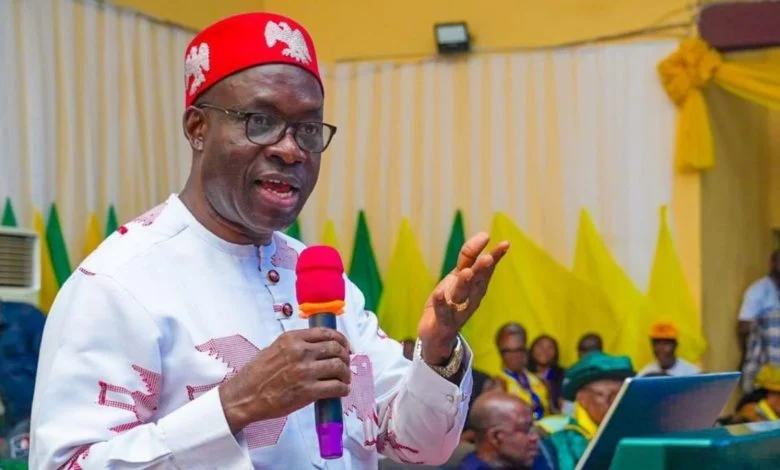
The Anambra State Government says it is still repaying loans taken out by previous administrations, including those of former governors Peter Obi and Willie Obiano.
The state said the inherited obligations remain part of its financial commitments, despite the Chukwuma Soludo administration’s decision not to take fresh commercial bank loans since it came into office.
Commissioner for Finance, Izuchukwu Okafor, disclosed this while speaking on the Ndi Anambra podcast released by the state government’s New Media team.
Okafor used the platform to explain the state’s current financial position and the steps taken by the Soludo administration to reduce its debt burden.
According to him, the government has focused largely on paying existing obligations rather than accumulating new debts.
“It’s on record that this administration has not borrowed a kobo from any commercial bank since the inception of this administration,” he said.The commissioner explained that the absence of new commercial borrowing does not mean the state has completely stopped making debt payments.
He said funds due to Anambra from the Federation Account Allocation Committee are still being deducted to service loans contracted by earlier administrations.
Okafor specifically linked some of the outstanding obligations to the administrations of Obi and Obiano.Read Political News
“These loans were borrowed during the time of Peter Obi and Willie Obiano, the past governors,” Okafor said.
The disclosure comes amid continued debate over the financial records of successive administrations in Anambra and the extent to which the state has relied on borrowing to finance projects.
Peter Obi governed Anambra from 2006 to 2013, while Willie Obiano succeeded him and remained in office until 2022. Soludo took over as governor in March 2022.
The current administration has repeatedly presented debt reduction as one of the major areas of its financial policy.
Okafor said the government had made substantial progress in reducing the liabilities it inherited.
He claimed that the overall state debt profile had dropped by more than 83 per cent under the Soludo administration.
“We have been able to manage the state debt very well, that we have brought it down by more than 83 per cent as of today,” Okafor said.
He said the reduction was not limited to conventional loans.
According to him, the government also inherited several domestic financial obligations which had to be addressed alongside existing debt repayments.
These included unpaid contracts, gratuity arrears and pension liabilities.
The commissioner said the administration had been working to settle such obligations while maintaining funding for ongoing government programmes.
He further stated that Anambra’s domestic debt had been brought close to zero after several outstanding liabilities were cleared.
Okafor said the government still has obligations tied to facilities obtained from development institutions.
He explained that some of the loans are structured in a way that allows repayments to be deducted directly from the state’s federal allocations.
“Before they limit Anambra’s own allocation, they will deduct it as such because most of them, World Bank loans and other loans, they committed,” he said.
The commissioner’s explanation also showed that the state’s current financial position cannot be assessed solely by looking at whether the Soludo administration has taken a new commercial loan.
The administration has maintained that it can finance its programmes through internally generated revenue and available public funds without resorting to fresh commercial borrowing.
The governor, a former Central Bank of Nigeria governor, has frequently emphasised fiscal discipline and the need to reduce the cost of servicing debt.Download Interactive Maps
Anambra had also featured prominently in previous debates over state borrowing during Obi’s tenure.
Obi had built a public reputation around conservative financial management and had repeatedly highlighted the savings and investments accumulated by his administration.
However, available debt records have shown that Anambra had outstanding obligations during and after his tenure, including external facilities.
The latest statement from the Soludo administration does not suggest that all the outstanding obligations were obtained directly from commercial banks.
Rather, Okafor pointed to loans and development facilities whose repayment arrangements remain active years after they were contracted.
He also disclosed that the government had recently cleared an obligation referred to as CAGS.
According to him, the repayment has provided additional financial space for the state government.
The commissioner said clearing such liabilities would allow more resources to be directed towards projects and other areas of government spending.Read Political News


2027: Rufai Oseni Online Poll Reveals Winner of Presidential Election. Nigerians React

BREAKING: Nigeria Govt Imposes 24-Hour Curfew, Details Emerges

BREAKING: Popular Nollywood Actress Rejects APC Appointment

Former Super Eagles Star Loses Life Savings, Duped By A Pastor of ₦1.2 Billion

I’m A Married Man, I Can Never Get Myself Involved With Such A Thing, Delta Gov Aide Reveals Why He Offered Comfort ₦500,000 Job

Lagos Imposes ₦250,000 Fine For Illegal Waste Disposal

-
 News19 hours ago
BREAKING: Nigeria Govt Imposes 24-Hour Curfew, Details Emerges
-

 Politics1 day ago
Prominent NWC Member Dumps PDP, Joins New Party
-
 Business1 day ago
Emir Sanusi Sends Strong Warning to Nigerians Buying Dangote Shares
-
 Entertainment1 day ago
BREAKING: Popular Nollywood Actress Rejects APC Appointment
-
 Opinion2 hours ago
2027: Rufai Oseni Online Poll Reveals Winner of Presidential Election. Nigerians React