
Business
Dollar to Naira Exchange Rate Today, August 14, 2026

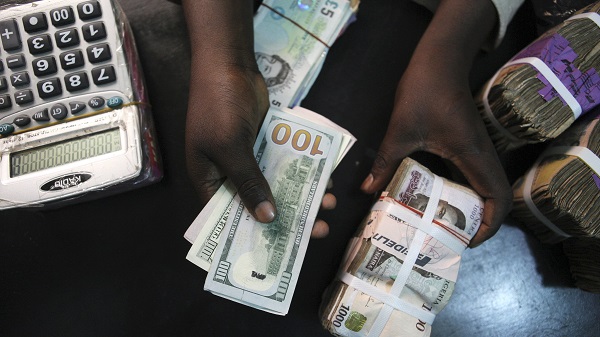
The naira remained broadly stable against the United States dollar on Friday, August 14, 2026, with the official Nigerian Foreign Exchange Market (NFEM) rate trading around the mid-₦1,360 band while the parallel market hovered in the low-₦1,400 range.
Data from the Central Bank of Nigeria’s NFEM platform showed the official exchange rate at about ₦1,364 per dollar, reflecting only marginal movement from recent sessions. The official rate is derived from the volume-weighted average of trades executed on the market and serves as Nigeria’s benchmark exchange rate.
Currency dealers in Lagos said the parallel market (black market) traded at approximately ₦1,405 per dollar for buying and ₦1,415 per dollar for selling on Friday morning, keeping the spread between the official and unofficial markets relatively narrow compared with the sharp gaps recorded in 2024 and early 2025. Recent market trackers have shown street-market quotes clustering around the ₦1,410 region.
At the prevailing official rate, $100 exchanged for roughly ₦136,400, while $1,000 was worth about ₦1.364 million. In the parallel market, the same amounts were valued at about ₦141,500 for $100 and ₦1.415 million for $1,000.

Market participants attributed the relative calm to continued liquidity management by the Central Bank of Nigeria and steady foreign-exchange supply through the formal market. Analysts also noted that importer demand has remained moderate, helping the naira hold within a relatively tight range in recent weeks.
Reuters reported that traders expect the naira to remain broadly stable in the near term, supported by the CBN’s presence in the market and efforts to ease demand pressure for dollars. The report placed recent official-market trading around the ₦1,360 level and street trading near ₦1,425 per dollar.
The official market has traded mostly between ₦1,362 and ₦1,370 per dollar in recent sessions, according to market data compiled by Proshare, underscoring the currency’s recent consolidation around the ₦1,360 range.
For Nigerians monitoring exchange rates for travel, school fees, imports, or international payments, the key levels to watch today are about ₦1,364/$ at the official NFEM window and ₦1,415/$ in the parallel market.

The naira remained broadly stable against the United States dollar on Thursday, August 13, 2026, with the official Nigerian Foreign Exchange Market (NFEM) rate trading around the mid-₦1,360 band while the parallel market hovered in the low-₦1,400 range.
Data from the Central Bank of Nigeria’s NFEM platform showed the official exchange rate at about ₦1,364 per dollar, reflecting only marginal movement from recent sessions. The official rate is derived from the volume-weighted average of trades executed on the market and serves as Nigeria’s benchmark exchange rate.
Currency dealers in Lagos said the parallel market (black market) traded at approximately ₦1,405 per dollar for buying and ₦1,415 per dollar for selling on Thursday morning, keeping the spread between the official and unofficial markets relatively narrow compared with the sharp gaps recorded in 2024 and early 2025. Recent market trackers have shown street-market quotes clustering around the ₦1,410 region.
At the prevailing official rate, $100 exchanged for roughly ₦136,400, while $1,000 was worth about ₦1.364 million. In the parallel market, the same amounts were valued at about ₦141,500 for $100 and ₦1.415 million for $1,000.
Market participants attributed the relative calm to continued liquidity management by the Central Bank of Nigeria and steady foreign-exchange supply through the formal market. Analysts also noted that importer demand has remained moderate, helping the naira hold within a relatively tight range in recent weeks.
Reuters reported that traders expect the naira to remain broadly stable in the near term, supported by the CBN’s presence in the market and efforts to ease demand pressure for dollars. The report placed recent official-market trading around the ₦1,360 level and street trading near ₦1,425 per dollar.
The official market has traded mostly between ₦1,362 and ₦1,370 per dollar in recent sessions, according to market data compiled by Proshare, underscoring the currency’s recent consolidation around the ₦1,360 range.
For Nigerians monitoring exchange rates for travel, school fees, imports, or international payments, the key levels to watch today are about ₦1,364/$ at the official NFEM window and ₦1,415/$ in the parallel market.


Nigerians may soon have another operational refinery as billionaire businessman Azibapu Eruani’s Azikel Refinery in Yenagoa, Bayelsa State, enters its final stage of construction.
The refinery is designed to process 25,000 barrels of crude oil or condensate daily and produce petrol, diesel, aviation fuel, kerosene, liquefied petroleum gas and other refined products.
The refinery is designed as a full-slate hydro-skimming plant with a capacity to process 25,000 barrels of crude oil or condensate per day.
Eruani, president of Azikel Group, disclosed the development during a recent tour of the refinery complex by members of the Nigerian Society of Engineers. Nigerian billionaire builds refinery
About 700 engineers and other personnel are currently working on the completion of the project, with most of the workforce comprising young Bayelsans and Nigerian engineers alongside expatriate specialists.
Azikel said the refinery is expected to employ more than 3,000 people when it becomes operational, while the project has already generated more than 80,000 indirect jobs, Biilionaires.Africa reports.
Mac Jokori, chairman of the Nigerian Society of Engineers, Bayelsa branch, described the facility as a major milestone for Nigeria’s refining industry.
Jokori said the refinery had complied with high engineering standards and would contribute to industrialisation, local capacity development and employment opportunities for young Nigerians. Refinery to produce petrol, aviation fuel
The Azikel facility is a full-slate hydro-skimming refinery designed to process both crude oil and condensate.
The refinery is expected to produce premium motor spirit, diesel, aviation fuel, kerosene, liquefied petroleum gas and other petroleum products.
Eruani said the ability to convert crude oil or condensate into petrol and aviation fuel was a major feature of the refinery.
He described Azikel as Nigeria’s second-largest full-slate refinery and said it was the only refinery in Africa designed to process condensate into a complete range of products.
Guardian reports that the company plans to expand the refinery’s capacity to 125,000 barrels per day in the future.
Azikel refinery capacity increased The refinery project has grown significantly from the facility initially approved by regulators.
The project received approval in 2015 under former President Muhammadu Buhari. In November 2023, Azikel Petroleum signed a $259 million debt funding agreement with the African Export-Import Bank for a 12,000-barrel-per-day hydro-skimming refinery.
However, Eruani said the project subsequently underwent enhanced value engineering and redesign, increasing its capacity to 25,000 barrels per day.
“The Azikel Refinery licensed by former President Muhammadu Buhari in 2015 has now gone through several enhanced value engineering and redesign to a 25,000 barrels per day capacity. It is now a $1 billion investment.”
Azikel Petroleum contracted US oil services company McDermott for feasibility studies and construction work on the facility.
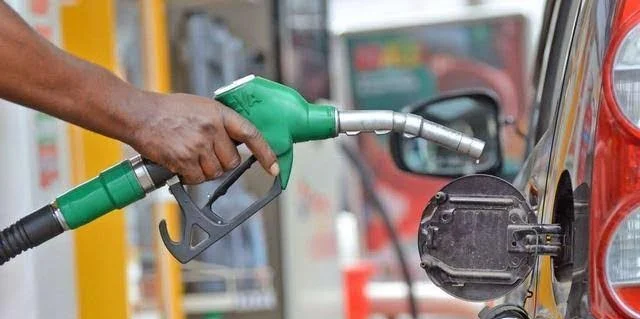
Nigerians could face another round of petrol price increases after the Dangote Refinery raised its ex-gantry petrol price, triggering fresh upward pressure across the downstream petroleum market.
The 700,000-barrels-per-day Dangote Refinery increased its petrol price by N15.50, from N1,150 to N1,181 per litre.
The latest adjustment comes as international crude oil prices approach $90 per barrel amid growing concerns over global energy supply.
Analysts said the move could be a defensive response to higher crude acquisition and operating costs, particularly as tensions involving the United States and Iran escalate around tanker traffic through the strategic Strait of Hormuz.
Nigerian depot prices climb
The impact of the refinery’s price adjustment is already being felt across Nigeria’s petroleum depots. Data from PetroleumPriceNG showed that depot petrol prices rose by nearly three per cent as of Tuesday, August 11, 2026, with several operators adjusting their rates upward. Soroman recorded one of the sharpest increases, raising its petrol price by N50 to N1,250 per litre. NIPCO also increased its rate to N1,200 per litre. Integrated raised its price by N25 to N1,200 per litre, while PIVOT increased its rate by N32 to N1,200 per litre.
The latest adjustments have pushed average depot prices to around N1,200 per litre, adding fresh pressure to marketers and retailers.
Filling stations face fresh pressure
The increase at the depot level could eventually translate into higher pump prices if crude oil remains elevated and transportation and logistics costs continue to rise. Major filling stations, including Dangote Refinery-backed MRS, have continued to sell petrol at prices ranging from about N1,240 to N1,260 per litre in some locations.
Energy policy expert Adeola Yusuf said consumers should closely monitor developments in the international oil market, warning that prolonged tensions around the Strait of Hormuz could trigger further increases.
“The situation remains fluid, and Nigerians should watch out for more increases in the coming days,” Yusuf said.
For motorists and households already grappling with elevated living costs, another petrol price increase could raise transportation and logistics expenses, potentially pushing up the prices of food, goods and other essential services.


BREAKING: Grief as Popular House Speaker Dies

Shehu Sani Predicts Winner of Osun 2026 Governorship Election

Dollar to Naira Exchange Rate Today, August 14, 2026

Former Super Eagles Star Loses Life Savings, Duped By A Pastor of ₦1.2 Billion

I’m A Married Man, I Can Never Get Myself Involved With Such A Thing, Delta Gov Aide Reveals Why He Offered Comfort ₦500,000 Job

Lagos Imposes ₦250,000 Fine For Illegal Waste Disposal

-

 News2 days ago
BREAKING: Nigerian Gov Declares Public Holiday Across State
-
 Uncategorized2 days ago
BREAKING: Popular Osun Candidate Withdraws From Race, 3 Days to Election
-
 Business2 days ago
Dollar to Naira Exchange Rate Today, August 13, 2026
-

 Entertainment1 day ago
Why Davido Should Apologize To Okpebholo Over WAEC Result Troll — Lawyer
-

 Sports1 day ago
Chelsea Give Clubs Friday Deadline To Bid £120 Million For Enzo Fernandez
-
 News1 day ago
BREAKING: Tinubu Announces Fresh Appointment
-

 Entertainment1 day ago
When I Tell You Something, Do It’ – Davido Scolds Isreal DMW
-

 Sports1 day ago
Desire Doue Seals 2206 UEFA Super Cup Win For PSG Against Aston Villa