
News
FG To Give Nigerian Shipowners $25m Each Under New Shipping Fund

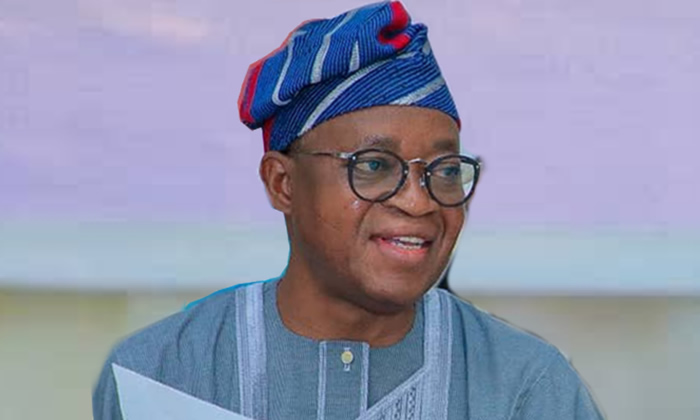
The Minister of Marine and Blue Economy, Adegboyega Oyetola, has revealed that the Federal Government will provide qualified Nigerian shipowners with up to $25m each, under the Cabotage Vessel Financing Fund, a move he said could strengthen indigenous shipping and create more than 30,000 direct and indirect jobs.
This comes as he also disclosed that disbursement of the long-awaited CVFF to qualified Nigerian shipowners to strengthen indigenous shipping and create thousands of jobs will soon commence.
Oyetola disclosed this in a post on his X handle on Monday, saying the government was finally moving to unlock the fund more than 20 years after it was established.
He said the initiative would help address one of the major challenges confronting Nigerian shipowners.
“After more than 20 years, we are finally moving to unlock the Cabotage Vessel Financing Fund (CVFF) for Nigerian shipowners. This is a major step towards building a stronger Nigerian-owned shipping industry, creating jobs and ensuring that more of the value generated from activities in our maritime space stays in Nigeria.
“Under the CVFF, each successful applicant will be able to access up to $25 million in financing to acquire vessels, subject to the applicable assessment and approval process. This is significant because access to affordable, long-term financing has been one of the major challenges limiting the growth of Nigerian-owned shipping companies”, the minister stated.
On how the fund would improve the competitiveness of indigenous operators, the minister said, “With access to financing at very low interest rates, our shipowners can acquire modern vessels, expand their fleets and compete for coastal and offshore contracts that are currently dominated by foreign operators.

“Our objective is to ensure that more Nigerian-owned vessels operate on Nigerian waters, more Nigerian businesses participate in our maritime economy, and more Nigerians benefit from the wealth our waters generate. Providing Nigerian shipowners with the financial capacity to acquire vessels is a critical step towards reducing foreign dominance in our maritime space.”
Oyetola said he had directed the Nigerian Maritime Administration and Safety Agency to accelerate the process of disbursing the fund to qualified applicants.
He stated, “I have, therefore, directed the Nigerian Maritime Administration and Safety Agency (NIMASA) to work closely with the 12 approved banks, known as Primary Lending Institutions (PLIs), to accelerate the disbursement of the fund to qualified applicants.
“NIMASA has so far received 92 applications. Of these, 20 have been forwarded to the Primary Lending Institutions, while one has so far been reviewed and forwarded for approval. To further speed up access, we have expanded the number of approved banks from five to 12 and launched the CVFF Application Portal to make the process more transparent, structured and accessible.”
The minister added that the expected impact of the fund extended beyond vessel acquisition, as increased indigenous ownership could stimulate several areas of the maritime economy.
He said, “The disbursement of the CVFF could help create a stronger indigenous fleet, which will in turn stimulate activity in shipyards, marine engineering, vessel maintenance, maritime logistics and other supporting industries. It could also create more than 30,000 direct and indirect jobs, while strengthening Nigeria’s ship-owning and shipbuilding ecosystem.
“This initiative is part of the Tinubu Administration’s commitment to unlocking the full potential of Nigeria’s Blue Economy, strengthening indigenous capacity and ensuring that Nigerians take a greater share of the opportunities in our maritime sector.” He also highlighted the government’s efforts to develop the human resources needed to support the maritime industry.
“Financing vessels is only one part of building a stronger indigenous maritime industry. We are equally investing in the people who will power this industry. So far, 222 seafarers have received free professional training, 333 cadets have completed their academic training and obtained degrees, while 135 cadets under the Nigerian Seafarers Development Programme (NSDP) have obtained their Certificates of Competency. In addition, 7,059 Nigerian seafarers have been placed onboard vessels to gain valuable sea-time experience.”
“We are determined to ensure that Nigerians own, operate and benefit from the economic activities taking place in Nigeria’s maritime space. We are building the capacity to make that happen — through vessel financing, skills development, indigenous enterprise and strategic investment in our maritime sector. The work continues”, the minister concluded.
The CVFF was established under the Coastal and Inland Shipping (Cabotage) Act of 2003 to support Nigerian shipping companies in acquiring vessels and developing indigenous capacity. Its disbursement has, however, been delayed for more than two decades.
The Federal Government launched the CVFF application portal in January 2026 and announced that successful applicants could access up to $25m in financing. NIMASA subsequently began receiving applications from interested operators.
NIMASA had disclosed in April that it received more than 60 applications within four months of opening the portal, with the agency promising that the disbursement process would be transparent and strictly monitored.
The latest figure provided by Oyetola represents an increase in applications to 92, although only one application has so far been reviewed and forwarded for approval, according to the minister.
The National Agency for Food and Drug Administration and Control (NAFDAC) has arrested two men over alleged production and repackaging of counterfeit alcoholic and energy drinks at a facility in Ojo, Lagos State.
The suspects, identified as Chibuzor Okafor and William John, were arrested during a raid on a two-storey building at Zamfara Plaza, BBA Trade Fair Complex, along the Badagry Expressway.
NAFDAC said its officers recovered drums, filters, packaging materials, a heating device and other equipment allegedly used in the illegal operation.
The agency disclosed that the raid followed intelligence gathering and surveillance on suspected counterfeiters operating within the Trade Fair International Market.
Speaking during the operation, the Assistant Director of NAFDAC’s Investigation and Enforcement Directorate, Kunle Ojo, said some of the suspects were caught in the act.
“Gentlemen of the press, as you can see today, when we came, we caught some red-handed people producing all kinds of alcoholic drinks,” Ojo said.
He described the discovery as alarming, adding that the operation was part of efforts to protect Nigerians from potentially dangerous products.
Ojo said NAFDAC had intensified enforcement activities ahead of the festive season, when demand for alcoholic beverages and other drinks usually increases.
He warned that counterfeit drinks could pose serious health risks and urged those involved in the trade to stop.
“You are killing Nigerians in order to make money, which is not good,” he said.
The NAFDAC official added that the agency would investigate the sources of the products and raw materials, as well as identify those allegedly financing or directing the operation.
He said the recovered products and materials would be moved to the agency’s warehouse for further action, including destruction in line with established procedures.
Ojo warned that those arrested would face administrative action and prosecution in accordance with the law.
One of the arrested suspects, Chibuzor Okafor, who identified himself as a drinks dealer in the market, said he changed the bottles of some drinks because the original containers were damaged.
Speaking to Vanguard at the scene, Okafor said, “I deal in drinks. I change the bottle of the drink. It’s not that the bottle is not good. It’s the drink in there, because the other one is already damaged. So that’s why we are putting it in the next bottle.”
NAFDAC has yet to establish publicly the full details of the products involved or the extent of the suspected operation.
The agency’s Deputy Director of Public Relations, Christiana Obiazikwor, said NAFDAC continued to carry out surveillance, seize unregistered and counterfeit products, arrest suspects and destroy offending goods.
She dismissed claims that the agency was not doing enough to tackle counterfeit products, saying its officers regularly visited markets and suspected production sites.
“NAFDAC is still at work. We are on the streets. We are in the markets. We are everywhere,” she said.
Obiazikwor explained that some enforcement operations were not publicized to avoid alerting suspected offenders or creating unnecessary tension.
She said journalists were invited to observe the latest operation to show the public the agency’s efforts to protect consumers.
The official urged Nigerians to report suspected counterfeit production and distribution directly to NAFDAC instead of relying on social media posts that could spread unverified information.
“There’s no point going to social media to create fear. Report to NAFDAC, and we’ll do the needful,” she said.
She assured members of the public that the identities of people who provide credible information would be protected.
The Assistant Director and Head of Public Relations at the Investigation and Enforcement Directorate, Victoria Jennifer Akudu, said the raid formed part of the agency’s routine operations against illegal manufacturing and distribution.
Akudu said enforcement officers regularly confiscated suspected counterfeit products and shut down facilities linked to illegal activities.
She disclosed that the suspected operators had allegedly moved from an earlier location following enforcement action, prompting officials to continue tracking their activities.
“We have confiscated and sealed off the place. They moved to another place. This time around, we passed through the back door. And that is how we are able to get them,” she said.
Akudu urged Nigerians to report suspected counterfeit products directly to the agency and avoid spreading unverified claims that could cause unnecessary public concern.
“I will ask Nigerians not to fear. We are alert, and we are alive. We are doing our statutory function the way it should be,” she said.
NAFDAC said the operation was part of its ongoing efforts to remove counterfeit, adulterated and unregistered products from the Nigerian market.
The agency warned that repackaging drinks in the bottles of established brands without proper quality checks could expose consumers to serious health risks, particularly when the contents and production conditions have not been verified.

Human rights activist and presidential candidate of the African Action Congress (AAC), Omoyele Sowore, has filed a ₦5 billion fundamental rights enforcement suit against the Department of State Services (DSS) over an alleged assault and forcible removal from the Federal High Court in Abuja.
Daily Voice reports that the suit, marked FHC/ABJ/CS/2480/2026, was instituted on Tuesday, October 13, 2026, against the DSS, its Director-General, Tosin Ajayi, the Attorney-General of the Federation, Lateef Fagbemi and a deputy director of the security agency, Benjamin Bulus.
Sowore alleged that DSS operatives assaulted and forcibly removed him from the court premises on June 22, 2026, despite an existing judicial order directing that he be remanded at the Kuje Correctional Centre.
He disclosed that the alleged assault occurred after Justice Mohammed Garba Umar of the Federal High Court, Abuja, ordered his remand at the Kuje Correctional Centre pending the hearing and determination of his application seeking a stay of the order revoking his bail and the bench warrant issued against him.
According to him, armed DSS operatives, including men and women wearing hoods, stormed the fourth floor of the court building while he was waiting for correctional officers to arrive and implement the remand order.
The activist alleged that the operatives physically assaulted him, forcibly removed him from the area and transported him against his will to the basement of the court complex using elevators reserved for Federal High Court judges, thereby resulting in physical injuries.
He maintains that the remand order did not authorise the security operatives to assault him, forcibly remove him or subject him to degrading treatment within the court premises.
Sowore is asking the court to determine whether the DSS operatives acted outside the scope of the judicial order and whether their conduct violated his fundamental rights.
The presidential candidate is seeking ₦5 billion in aggravated damages for alleged violations of his constitutional rights to dignity and personal liberty.
A significant part of the case concerns video footage allegedly recorded during the incident using Ray-Ban Meta smart glasses.
According to the court processes, the recording forms part of the evidence Sowore intends to rely on to establish the circumstances of the alleged assault and the conduct of the operatives involved.

Nigeria Police Force operatives arrested former Imo state governor and Senator Rochas Okorocha on Monday evening, October 12, 2026, at the REIZ Continental Hotel in central Abuja.
The police linked the arrest to allegations of criminal conspiracy, forgery, and impersonation, all connected to a criminal investigation that had been ongoing for some time before Monday’s development.
According to available information, Okorocha was first invited to report to the Force Headquarters in Abuja on September 2, 2026.
His legal team subsequently requested a rescheduling of the appointment to September 8, 2026 — an appointment the former governor also failed to honour.
The Sun reported that with Okorocha having evaded two separate police invitations, the authorities moved to secure a bench warrant, which gave officers the legal authority to proceed with his arrest rather than continue with voluntary invitations.
However, Channels TV confirmed that the former governor of Imo state was released on bail after one hour of interrogation. The development was confirmed by the Imo state police command’s Public Relations Officer, CSP Aniete Iniedu.
The police spokesperson also disclosed that Okorocha was asked to return to the force headquarters on Tuesday, October 13, for the continuation of the investigation into the allegation.
Rochas Okorocha? Okorocha served as governor of Imo state and later represented the Imo West Senatorial District in the Nigerian Senate. He has remained a prominent figure in Nigerian politics since leaving office as governor.
No further details on the specific circumstances surrounding the allegations against him were immediately available at the time of his arrest on Monday night.


Ayra Starr Announces World Tour For 2027

I Don’t Believe In Buying Expensive Clothes – Davido’s Sister

They Almost Squeezed Me To Death – Portable Begs Tinubu, Seyi For More Money

FULL LIST: Top 10 “Tokunbo” Cars You Can Get For ₦3m–₦5m

Former Super Eagles Star Loses Life Savings, Duped By A Pastor of ₦1.2 Billion

I’m A Married Man, I Can Never Get Myself Involved With Such A Thing, Delta Gov Aide Reveals Why He Offered Comfort ₦500,000 Job

-
 News1 day ago
BREAKING: Police Arrest Prominent APC Ex-Governor; Reason Emerges
-

 News10 hours ago
Sowore Drags DSS DG, AGF, Others To Court, Demands ₦5 Billion
-
 News10 hours ago
NAFDAC Uncovers Fake Alcohol, Energy Drinks Factory In Lagos
-
 Entertainment10 hours ago
They Almost Squeezed Me To Death – Portable Begs Tinubu, Seyi For More Money
-
 Entertainment10 hours ago
I Don’t Believe In Buying Expensive Clothes – Davido’s Sister
-
 Business1 day ago
Dangote Refinery Announces Fresh Job Vacancies for Nigerians
-
 Politics10 hours ago
Gunmen Kill NDC Member During Attack On Enugu Campaign Office
-
 Politics10 hours ago
2027: ‘False Battle’ – APC Breaks Silence On Rift Between Wike, Governors