News
SOS Children’s Villages Nigeria calls for children to be treated as partners

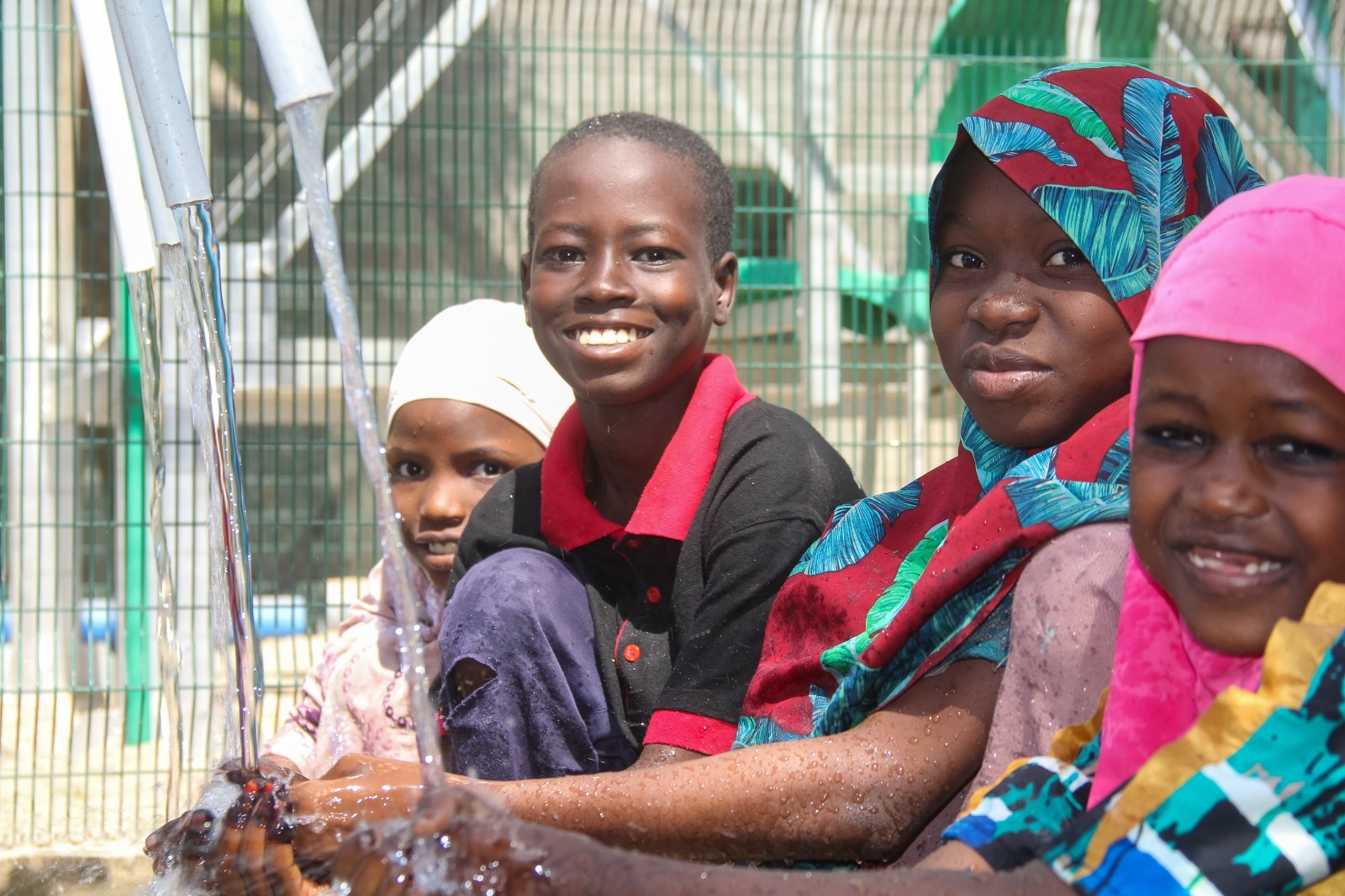
SOS Children’s Villages Nigeria calls on government, communities and development partners to put it into practice by treating children and young people as partners and co-creators of solutions to the issues they face. The call places particular focus on children who have lost parental care or are at risk of losing it.
“Children already have a voice. Our job is to create the conditions in which they can use that voice safely and be taken seriously,” said Eghosa Erhumwunse, National Director of SOS Children’s Villages Nigeria. “Children and young people often know best how to solve the problems they face. What they need is the opportunity and the space to thrive.”
A child should know their rights, know where to go for help and be able to influence decisions about their care, their education and their future. Listening must lead to action.
This principle guides the organisation’s programmes. Family strengthening helps parents and caregivers to care for their children and keep families together. Where children cannot live with their families, alternative care provides safe, family-based settings. Youth development prepares young people for independent adult life, and child rights advocacy strengthens community and state child protection systems. Together, these programmes give children the security they need to exercise their rights.
Violence remains part of daily life for many children in Nigeria. Nine in 10 children aged 1 to 14 experience violent discipline at home (NBS and UNICEF, MICS 2021), and more than 8 in 10 experience it in school (UNICEF, 2022).
Children and young people are already contributing to the response. Ahead of the Second Global Ministerial Conference on Ending Violence Against Children, held in Manila in November 2026, members of the Children and Youth Council in communities we work in set out their position in a policy brief. They believe children should not be seen only as victims in need of protection, but as agents of change who can identify risks, support their peers and help shape the policies that affect them. As one Council member put it: “We cannot build a safer world for children without listening to children.”
Meaningful participation requires age-appropriate information, trusted adults and safe ways to report concerns. Children should be able to express their views in ways that suit their age, ability and circumstances, and be told how those views were used. Children with disabilities, displaced children and children in alternative care need particular attention. Participation must also protect children’s privacy: no child should be pressured to recount a traumatic experience, appear in the media or share personal information to be heard. Supporting children to speak up must never shift the responsibility for their protection onto them.

SOS Children’s Villages Nigeria will continue to strengthen families and communities while creating spaces where children and young people can drive real change.
On World Children’s Day, SOS Children’s Villages Nigeria and its Children and Youth Council call for the following actions:
Government and public institutions: Resource child protection, family support and alternative care services, and strengthen implementation of the Child’s Rights Act 2003, the National Plan of Action to End Violence Against Children (2023 to 2027) and the National Alternative Care Guidelines. Ensure that children who cannot live with their families receive safe, family-based care. Establish confidential, child-friendly reporting mechanisms in schools and communities, and involve children as equal partners in designing and monitoring child protection policies, with clear feedback on how their views were used
Schools, families and communities: Create safe environments in which children can speak up without fear of blame or punishment. Promote positive discipline in place of corporal punishment, challenge harmful practices such as child marriage, teach digital safety alongside children’s rights, and ensure that every report leads to timely support.
Businesses, donors, civil society and the media: Invest in family strengthening, child protection and youth-led initiatives, including peer support and peer mediation in schools. Support children’s own advocacy priorities and protect their dignity and privacy in all communications.
“The test of our commitment is what happens after a child speaks,” Erhumwunse added. “When a concern is raised, it must be addressed. When a right is violated, it must be remedied. Every child should grow up knowing that their voice matters and that adults will act to protect it.”
The Federal Government’s planned payment of the ₦70,000 monthly transport allowance to Nigerian public service workers has generated considerable interest among civil servants, particularly those expecting financial relief from the intervention.
The allowance followed an agreement reached between the Federal Government and the Nigeria Labour Congress (NLC) at a conciliation meeting held in Abuja on October 27, 2026.
According to the agreement, the intervention is expected to commence in November 2026 and run for six months.
However, before workers begin to expect the payment, there are four important things they should understand.
1. It Is a Six-Month Benefit
The ₦70,000 allowance is not a permanent monthly benefit. The government approved it for only six months, beginning from November 2026.
This means the intervention is expected to run from November 2026 to April 2027.
2. It Is Not a New National Minimum Wage
Workers should understand that the ₦70,000 payment is not a new national minimum wage.
It is a temporary government intervention agreed upon with organised labour to provide relief amid rising transportation costs and economic hardship.
The minimum wage implementation issue remains a separate matter, with both parties agreeing to establish a committee to continue negotiations.
3. It Is Specifically a Transport Allowance
The ₦70,000 is a transport intervention, not a salary increase or general-purpose wage adjustment.
Its primary purpose is to provide financial support to workers struggling with the rising cost of transportation.
4. Workers Should Not Expect a One-Off ₦420,000 Payment
Although the six-month benefit could amount to ₦420,000 per eligible worker, the approved amount is ₦70,000 monthly, not a single payment of ₦420,000.
Also, the agreement has not specified the exact payment date, disbursement method or detailed administrative arrangements for beneficiaries.
The agreement encourages state and local governments to participate in the intervention process. Therefore, implementation arrangements at those levels may require further clarification.
Source: Federal Government–NLC agreement of October 27, 2026.
The Federal Government has approved a ₦70,000 monthly transport allowance for public service workers, with payment scheduled to commence in November 2026.
The intervention, which will run for six months, is part of measures agreed upon by the Federal Government and the Nigeria Labour Congress (NLC) to cushion the impact of rising transportation costs and economic hardship on Nigerian workers.
The agreement was reached during a conciliation meeting between government representatives and organised labour held at the Federal Ministry of Labour and Employment in Abuja.
According to the memorandum of understanding signed at the meeting, the transport allowance will be paid across all levels for six months, beginning in November.
The resolution stated: “That transport intervention of Seventy Thousand Naira (₦70,000) commencing from November 2026 would be paid across all levels for a period of six months.”
The agreement followed renewed pressure from organised labour over workers’ welfare, the rising cost of living and outstanding agreements between the government and labour unions.
FG Approves Other Outstanding Allowances
Apart from the transport intervention, the Federal Government also approved the payment of outstanding peculiar allowance arrears owed to eligible workers.
The arrears, which take effect from May 1, 2026, will be paid in three equal monthly instalments beginning in November.
The government also agreed to settle 19 months of outstanding allowances owed to health workers within three months, starting from December 2026.
Meanwhile, issues surrounding hazard allowances for agricultural officers and the proposed adjustment of the Consolidated Health Salary Structure (CONHESS) were also discussed during the meeting.
The National Salaries, Incomes and Wages Commission is expected to complete the necessary verification and assessment before further decisions are taken.
Minimum Wage Implementation Still Unresolved
Despite the agreement on transport support and outstanding allowances, the Federal Government and organised labour failed to reach an agreement on the effective date for implementing the national minimum wage discussions.
However, both parties agreed to immediately constitute a Minimum Wage Negotiation Committee to address the outstanding issues.
The meeting also considered tax relief for workers, with both parties agreeing that the matter should be referred to the National Executive Council because of its statutory implications.
Furthermore, state and local governments were urged to participate in the transport intervention process to extend the benefits to their respective workers.
When Will Workers Receive the ₦70,000?
Although the Federal Government has approved the transport allowance to commence in November 2026, the agreement did not specify the exact payment date or whether the money would be paid alongside workers’ monthly salaries.
The six-month intervention is expected to provide a total of ₦420,000 to an eligible worker if all six monthly payments are made.
However, the agreement does not automatically compel state and local governments to implement the allowance, as they were only urged to key into the intervention.
The Federal Government and the NLC are expected to reconvene after one month to assess the implementation of the resolutions.
The development comes amid growing concerns over transportation costs, rising food prices and the financial difficulties confronting Nigerian workers.
Sources: [Punch Newspaper](https://punchng.com/fg-approves-n70000-monthly-transport-support-for-workers-for-six-months/) | [Channels Television](https://www.channelstv.com/2026/10/27/fg-approves-six-month-%E2%82%A670000-transport-support-for-workers/) | [Reuters](https://www.reuters.com/business/world-at-work/nigeria-agrees-transport-allowance-federal-government-workers-ahead-tinubu-re-2026-10-28/)


The African Democratic Congress (ADC) vice-presidential candidate, Rotimi Amaechi, has said Nigerians are responsible for the country’s problems, not President Bola Tinubu. Daily Voice reports that Amaechi spoke on Thursday at the ADC campaign rally in Kebbi State.
Amaechi urged Nigerians to take responsibility for changing the situation by coming out en masse to vote against Tinubu in the 2027 general elections. The former Governor of Rivers State also accused Tinubu’s administration of borrowing more money than his predecessor, the late former President Muhammadu Buhari.
According to Amaechi, Tinubu’s administration had borrowed over $30 billion, contrasting it with what he described as Buhari’s borrowing record.
He said, “They will continue to tempt you. If they don’t tempt you, then you are not a creation of God. When they tempt you, they are showing you that they are afraid. They know that come January 16, we will win.
“They are borrowing money quickly so that they can take it and run away. If not, you borrowed over $30 billion, all one man, and later you people will say that Buhari was borrowing money.
“You have seen what is called borrowing now, right? Buhari was borrowing one, two million, but this man has come and is taking 30 billion.
“Honestly, you are the problem; Tinubu is not the problem. If we all march out on January 16, let the idiot come out and stop us from voting. It has nothing to do with religion; it has nothing to do with ethnicity. It’s blackmail.
“How can a man be campaigning that it’s the turn of the South? You will do the turn of the South until you kill us? He said Nigerians should embrace poverty. Why is he not poor? Why has Tinubu refused to embrace poverty? Tinubu has no solution, for Christ’s sake. You are the solution. We must go out and march; we must go out and vote.”


SOS Children’s Villages Nigeria calls for children to be treated as partners

FG Releases List of Approved Centres For Nigerians To Register to Get N30k Monthly [Full List]