Connect with us

News

26 States Lean On FAAC As Wage Bills Outstrip IGR

Published

on

At least 26 state governments could not generate enough internal revenue to cover their personnel costs in 2025, as they continue to depend on allocations from the Federation Account despite a significant improvement in their finances.

An analysis by Daily Voice showed that only eight of the 34 states covered by a new BudgIT report generated Internally Generated Revenue higher than their personnel expenditure during the year. The eight states were Lagos, Enugu, Ogun, Delta, Kaduna, Kwara, Abia and Anambra.

The remaining 26 states generated about N1.16tn internally but spent approximately N1.91tn on personnel, leaving a gap of about N747bn between their combined IGR and wage-related expenditure.

The findings are contained in BudgIT’s 2026 report titled ‘Nigeria’s Economic Reforms: What Has Changed Across Nigeria’s States? An Analysis of State Finances in the Post-Subsidy Years’.

The report analysed actual figures contained in states’ full-year budget implementation reports for 2022 and 2025. Akwa Ibom and Rivers were excluded because of incomplete or unavailable data.

The figures do not imply that states are expected to finance salaries exclusively from IGR because statutory allocations are a legitimate source of government revenue. They, however, show the extent to which many states would struggle to meet even their personnel obligations without revenue distributed by the Federation Account Allocation Committee.

This dependence has persisted despite the sharp rise in revenues available to states following the removal of petrol subsidy, foreign exchange reforms, and higher revenues accruing to the Federation Account.

According to BudgIT, aggregate FAAC allocations increased from N3.43tn in 2022 to N11.38tn in 2025, representing a 232.06 per cent increase and a compound annual growth rate of 50.2 per cent.

IGR also increased substantially, rising from N1.57tn to N4.15tn over the same period, but its 165.01 per cent growth and 38.38 per cent CAGR lagged the expansion in FAAC receipts.

Consequently, states became more dependent on federal transfers despite generating more revenue internally. FAAC accounted for 68.7 per cent of aggregate state revenue in 2022 but increased to 73.3 per cent in 2025. Conversely, IGR’s share fell from 31.4 per cent to 26.7 per cent.

BudgIT said this showed that “despite improvements in domestic revenue mobilisation, many states remained heavily reliant on transfers from the Federation Account.”

It stressed that improving domestic revenue mobilisation would be critical to strengthening states’ long-term fiscal sustainability and reducing their dependence on federal transfers.

The report said, “Although statutory allocations accounted for a larger share of the overall increase in revenues, strengthening domestic revenue mobilisation remains essential for improving long-term fiscal sustainability and reducing dependence on federal transfers.”

A state-by-state comparison by The PUNCH showed wide disparities between personnel expenditure and internally generated revenue. Yobe generated only N15.42bn internally in 2025 but spent N76.34bn on personnel. Its personnel bill was therefore almost five times its IGR, leaving a shortfall of about N60.91bn.

Taraba generated N17.89bn against personnel expenditure of N55.60bn, meaning its personnel costs were more than three times its IGR. Sokoto recorded IGR of N20.58bn but personnel expenditure of N58.65bn, while Adamawa generated N24.14bn internally against a N65.73bn personnel bill.

Jigawa’s personnel expenditure stood at N92.66bn compared with IGR of N35.27bn, while Benue spent N73.94bn on personnel after generating N29.38bn internally.

Similarly, Kogi generated N36.50bn but recorded personnel expenditure of N89.20bn, while Kebbi’s N18.41bn IGR was less than half of its N44.82bn personnel expenditure.

Other states with personnel costs exceeding IGR included Bauchi, Bayelsa, Borno, Cross River, Ebonyi, Edo, Ekiti, Gombe, Imo, Kano, Katsina, Nasarawa, Niger, Ondo, Osun, Oyo, Plateau and Zamfara.

In absolute terms, Oyo recorded the largest gap among the 26 states. The state generated N102.52bn internally but spent N170.04bn on personnel, creating a difference of about N67.51bn.

Yobe followed with a gap of about N60.91bn, while Jigawa recorded N57.39bn. Ondo’s personnel expenditure of N99.58bn exceeded its N45.63bn IGR by N53.94bn, while Kogi recorded a gap of N52.70bn. Bayelsa generated N52.15bn against N98.75bn in personnel expenditure, leaving a difference of N46.60bn.

Some states were much closer to financing their personnel costs internally. Edo generated N98.45bn and spent N99.27bn on personnel, leaving a gap of less than N1bn. Gombe generated N36.36bn compared with personnel expenditure of N53.95bn, while Osun recorded N58.80bn in IGR against N87.46bn in personnel costs.

The data showed that the situation improved slightly compared with 2022, when 28 of the 34 states had personnel expenditure above their IGR. Abia, Delta, Enugu and Kwara moved from having IGR below personnel expenditure in 2022 to generating enough internally to cover their wage-related costs by 2025. However, Ebonyi and Jigawa moved in the opposite direction.

The PUNCH further observed that the weakness in state-level fiscal independence is partly obscured by the enormous size of Lagos’ revenue base. Lagos generated N1.85tn in IGR in 2025, up from N656.35bn in 2022. Its IGR alone accounted for about 44 per cent of the N4.15tn generated by the 34 states covered by the report.

The state spent N333.67bn on personnel, meaning its IGR was more than five times its personnel expenditure. Enugu generated N406.77bn compared with personnel expenditure of N56.40bn, while Ogun generated N237.65bn against N151.27bn in personnel costs. Delta recorded N206.44bn in IGR and N197.81bn in personnel expenditure.

Other states whose IGR exceeded their personnel bills were Kaduna, which generated N86.72bn against N77.63bn; Kwara, N85.21bn against N65.22bn; Abia, N66.86bn against N62.26bn; and Anambra, N54.24bn against N39.95bn.

Lagos’ dominance also means the aggregate IGR position appears considerably stronger than that of the typical state. Excluding Lagos, the remaining 33 states generated about N2.30tn internally in 2025. Their combined personnel expenditure stood at roughly N2.56tn, meaning personnel costs exceeded IGR by about N254bn.

Enugu also recorded an exceptional increase that boosted the overall IGR figure. Its IGR jumped from N25.12bn in 2022 to N406.77bn in 2025, an increase of N381.66bn and a CAGR of 153.01 per cent, the highest among the states.

BudgIT, however, noted that the increase was largely attributable to proceeds collected by the Enugu State Housing Development Corporation from the government’s intervention in the landed property market.

The organisation expressed reservations about the classification and noted the potentially cyclical nature of the receipts. Niger recorded the second-fastest IGR growth, with collections rising from N12.11bn to N66.37bn, while Abia increased from N14.67bn to N66.86bn.

But not every state benefited from the IGR expansion. Three states recorded lower IGR in 2025 than in 2022. Jigawa suffered the biggest decline, falling from N59.40bn to N35.27bn. Sokoto’s IGR dropped from N23.60bn to N20.58bn, while Ebonyi declined marginally from N23.89bn to N23.25bn.

Jigawa’s position was particularly significant because its personnel expenditure rose from N52.37bn in 2022 to N92.66bn in 2025, while its IGR declined, substantially increasing its dependence on other revenue sources.

The Minister of Finance and Coordinating Minister of the Economy, Taiwo Oyedele, recently called for stronger fiscal federalism, improved revenue generation and economic diversification to strengthen Nigeria’s resilience to economic shocks. The minister spoke in Owerri, the Imo State capital, at the 2026 National Council on Finance and Economic Development Retreat.

Speaking on the theme ‘Strengthening Fiscal Federalism for Equity, Sustainable Development and Economic Resilience in a Volatile Global Economy,’ Oyedele insisted on the retreat interrogating the current allocation and derivation principles, even as he called for greater fiscal responsibility, accountability and cooperation among Nigeria’s three tiers of government to achieve sustainable economic growth.

The minister urged state governments nationwide to strengthen their Internally Generated Revenue, attract investments and create jobs rather than rely heavily on federal allocations.

Also speaking, the Imo State Governor, Hope Uzodimma, who was represented at the event by his Deputy, Chinyere Ekomaru, said that states must be empowered to generate more revenue and efficiently manage available resources, pointing out that continued dependence on oil revenue was no longer sustainable.

An economist and former Vice-Chancellor of the University of Uyo, Prof Akpan Ekpo, recently stressed that “states have to think of new ways of increasing their IGRs.” He urged the states to increase their revenue by increasing service delivery, which will attract more revenue.

A renowned economist and Chief Executive Officer of the Centre for the Promotion of Private Enterprise, Muda Yusuf, earlier said that a majority of states were not financially sustainable and were at risk of insolvency without a boost in investment.

He said, “This issue is a fiscal sustainability problem, showing that many states are not fiscally sustainable and need to work towards it; and that the states need to do a lot more to attract more investments to their states so that their level of dependence on the Federal Allocation Accounts Committee would reduce.

He also said that the state governors should reduce their bloated staff and political appointees. “Most of these states have heavy overhead and they have very bloated bureaucracy, political appointees and they are putting a lot of pressure on their resources, so they have to do some rationalisation on their staff, many of them don’t need more than 50 per cent of their workforce but for political reasons, they put all manner of characters on their payroll including the local government,” he said.
Click to comment

Leave a Reply

Your email address will not be published. Required fields are marked *

News

NISS: President Tinubu Makes Fresh Appointment

Published

on

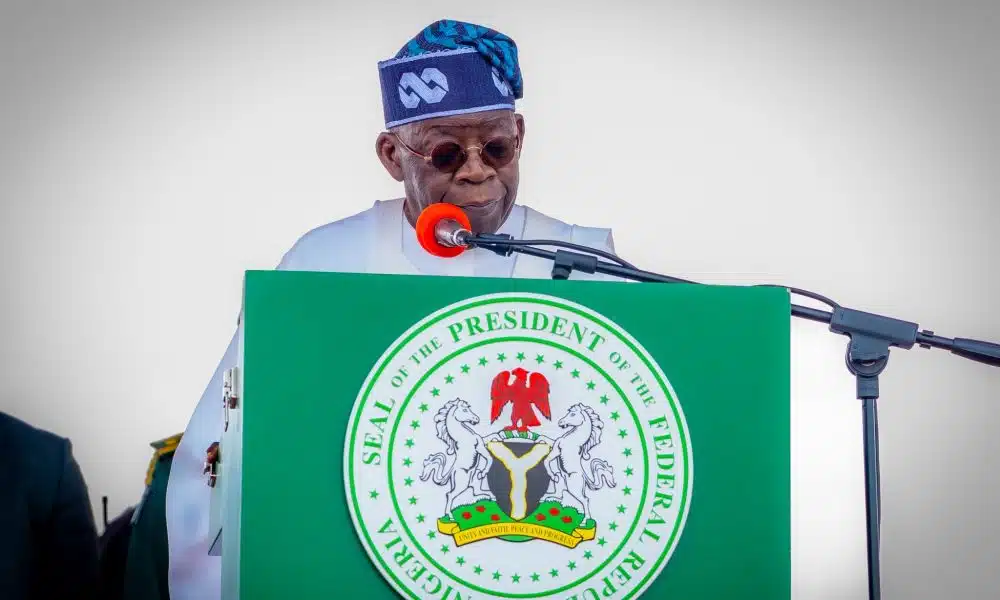
President Bola Tinubu has approved the appointment of the immediate past Director-General of the Department of State Services (DSS), Yusuf Bichi, as the Chairman of the Governing Board of the National Institute for Security Studies (NISS), Lower Usuma Dam, Abuja.

Bichi’s appointment was approved by President Tinubu based on the recommendation of the current Director-General of the DSS, Oluwatosin Adeola Ajayi.

Daily Voice reports that his appointment, according to a statement on Thursday by the Director of Coordination and Liaison of the NISS, Lilian Omo-Odigwe, is for an initial four-year term, effective 22nd October, 2026.

The statement noted that Bichi’s appointment is in accordance with Section 4 of the National Institute for Security Studies (Establishment) Act, 2019.

Bichi, who will succeed A.A. Gadzama, on the Governing Board, handed over leadership of the DSS to the incumbent Director-General in August 2024.

The former DG began his career in the Security Division of the Kano State Cabinet Office before his transfer of service in 1984.

“Bichi’s appointment to Chair the NISS Board brings an extensive experience in intelligence, security administration, operational leadership and institutional training to the governance of the National Institute,” the statement added.

Meanwhile, Nollywood actress Eniola Badmus has defended her continued support for President Bola Ahmed Tinubu, saying her political stance is the reason some people criticize her.

Naija News reports that the actress made this known during an interview with Nigerian comedian and content creator Isbae U on his podcast, Curiosity Made Me Ask.

Badmus explained that the criticism she receives is largely connected to her decision to support Tinubu, adding that she remains committed to the president despite the negative reactions from some Nigerians.

The actress maintained that she would continue to stand by her political choice, regardless of public opinion.

She also noted that democracy allows people to support political candidates and parties of their choice without being attacked for their decisions.

According to Badmus, she does not condemn people for supporting politicians different from the ones she believes in, stressing that everyone should be free to make their own political decisions.
Continue Reading

News

Ebola fears: FG, States On Alert As Infected Diplomat Suffers Organ Failure

Published

on

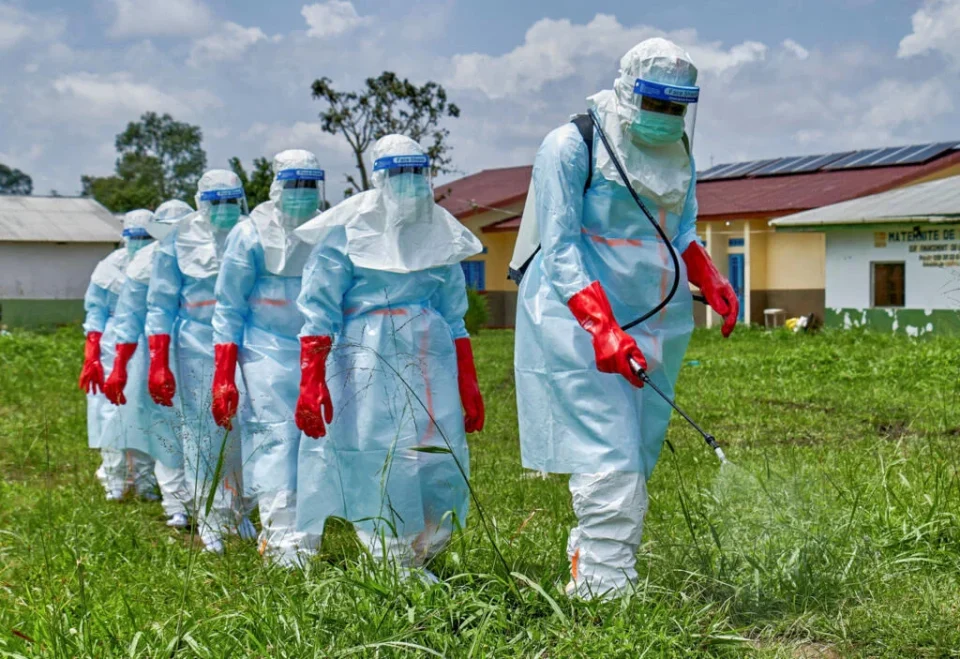
A diplomat diagnosed with the Bundibugyo strain of Ebola in the Federal Capital Territory, Abuja, has reportedly deteriorated into multi-organ failure, as the Federal Government and state governments intensify surveillance, contact tracing and emergency preparedness to prevent the spread of the deadly disease.

The patient’s name and nationality were, however, not disclosed.

The Director of Public Health Laboratory Service at the Nigeria Centre for Disease Control and Prevention, Olajumoke Babatunde, gave the update at an emergency meeting of the agency in Abuja on Wednesday.

The NCDC said the case is the Bundibugyo strain of Ebola, the same strain causing the outbreak in the Democratic Republic of Congo, adding that three levels of molecular tests were done to confirm the strain.

“The patient’s condition has deteriorated. We did three levels of tests, but all were molecular. The strain was Bundibugyo,” Babatunde revealed.

The Bundibugyo virus is a rare species of the Ebola virus group. Scientists first identified it during an outbreak in Uganda in 2007. Ebola can spread through direct contact with the blood and other bodily fluids of an infected person, or with contaminated materials. It is not ordinarily transmitted through casual contact with someone who is not showing symptoms.

The development comes as Anambra State disclosed that it had followed up 40 persons of interest, with 33 completing their monitoring period and being cleared, while seven remained under active follow-up as of October 20, 2026.

Niger State has also placed its health system on high alert, activated emergency operations and said it was completing an isolation centre, while Ogun is tracing 111 persons of interest.

The Federal Government confirmed the Ebola case in Abuja on Tuesday, after a woman who had recently arrived on an international flight from Uganda was admitted to a private hospital in the FCT for several days before the infection was confirmed.

Following the index case, the NCDC has commenced an incident-management response, with officials working on case management, enhanced surveillance, contact tracing, infection prevention and control, and public risk communication.

FG, Uganda collaborate

Meanwhile, the FG on Wednesday said Nigeria’s only Ebola case was being contained, urging Nigerians not to “fall into a trap of hysteria or panic”.

The Coordinating Minister of Health and Social Welfare, Prof Muhammad Pate, spoke to State House correspondents on Wednesday evening after a meeting with the Chief of Staff to the President, Femi Gbajabiamila, at the Presidential Villa, Abuja, on the Ebola situation.

Pate said the government was working with Uganda, which is battling its own outbreak, and was tracing the case’s contacts to stop the virus from spreading.

He told our correspondent, “All I can tell you is that we are collaborating with our sister African nation of Uganda.

“What is important is that we have found this one case.

“We are doing contact tracing, and we are putting containment measures to ensure that it doesn’t go into our population.”

He said Nigeria had handled the disease before and had the institutions to do so again.

“The Federal Government has competent authorities to deal with this. We have done it in 2014, and we have good public health institutions. Nigerians should be reassured.

“We must be vigilant, but not panic. People should respect public health information from trusted sources and not spread misinformation and false rumours,” Pate added.

The minister promised regular updates and said he would soon receive a report on the case.

“We will be truthful to Nigerians with the information that we receive on a daily basis.

If the situation changes, we will come out and inform Nigerians,” he affirmed.

The Minister said the Nigeria Centre for Disease Control and Prevention had an incident management system and was “working 24/7”, while the Presidential Task Force on Ebola was also active.

He noted that the outbreak had run for five months without a case in Nigeria and that other countries had dealt with it.

According to him, “It’s one case. It’s an imported case, and we are containing it.”

Our correspondent exclusively gathered that President Tinubu, at the meeting of the National Security Council on October 15, had directed a review of Nigeria’s response plan over the Ebola crisis.

Asked about the review of the response plans, Pate said that was already under way, and that coordination with the office of the National Security Adviser and the task force had “served us well”.

“That has been ongoing. The truth of the matter is that we have a very good response coordination mechanism with the office of the NSA with the public health measures with the task force, and that has served us well.

“In fact, we’re a large country, and I just travel a lot. And we have one case, and even that one case coming from outside our country, and we’ve been able to detect it and report it and be able to take effort to contain it,” said the Minister.

He said the government would meet again on Thursday.

Pate criticised what he called “a lot of noise” around the case, and said he had spoken that day to the person who discovered the virus 50 years ago.

He said past outbreaks had been contained in Uganda, Kenya and France, and that Nigerians panicked at news of the virus because they did not look beyond the country.

Pate argued that the response needed discipline and execution, but added that it also depended on the public.

“We’ve got the resources, we’ve got the backing of our president, we’ve got the mechanisms of cross institutions,” according to him.

He said the government could not control those who were told to isolate but instead went out to the market.

“That is not in the government’s hands,” he said.

One of our correspondents spotted the Comptroller-General of the Nigeria Immigration Service, Kemi Nandap, and the Managing Director of the Federal Airports Authority of Nigeria, Olubunmi Kuku, leaving the meeting.

The World Health Organisation revealed that the virus was the Bundibugyo strain.

The WHO declared the outbreak in the Democratic Republic of Congo and Uganda a public health emergency of international concern on May 16.

As of October 11, the DRC had 9,066 confirmed cases and 4,381 deaths, according to the WHO figures cited by Newsweek.

WHO says there is no approved vaccine or specific treatment for Bundibugyo virus disease. Kenya confirmed an imported case this month, Al Jazeera reported.

On June 9, President Bola Tinubu set up a task force chaired by Gbajabiamila and approved N10bn for emergency preparedness.

Part of its measures include tougher screening at airports, QR-code health declarations for passengers from high-risk countries and isolation centres at the Lagos and Abuja airports.

At its inauguration on June 18, Gbajabiamila said there were no cases in the country and that Nigeria did not want “a repeat of what happened during the last outbreak when a carrier entered the country”.


NCDC finalises plan

The NCDC disclosed that it convened its first incident management meeting on Wednesday to coordinate the national response following the confirmation of the Abuja case.

In a statement posted on its X account, the agency said its incident action plan was being finalised, with response teams already involved in case management and other emergency activities.

“The Incident Action Plan is being finalised today; NCDC teams are on the ground conducting case management and response activities, prioritising enhanced surveillance, contact tracing, infection prevention and control, and coordinated risk communication,” the agency said.

It added that it remained committed to a timely, coordinated and evidence-based response to protect Nigerians.

The confirmation of the case has prompted health authorities to intensify surveillance and contact tracing, while states review their preparedness, identify facilities for managing suspected cases and educate residents on the symptoms and transmission of the disease.

The national response is particularly important because the patient reportedly travelled to Nigeria from Uganda before being diagnosed in Abuja. The development has also raised the importance of identifying people who may have had contact with the patient and monitoring them for symptoms during the prescribed period.

Public health authorities have emphasised that individuals identified as contacts or persons of interest are not automatically infected with Ebola. They are monitored because of possible exposure, and their status must be determined through appropriate public health assessments.

Keyamo orders restriction

The Minister of Aviation and Aerospace Development, Festus Keyamo, has directed the Nigeria Civil Aviation Authority to place 46 persons who had contact with a reported Ebola case in Abuja on a no-fly list for 21 days.

Keyamo disclosed this in a statement on Wednesday, following a virtual meeting with the Coordinating Minister of Health and Social Welfare, Professor Muhammad Ali Pate, on measures to contain the outbreak.

He said the list comprised 44 persons who had contact with the affected individual at a hospital after she developed symptoms, as well as two domestic staff of the individual.

According to the minister, efforts are ongoing to isolate the contacts pending confirmation that they have not been infected with the virus.

He said, “Whilst efforts are ongoing to isolate them for now until there is certainty they have not been infected with the virus, the Aviation authorities are required to put them on a no-fly list for at least 21 days.”

Keyamo explained that the 21-day period corresponds with the time within which symptoms of the disease are normally expected to manifest.

He said he had directed the NCAA to immediately notify all local and international airlines of the development to prevent the listed individuals from travelling by air during the period.

The minister also directed the Federal Airports Authority of Nigeria to strengthen Ebola response and surveillance measures at all international airports across the country.

He listed the measures being implemented by FAAN to include enhanced health screening, temperature checks, travel history tracking, digital health declarations and closer coordination with the Nigeria Centre for Disease Control and Prevention.

Keyamo said the measures followed regional outbreak alerts and were aimed at strengthening surveillance and response at the country’s airports.

The development comes amid concerns over the reported Ebola case in Abuja, with health and aviation authorities taking steps to monitor potential contacts and limit the risk of further transmission.

Airports deploy cameras

Also, the Federal Airports Authority of Nigeria has begun installing temperature-screening cameras at airports to detect passengers with elevated body temperatures following Nigeria’s first imported Ebola case in Abuja.

A senior FAAN official said passengers flagged by the cameras would undergo further medical screening, with suspected cases isolated and assessed. The authority is also providing hand sanitisers and personal protective equipment for frontline workers.

The NCDC said the infected woman arrived from Uganda on October 5, developed symptoms on October 7 and sought treatment at a private hospital in Abuja on October 11. Her travel history and failure to respond to malaria treatment prompted doctors to alert health authorities.

The Incident Manager of the National Ebola Disease Response, Dr Odianosen Ehiakhamen, said 44 contacts, mainly healthcare workers and hospital support staff, had been identified for monitoring.

“For the 44 contacts, they are majorly healthcare workers and support staff of the hospital, because everything has happened within the hospital,” he said.

Ehiakhamen added that Nigeria had strengthened its preparedness since May through risk assessments, surveillance, staff training and infection prevention measures.

The World Health Organisation has urged countries in the region to maintain heightened vigilance to ensure early detection and prevent further transmission.

Senate demands action

The Senate urged the Federal Government to introduce mandatory health screening for all passengers arriving in Nigeria through international airports, seaports and designated land borders, following concerns over the risk of Ebola transmission.

The lawmakers also called for emergency funding to strengthen disease surveillance, equip Port Health Services and prepare treatment and isolation centres across the 36 states and the Federal Capital Territory.

The resolutions followed a motion sponsored by Ondo South Senator Francis Faduyile, who warned that the Nigeria Centre for Disease Control and Prevention had rated the risk of importing Ebola as high.

Faduyile recalled Nigeria’s 2014 Ebola outbreak, which recorded 20 confirmed and probable cases and eight deaths, stressing the need for early detection, contact tracing and coordinated response measures.

The Senate proposed health declaration forms, temperature checks and symptom screening for all international arrivals, with enhanced checks for travellers who had visited or transited affected areas within the previous 21 days. It also called for exit screening during declared public health emergencies.

The lawmakers urged the relevant agencies to provide trained health personnel, thermal scanners, protective equipment and isolation facilities at entry points. They also called for the modernisation of the Quarantine Act of 1976 to reflect current public health realities and international standards.

Contributing to the debate, Senator Adamu Aliero said the health ministry had already begun implementing several proposed measures but warned against complacency.

“Virtually all the prayers that have been canvassed, the ministry has started doing them,” he said.

Senate Chief Whip Tahir Monguno called for an amendment to the Quarantine Act, saying there was a need “to bring it in tandem with existing realities.”

Senate President Godswill Akpabio urged relevant agencies to act proactively, describing Ebola as a serious medical emergency.

“We have to be proactive; everybody must take part. If it spreads, it will be a major problem,” he said.

The Senate mandated its committees on Health, Primary Healthcare, Disease Control, Aviation, Interior and Appropriations to inspect major entry points, engage relevant agencies and report back within four weeks. The Committee on Legislative Compliance was also directed to monitor implementation.

The lawmakers urged Nigerians to remain vigilant and maintain hand hygiene in public places, institutions and event centres.

Reps react

The House of Representatives has also called on the Federal Government to strengthen preventive and emergency medical measures against Ebola and immediately release outstanding appropriated funds to relevant health agencies.

The resolutions followed the adoption of a motion of urgent public importance sponsored by the member representing Isuikwuato/Umunneochi Federal Constituency of Abia State, Amobi Ogah.

Presenting the motion, Ogah described Ebola as a severe and potentially fatal infectious disease requiring prompt detection, effective infection prevention and coordinated public health intervention.

“It is extremely disturbing that yesterday, October 20, 2026, an Ebola Virus case was confirmed in a woman arriving from Uganda in Abuja who tested positive. Health authorities traced 44 contacts for isolation and further tests,” he said.

He warned that delays in identifying suspected cases, conducting laboratory investigations, isolating infected persons and tracing contacts could increase the risk of transmission and place additional pressure on the healthcare system.

The lawmaker also expressed concern about inadequate public awareness, shortages of infection prevention supplies, gaps in healthcare workers’ preparedness and limited emergency response capacity.

The House called on the Federal Government to mobilise public and private health institutions and place relevant agencies on high alert.

It urged the Federal Ministry of Finance to release outstanding appropriated funds to enable health agencies to intensify surveillance, contact tracing, laboratory testing and other emergency interventions.

The lawmakers further asked the Federal Ministry of Health and Social Welfare and the NCDC to assess the additional funding required to strengthen the country’s response in line with current epidemiological evidence and public health guidance.

The House mandated its Committee on Infectious Diseases to engage relevant ministries, departments, agencies and public health institutions to obtain updates on the outbreak and report back for further legislative action.

Meanwhile, Ogun State Government said no Ebola case had been recorded in the state as of October 21, 2026. Commissioner for Health Dr. Tomi Coker said 111 persons of interest had been monitored and discharged after completing the required surveillance period.

She urged residents to remain calm, rely on official information and report possible exposure promptly. The US Mission in Nigeria also advised travellers to monitor their health for 21 days after visiting areas affected by Ebola and seek medical guidance if symptoms develop.

While several states outlined their preparedness plans, Delta State residents are still awaiting details of the measures being taken by their government to guard against a possible spread of the disease.

The United States government has also issued a health alert to its citizens following Nigeria’s confirmation of the case, advising those who may have been exposed to monitor their health and seek medical guidance if symptoms develop.

Yobe establishes teams

The Yobe State Government said it had established surveillance teams, isolation arrangements and contact-tracing mechanisms across all 17 local government areas to prevent the disease from spreading into the state.

The Director of Public Health in the state Ministry of Health, Dr Nuru Sulaiman Muhammad, told The PUNCH that health officials had intensified surveillance following the confirmation of the Abuja case.

“We are aware of the case of a woman who travelled to Uganda and contracted the virus. She was confirmed after she returned to the FCT. After that, the public health team swung into action, and 44 contacts have been identified,” he said.

Muhammad said the state had deployed health personnel to strengthen disease surveillance, investigate potential exposure and ensure early detection of any suspected case.

“We have already established a team of health personnel to ensure that Ebola does not spread across the state. We have established different teams across all the local government areas of the state,” he said.

He said trained contact tracers would investigate reports of possible exposure and visit affected communities, with security personnel assisting them in accessing hard-to-reach areas affected by insecurity.

“If there is anything that poses a public health threat, we conduct contact tracing. We recruit and train contact tracers, and they go around every community that is affected,” he said.

He added, “Even if there is a security threat, we go to hard-to-reach areas with security personnel to facilitate entry into such communities.”

According to the director, isolation centres were available in Bade, Potiskum and Damaturu, covering the state’s three senatorial districts.

He said surveillance was also being strengthened at land border crossings in collaboration with relevant health personnel.

The state had distributed infection prevention and control materials, including hand sanitisers, and was engaging communities through public enlightenment campaigns.

Muhammad said a meeting had been scheduled for Thursday to review preparedness and strengthen the state’s response.

Ekiti stockpiles equipment

The Ekiti State Government has intensified Ebola preparedness through laboratory training, surveillance activities, public awareness campaigns and the stockpiling of personal protective equipment.

In an advisory dated October 20, the government said the measures followed alerts from the Nigeria Centre for Disease Control and Prevention (NCDC) and reports of Ebola cases in the region.

The state has trained laboratory personnel in sample collection, handling and transportation, while surveillance teams have received training in disease detection, response and active case searches.

It has also inaugurated an Ebola Virus Disease Technical Working Group, conducted simulation exercises at the Federal Teaching Hospital, Ido Ekiti, and trained healthcare workers in case management and infection prevention.

Airport officials and environmental health officers have been trained to screen passengers, while a burial team has received training in safe and dignified burial procedures.

The government said it had distributed public awareness materials, aired radio jingles and engaged community leaders, religious organisations, traditional rulers and the media to promote awareness and reporting of suspected cases.

It urged residents to remain vigilant, practise regular hand hygiene and avoid contact with the body fluids of suspected cases.

Residents who suspect exposure were advised to report promptly, even if they felt well, while those with symptoms should contact public health authorities before visiting a healthcare facility.

The government also urged the public to cooperate with contact-tracing teams and avoid spreading rumours or stigmatising potentially exposed persons, citing Nigeria’s successful containment of Ebola in 2014 as evidence of the importance of early detection and coordinated response.

States on alert

The Enugu State Government has reactivated and strengthened its Public Health Emergency Operations Centre following the confirmation of the Abuja case.

The Commissioner for Health, Prof. George Ugwu, said the state had intensified surveillance across its 17 local government areas and strengthened coordination with relevant agencies and partners.

He said surveillance activities around the Akanu Ibiam International Airport were being reinforced in collaboration with Port Health Services and other stakeholders.

“Let me begin by reassuring the people of Enugu State that there is currently no confirmed case of Ebola Virus Disease in Enugu State. However, following the recent confirmation of a case in Abuja and the ongoing Ebola outbreak in parts of Africa, it is important that we remain vigilant and adequately prepared,” he said.

Ugwu said rapid response teams and technical personnel had been placed on standby, while public awareness and risk communication activities were being strengthened.

He urged public and private health facilities to maintain a high index of suspicion, promptly isolate suspected cases and notify the appropriate surveillance officers.

The Kano State Centre for Disease Control also reactivated its Public Health Emergency Operations Centre and placed it on high alert.

In a statement issued on Wednesday, its Director-General, Prof. Muhammad Adamu Abbas, said the state was prepared to respond to any potential threat.

“The Public Health Emergency Operations Centre is fully ready and on high alert. There is no need to panic, but we must all be careful and act quickly,” the statement said.

The centre advised residents to report suspected cases through its emergency contact number, 07077974504, its email address, kanocdc@gmail.com, or the nearest local government Disease Surveillance and Notification Officer or health facility.


Continue Reading

News

Stop Depending On FG For Electricity – Shettima Tells States

Published

on

Nigeria To Revive Cocoa Industry, Says Shettima

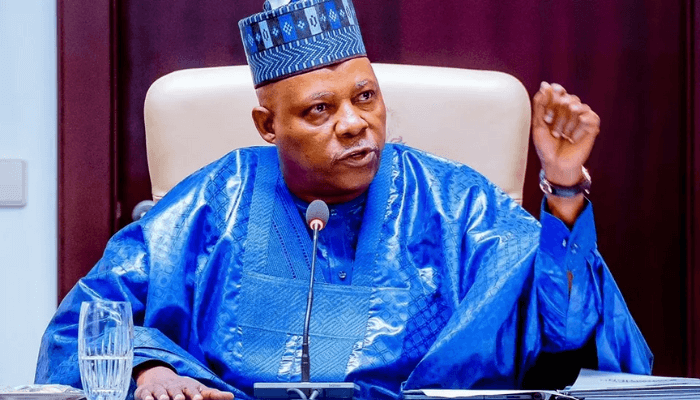
Vice President Kashim Shettima has urged state governments to stop relying solely on the Federal Government to solve Nigeria’s electricity problems and instead establish their own functional power markets to attract private investors.

He said Nigeria’s ambition to build a strong industrial economy would remain difficult to achieve without reliable electricity for businesses, homes, hospitals and schools.

Daily Voice reports that Shettima made the call on Wednesday while declaring open a national stakeholders’ workshop on the Electricity Act 2023 at the Presidential Villa in Abuja.

The Deputy Chief of Staff to the President, Senator Ibrahim Hassan Hadejia, represented the Vice President at the event.

The workshop brought together government agencies, electricity regulators, and other stakeholders to review the law’s implementation and discuss ways to improve power supply across the country.

Shettima said the Electricity Act 2023 had allowed states to regulate electricity markets within their jurisdictions and develop power solutions based on their resources and economic needs.

“Our states must shed the habit of waiting for Abuja to provide every answer,” he said.

He stressed that electricity supply should be treated as a shared responsibility between the Federal Government, state governments and private investors.

The Vice President pointed to the energy resources available in different parts of the country, saying states should take advantage of them to improve electricity supply and support economic growth.

He cited the solar energy potential of Sokoto, Borno and Katsina states, the gas resources in Delta, Rivers and Bayelsa, and the hydropower opportunities in Niger and Kebbi states.

According to him, turning these resources into viable electricity projects would help boost agriculture, manufacturing, healthcare and education.

However, Shettima warned that passing the law alone would not solve the country’s power problems, adding that states needed to establish the right institutions and create an environment that would attract investment.

He urged states that had yet to establish their electricity regulatory bodies to begin the process without further delay.

Shettima also proposed a voluntary National Electricity Reform Peer Review and Implementation Framework involving the Nigerian Electricity Regulatory Commission (NERC), the Federal Ministry of Power, the Nigeria Governors’ Forum and state electricity regulators.

He said the framework would allow states to learn from one another and assess their progress in developing electricity markets, attracting investments, protecting consumers and expanding access to power.

Earlier, the Permanent Secretary of the Ministry of Power, Mahmuda Mamman, said the success of the Electricity Act depended on states establishing credible regulatory institutions and electricity markets that could operate commercially.

On his part, the Director-General of the Nigeria Governors’ Forum, Dr Abdulateef Shittu, said the forum was working to improve cooperation between federal and state institutions on electricity reforms.

Shittu also disclosed that efforts were underway to develop a standard tariff framework that would protect electricity consumers while encouraging private investment in the sector.

Meanwhile, NERC’s Deputy General Manager and Head of Compliance, Hauwa Yakubu, disclosed that the commission had transferred regulatory responsibilities to 17 states.

She said Akwa Ibom was the latest state to receive the transfer, marking another step towards state-level electricity regulation under the Electricity Act 2023.

Continue Reading

Trending