
News
FG To Give Nigerian Shipowners $25m Each Under New Shipping Fund

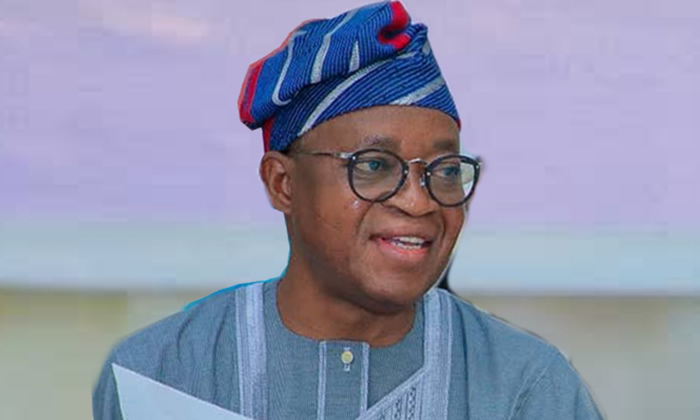
The Minister of Marine and Blue Economy, Adegboyega Oyetola, has revealed that the Federal Government will provide qualified Nigerian shipowners with up to $25m each, under the Cabotage Vessel Financing Fund, a move he said could strengthen indigenous shipping and create more than 30,000 direct and indirect jobs.
This comes as he also disclosed that disbursement of the long-awaited CVFF to qualified Nigerian shipowners to strengthen indigenous shipping and create thousands of jobs will soon commence.
Oyetola disclosed this in a post on his X handle on Monday, saying the government was finally moving to unlock the fund more than 20 years after it was established.
He said the initiative would help address one of the major challenges confronting Nigerian shipowners.
“After more than 20 years, we are finally moving to unlock the Cabotage Vessel Financing Fund (CVFF) for Nigerian shipowners. This is a major step towards building a stronger Nigerian-owned shipping industry, creating jobs and ensuring that more of the value generated from activities in our maritime space stays in Nigeria.
“Under the CVFF, each successful applicant will be able to access up to $25 million in financing to acquire vessels, subject to the applicable assessment and approval process. This is significant because access to affordable, long-term financing has been one of the major challenges limiting the growth of Nigerian-owned shipping companies”, the minister stated.
On how the fund would improve the competitiveness of indigenous operators, the minister said, “With access to financing at very low interest rates, our shipowners can acquire modern vessels, expand their fleets and compete for coastal and offshore contracts that are currently dominated by foreign operators.

“Our objective is to ensure that more Nigerian-owned vessels operate on Nigerian waters, more Nigerian businesses participate in our maritime economy, and more Nigerians benefit from the wealth our waters generate. Providing Nigerian shipowners with the financial capacity to acquire vessels is a critical step towards reducing foreign dominance in our maritime space.”
Oyetola said he had directed the Nigerian Maritime Administration and Safety Agency to accelerate the process of disbursing the fund to qualified applicants.
He stated, “I have, therefore, directed the Nigerian Maritime Administration and Safety Agency (NIMASA) to work closely with the 12 approved banks, known as Primary Lending Institutions (PLIs), to accelerate the disbursement of the fund to qualified applicants.
“NIMASA has so far received 92 applications. Of these, 20 have been forwarded to the Primary Lending Institutions, while one has so far been reviewed and forwarded for approval. To further speed up access, we have expanded the number of approved banks from five to 12 and launched the CVFF Application Portal to make the process more transparent, structured and accessible.”
The minister added that the expected impact of the fund extended beyond vessel acquisition, as increased indigenous ownership could stimulate several areas of the maritime economy.
He said, “The disbursement of the CVFF could help create a stronger indigenous fleet, which will in turn stimulate activity in shipyards, marine engineering, vessel maintenance, maritime logistics and other supporting industries. It could also create more than 30,000 direct and indirect jobs, while strengthening Nigeria’s ship-owning and shipbuilding ecosystem.
“This initiative is part of the Tinubu Administration’s commitment to unlocking the full potential of Nigeria’s Blue Economy, strengthening indigenous capacity and ensuring that Nigerians take a greater share of the opportunities in our maritime sector.” He also highlighted the government’s efforts to develop the human resources needed to support the maritime industry.
“Financing vessels is only one part of building a stronger indigenous maritime industry. We are equally investing in the people who will power this industry. So far, 222 seafarers have received free professional training, 333 cadets have completed their academic training and obtained degrees, while 135 cadets under the Nigerian Seafarers Development Programme (NSDP) have obtained their Certificates of Competency. In addition, 7,059 Nigerian seafarers have been placed onboard vessels to gain valuable sea-time experience.”
“We are determined to ensure that Nigerians own, operate and benefit from the economic activities taking place in Nigeria’s maritime space. We are building the capacity to make that happen — through vessel financing, skills development, indigenous enterprise and strategic investment in our maritime sector. The work continues”, the minister concluded.
The CVFF was established under the Coastal and Inland Shipping (Cabotage) Act of 2003 to support Nigerian shipping companies in acquiring vessels and developing indigenous capacity. Its disbursement has, however, been delayed for more than two decades.
The Federal Government launched the CVFF application portal in January 2026 and announced that successful applicants could access up to $25m in financing. NIMASA subsequently began receiving applications from interested operators.
NIMASA had disclosed in April that it received more than 60 applications within four months of opening the portal, with the agency promising that the disbursement process would be transparent and strictly monitored.
The latest figure provided by Oyetola represents an increase in applications to 92, although only one application has so far been reviewed and forwarded for approval, according to the minister.
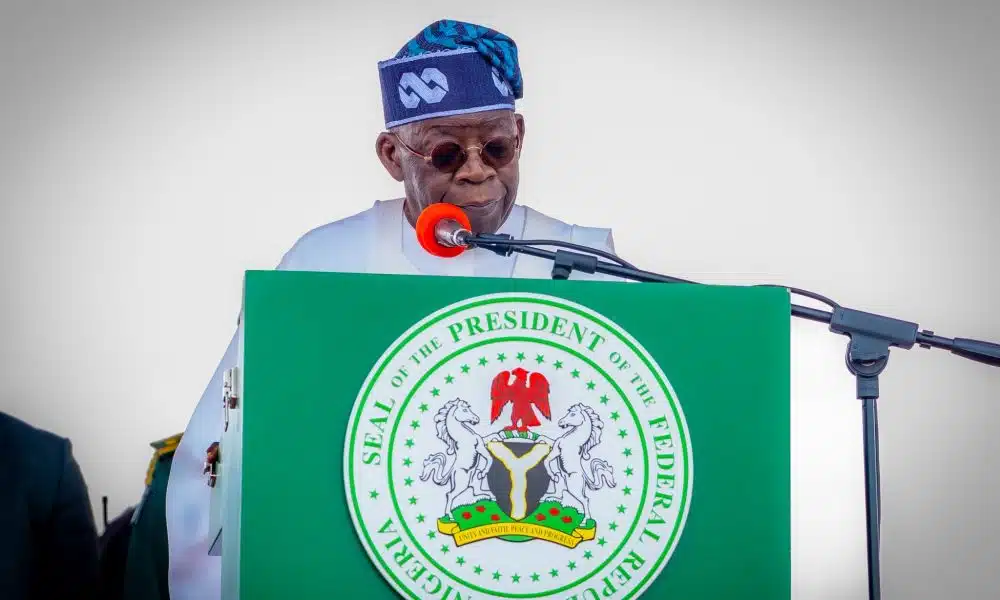
President Bola Tinubu has approved the appointment of the immediate past Director-General of the Department of State Services (DSS), Yusuf Bichi, as the Chairman of the Governing Board of the National Institute for Security Studies (NISS), Lower Usuma Dam, Abuja.
Bichi’s appointment was approved by President Tinubu based on the recommendation of the current Director-General of the DSS, Oluwatosin Adeola Ajayi.
Daily Voice reports that his appointment, according to a statement on Thursday by the Director of Coordination and Liaison of the NISS, Lilian Omo-Odigwe, is for an initial four-year term, effective 22nd October, 2026.
The statement noted that Bichi’s appointment is in accordance with Section 4 of the National Institute for Security Studies (Establishment) Act, 2019.
Bichi, who will succeed A.A. Gadzama, on the Governing Board, handed over leadership of the DSS to the incumbent Director-General in August 2024.
The former DG began his career in the Security Division of the Kano State Cabinet Office before his transfer of service in 1984.
“Bichi’s appointment to Chair the NISS Board brings an extensive experience in intelligence, security administration, operational leadership and institutional training to the governance of the National Institute,” the statement added.
Meanwhile, Nollywood actress Eniola Badmus has defended her continued support for President Bola Ahmed Tinubu, saying her political stance is the reason some people criticize her.
Naija News reports that the actress made this known during an interview with Nigerian comedian and content creator Isbae U on his podcast, Curiosity Made Me Ask.
Badmus explained that the criticism she receives is largely connected to her decision to support Tinubu, adding that she remains committed to the president despite the negative reactions from some Nigerians.
The actress maintained that she would continue to stand by her political choice, regardless of public opinion.
She also noted that democracy allows people to support political candidates and parties of their choice without being attacked for their decisions.
According to Badmus, she does not condemn people for supporting politicians different from the ones she believes in, stressing that everyone should be free to make their own political decisions.
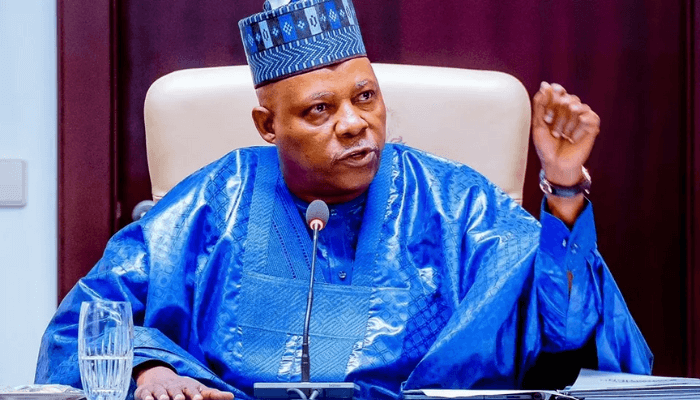
Vice President Kashim Shettima has urged state governments to stop relying solely on the Federal Government to solve Nigeria’s electricity problems and instead establish their own functional power markets to attract private investors.
He said Nigeria’s ambition to build a strong industrial economy would remain difficult to achieve without reliable electricity for businesses, homes, hospitals and schools.
Daily Voice reports that Shettima made the call on Wednesday while declaring open a national stakeholders’ workshop on the Electricity Act 2023 at the Presidential Villa in Abuja.
The Deputy Chief of Staff to the President, Senator Ibrahim Hassan Hadejia, represented the Vice President at the event.
The workshop brought together government agencies, electricity regulators, and other stakeholders to review the law’s implementation and discuss ways to improve power supply across the country.
Shettima said the Electricity Act 2023 had allowed states to regulate electricity markets within their jurisdictions and develop power solutions based on their resources and economic needs.
“Our states must shed the habit of waiting for Abuja to provide every answer,” he said.
He stressed that electricity supply should be treated as a shared responsibility between the Federal Government, state governments and private investors.
The Vice President pointed to the energy resources available in different parts of the country, saying states should take advantage of them to improve electricity supply and support economic growth.
He cited the solar energy potential of Sokoto, Borno and Katsina states, the gas resources in Delta, Rivers and Bayelsa, and the hydropower opportunities in Niger and Kebbi states.
According to him, turning these resources into viable electricity projects would help boost agriculture, manufacturing, healthcare and education.
However, Shettima warned that passing the law alone would not solve the country’s power problems, adding that states needed to establish the right institutions and create an environment that would attract investment.
He urged states that had yet to establish their electricity regulatory bodies to begin the process without further delay.
Shettima also proposed a voluntary National Electricity Reform Peer Review and Implementation Framework involving the Nigerian Electricity Regulatory Commission (NERC), the Federal Ministry of Power, the Nigeria Governors’ Forum and state electricity regulators.
He said the framework would allow states to learn from one another and assess their progress in developing electricity markets, attracting investments, protecting consumers and expanding access to power.
Earlier, the Permanent Secretary of the Ministry of Power, Mahmuda Mamman, said the success of the Electricity Act depended on states establishing credible regulatory institutions and electricity markets that could operate commercially.
On his part, the Director-General of the Nigeria Governors’ Forum, Dr Abdulateef Shittu, said the forum was working to improve cooperation between federal and state institutions on electricity reforms.
Shittu also disclosed that efforts were underway to develop a standard tariff framework that would protect electricity consumers while encouraging private investment in the sector.
Meanwhile, NERC’s Deputy General Manager and Head of Compliance, Hauwa Yakubu, disclosed that the commission had transferred regulatory responsibilities to 17 states.
She said Akwa Ibom was the latest state to receive the transfer, marking another step towards state-level electricity regulation under the Electricity Act 2023.


Obasanjo’s Son Picks Side In 2027 Race

NISS: President Tinubu Makes Fresh Appointment

Ebola fears: FG, States On Alert As Infected Diplomat Suffers Organ Failure


-
 News2 days ago
2027: Tinubu Announces New Appointments
-
 News16 hours ago
Kano Assembly Suspends Lawmaker Over Alleged Insult To Governor
-

 Politics16 hours ago
PDP Moves to Sanction Wike Over Alleged Support for APC
-
 News16 hours ago
Stop Depending On FG For Electricity – Shettima Tells States
-
News51 minutes ago
NISS: President Tinubu Makes Fresh Appointment
-
 News16 hours ago
Ebola fears: FG, States On Alert As Infected Diplomat Suffers Organ Failure
-
 Politics43 minutes ago
Obasanjo’s Son Picks Side In 2027 Race