News
Independence Day 2026: Read Tinubu’s Full Speech to Nigerians

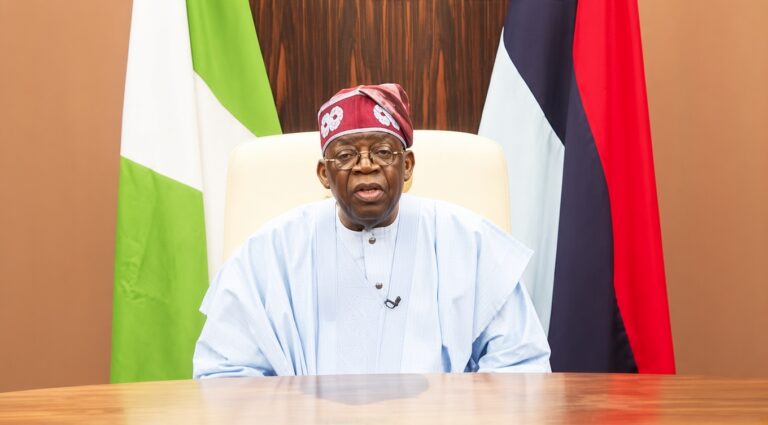
FROM REFORM TO PROSPERITY: INDEPENDENCE DAY ADDRESS TO THE NATION BY HIS EXCELLENCY, PRESIDENT BOLA AHMED TINUBU, GCFR, 1ST OCTOBER 2026
My fellow Nigerians,
Sixty-six years ago today, our flag was raised, for the first time, over a free and sovereign nation. Since then, we have journeyed together as one nation, bound by our collective trust in the great promise of Nigeria: that a country of our size, our bountiful resources, our cultural diversity and, above all, our extraordinary people can build a giant in Africa; that in this blessed and fertile land we can build a united, strong and prosperous nation; a land of regional authority and global consequence.
Our journey has not always been easy. In truth, it has generally been too hard for too many. We have known moments of great hope and periods of profound disappointment. We have endured war, military rule, economic crises, insecurity and political upheaval. Yet through it all, Nigeria, with the indomitable spirit of its people, has endured.
It has endured through the efforts of the farmer who rises before dawn to work his land. The trader who opens her shop each morning, hopeful for a productive day. The teacher who believes in the children entrusted to her care and the young entrepreneur who refuses to surrender ambition to circumstance. We are grateful for the men and women of our Armed Forces and security services who place themselves in harm’s way so that the rest of us may live in peace.
Through every difficulty, generations of Nigerians have continued to believe in one thing: that this country of ours will be better.
This faith, which sustains us all, is the inheritance of independence. Our founding fathers did not struggle merely for a flag, an anthem or a place among the nations of the world. Independence carried a larger promise: that Nigerians would have the freedom to shape their own destiny and build a nation capable of providing opportunity, dignity and a better life for its people. Sixty-six years later, Almighty God has made it our responsibility to deliver that promise.

Today, as we celebrate our independence, we must speak honestly about the journey so far, the choices we made, and the country we are determined to build from here.
For too long, the promise of Nigeria was undermined by choices that postponed difficult decisions and allowed deep economic distortions to grow.
By 2023, poverty was rising, and hope was nearly gone. The country’s situation was darker than ever. We had no choice but to act.
Nigeria was like a sick patient who receives the terrible news that he has cancer. His doctor explains that the treatment will be difficult and painful, but that it offers a strong prospect of recovery. The patient has a choice. He can begin treatment, endure its discomfort and fight the disease. Or he can ask only for morphine, dull the pain and leave the cancer to spread.
For too long, Nigeria’s leaders chose morphine while praying for a miracle that never came.
They focused on symptoms while allowing the disease to take hold deep within the fabric of our society. We spent enormous sums sustaining inefficient arrangements that were never intended to last. We hid from difficult truths and passed the consequences from one generation to the next.
When this Administration assumed office, we resolved to do things differently. We chose to excise the cancer. The reforms that followed were difficult. The side effects were real. Yet, we must never confuse the medicine with the disease.
Our reforms did not create the weaknesses in our economy. They confronted them. Now, as certain influential but regressive voices would have us abandon the treatment and return ourselves to the abuse of addictive subsidies, we must resist their siren song. We must remember why we began this journey and how far we have already come.
Three and a half years later, the evidence that Nigeria’s economic outlook has improved is undeniable. Our economy has grown by over 4 per cent this year. Both oil and non-oil sectors have contributed to the renewed period of stable growth.
Oil theft is down. Inflation has fallen substantially from its peak. Our foreign reserves have been rebuilt, our foreign exchange market has stabilised, and in 2025 this country recorded its highest revenue from non-oil exports in its history, exceeding $6 billion. This is real money being made by real Nigerian businesses.
These are not idle claims. International observers, journalists, NGOs and multilateral institutions can see the change. Each has concluded that our reforms have strengthened Nigeria’s economic stability and resilience. The private sector has long since delivered its verdict, and foreign direct investment continues to rise each year.
My fellow Nigerians, we have reached a turning point.
The emergency treatment is over. The foundation has been repaired. The central economic task before us has changed. For three years, our overriding purpose was to correct our nation’s course.
Now, our purpose is simple: shared and widespread prosperity.
When I speak of prosperity, I do not speak merely of a larger economy, abstract numbers or better statistics. I mean something much more personal.
I mean a Nigeria in which the farmer can cultivate his land safely, produce more at lower cost, and earn a decent return for his labour. A Nigeria in which factories have reliable power, businesses can obtain credit, and young people can find productive work. A Nigeria in which food and transportation are affordable, education is within reach, and hard-working families can look towards the future with confidence.
This is the promise we must now fulfil.
Our priority is to bring down the cost of living. We will achieve this by lowering the cost of producing and moving the things Nigerians consume.
We have the land and people to feed ourselves. My government is therefore focused on expanding mechanised irrigation and dry-season farming, improving access to seeds and fertiliser, holistically increasing mechanisation, and investing in storage and transportation. We are building and completing the roads, railways and ports that connect farms and factories to markets.
Our logic is simple. When a farmer produces more cheaply, when fewer crops are lost between the farm and the market, when a manufacturer spends less on electricity, when a truck reaches its destination faster, and when the business environment fosters fair competition, all those savings will ultimately find their way into the price of goods in the market.
But prosperity requires more than cheaper goods. It requires productive work.
Nigeria is a young country. Millions of young Nigerians enter adulthood every year with talent, energy and ambition. Our responsibility is to ensure that this great demographic strength becomes an engine of production rather than a source of despair.
We are therefore placing jobs, enterprise, and industrial growth at the heart of our government’s policies.
We will use our gas to power new industries. We will support businesses that work to bring factories back to life in our great industrial centres. We will expand digital connectivity into communities that have waited too long to participate in the modern economy. We will invest in the skills employers demand and support Nigerian businesses with the infrastructure and finance they need to grow.
I want to see more Nigerians making things. I want to see more Nigerian farms feeding our cities and supplying our factories. I want to see Nigerian businesses selling Nigerian goods to the whole world. I want young Nigerians building unicorns and creating opportunities for others here at home.
I am also conscious that millions of our fellow citizens cannot wait for tomorrow. Some Nigerian families still struggle today for the next meal, the next school fee, the next medical bill, or simply enough money to get to work. Their circumstances did not begin with the reforms of the last three years. Their struggle is the accumulated consequence of decades of low productivity, inadequate infrastructure, insufficient opportunity and institutions that too often failed those who needed them most.
We cannot erase in four years what accumulated over generations. But we can change its course. We can build an economy that steadily lifts people out of poverty while ensuring that those who remain vulnerable are not abandoned along the way.
That is why we are strengthening direct support for the poorest households and improving the National Social Register so that assistance reaches those who genuinely need it.
It is why the Nigerian Education Loan Fund is ensuring that the child of a low-income family need not surrender the dream of higher education simply because his parents cannot afford the fees.
It is why CREDICORP is giving working Nigerians access to consumer credit, allowing people to acquire vehicles, solar systems, digital devices and other essential assets without first having to accumulate years of savings.
That is why, working with our states and local governments, we will continue to strengthen primary healthcare, basic education, and the essential public services poorer Nigerians depend on most. Since 2023, we have paid salaries and pensions on time and in full. We have reformed the national pension program to benefit retirees and the vulnerable.
These programmes are not substitutes for prosperity. They are a bridge to aid our nation’s citizens on their path towards it. Our objective is not to manage poverty more efficiently.
We will defeat it.
It will take time. It will require discipline. It will require sustained growth year after year and the creation of millions of productive opportunities across our country.
But for the first time in decades, we embark on this task from a position of strength; with an economy whose fundamental direction has been corrected. We confronted the difficult choices we faced and have laid the foundations for lasting prosperity. Rather than fail the promise of a better future for our children, the time has come for us to build that future.
The age of reform has done its work. Now begins the age of prosperity. An age in which the promise of this great nation must finally become the lived experience of Nigerians from all walks of life.
We have travelled through difficult years together. We have made hard decisions together. And now, still together, we must build the country those decisions have made possible.
I believe deeply in what lies ahead.
I believe in the millions of ordinary men and women whose work, courage and determination have always been the true strength of our country. The road ahead will still demand much from us. But we travel it now with firm footing, a clear direction and renewed hope in our collective future.
Nigeria has corrected its course. We have passed through our own Red Sea. This is not the time to look back. Let us go forward together, with faith in ourselves, faith in our country, and faith that the sacrifices we have made will yield their reward.
The Promised Land before us is a Nigeria of abundance and opportunity; a nation where prosperity is broadly shared, where every child can dream beyond the circumstances of his birth, and where our country’s immense promise is finally reflected in the lives of our people.
Our destination is in sight. Our foundations are strong. Our direction is clear. So let us go forward. No looking back.
Happy Independence Day, my fellow Nigerians. God bless you all, and God bless the Federal Republic of Nigeria.
Bola Ahmed Tinubu, GCFR
President and Commander-in-Chief of the Armed Forces of the Federal Republic of Nigeria

The Nigeria Correctional Service, NCoS, Kwara State Command, has released the names and photos of the two death-row inmates who escaped from the Medium Security Custodial Centre, Oke-Kura, Ilorin.
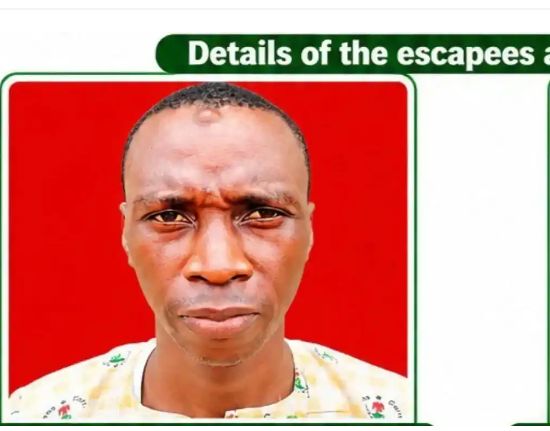
The two inmates escaped in the early hours of Wednesday, November 18, after breaking through and scaling the perimeter wall of the facility.
Their identities were disclosed in a statement issued on Friday by the Kwara State Command’s Public Relations Officer, Adegbulugbe Olumide.
According to NCoS, the first inmate is 41-year-old Segun Abraham Nasiru from Lokoja, Kogi State, while the second person is 38-year-old Oluwasegun Omoyajowo Ajiboye from Ilaro, Ekiti State.
The NCoS disclosed that Nasiru had earlier escaped from the Mandala Custodial Centre, been rearrested and transferred to Oke-Kura.
The Controller-General of the NCoS, Sylvester Ndidi Nwakuche, while reacting, blamed the incident on negligence.
“This is unfortunate and unacceptable. This is a facility that locks over 600 inmates, and about two inmates have found their way out, but I can assure you the dragnet has been spread and we will get them back,” he said.
According to him, any officer found culpable will be severely punished.
The NCoS appealed to members of the public to help with useful information that can lead to the recapture of the fugitives.
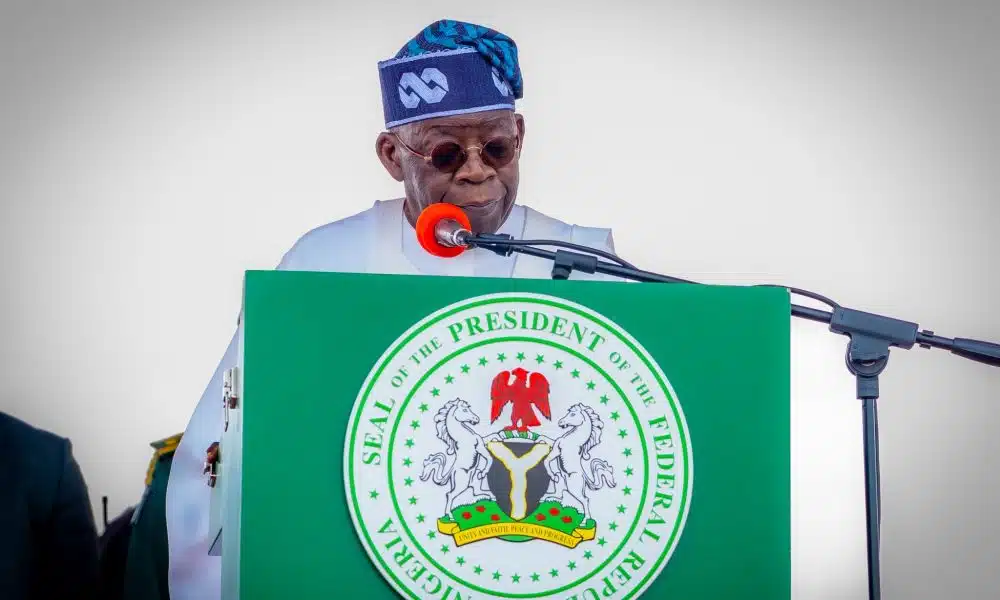
The Presidency said Dabiri’s appointment forms part of Tinubu’s efforts to ensure effective regional representation and inclusivity on the commission.
President Bola Tinubu has appointed Agboola Dabiri as the South-West Commissioner on the National Assembly Service Commission.
Naija News understands that Dabiri, until the recent appointment, was the Lagos State Commissioner for Youth and Social Development.Nigerian news subscription
He takes over from Taiwo Oluwa, who resigned from the commission on March 30, 2026, to run for the Irewole/Isokan Federal Constituency seat in Osun State.
The Special Adviser to the President on Information and Strategy, Bayo Onanuga, announced the appointment in a statement on Friday.
The statement said that, in addition to his work in the Lagos cabinet, Dabiri also worked in the Federal Capital Territory Administration.
It read, “Until his appointment, Dabiri served as Commissioner for Youth and Social Development in Lagos State. He also previously served as Mandate Secretary for Economic Planning, Revenue Generation and Public-Private Partnership in the Federal Capital Territory.”
The Presidency said the appointment was meant to give every region fair representation on the commission.
“The appointment is part of the President’s efforts to ensure effective representation and inclusivity in the National Assembly Service Commission,” the statement added.
Section 157 of the 1999 Constitution establishes the National Assembly Service Commission. The commission appoints, promotes and disciplines the staff of the National Assembly.

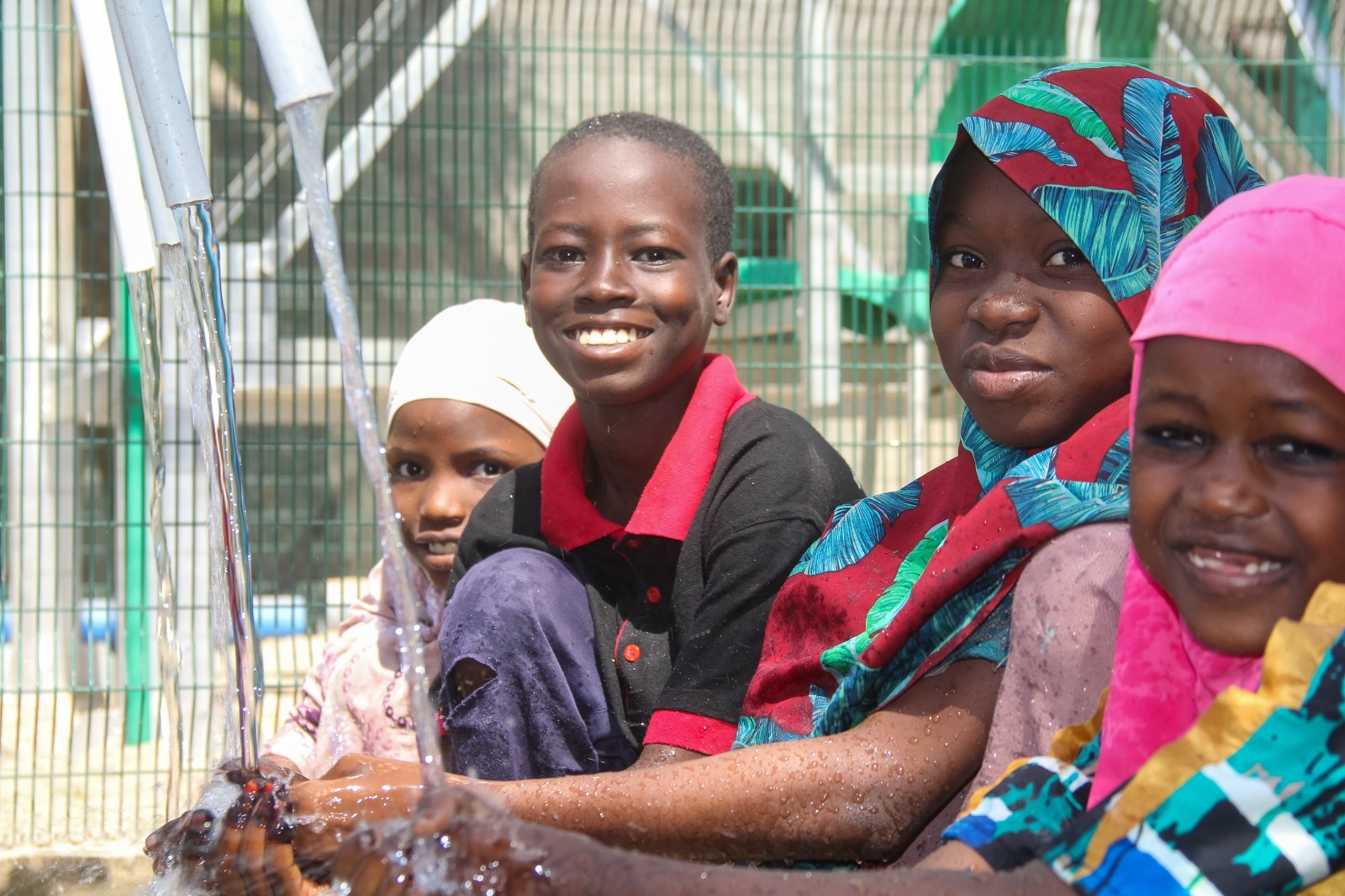
SOS Children’s Villages Nigeria calls on government, communities and development partners to put it into practice by treating children and young people as partners and co-creators of solutions to the issues they face. The call places particular focus on children who have lost parental care or are at risk of losing it.
“Children already have a voice. Our job is to create the conditions in which they can use that voice safely and be taken seriously,” said Eghosa Erhumwunse, National Director of SOS Children’s Villages Nigeria. “Children and young people often know best how to solve the problems they face. What they need is the opportunity and the space to thrive.”
A child should know their rights, know where to go for help and be able to influence decisions about their care, their education and their future. Listening must lead to action.
This principle guides the organisation’s programmes. Family strengthening helps parents and caregivers to care for their children and keep families together. Where children cannot live with their families, alternative care provides safe, family-based settings. Youth development prepares young people for independent adult life, and child rights advocacy strengthens community and state child protection systems. Together, these programmes give children the security they need to exercise their rights.
Violence remains part of daily life for many children in Nigeria. Nine in 10 children aged 1 to 14 experience violent discipline at home (NBS and UNICEF, MICS 2021), and more than 8 in 10 experience it in school (UNICEF, 2022).
Children and young people are already contributing to the response. Ahead of the Second Global Ministerial Conference on Ending Violence Against Children, held in Manila in November 2026, members of the Children and Youth Council in communities we work in set out their position in a policy brief. They believe children should not be seen only as victims in need of protection, but as agents of change who can identify risks, support their peers and help shape the policies that affect them. As one Council member put it: “We cannot build a safer world for children without listening to children.”
Meaningful participation requires age-appropriate information, trusted adults and safe ways to report concerns. Children should be able to express their views in ways that suit their age, ability and circumstances, and be told how those views were used. Children with disabilities, displaced children and children in alternative care need particular attention. Participation must also protect children’s privacy: no child should be pressured to recount a traumatic experience, appear in the media or share personal information to be heard. Supporting children to speak up must never shift the responsibility for their protection onto them.
SOS Children’s Villages Nigeria will continue to strengthen families and communities while creating spaces where children and young people can drive real change.
On World Children’s Day, SOS Children’s Villages Nigeria and its Children and Youth Council call for the following actions:
Government and public institutions: Resource child protection, family support and alternative care services, and strengthen implementation of the Child’s Rights Act 2003, the National Plan of Action to End Violence Against Children (2023 to 2027) and the National Alternative Care Guidelines. Ensure that children who cannot live with their families receive safe, family-based care. Establish confidential, child-friendly reporting mechanisms in schools and communities, and involve children as equal partners in designing and monitoring child protection policies, with clear feedback on how their views were used
Schools, families and communities: Create safe environments in which children can speak up without fear of blame or punishment. Promote positive discipline in place of corporal punishment, challenge harmful practices such as child marriage, teach digital safety alongside children’s rights, and ensure that every report leads to timely support.
Businesses, donors, civil society and the media: Invest in family strengthening, child protection and youth-led initiatives, including peer support and peer mediation in schools. Support children’s own advocacy priorities and protect their dignity and privacy in all communications.
“The test of our commitment is what happens after a child speaks,” Erhumwunse added. “When a concern is raised, it must be addressed. When a right is violated, it must be remedied. Every child should grow up knowing that their voice matters and that adults will act to protect it.”


Govt Release Identities Of Death Rows Inmates Who Escaped From Nigerian Prison

Just In: Tinubu Announces Top New Appointment