Business
Competition: Private Depots Slash Petrol Price Below Dangote’s Rate
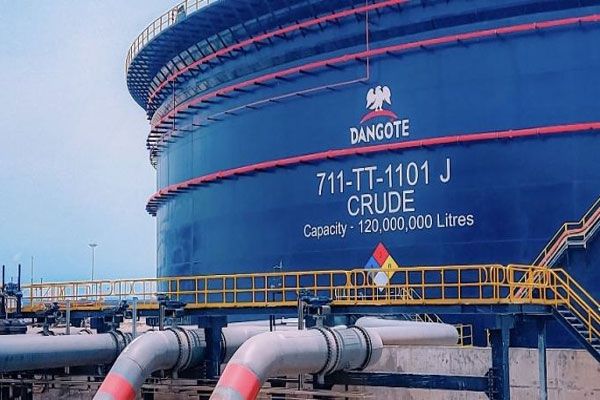
Price competition between Private fuel depots and Dangote petroluem refinery has intensified.
Checks show that most depots are now selling petrol at prices lower than Dangote Refinery.
Filling station owners and companies buying in large quantities now have to make a choice where to buy petrol from.
Private fuel depots across Nigeria are selling petrol at prices lower than the Dangote Petroleum Refinery.
Checks revealed that the average ex-depot price at major private depots has dropped to between N872 and N875 per litre, down from the previous average of N900.
The new rate at several depots is lower than Dangote refinery’s current price of N877 per litre.
The changes are seen at Aiteo, Pinnacle, Rainoil, Emadeb, Eterna, Ardova, Nipco, and Integrated Oil.

The ex-depot price reduction is expected to determine how much Nigerians pay for petrol in the coming days.
According to Petroleumprice.ng, private depots have become “noticeably busier” than Dangote’s plant, which has recorded slower activity since launching its N877 per litre pilot scheme earlier this month.
The pilot framework, a temporary supply arrangement jointly developed by Dangote Refinery and a coalition of 20 depot owners, began on October 10 and is set to end on Friday, October 31, 2025.
The initiative, covering about 600 million litres of petrol, followed a high-level meeting between Aliko Dangote and key downstream operators, including Salbas Energy, Optima Energy, Shafa, and Rano.
While the scheme was designed to stabilize prices, it has created new market competition.
Depot owners have responded to Dangote’s scheme and decided to slash their ex-depot prices to attract marketers.
A depot operator in Satellite Town, Lagos, said the renewed market activity has been encouraging.
“We are happy now, the place is much busier than before. Trucks are loading again, and retailers are coming back.”
Market analysts believe this resurgence reflects growing confidence in private depots as they resume active importation after weeks of slow operations.
They note that while Dangote remains a dominant player, private depots are using pricing flexibility and strong customer networks to stay relevant.
Experts, however, caution that sustaining these lower prices may be difficult.
President Bola Tinubu has approved a 15% import duty on petrol and Automotive Gas Oil (AGO), commonly known as diesel.
ThisDay reports that the new duty will be applied to the cost, insurance, and freight (CIF) value of imported fuels.
This means that imported petrol will now be more expensive, giving Dangote refinery an edge over depots in the race to win customers.
Earlier, Legit reported that Dangote Refinery has announced Optima Energy as its latest partner for the sale of petrol across the country.
The new marketer has now increased the number of partnerships available for Dangote Refinery petrol to four
Optima Energy joins MRS Nigeria, Ardova PLC, and Hyden as the other partners working directly with Dangote to sell affordable fuel.
Business
2026 Tax Laws Will Ease Burden On Businesses, Poor Nigerians – Tinubu
President Bola Ahmed Tinubu has urged Nigerians not to panic over the new tax regime scheduled to take effect in 2026, assuring that the policy is designed to ease the burden on the poor, low-income earners and small businesses.
The President gave the assurance on Tuesday, December 16, at the 8th Annual Senator Abiola Ajimobi Roundtable and the 76th posthumous birthday lecture of the late former Governor of Oyo State, held at the University of Ibadan.
The event, themed “Pathways to Electoral Credibility: Reforming Political Parties, Re-engineering Citizens, and Restoring Trust in Nigerian Democracy,” was organised by the Senator Abiola Ajimobi Foundation in collaboration with the Institute of Peace and Strategic Studies, University of Ibadan.
It was attended by friends, associates, family members and partners of the late governor, and chaired by a former Governor of Ogun State, Olusegun Osoba.
Ajimobi, who governed Oyo State between 2011 and 2019, died in June 2020, a year after leaving office.
Economic Reforms Yielding Results – Says The President
Tinubu’s message, delivered by the Executive Chairman of the Federal Inland Revenue Service, Zaccheus Adedeji, highlighted the necessity of recent economic reforms undertaken by the administration.
The President said the reforms, though initially painful, were already producing positive outcomes across key economic indicators.
“As recent evidence has shown, the drastic economic measures our administration undertook were necessary to revitalise the economy. Investors have since reaffirmed their confidence as the fruits of our reforms become manifest through robust macroeconomic indicators,” he said.
According to him, improvements are being recorded in several areas.
“Our GDP is growing, inflation is tumbling, and improvements are being recorded in the fiscal deficit. Companies that were previously posting losses have returned to profitability, with improved capacity utilisation and increased investment levels,” Tinubu added.
New Tax Laws To Bring Relief
The President said Nigerians would begin to feel the impact of the reforms more strongly in the coming year, particularly through the implementation of the new tax laws.
He explained that the laws would exempt critical sectors from burdensome taxes and eliminate multiple taxation on businesses.
“The impact of these improvements will be felt more by Nigerians, particularly in the new year, with huge reliefs coming from the new tax laws, which exempt food, medication, education, agriculture and shared transportation from burdensome taxes and free businesses from multiple taxation,” he said.
Tinubu further assured Nigerians that there was no cause for fear.
“I want to assure Nigerians that there should be no apprehension about the new tax laws, which implementation will begin next year. The laws come with good news for the poor, low-income earners and small businesses,” he added.
Tribute To Ajimobi
Commending the late former governor, Tinubu said Ajimobi exemplified leadership that prioritized long-term development, even when it involved making difficult decisions.
“We shared many ideals. He believed that a leader must take the people he governs to the height they ought to be, even if it involves making tough choices and decisions that may engender initial discomfort but would, in the long run, catapult the state to greater development,” the President said.
He also praised Ajimobi’s wife, Ambassador-designate Florence Ajimobi, for sustaining the family’s legacy.
In his concluding remarks, Tinubu urged leaders and members of the All-Progressives Congress in Oyo State to unite ahead of the 2027 general elections.
“The best tribute and honour you can give to our departed statesman is to unite and strengthen the party to take over the reins of government in this state in 2027. This is achievable, and it must be achieved,” he said.
Gov Makinde, Gambari Speak On Democracy
In his remarks, Oyo State Governor, Seyi Makinde, represented by his deputy, Bayo Lawal, described the roundtable as a fitting platform to honour Ajimobi’s legacy while addressing pressing issues affecting Nigeria’s democracy.
Makinde said the late governor made lasting contributions to governance in the state, leaving behind lessons that transcended partisan politics.
He stressed that rebuilding trust in democracy required sincerity, accountability and inclusive governance, adding that electoral credibility could only be achieved when political parties practised internal democracy and delivered on their promises.
Delivering the lead paper, former Chief of Staff to ex-President Muhammadu Buhari, Prof Ibrahim Gambari, identified political party reform as the most critical factor for democratic renewal in Nigeria.
He listed voter apathy, democratic disillusionment, weak internal party democracy, institutional weaknesses, electoral violence, insecurity and trust deficits as persistent challenges undermining electoral credibility.
Earlier, the President of the Senator Abiola Ajimobi Foundation, Florence Ajimobi, commended Tinubu for what she described as his unwavering loyalty to the late statesman and their shared values of good governance and democratic commitment.
She said the President’s consistent participation in the annual event and continued support reflected a genuine commitment to the ideals Ajimobi stood for.
Dignitaries at the event included the Speaker of the House of Representatives, Tajudeen Abbas, who was the Special Guest of Honour, Imo State Governor, Hope Uzodimma, traditional rulers, community leaders and students.
Business
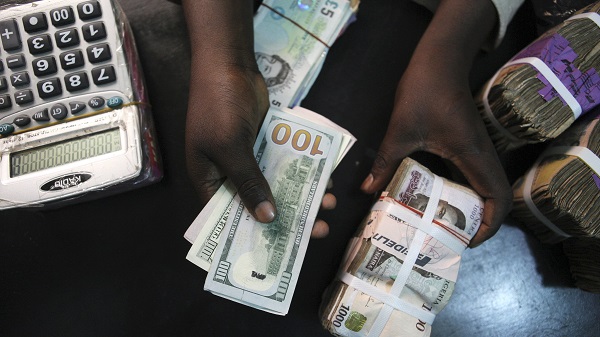
Dollar To Naira Exchange Rate Today, December 17, 2025
The Nigerian Naira continues to experience significant activity across the various segments of the foreign exchange market today, Wednesday, December 17, 2025.
Data from the Nigerian Foreign Exchange Market (NFEM) and the unofficial parallel market indicate a narrow but persistent gap between official and black-market rates as the year draws to a close.
In the official NFEM window, the Naira opened the day with a slight depreciation compared to the previous day’s closing figures. Trading data reveals that the US Dollar is currently exchanging for an average of 1,453.67 Naira. This follows a volatile start to the week where the currency hit a daily high of 1,454.97 Naira during early morning sessions. Market analysts attribute this movement to a surge in demand from corporate entities looking to settle end-of-year obligations and import invoices before the holiday break.
The parallel market, often referred to as the black market, tells a slightly different story with rates remaining higher than the official window. Currently, street traders in major hubs like Lagos, Abuja, and Kano are buying the Dollar at approximately 1,475 Naira and selling at 1,485 Naira.
While this represents a relatively stable margin compared to the previous week, the premium between the official and parallel rates remains a point of concern for small-scale importers and individual travellers.
The Central Bank of Nigeria (CBN) has maintained its stance on ensuring liquidity within the NFEM to curb extreme volatility. Recent reports suggest that the apex bank’s interventions have helped prevent a more drastic slide of the local currency, even as global oil price fluctuations continue to impact Nigeria’s foreign reserves.
For other major currencies, the British Pound is trading at approximately 1,943 Naira in the official market, while the Euro is pegged at 1,707 Naira. In the parallel market, these rates are slightly higher, with the Pound nearing the 2,000 Naira mark in some regions.
Business
Petrol Battlefield: ICPC Plans NMDPRA Boss Probe After Dangote Petition
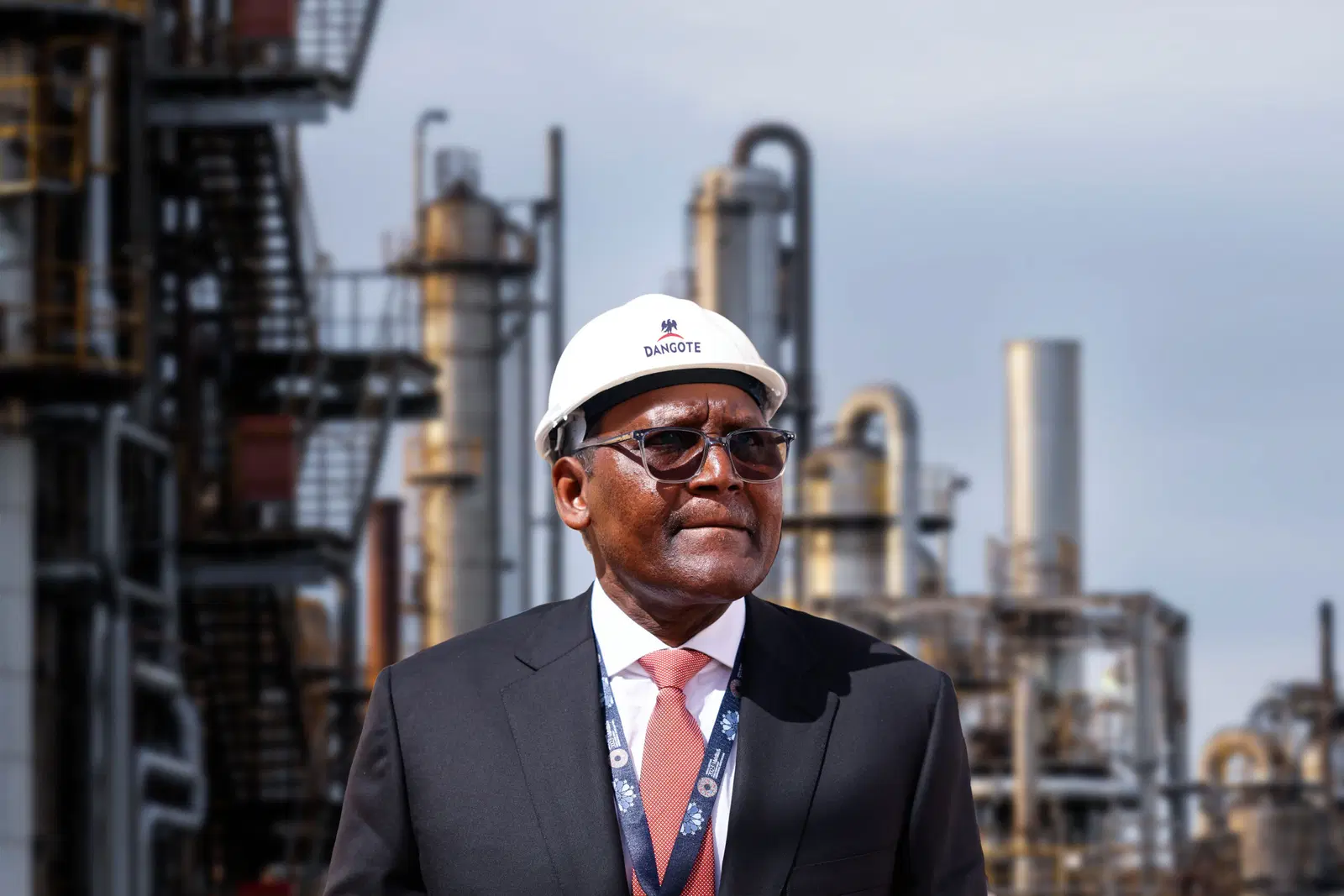
The Nigerian oil and gas sector has been thrown into fresh controversy as the Independent Corrupt Practices and Other Related Offences Commission has declared that it will investigate a petition lodged against the Chief Executive Officer of the Nigerian Midstream and Downstream Petroleum Regulatory Authority, Farouk Ahmed, by the Chairman of Dangote Group, Aliko Dangote.
Dangote, in a petition submitted on December 16, 2025, through his lawyer, Ogwu Onoja (SAN), called on the ICPC to investigate, prosecute, and potentially arrest Ahmed over allegations of corruption and financial impropriety. The petition claims that Ahmed spent more than $7m on the education of his four children in Switzerland, reportedly paid upfront for a six-year period, without any lawful source of income to justify such expenditure.
“That Engr Farouk Ahmed has grossly abused his office contrary to the extant provisions of the Code of Conduct for Public Officers and, by so doing, enmeshed himself in monumental corruption and unlawful spending of public funds running into millions of dollars.
“That Engr. Farouk Ahmed spent, without evidence of lawful means of income, a humongous sum of over $7m of public funds on the education of his four children in different schools in Switzerland for a period of six years upfront,” the petition stated.
Dangote named the children and the Swiss schools they attend, providing the alleged amounts paid for each to enable verification by the ICPC. He further accused Ahmed of diverting public funds for personal gain through the instrumentality of the NMDPRA, an action the billionaire businessman claims has fuelled public outrage and recent protests by civil society groups.
“It is without doubt that the above facts in relation to abuse of office, breach of the Code of Conduct for public officers, corrupt enrichment and embezzlement are gross acts of corrupt practices for which your Commission is statutorily empowered under Section 19 of the ICPC Act to investigate and prosecute,” Dangote said.
Dangote added that successful prosecution under the law could result in a five-year prison sentence without the option of a fine. He alleged that Ahmed had enriched himself with taxpayers’ money meant for public use, diverting it for private purposes, which he said undermined public trust in Nigeria’s petroleum sector.
Reacting to the petition, the ICPC spokesperson, John Odey, confirmed its receipt. He said, “The ICPC wishes to confirm that it received a formal petition today, Tuesday, December 16, 2025, from Alhaji Aliko Dangote through his lawyer. The petition is against the CEO of the NMDPRA, Alhaji Farouk Ahmed. The ICPC wishes to state that the petition will be duly investigated.”
A coalition of 40 lawyers under the aegis of Lawyers in Defence of Democracy and Anti-Corruption has condemned the corruption allegations leveled against Ahmed as baseless, describing Dangote’s claims as a malicious media trial aimed at unjustly portraying Ahmed as guilty without due process.
Addressing a press conference in Abuja, Emeka Okafor, National Coordinator, and Barrister Mohammed Bello, Secretary, said the allegations, including claims of $5m spent on Ahmed’s children’s education in Switzerland, were reckless fabrications unsupported by facts or evidence.
Okafor emphasised that the NMDPRA boss’s regulatory efforts were in the national interest, aimed at dismantling monopolistic practices and promoting investor participation in the petroleum sector.
“This is a clear attempt at a media conviction of a public officer who has not been investigated, charged, or found guilty by any competent authority,” Okafor said.
The lawyers warned that such tactics could discourage local and foreign investors, particularly at a time when President Bola Tinubu’s Renewed Hope Agenda is focused on economic revitalisation. They stressed that any grievances should be addressed through lawful institutional channels rather than media campaigns.
“If indeed there were genuine concerns, the proper course of action would have been to submit a petition to relevant anti-corruption agencies for investigation, not a trial by media,” said Barrister Bello.
Students, CSOs react
The National Association of Nigerian Students also decried what it described as a media smear campaign against Ahmed. In a statement signed jointly by Samson Ajasa and Mr Humphrey Jonathan, NANS stressed that NMDPRA is a statutory regulatory body that must never be coerced, intimidated, or blackmailed to serve individual or corporate interests.
NANS noted that while it had supported the Dangote Refinery during operational challenges, it drew a firm line against character assassination and reputational attacks against credible public servants.
“The recent actions and allegations directed at Farouk Ahmed, a man of proven integrity, professionalism, and service to the nation, are totally unacceptable to Nigerian students and civil society groups,” the statement read.
NANS called on Dangote Refinery to engage regulatory bodies and government institutions through established legal and administrative frameworks instead of media campaigns that could undermine public confidence and national stability.
The students’ association commended Ahmed and the NMDPRA for transparency in publishing regulatory reports and urged collaboration between regulators and investors to support national development.
Over 50 civil society organisations also dismissed Dangote’s allegations as false, unfounded, and unsupported by evidence. Speaking on behalf of the coalition, Comrade Ibrahim Bello, National Coordinator of the Centre for Fiscal Transparency and Public Integrity, said the organisations had conducted internal reviews and found no basis for the corruption claims against Ahmed.
They described the allegations as a calculated attempt to discredit NMDPRA’s leadership over its anti-monopoly stance in Nigeria’s midstream and downstream petroleum sector.
PETROAN backs Farouk
The Petroleum Products Retail Outlets Owners Association of Nigeria criticised Dangote’s public allegations against Ahmed, declaring strong support for the NMDPRA leadership.
In a statement signed by Dr Joseph Obele, National Public Relations Officer, PETROAN called on President Tinubu to intervene in what it described as a deepening cold war in the downstream sector, warning that public attacks on regulators could damage investor confidence.
Dr Billy Gillis-Harry, PETROAN National President, said, “The ongoing allegations and verbal attacks directed at the leadership of the NMDPRA by the President of Dangote Group are capable of discouraging potential foreign investors and eroding confidence in Nigeria’s regulatory institutions.”
PETROAN passed a vote of confidence in Ahmed’s management, citing the authority’s reforms, regulatory clarity, and improvements in operational efficiency, transparency, and competition in the downstream sector. The association condemned Dangote’s negative public statements about Nigeria’s national refineries, warning that such comments could undermine investor confidence.
The retailers’ body also stressed that public announcements of petrol prices by any individual or organisation violated the Petroleum Industry Act, Section 205(1), which provides that wholesale and retail prices should be determined by free market conditions with limited regulatory oversight.
The association raised concerns over unresolved labour disputes involving the National Union of Petroleum and Natural Gas Workers and the Petroleum and Natural Gas Senior Staff Association of Nigeria with the Dangote Refinery. PETROAN warned that prolonged conflicts could lead to supply disruptions, artificial scarcity, price instability, and weakened investor confidence.
“The current dirty price war is already causing collateral damage to all parties involved. Most of the aggressive price crashes appear designed to frustrate importers and are often executed below cost. This is unsustainable and harmful to the long-term stability of the downstream sector,” the statement added.
The association urged President Tinubu to intervene decisively to resolve the disputes, promote dialogue, uphold the Petroleum Industry Act, and restore stability in the downstream petroleum sector.
At a press briefing at the Dangote Petroleum Refinery in Lekki, Lagos, on Sunday, Dangote called for a full investigation into the source of funds used by Ahmed, urging him to appear before the Code of Conduct Tribunal to offer a public explanation.
“I’ve actually had people making complaints about a regulator who has actually put his children in secondary school. And that secondary school education, which is six years, four of them cost Nigeria $5m. I mean, you cannot imagine somebody paying $5m for educating four children,” Dangote said.
Dangote also petitioned the ICPC to probe Ahmed’s financial activities, while alleging that the regulator’s actions amounted to economic sabotage that could undermine public trust and investor confidence.
Ahmed and the NMDPRA had previously dismissed similar claims in July 2025, when another group accused the CEO of spending over $5.5m on foreign education for his children. At that time, the authority described the allegations as orchestrated smear campaigns designed to discredit its leadership and inconsistent with the facts.
Since the commencement of phased operations at the Dangote Refinery, tensions between the refinery and NMDPRA have been marked by disagreements over import licences, crude supply access, pricing transparency, and the broader role of domestic refineries in meeting Nigeria’s fuel demand.
The controversy has highlighted the tensions inherent in Nigeria’s downstream petroleum sector, where regulatory reforms, investor interests, and the operations of domestic refineries intersect.
While Dangote’s petition has triggered formal investigation by the ICPC, legal experts, civil society groups, students, and industry stakeholders have emphasised due process, the presumption of innocence, and the need for collaborative engagement to ensure the sector remains stable, competitive, and attractive to investors.
With PETROAN, NANS, lawyers, and civil society groups backing Ahmed, the matter is expected to test the balance between regulatory authority and private sector interests, underscoring the delicate interplay of governance, compliance, and industrial growth in Nigeria’s vital oil and gas industry.
-
Politics1 day ago2027: Amaechi Reveals Position He Wants If He Can’t Be President
-
News2 days ago2027 Election: Fresh Twist As Tinubu’s Campaign Posters Suddenly Disappear On Abuja Road; Reactions Emerge
-
Politics2 days ago2027: PDP Must Be Ready To Form Alliances – Lamido
-
Entertainment2 days agoWhy We Didn’t Do Our Court Wedding In Nigeria – Temi Otedola
-
News2 days agoOlanipekun Urges Ladoja To Lead Unity Of Traditional Rulers In Southwest
-
Sports1 day agoEgypt Beat Super Eagles Of Nigeria In Cairo Ahead Of AFCON 2025
-
Foreign1 day ago(ICYMI) FULL LIST: Trump Restricts US Entry For Nigeria, 23 Other Countries
-
News2 days agoCourt Backs PIA, Dismisses Suit Challenging Host Community Liability Provisions