
Foreign
Nigeria, Saudi Arabia Sign New Security Cooperation Agreement


Nigeria and Saudi Arabia on Wednesday signed a new security cooperation agreement aimed at strengthening collaboration in military operations, training, intelligence sharing, and joint activities.
The Minister of State for Defence, Bello Matawalle, signed on behalf of Nigeria, while Dr. Khaled H. Al-Biyari represented Saudi Arabia.
Matawalle described the agreement as “an important step that will further enhance security operations in Nigeria.”
The pact comes at a time when Nigeria is grappling with student abductions, bandit attacks, and threats posed by Boko Haram and ISWAP in the North.

The agreement will run for five years before review, and either country may withdraw after giving a three-month notice.
Security experts, including Dr. Riyauddeen Zubairu Maitama, say the partnership could significantly boost counterterrorism efforts, stating that Saudi Arabia is among the countries making major contributions in that field”.

Business
Canada Publishes 2 Official Websites to Find Jobs, Says Over 2,000 Vacancies Are Posted Daily


Canada has made it easier for unemployed individuals and foreigners who wish to live and work in the country to find jobs that can help them live comfortably and meet their basic responsibilities.
On the official Canadian government website, two links are provided to websites where job seekers can find available jobs in Canada
According to the Canadian government website, applicants who apply for jobs through these platforms can get hired by different companies, as more than 2,000 jobs are posted every day.
Aside from these two websites, the Canadian government explains that individuals can also use employment agencies to help them find jobs that match their skills.
A job seeker can also ask friends or family members if there are job openings or vacancies, as not all positions are advertised on these websites.
1. Job Bank
The Canadian government explains that thousands of jobs are advertised on this platform every day by organisations and companies. The link to access the website can be found in the detailed post published on the Canadian government website.
2. Jobs GC

Another website where foreigners who wish to work in Canada or Canadian citizens can find government jobs is the Jobs GC website. Federal public service jobs are advertised on the website, alongside several other opportunities that may match an applicant’s skills.
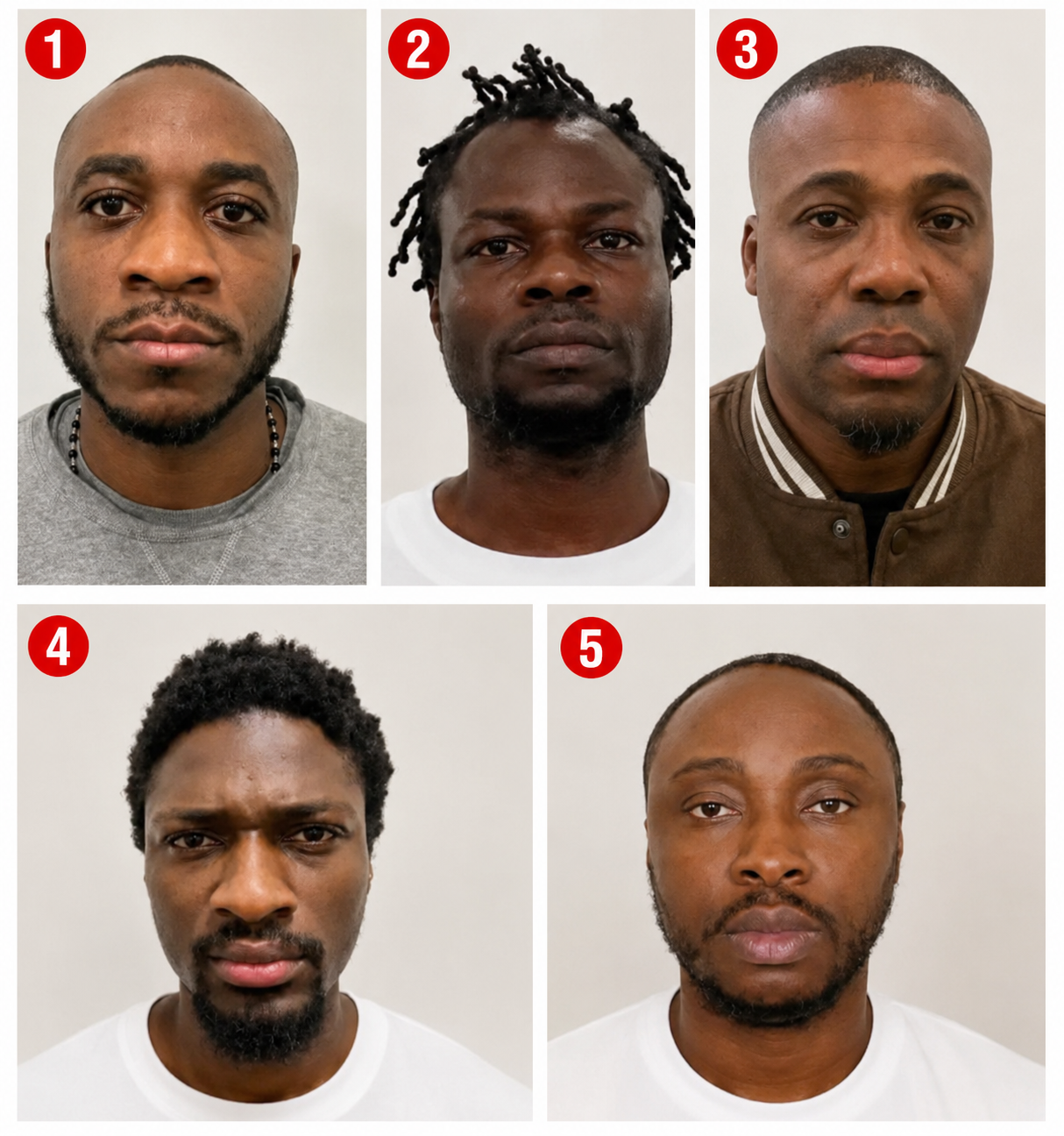
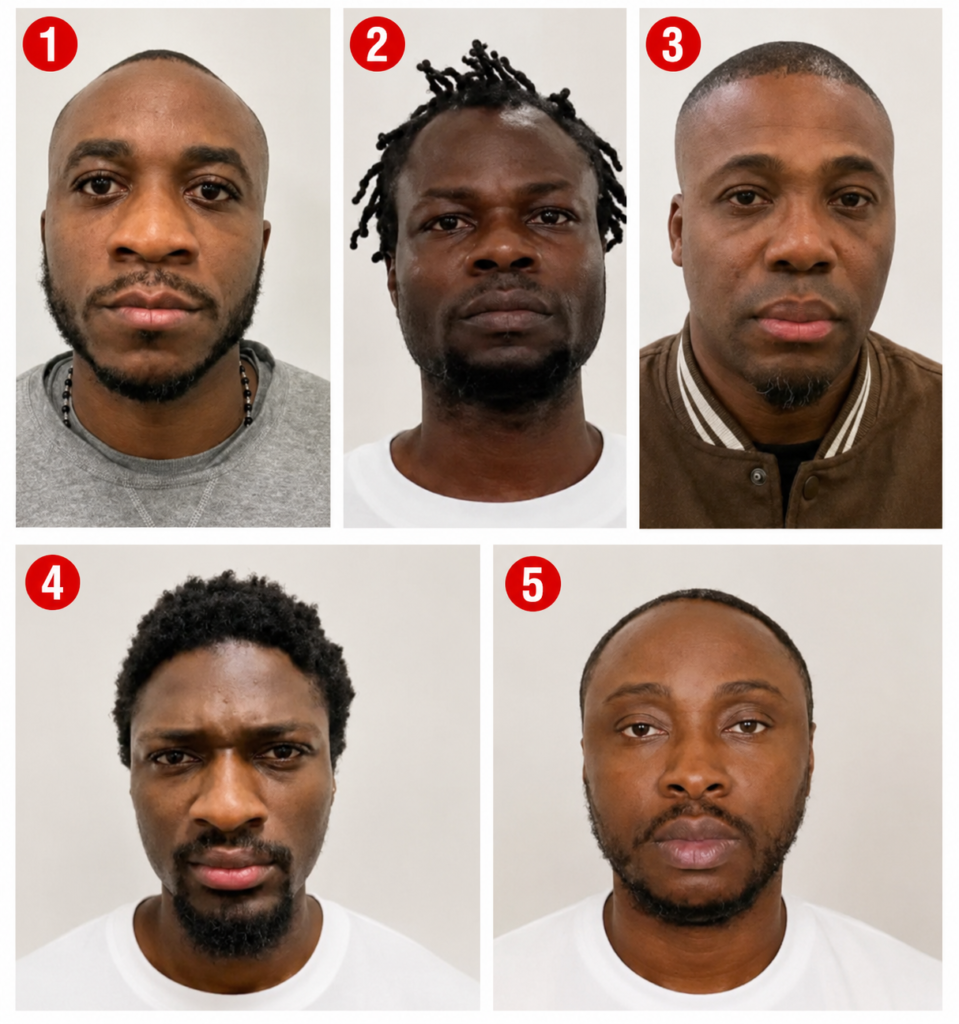
The United States Government, through the Department of Homeland Security (DHS), has updated its public register of online fraudsters (Yahoo boys) slated for deportation.
Among the list of 124 Nigerians flagged on the portal are five notorious, well-known cyber fraudsters whose identities, photographs, and criminal profiles have been officially published.
The database, known as the “Worst of the Worst” (WOW) portal, highlights some Nigerians who have been convicted of major federal crimes and are prioritised for deportation by US Immigration and Customs Enforcement (ICE).
Legit has collated a detailed report on the five popular Nigerian fraudsters (Yahoo Boys) who are now awaiting deportation, including a former Forbes-celebrated businessman.
1. Obinwanne Okeke (Invictus Obi)
Perhaps the most famous name on the deportation list is Obinwanne Okeke, widely known as Invictus Obi. In 2016, Okeke was celebrated internationally, even making the prestigious Forbes “30 Under 30” list of Africa’s most promising entrepreneurs.
However, his empire crumbled when the FBI arrested him for masterminding an $11 million global cyber-intrusion and Business Email Compromise (BEC) scheme. His team successfully hacked the email systems of Unatrac Holding Limited, a heavy machinery supplier, to divert massive payments.
Okeke was sentenced to 10 years in a US federal prison in 2021. Following his release from custody, he was transferred to ICE and placed on the priority deportation list.
2. Oriyomi Aloba
Oriyomi Aloba carried out one of the most unusual cyberattacks on the list by targeting the US justice system itself. Aloba successfully hacked into the Los Angeles Superior Court computer system.
He then hijacked the court’s servers to send over 2 million malicious phishing emails to unsuspecting recipients, aiming to steal credit card details and personal identity data.
In 2019, US federal authorities sentenced him to 145 months (over 12 years) in prison. He has now been officially listed on the DHS portal for deportation to Nigeria.
3. Chibundu Anuebunwa
Chibundu Anuebunwa specialised in high-level corporate impersonation to swindle international companies. Anuebunwa was a key player in a transnational cyber fraud ring that ran a $2.5 million BEC scheme.
The crime team specialised in spoofing and hacking corporate emails to impersonate high-ranking executives, tricking companies worldwide into executing fraudulent wire transfers. He was sentenced to 66 months (5.5 years) in federal prison in 2023. His profile and photo are now active on the US deportation registry.
4. Quazeem Adeyinka
Quazeem Adeyinka was part of a team that exploited US government emergency funds during the global pandemic crisis.
Adeyinka participated in a wire fraud conspiracy that used stolen identities to file fraudulent claims for COVID-19 pandemic-related unemployment insurance benefits. The scheme successfully siphoned over $2.2 million from US taxpayer-funded relief programs.
He was sentenced to 26 months in federal prison and has been marked on the priority list for deportation.
5. Olaolu Alabi
Olaolu Alabi used stolen pandemic relief and corporate fraud proceeds to fund a lavish lifestyle before his arrest. Operating out of Owings Mills, Maryland, Alabi was convicted of conspiracy to commit wire fraud, access device fraud, and aggravated identity theft.
He defrauded individuals and businesses of over $1.5 million using stolen identities to claim pandemic relief. Alabi personally pocketed at least $500,000, some of which he spent on a luxury trip to Hawaii for himself and his friends. He was sentenced to 66 months (5.5 years) in federal prison and is now awaiting repatriation to Nigeria on the DHS list.
While the US Government has published their names and photographs, the DHS has not released specific deportation flight dates. Under US law, each individual’s deportation will be processed systematically as they complete their prison sentences or exhaust their remaining legal options.
-Source: Legit

Elon Musk’s wealth jumped by about $165 billion in one day as SpaceX stock surged after its historic stock market debut. SpaceX briefly crossed a $3 trillion valuation, making it one of the world’s most valuable companies and further cementing Musk’s position as the richest person on earth. The company also holds 18,712 bitcoin, while some analysts warn that SpaceX’s rapid rise in value may be difficult to sustain over the long term.
Elon Musk has added an astonishing $165 billion to his personal fortune in just one day, pushing his estimated net worth to around $1.3 trillion after SpaceX shares continued their explosive run on the stock market.
The sharp jump came as SpaceX stock gained nearly 20% during its second full trading session following its historic Nasdaq debut. The rally briefly pushed the company’s market valuation above $3 trillion, cementing its position among the world’s most valuable publicly traded companies.
SpaceX entered the public market under the ticker symbol SPCX after pricing its initial public offering (IPO) at $135 per share. The company raised approximately $75 billion, making it the largest IPO ever recorded. Investor demand was reportedly overwhelming, with orders exceeding $350 billion, nearly four times the amount of stock available.
By Monday’s close, SpaceX shares had climbed as high as $229.40, giving the aerospace and satellite internet giant a market capitalization of about $2.52 trillion. At one point during trading, the company’s value crossed the $3 trillion mark.
The rally has had a massive impact on Musk’s wealth because he remains the company’s largest shareholder. According to estimates, his one-day gain exceeded the entire net worth of Microsoft co-founder Bill Gates.
Investor and entrepreneur Anthony Pompliano highlighted the scale of the surge in a post on X, writing:


2027 Election Shock: Three Parties Miss INEC Deadline, Presidential Ambitions in Jeopardy

Niger Governor Bago Announces Running Mate For 2027 Election

Muslim- Muslim Ticket: Former Speaker Breaks Silence on Dumping APC

Former Super Eagles Star Loses Life Savings, Duped By A Pastor of ₦1.2 Billion

I’m A Married Man, I Can Never Get Myself Involved With Such A Thing, Delta Gov Aide Reveals Why He Offered Comfort ₦500,000 Job

Lagos Imposes ₦250,000 Fine For Illegal Waste Disposal

-

 Politics2 days ago
Top APC Governor Announces Running Mate for 2027
-
 Uncategorized18 hours ago
Tinubu Announces Two Top Appointments, Names Revealed
-

 Tech2 days ago
“Irreparable Loss”: Tears as Prominent APC Chieftain Dies
-

 Politics2 days ago
BREAKING: Atiku in Strong Trouble As Court Gives Fresh Verdict on ADC Crisis
-

 Business1 day ago
Dangote Refinery Fixes Petrol Price in New Pricing Template
-
News1 day ago
Tension as Wike, Tinubu’s Allies Clash Over Top Agency’s Appointment
-
 Politics3 hours ago
Niger Governor Bago Announces Running Mate For 2027 Election
-
 Politics8 hours ago
Muslim- Muslim Ticket: Former Speaker Breaks Silence on Dumping APC